The History and Origin of the Hydrangea
From Japanese forests to Bali's florist shelves: the fascinating botanical history and cultural journey of the hydrangea across continents and centuries.
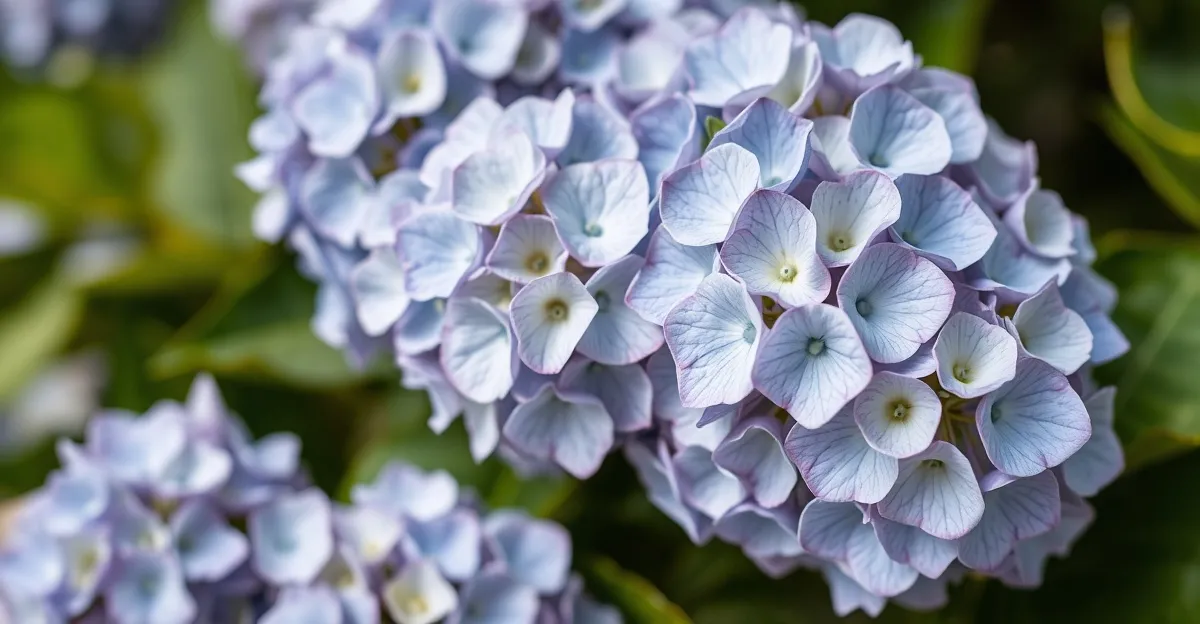
If you were to choose a flower that carries the most layered cultural history of any commonly available bloom, hydrangea would be a strong candidate. Its story begins in the forests of East Asia, passes through the hands of European plant hunters during one of history's great botanical collecting frenzies, gets renamed multiple times, travels to gardens across six continents, and arrives on the shelves of Bali's flower markets — all within a timeline of roughly three hundred years of Western documentation, and centuries more in East Asian cultivation.
Here is that story.
The Botanical Origins
The genus Hydrangea contains between 70 and 75 species, native primarily to East Asia (Japan, China, Korea) and the Americas. The name itself is Latin-Greek hybrid: hydro (water) and angeion (vessel or container), referring to the shape of the seed capsule, which resembles a small water pitcher. Despite popular assumption, the name does not refer to the plant's water requirements, though hydrangeas are indeed thirsty plants.
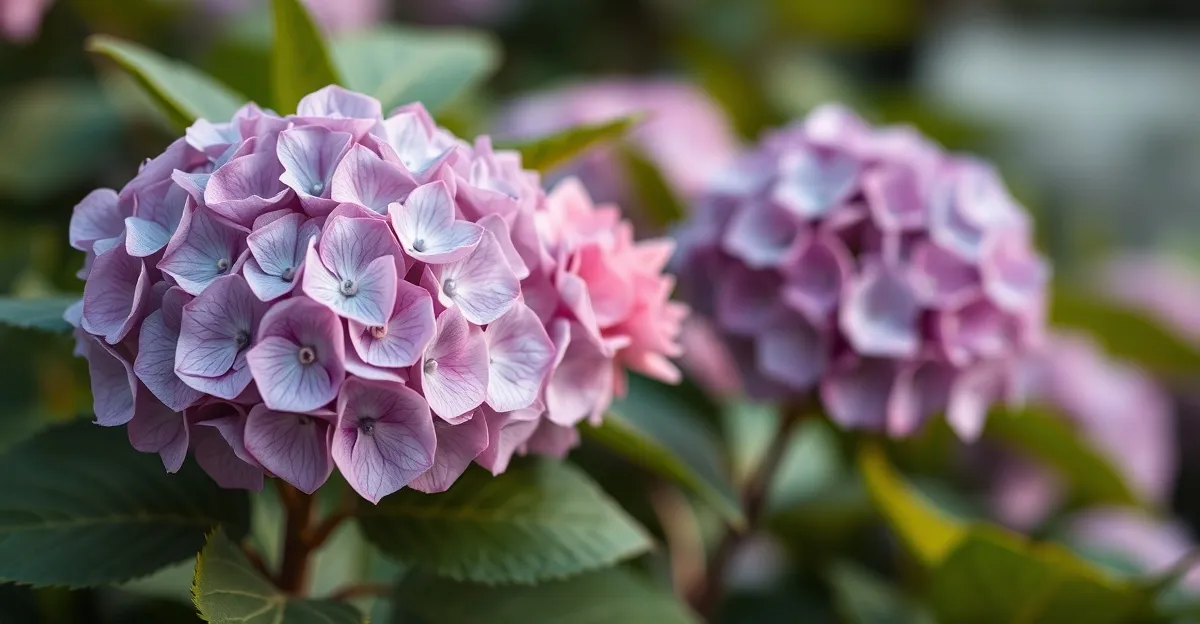
The most widely cultivated and recognisable species is Hydrangea macrophylla — the bigleaf hydrangea — which originated in Japan and the Japanese island coastal regions. This is the rounded, dome-headed flower that most people picture when they hear the word "hydrangea." Alongside it, Hydrangea paniculata (from China and Japan) produces elongated cone-shaped flower heads, and the North American native Hydrangea arborescens (smooth hydrangea) produces the white Annabelle variety beloved by contemporary florists.
Ancient History in East Asia
Long before European botanists encountered the hydrangea, the flower was established in Japanese culture, medicine, and aesthetics. In Japan, ajisai (the Japanese name for hydrangea) appears in the earliest poetry collections — the Man'yōshū, compiled in the 8th century CE, contains poems referencing the flower. Its association with the rainy season (tsuyu, roughly June in Japan) became culturally embedded: hydrangeas blooming in the rain became one of Japanese aesthetics' defining seasonal images.
Traditional Japanese medicine used parts of the hydrangea plant. The leaves of Hydrangea macrophylla var. thunbergii were dried to make a sweet herbal tea called amacha (sweet tea), which is still used in Buddhist ceremonies on the birthday of the Buddha (Hanamatsuri, or flower festival) on April 8th. Temple gardens across Japan planted hydrangeas as part of their botanical collections, contributing to the flower's strong association with Buddhist and Shinto sacred spaces.
In China, Hydrangea macrophylla was cultivated in imperial gardens, and early records describe its cultivation for ornamental purposes going back to the Song dynasty (960–1279 CE).
European Discovery and the Naming Wars
The European encounter with hydrangea came during the late 17th and 18th centuries, when European traders, physicians, and naturalists attached to trading companies began documenting Japanese flora.
Engelbert Kaempfer, a German physician working for the Dutch East India Company (VOC), documented Japanese hydrangeas during his time in Japan (1690–1692) and published accounts in his Amoenitatum Exoticarum (1712). His description was among the first European accounts of the plant.
Carl Peter Thunberg, a Swedish botanist and student of Linnaeus, made a more systematic botanical study during his time in Japan (1775–1776) and formally described several hydrangea species. The species designation thunbergii in some varieties honours his contribution.
The formal genus name Hydrangea was established by Philip Miller in his Gardeners Dictionary (1768 edition), based on a North American species (H. arborescens) that had been brought to Europe. The Asian species were formally reclassified under this genus as more specimens arrived in Europe.
The Role of Plant Hunters
The 18th and 19th centuries saw an extraordinary and aggressive collection of Asian plants by European botanical institutions. The Royal Botanic Gardens at Kew, the Jardin des Plantes in Paris, and various private estates competed for the newest, most unusual specimens from Japan, China, and across Asia.
Japan's isolationist policies during the Edo period (1603–1868) made direct collection difficult, but traders and scholars with limited access to Japanese ports still managed to collect plant specimens. When Japan opened to the West after the Meiji Restoration in 1868, the flood of Japanese plants into European horticulture was remarkable.
Among the most significant figures in bringing hydrangeas to European gardens was Philipp Franz von Siebold, a German physician who worked in Japan from 1823 to 1829. He collected and sent numerous plant specimens to Europe, including many hydrangea varieties. His name is commemorated in Hydrangea serrata, a mountain species sometimes called the tea of heaven hydrangea.
The French plant hunters of the 19th century — particularly Charles Sargent working through Harvard's Arnold Arboretum — documented and collected further species from China, adding significantly to what European and American gardens could grow.
Hybridisation and the Modern Garden Hydrangea
The transformation from wild collected species to the hydrangeas sold in contemporary florists involved considerable breeding work, primarily in France in the late 19th and early 20th centuries.
French nurseries — particularly Victor Lemoine's firm in Nancy — began systematic crosses between Hydrangea macrophylla forms in the 1890s. By selecting for larger flower heads, more consistent colours, and compact growth habits, they produced the ancestors of today's garden and cut flower hydrangeas.
The development of mophead varieties (dense, round flower heads) and lacecap varieties (flat heads with a ring of larger flowers around a central cluster of smaller ones) happened largely through this French breeding work.
By the early 20th century, hydrangeas had become fashionable garden plants across Europe, and breeding programs proliferated in the Netherlands, Germany, and England. The Netherlands' dominance in cut flower cultivation brought commercial hydrangea production to an industrial scale by the late 20th century.
Today, new variety development continues through programs in Japan, the Netherlands, and the United States, producing varieties with longer vase life, more saturated colours, and greater heat tolerance.

The team
your florists
weekly subscription · Bali
We write about flowers because we love them. We deliver them because someone should — properly, weekly, across Bali.
— heyflowerPay once for 3, 6, or 12 months, no auto-renewal.
Hydrangeas Reach Asia's Tropical Markets
The route from European botanical gardens and Japanese temples to Bali's florist markets passes through the expansion of global cut flower trade and the development of local highland flower cultivation in Indonesia.
Commercial hydrangea cultivation in Indonesia developed in the cooler highland regions of Java (around Lembang and Malang) and Bali (around Bedugul) in the mid-to-late 20th century. These highland areas, where temperatures are cooler and rainfall higher, provide reasonable growing conditions for a plant that prefers temperate climates.
The Indonesian market for cut flowers grew steadily through the 1980s and 1990s, driven by rising incomes, tourism, and the adoption of Western-style retail floristry alongside traditional ceremonial flower use. Hydrangeas found a market because they provided high visual impact at competitive prices.
Today in Bali, hydrangeas from highland farms and imported from Java arrive regularly in the Canggu, Seminyak, and Kerobokan flower markets, alongside orchids (grown extensively in Bali), tropical foliage (local), and imported roses and lilies.
For comparison with a flower that followed a similar route through botanical history, the history and origin of the gerbera covers the daisy family's comparable journey from South Africa to global floriculture.
The Colour-Changing Discovery
One of the most scientifically interesting aspects of hydrangea history is the relatively late understanding of why hydrangeas change colour. It was known empirically for centuries that the same plant could produce blue flowers in one soil and pink in another, but the mechanism was not understood.
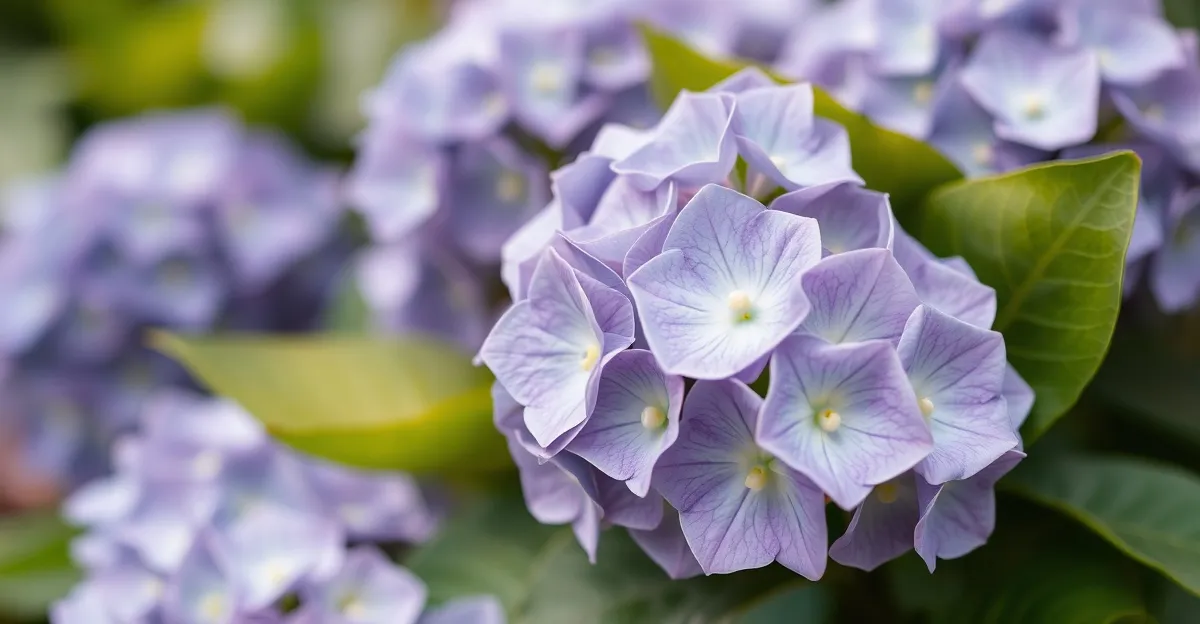
Research in the 20th century established that the blue colour in H. macrophylla results from aluminium ions being taken up from acidic soil and combining with the flower's anthocyanin pigments. Alkaline soil limits aluminium uptake, resulting in pink flowers. White-flowering varieties lack the pigment pathway and do not change colour regardless of soil pH.
This discovery had commercial applications: growers could predictably control hydrangea colour through soil amendment, which meant consistent supply of specific colours for the cut flower market.
Frequently Asked Questions
Where did hydrangeas originally come from?
Hydrangeas are native to East Asia (Japan, China, Korea) and the Americas. The most commonly cultivated garden and cut flower species (Hydrangea macrophylla) originated in Japan.
How did hydrangeas get their name?
The Latin name Hydrangea comes from Greek hydro (water) and angeion (vessel/container), referring to the shape of the seed capsule — which resembles a small water pitcher. This name was formalised by Philip Miller in 1768.
When did hydrangeas first arrive in Europe?
The first documented European descriptions date to Engelbert Kaempfer's accounts from Japan around 1690–1692. Formal botanical classification followed in the 18th century, and garden cultivation began expanding seriously after Japan's opening to the West in 1868.
Why do hydrangeas change colour?
The colour of Hydrangea macrophylla depends on soil pH. Acidic soil allows the plant to absorb aluminium, which combines with the flower's pigments to produce blue. Alkaline soil restricts aluminium absorption, producing pink. White-flowering varieties are unaffected because they lack the relevant pigment pathway.
Are all hydrangeas from Japan?
No. The genus Hydrangea contains 70–75 species from both Asia and the Americas. North American natives include H. arborescens and H. quercifolia (oakleaf hydrangea). The most commonly grown ornamental varieties descend primarily from Japanese and Chinese species, but North American species have also contributed significantly to modern breeding.
Fresh locally sourced and seasonal hydrangeas delivered weekly or fortnightly across Canggu, Berawa, Pererenan, Seminyak, and Kerobokan — heyflower.co connects you to Bali's best blooms.
More on Hydrangea