Marigold vase life in the tropics: how long do they last?
How long do marigolds last in a vase in Bali's tropical climate? A practical guide to realistic expectations and the best ways to extend their freshness.
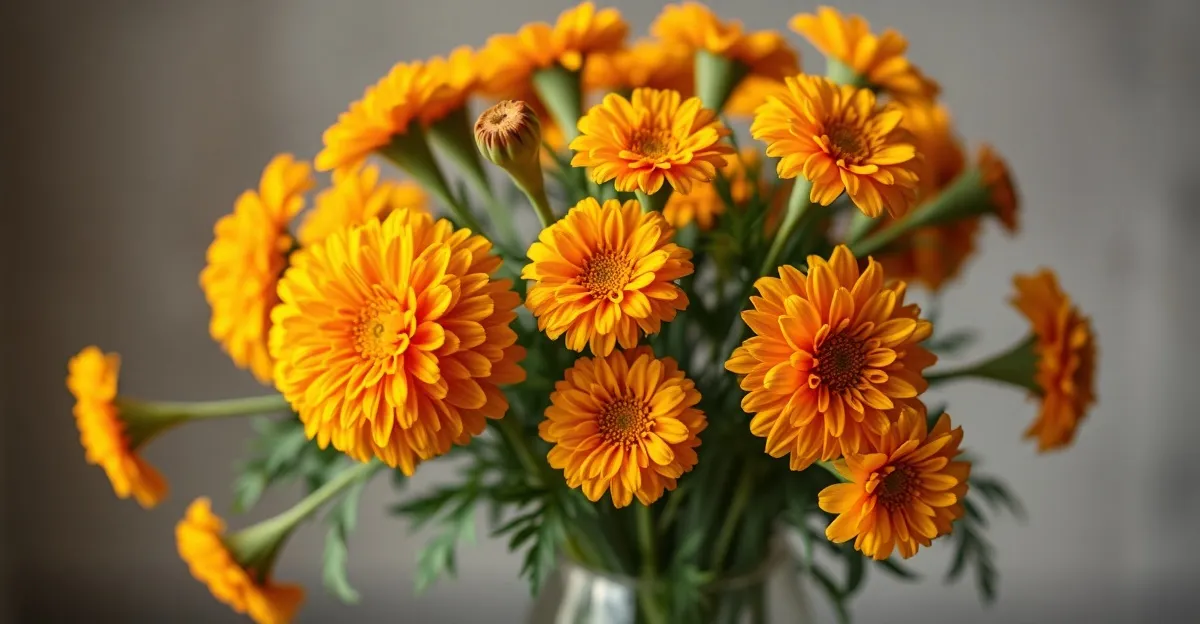
It's one of the most common questions we get from customers in Bali: "Why did my marigolds only last two days?" It's a fair question, and the honest answer has less to do with the quality of the flowers and more to do with what happens to any cut flower in a tropical climate.
Bali is not Amsterdam. It's not Tokyo. When florists in cooler countries talk about marigold vase life of 10 to 14 days, they're talking about flowers sitting in a 20°C kitchen, not a 32°C villa in Seminyak with 85% humidity. Those numbers simply don't translate, and it's worth being realistic about what "good vase life" actually means in a tropical context — and then understanding how to get the most out of it.
Realistic expectations: how long marigolds actually last in Bali
Under typical home conditions in Bali — room temperature around 28 to 32°C, moderate to high humidity, no special treatment — cut marigolds will usually last between 3 and 5 days. That's not a failure; that's Bali.
With proper care — which we'll cover in detail — you can reliably extend that to 6 to 9 days for healthy, freshly cut stems. Occasionally, under ideal conditions (good air conditioning, daily water changes, stems re-cut every two days), marigolds can last up to 12 days. But that's the ceiling, not the expectation.
Seasonal variation matters too. During Bali's dry season (roughly April through September), when temperatures are slightly lower and humidity drops somewhat from its wet-season peak, marigolds tend to last a day or two longer. The wet season — particularly November through February, when Seminyak and Canggu can feel genuinely steamy — is harder on cut flowers across the board.
Why tropical heat shortens vase life
Understanding why marigolds fade faster in the tropics helps you intervene at the right points.
Bacterial growth accelerates in warm water. The single biggest enemy of vase life in Bali isn't heat directly — it's the bacteria that thrive in warm water. In a 30°C room, bacterial colonies in vase water can reach problematic concentrations within 12 to 24 hours. They attack the cut stem ends, blocking the vascular tissue that draws water up to the petals. Once that blockage is established, petals begin to dehydrate and wilt even if there's plenty of water in the vase.
Transpiration increases with heat. Marigold petals lose moisture through a process called transpiration, and this speeds up significantly in high temperatures. Even if the flower is drawing water efficiently, hot air pulls moisture out of petals faster than it can be replenished in hot conditions.
Ethylene accumulation is faster. As flowers age, they produce ethylene gas, which triggers further aging in nearby blooms. In a warm, enclosed room, ethylene concentrates quickly. This is why marigolds in a small, hot room age faster than those in a well-ventilated space.
Humidity creates different problems. High humidity slows the surface drying of petals, which is protective up to a point. But it also means that any surface moisture — from misting, or from condensation — doesn't evaporate, encouraging fungal growth on petals. In wet season, you'll sometimes see individual petals develop soft dark spots that spread through the bloom within a day.
The vase life by variety
Not all marigolds are equal when it comes to tropical durability.
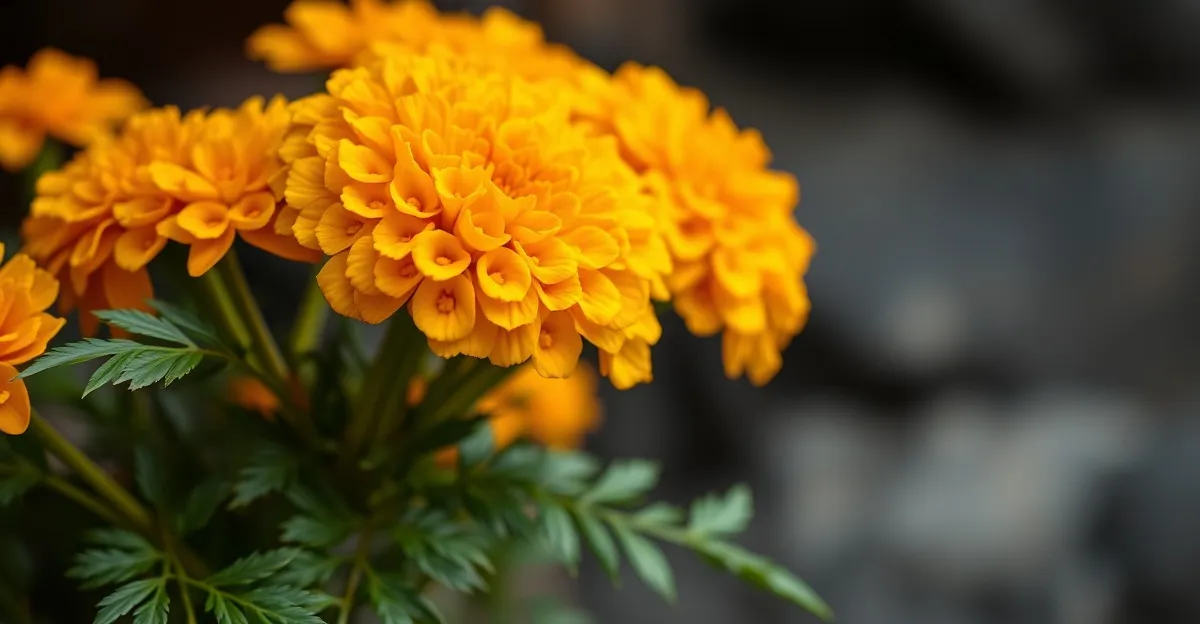
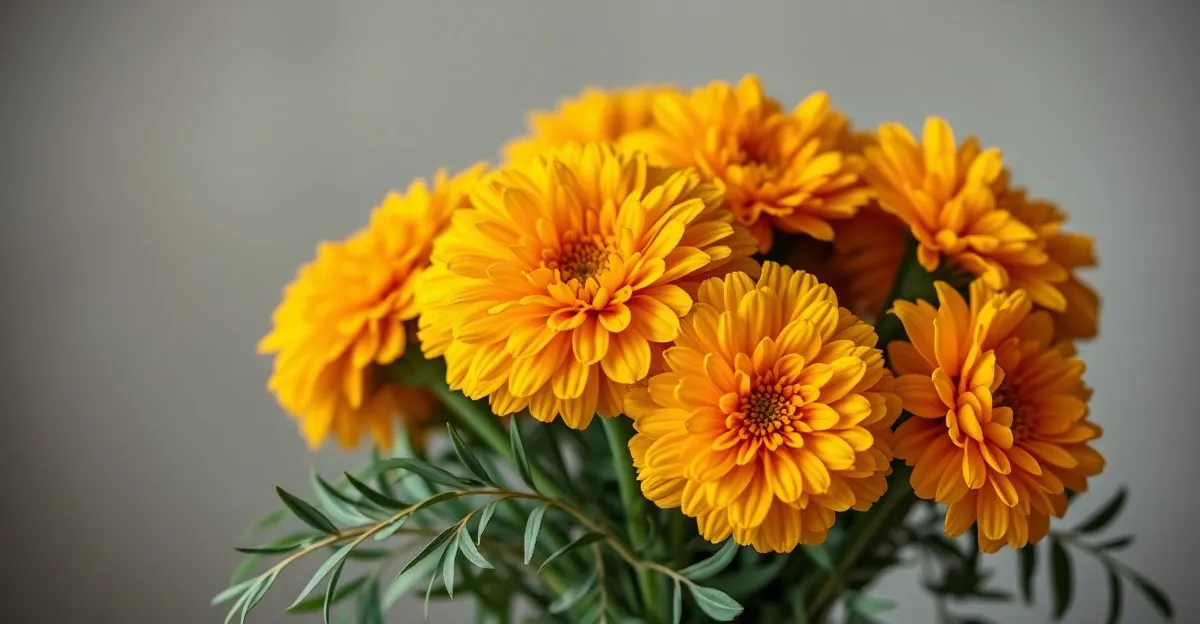
African marigolds (Tagetes erecta) — the large, globe-shaped heads on long stems — generally have the longest vase life of the commonly available varieties. Their dense, tightly packed petals hold moisture well and their thick stems support water uptake. These are the marigolds you'll find most commonly at Bali's traditional markets and florist shops. With good care, they regularly reach 7 to 9 days.
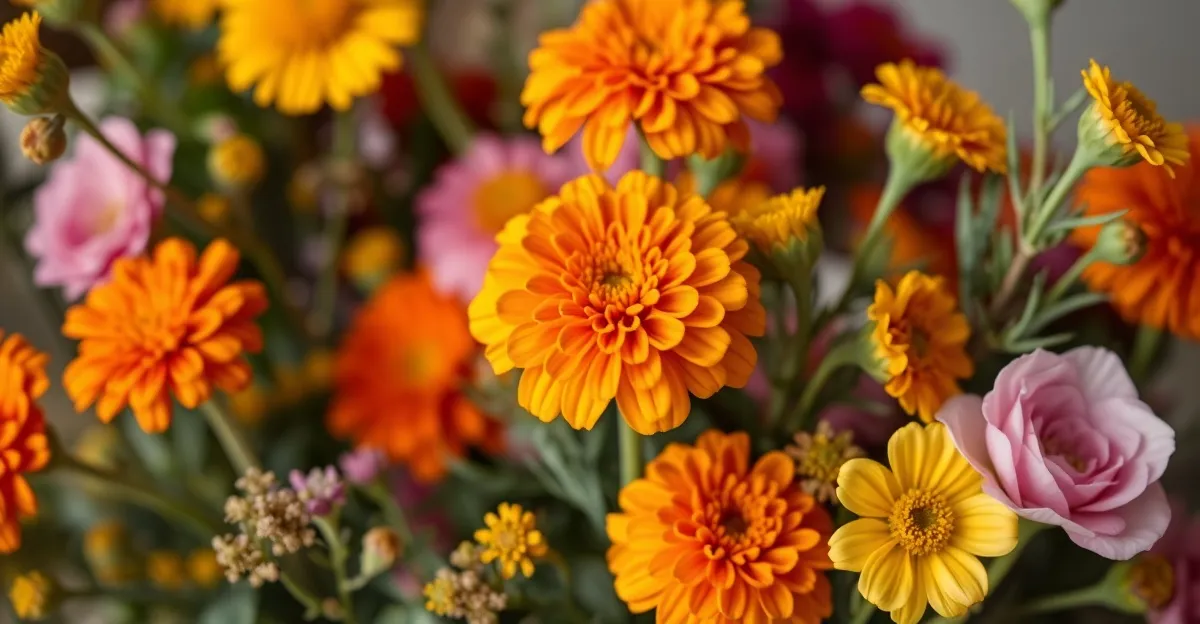
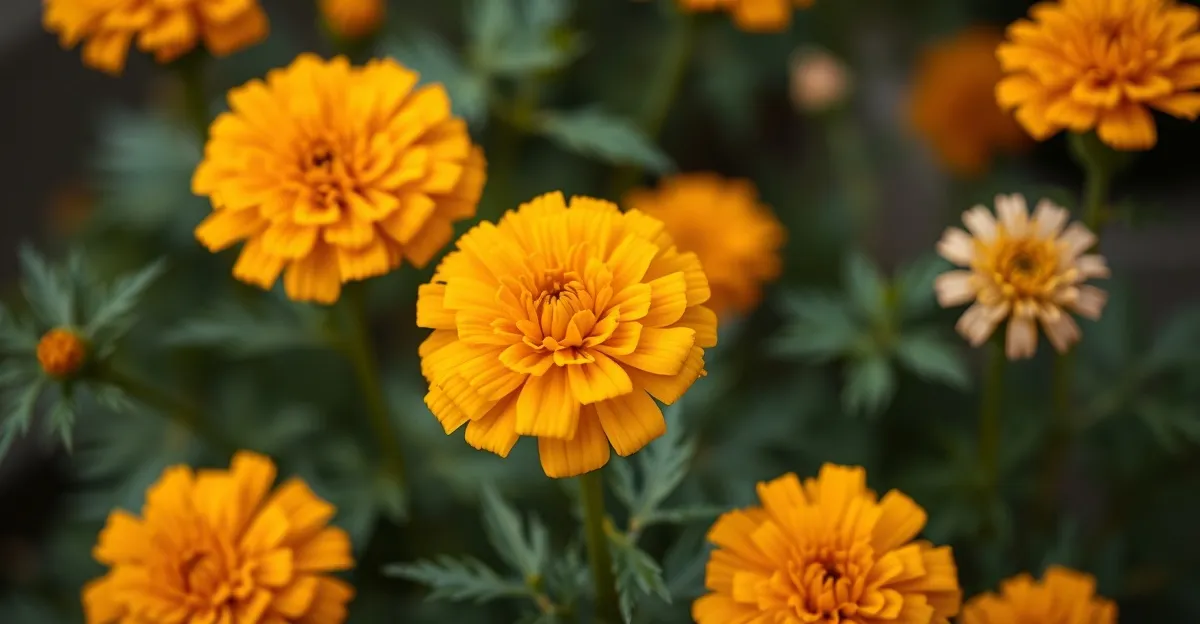
French marigolds (Tagetes patula) — smaller, often bicoloured, with more open flower heads — have a shorter vase life in general. Their thinner petals dehydrate faster, and the more open structure means ethylene and heat affect them more directly. Expect 4 to 6 days with good care in tropical conditions.
Signet marigolds (Tagetes tenuifolia) — the small, single-flowered varieties with ferny foliage — are rarely used as cut flowers and are mainly garden plants. They don't perform well in vases in any climate.
Day-by-day: what to expect
Here's a rough timeline of what happens to a well-cared-for marigold arrangement in a Bali home:
Days 1–2: Flowers are at peak. Petals are turgid, colour is saturated, stems are firm. Scent is at its strongest. If they arrived slightly travel-stressed, they'll actually look better on Day 2 after hydrating properly.
Days 3–4: Slight softening in the outermost petals. Colour may deepen slightly or begin to slightly fade in direct light. Still fully presentable and beautiful.
Days 5–6: Outer petals begin to look tired. Remove the most faded individual flowers if you're working with a multi-stem arrangement. Inner petals and freshly opened buds may still look good.
Days 7–8: With good care, some stems may still have presentable heads. Others will be past their best. Strip the arrangement down to the freshest flowers and re-arrange.
Days 9+: Past reliable vase life for most conditions. Time to replace.
What actually extends vase life in the tropics
The most effective interventions, in order of impact:
Daily water changes: This is the single most important thing you can do. Empty the vase completely, rinse it, and refill with fresh room-temperature water. Every day, without exception. In wet season, you may even benefit from twice-daily changes.
Re-cut stems every two days: Each time you change the water, re-cut the bottom 2 to 3 centimetres of stem at a 45-degree angle with a sharp, clean knife. This removes the bacterial blockage that forms at the cut end and reopens the vascular tissue. Crushing the stem (with blunt scissors) actually does more harm than no cutting at all.
Add a preservative to the water: A flower food sachet (sometimes included with purchased bouquets) provides three things: a carbohydrate source, an acidifier that inhibits bacterial growth, and an anti-ethylene compound. If you don't have a sachet, a DIY substitute works well: half a teaspoon of sugar, a few drops of white vinegar or lemon juice, and the tiniest pinch of bleach per litre of water.
Choose the right location: Cool, well-ventilated space, out of direct sun. A living room with cross-ventilation works well in Bali. Avoid bathrooms (low light, poor airflow) and outdoor areas in afternoon sun (too hot). Air conditioning is helpful for extending life, but keep flowers away from direct airflow from the unit — it dries petals.
Remove leaves below the waterline: Submerged foliage decomposes quickly and dramatically accelerates bacterial growth in warm water. Strip all leaves from the lower half of the stems before putting them in the vase.
For a comprehensive guide to keeping tropical blooms fresh in Bali's climate, how to care for marigold in Bali's humid climate covers all the details including seasonal variations.

The team
your florists
weekly subscription · Bali
We write about flowers because we love them. We deliver them because someone should — properly, weekly, across Bali.
— heyflowerPay once for 3, 6, or 12 months, no auto-renewal.
When to give up vs. when to persevere
Knowing when to replace flowers is part of good care. If you see these signs, the flowers are past their best and it's time to let them go:
- Petals that are soft and translucent rather than firm and opaque
- A sour or unpleasant smell from the water (even after a recent change)
- Stem ends that have gone dark, slimy, or hollow-feeling
- Significant petal drop with each touch of the arrangement
The sour smell in particular is a sign that bacterial activity has advanced beyond the point where it can be reversed. Fresh water and a new cut won't save heavily contaminated flowers.
If the blooms are still firm but the arrangement is looking patchy, strip out the faded flowers, re-cut the remaining stems, and do a fresh arrangement in a clean vase. You can often extend the life of the best individual stems by another few days this way.
Preserving marigolds beyond vase life
If you want to keep marigolds longer than their fresh vase life allows, a few options work reasonably well in Bali:
Air drying: Bunch the marigolds loosely (stems pointing up, not hanging — they dry flatter and hold shape better this way in high humidity), and leave in a well-ventilated, low-humidity spot. Bali's humidity makes traditional air-drying slow and imperfect — flowers may go mouldy before they dry fully. The dry season is the better window for this.
Silica gel drying: Florist-grade silica gel, available from craft stores in Denpasar, can dry marigold heads beautifully in 3 to 7 days. The results are significantly better than air-drying in tropical humidity.
For a full exploration of whether more sophisticated preservation methods are worth it for tropical blooms, freeze-drying flowers: is it worth it for tropical blooms? covers the options available in Bali in detail.
FAQ
How long do marigolds last in Bali without any special care? Without much intervention — just putting them in water and leaving them — marigolds typically last 2 to 4 days in Bali's tropical conditions, depending on the season. Wet season conditions are harder; dry season is more forgiving.
Do marigolds last longer in air conditioning? Somewhat, yes. Air-conditioned rooms are cooler, which slows bacterial growth and reduces transpiration. However, direct airflow from AC units dries out petals. The best approach is a cool air-conditioned room but positioned away from the direct airflow of the unit.
Why do my marigolds wilt even though the vase has water in it? This is almost always caused by bacterial blockage in the stem ends. The flower can't draw water up past the blockage regardless of how much is in the vase. Re-cut the stems 2 to 3 cm from the base at a 45-degree angle, change the water, and clean the vase thoroughly.
Can I revive wilted marigolds? Sometimes. If the wilting is recent and the stems aren't slimy or the water foul-smelling, try: re-cut the stems, submerge the entire flower head in cool water for 20 to 30 minutes, then return to fresh vase water. This rehydration technique works on mildly wilted flowers. It won't revive flowers that have deteriorated significantly.
Are there any marigold varieties that last longer as cut flowers in the tropics? Large-headed African marigolds (Tagetes erecta) generally outlast other varieties in tropical conditions. Their dense structure holds up better in heat and humidity. If you're ordering specifically for longevity, ask for African marigold varieties.
Ready to bring fresh flowers to your Bali home or event? Explore our weekly flower subscription and get handpicked blooms delivered to your door every week.
More on Marigold