How to preserve a marigold bouquet after the event
Marigolds can be preserved beautifully after events — and Bali's climate requires specific techniques. Learn air drying, pressing, and silica gel methods that actually work in the tropics.
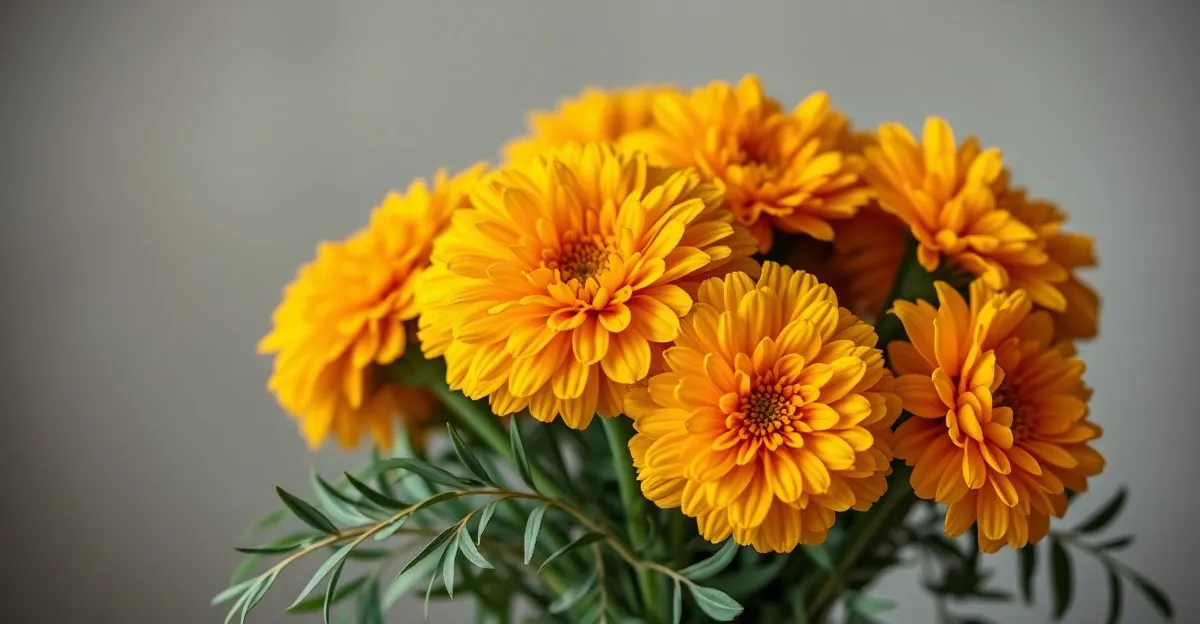
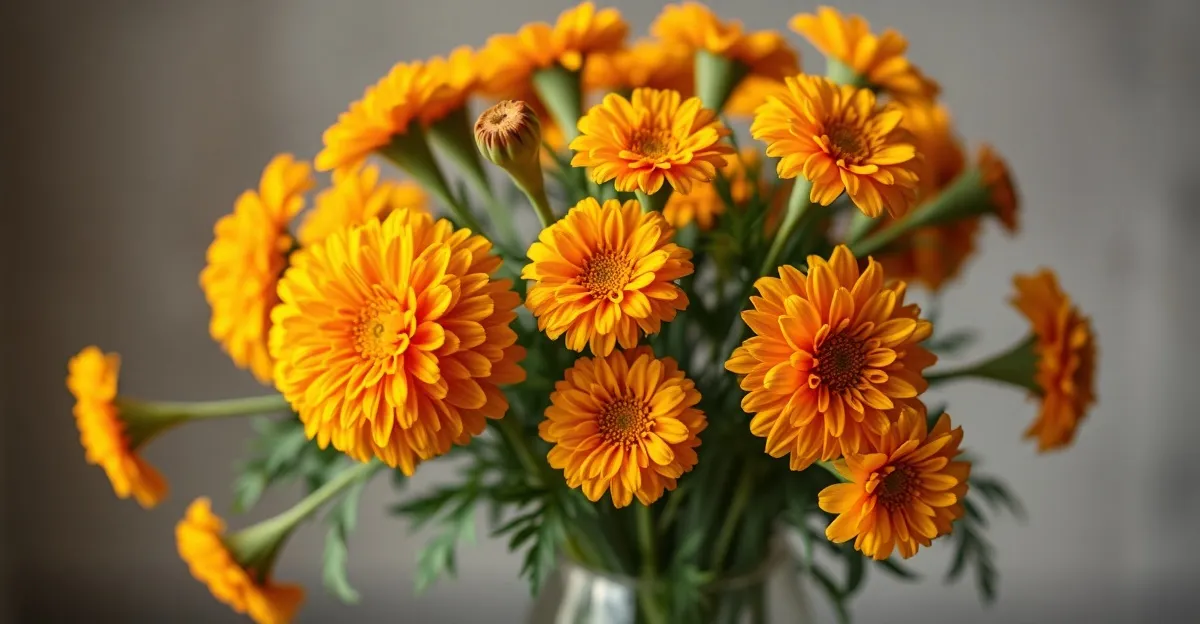
Marigolds seem too robust to be sentimental flowers — they are everywhere in Bali, used in daily offerings, sold in bunches at every market corner. But a specific marigold bouquet from a significant event — a wedding in Ubud, a Galungan ceremony at your host family's compound, a birthday arrangement from someone you love — is worth preserving. The good news is that marigolds are actually among the easier flowers to preserve, with a few tropical-climate modifications to standard technique.
Why marigolds preserve well
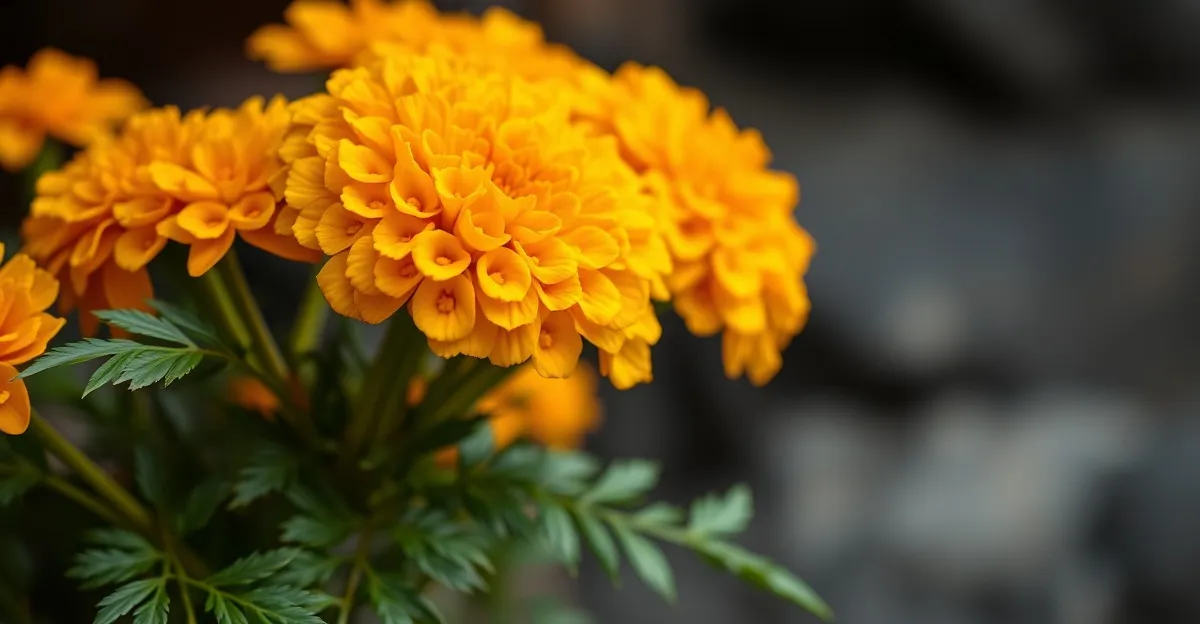
Marigold flower heads are dense and compact. Unlike thin-petaled flowers like sweet peas or freesias, the tightly packed petals of an African marigold (Tagetes erecta) have lower surface area relative to their volume, which means they release moisture more slowly and uniformly. This makes the drying process more predictable.
The natural oils in marigold petals — the same oils that give the flower its distinctive earthy scent — also slow moisture loss and provide some resistance to mold. This does not make marigolds immune to Bali's humidity, but it gives them an advantage over more delicate flowers during the preservation process.
The challenge: Bali's humidity
Before getting into methods, the key context: in Bali's coastal areas (Seminyak, Kuta, Canggu, Sanur), relative humidity typically runs 70–85% even in the dry season, spiking higher during the wet months from November through March. Inland Ubud tends to be cooler but also significantly more humid during the wet season.
This ambient moisture is the enemy of all flower preservation. Methods that work easily in Melbourne or London's dry interiors take longer and require more active management in tropical Bali. Every method below accounts for this.
Method 1: Air drying (easiest, best for decorative display)
Air drying marigolds works well, but in Bali's humidity, you need to actively create drying conditions rather than passively relying on the air.
Steps:
- Start while flowers are fresh — do not wait until they begin to wilt.
- Strip all leaves from the stems. Leaves hold moisture and dry slowly.
- Tie stems in small bunches (3–5 stems maximum). Overcrowding prevents airflow around flower heads.
- Hang upside down — this maintains the round shape of the flower head by letting gravity pull the petals outward.
- Place where you have maximum airflow. A room with a ceiling fan running on low, a well-ventilated covered outdoor area, or anywhere with consistent air movement works well. Avoid completely still, enclosed spaces.
- Check daily for the first week. If you see any soft spots, discoloration, or musty smell, remove affected stems immediately.
- In Bali's humidity, expect 3–4 weeks for complete drying — longer than the 2 weeks often cited for temperate climates.
Results: Air-dried marigolds hold their shape beautifully and retain much of their original color — yellows and oranges tend to deepen slightly as they dry. The earthy scent persists for months. Dried marigold bunches look wonderful hanging in entryways or displayed in ceramic vases, and they work well in dried wreaths.
Important note for the wet season: During November–March, air drying becomes difficult even with good airflow. The ambient humidity is simply too high for reliable results. Use silica gel during this period.
Method 2: Silica gel drying (best results, most reliable in Bali)
Silica gel is the gold-standard method for flower preservation in tropical climates because it actively removes moisture rather than waiting for evaporation. For Bali, this is particularly effective.
Silica gel is available at craft supply shops in Denpasar (look near Tiara Dewata, or at craft stores in the Pemogan area) and can be ordered online through Indonesian marketplaces.
Steps:
- Find an airtight container with a tight-fitting lid. A large plastic food container works perfectly.
- Pour 3–4cm of silica gel crystals into the bottom.
- For individual flower heads: cut the stem short (2–3cm) and place flowers face-up in the silica gel, not touching each other.
- For full bouquet stems: stand stems upright in the silica gel, flower heads up, spaced apart.
- Gently pour more silica gel over and around the flower heads, using a spoon or your fingers to support petals as you pour to prevent crushing.
- Seal the container completely.
- Wait 3–5 days for marigolds (their density means they take a bit longer than delicate flowers).
- Open carefully and brush off any silica crystals with a soft paintbrush.
Results: Marigolds preserved with silica gel look remarkably close to fresh, maintaining their round three-dimensional shape and vivid color. They are somewhat fragile once dry — the petals become papery — but handle carefully and they last for years. This is the best method if you want preserved flowers to display rather than use as craft material.
Reusing silica gel: After use, silica gel can be reactivated by spreading it in a baking tray and placing in a low oven (100°C) for about an hour. The color of the crystals (if you use the indicating type, which changes color when saturated) will shift back to blue or orange depending on the product, signaling it is ready to use again.
Method 3: Pressing (best for flat uses — cards, frames, resin)
Pressed marigolds are stunning. The petals, when flattened, show beautiful color gradients from center to petal tip, and the flower's symmetry becomes especially visible. Large African marigold heads need to be separated into individual petals for pressing — the whole head is too thick to press flat without significant browning.
Steps:
- Pull the flower head apart into individual petals or small petal clusters.
- Arrange petals on absorbent paper (blotting paper, newsprint, or old phone book pages).
- Leave space between petals and do not overlap.
- Cover with another sheet of absorbent paper, then weight with heavy books.
- Change the paper every 2 days for the first week — this is critical in Bali's humidity to prevent mold. Set a reminder.
- After 2–3 weeks, petals should be fully flat and papery.
The Bali modification: In humid conditions, pressing between paper alone risks mold. Placing the entire pressing arrangement (books and all) in a room with air conditioning running helps significantly. Some people also place silica gel packets near (not touching) the pressing arrangement to absorb ambient moisture.
Uses: Pressed marigold petals can be framed under glass for a botanical print, used in greeting cards and stationery, incorporated into resin for paperweights or jewelry, or used in decoupage projects.

The team
your florists
weekly subscription · Bali
We write about flowers because we love them. We deliver them because someone should — properly, weekly, across Bali.
— heyflowerPay once for 3, 6, or 12 months, no auto-renewal.
Method 4: Making dried marigold oil or tea
If you have more marigolds than you need for display preservation, consider preserving them differently: as marigold oil or tea. Calendula (Calendula officinalis, a related plant also called marigold) is more commonly used for this, but Tagetes varieties also contain beneficial compounds.
Dried marigold petals steeped in carrier oil (coconut oil works perfectly in Bali) for several weeks produce an infused oil with light anti-inflammatory properties — traditionally used for skin care. This is a genuinely different kind of preservation but keeps the essence of the flowers in a useful form.
Dried petals can also be used as a garnish in cooking — marigold petals have a mildly bitter, herbal flavor that works in salads and rice dishes.
Keeping your preserved marigolds in good condition
Once preserved, marigolds need protection from re-absorbing moisture.
Display tips for Bali conditions:
- Keep in rooms with air conditioning that runs regularly — the lower humidity will significantly extend the life of dried flowers.
- Avoid displaying near the kitchen (steam) or bathroom.
- A glass cloche or sealed shadow box greatly extends the display life by reducing ambient moisture contact.
- Small silica gel packets placed discreetly near displays help manage humidity.
- Direct sunlight will fade color over time — indirect light or a dim spot preserves color longer.
For ongoing fresh flowers alongside your preserved keepsake, our weekly flower subscription ensures your space always has fresh blooms.
FAQ
How long do air-dried marigolds last in Bali's climate? In a dry, well-ventilated interior (ideally with some air conditioning), air-dried marigolds can last 1–2 years before significant fading or deterioration. In a very humid space without climate control, expect 3–6 months.
Can I preserve the marigold's scent? Yes, partially. Dried marigolds retain their distinctive earthy scent for several months, though it fades over time. Silica gel-dried flowers retain scent better than air-dried ones. The scent does not intensify after preservation the way some potpourri flowers do.
Do marigold petals press individually or should I press the whole head? For large African marigolds, press individual petals or small petal clusters. The whole head is too thick to press effectively and will brown in the center before the outer petals are dry. French marigolds (smaller heads) can sometimes be pressed intact if flattened firmly from the start.
My dried marigolds have gone brown — what went wrong? Browning during drying typically means either: the flowers were past their peak before preservation began, or moisture caused mold (even if not visible) that degraded the pigment. In Bali's humidity, drying too slowly is the most common cause. Switch to silica gel for future attempts.
Can I put preserved marigolds in a shadow box? Yes, and this is highly recommended for Bali conditions. A sealed shadow box greatly reduces the flower's exposure to ambient humidity, significantly extending the display life of preserved flowers.
Ready to bring fresh flowers to your Bali home or event? Explore our weekly flower subscription and get handpicked blooms delivered to your door every week.
More on Marigold