The History and Origin of the Tuberose
From pre-Columbian Mexico to Bali's daily offerings — discover the full story of the tuberose's remarkable history and cultural journey.
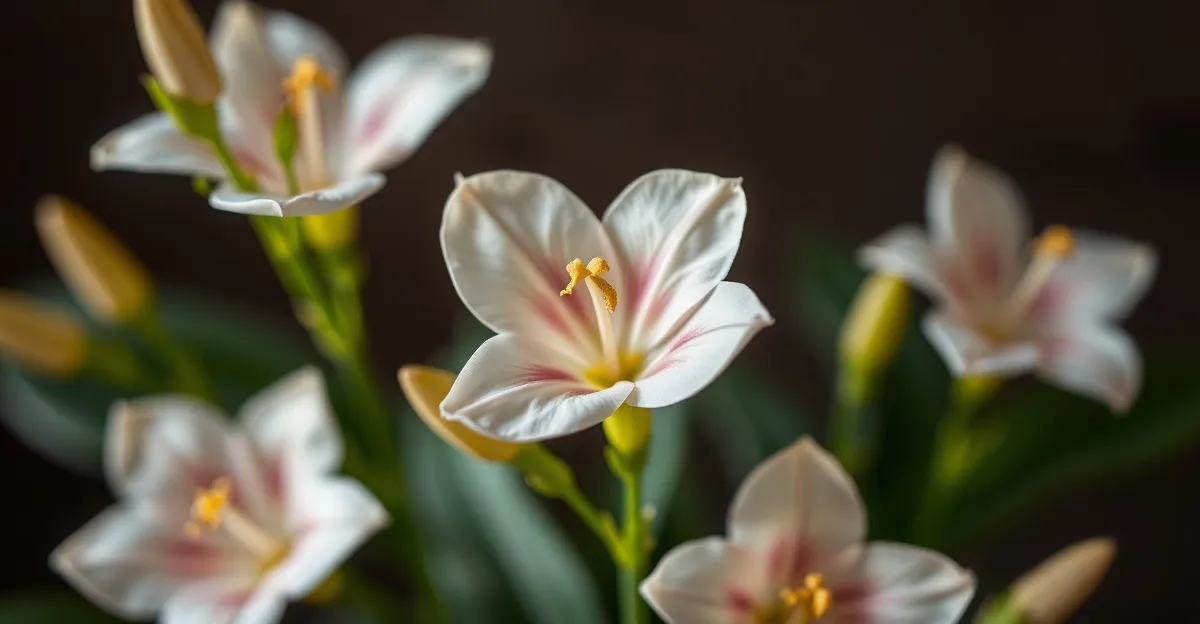
Few flowers have traveled as far in both geographical distance and cultural significance as the tuberose. Starting as a cultivated plant in pre-Columbian Mexico, carried by Spanish colonists to Europe and Asia, adopted into the heart of Indian, Southeast Asian, and Pacific ceremonial traditions, and today a living presence in Bali's daily offerings — the history of tuberose is a story about human beings and their relationship with extraordinary beauty.
At heyflower.co, we believe knowing a flower's story deepens your relationship with it. Here is the full history of the tuberose.
Pre-Columbian Origins in Mexico
Tuberose (Polianthes tuberosa) originated in the highlands of Mexico, where it was cultivated by Aztec civilisations for centuries before European contact. The Aztecs, who maintained extraordinary botanical gardens and had sophisticated systems of plant knowledge, cultivated tuberose primarily for its fragrance rather than its visual beauty.
In Nahuatl, the Aztec language, the plant was called "omixochitl" — meaning "bone flower," possibly a reference to the white petals or the structure of the tuberous root. It was used in ceremonial contexts: the fragrance was valued for its ability to create an atmosphere of altered consciousness suitable for spiritual practice, and it was included in offerings to Aztec deities.
The Aztec cultivation of tuberose was sophisticated enough to have produced the double-flowered variety — with its multiple petal layers — well before European contact. The wild type, with single rows of petals, was already being deliberately bred toward greater elaboration when Spanish explorers arrived in the early 16th century.
Spanish Discovery and European Introduction
When Spanish conquistadors arrived in Mexico in the early 16th century, they encountered tuberose in Aztec botanical gardens and markets. The flower's extraordinary fragrance made an immediate impression. Spanish missionaries and botanists began documenting the plant, and specimens were sent back to Spain within decades of the initial conquest.
The exact date of tuberose's first arrival in Europe is disputed, but by the mid-16th century, the plant was being cultivated in Spain and beginning to spread to other European botanical gardens. The Hortus Botanicus in Leiden (Netherlands) received specimens, and the plant quickly attracted the attention of Europe's botanical community.
In Europe, tuberose was initially grown as a botanical curiosity — a remarkable flowering plant from the newly discovered Americas. But its extraordinary fragrance soon transformed its status from curiosity to cultural treasure.
The French Perfume Connection
The most significant chapter in tuberose's European history is its relationship with the French perfume industry, which began in the 17th century. The town of Grasse in Provence, which had been developing as a perfume centre since the Renaissance, began experimenting with tuberose extraction.
Tuberose became one of the most prized raw materials in fine perfumery — and remains so today. Extracting its scent is extraordinarily labour-intensive. The traditional method, enfleurage, involved pressing fresh flowers into fat to capture the fragrance compounds. Because tuberose continues to produce scent compounds after cutting (a property called "post-mortem" fragrance production), the enfleurage process could capture fresh waves of fragrance from the same flowers over several days.
Modern extraction uses a process called solvent extraction to produce the "absolute" — a richly concentrated essence. Tuberose absolute is among the most expensive perfume raw materials in the world. A kilogram may require thousands of kilograms of flowers and many hours of skilled labour to produce. Its presence in famous fragrances — Fracas by Robert Piguet, Poison by Christian Dior, Tubéreuse Criminelle by Serge Lutens — signals luxury, complexity, and deliberate extravagance.
Tuberose Travels to Asia
The same Spanish colonial networks that spread European culture across the Americas also connected Europe with Asia through the Philippines, and tuberose's journey to Asia followed these routes in the late 16th and early 17th centuries.
The flower arrived in India via both Portuguese and Spanish colonial networks. In India, tuberose found a cultural home that proved permanent. Indian classical traditions had long valued intensely fragrant white flowers — jasmine, gardenia, champaka — for temple offerings, wedding garlands, and the devotional practice of wearing flowers. Tuberose, with its extraordinary fragrance and white petals, fit this tradition perfectly.
The Indian Name: Rajnigandha
In India, tuberose was named "rajnigandha" — meaning "royal night fragrance" or "the night-blooming one with fragrance fit for a king." An alternative name, "Nishigandha" (night fragrance), reflects the same observation about its evening scent intensification. These names quickly embedded tuberose in Indian linguistic and cultural consciousness.
Tuberose garlands — long, intricately woven strands worn in women's hair and used to adorn temple statues — became a central element of Indian ceremonial aesthetic. Indian classical music, particularly in the gharanas associated with the courtesan tradition (tawaif culture), used tuberose garlands as a signature of artistic and feminine elegance. Tuberose appears throughout Indian classical poetry as a symbol of intoxicating beauty.
The Journey to Southeast Asia
From India, tuberose moved through maritime trade networks to Southeast Asia — reaching the Indonesian archipelago by the 17th century at the latest, and possibly earlier. In Indonesia, the flower became "sedap malam" — delightful at night — and established itself in both Javanese court culture and in the religious traditions of Bali.
In Javanese culture, the sedap malam became associated with elaborate ceremonial occasions. Tuberose garlands decorated the settings of wayang (shadow puppet) performances. The flowers scented the rooms of royal courts. And over time, their association with ceremony of all kinds — including funerary ceremony — became part of the flower's Javanese cultural DNA.
In Bali, with its distinct Hindu culture, tuberose found a different but equally profound ceremonial role — as an offering flower and ceremonial garland component, connecting the human world with the divine.
Modern Commercial Cultivation
By the 20th century, tuberose was commercially cultivated across tropical and subtropical Asia — India, China, Thailand, Indonesia, the Philippines, and Mexico — as well as in the agricultural regions of France that supply the perfume industry. India became the world's largest commercial producer, with cultivation particularly concentrated in the states of Maharashtra, Karnataka, and Tamil Nadu.
Indonesia, and specifically the Malang region of East Java, developed significant tuberose cultivation to supply the domestic ceremonial flower market and the growing export market. Today, Indonesian tuberose is exported to other Asian markets and contributes to the global supply of this extraordinarily fragrant flower.

The team
your florists
weekly subscription · Bali
We write about flowers because we love them. We deliver them because someone should — properly, weekly, across Bali.
— heyflowerPay once for 3, 6, or 12 months, no auto-renewal.
Tuberose in Contemporary Bali
The tuberose in Bali today exists at the intersection of all these historical threads — the pre-Columbian Mexican origin, the European perfume legacy, the Indian ceremonial tradition, the Javanese cultural associations, and the distinctly Balinese Hindu ceremonial use.
For heyflower.co's customers, knowing this history adds dimension to the flowers we deliver. When we include tuberose in a villa arrangement or a wedding bouquet, we're working with a flower that carries millennia of human appreciation across a dozen cultures. The fragrance that fills your living room in Canggu is the same fragrance that scented Aztec temples, French royal courts, Indian wedding halls, and Balinese temple festivals.
For related historical perspectives on tropical flowers in Bali, our article on the history and origin of the ginger flower explores another flower with deep Balinese ceremonial connections.
Frequently Asked Questions
Why is tuberose associated with death in some Asian cultures?
The funeral association of tuberose in parts of Indonesia and Asia relates partly to its use as a masking fragrance in traditional funerary contexts (before modern preservation), and partly to its broader ceremonial associations — the same flower used in wedding ceremonies was used in death ceremonies, as both are sacred transitions. Over time, the funeral association became stronger in some communities than in others.
Is tuberose related to any other common flowers?
Tuberose (Polianthes tuberosa) belongs to the Agavaceae family — surprisingly, it's a distant relative of agave plants. It is not closely related to roses, jasmine, or other flowers it's sometimes compared to in fragrance terms. The botanical family was reclassified in recent years, with some systems now placing Polianthes within the Asparagaceae family.
Why is tuberose so much more fragrant in the evening?
Tuberose fragrance is primarily produced by the flower as a signal to its nocturnal moth pollinators. Fragrance production is regulated by temperature and light cycles, intensifying as temperatures warm in the evening and continuing through the night. In Bali's warm evenings, this intensification is particularly pronounced.
How long has tuberose been used in Indonesia?
Based on historical trade records and botanical documentation, tuberose has been cultivated in Java since at least the early 17th century. Given the pace of plant introduction through the spice trade networks that connected Indonesia to India and Europe, it may have arrived even earlier.
Is tuberose used in any contemporary perfumes?
Yes — tuberose remains one of the most prized perfume materials in the world. Contemporary fragrances featuring tuberose include Fracas (Robert Piguet), Carnal Flower (Frédéric Malle), Tubéreuse Criminelle (Serge Lutens), and numerous others. Natural tuberose absolute is one of the most expensive raw materials in fine perfumery.
A Flower with a Thousand Years of Story
At heyflower.co, we work with tuberose because it is one of the most extraordinary flowers the world grows. Its history is vast, its fragrance is unmatched, and its meaning is deep. Experience it for yourself through our subscription arrangements, delivered fresh across Bali's most beautiful addresses.
More on Tuberose