Tuberose in Balinese Ceremonies: Traditional Uses in Bali
Explore the deeply rooted role of tuberose in Balinese Hindu ceremonies, from daily offerings to elaborate festivals and rites of passage.
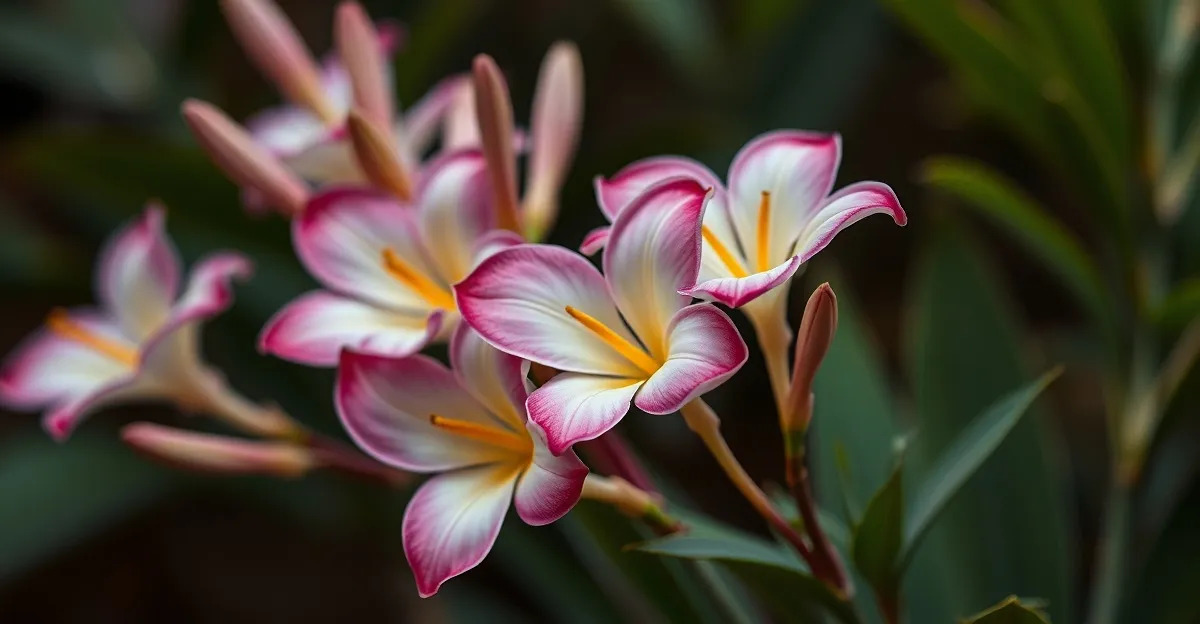
To walk through a Balinese village on a ceremony day is to experience flowers as something far beyond decoration. The garlands draped over stone temple gates, the offerings piled high with petals of precise colours and types, the women moving through temple courtyards with flowers threaded into their hair — this is a living visual language thousands of years in development, and tuberose is one of its essential words.
Tuberose — "sedap malam" in Indonesian, meaning night fragrance — has been part of Balinese ceremonial culture long enough to be considered a genuinely traditional flower. Unlike some flowers that have arrived in Bali only through recent trade and tourism, tuberose entered Balinese ceremonial life centuries ago through the same Indian cultural currents that shaped Balinese Hinduism itself.
The Balinese Hindu Context for Ceremonial Flowers
Understanding tuberose's place in Balinese ceremony requires some grounding in how Balinese Hinduism relates to flowers generally.
In Balinese Hindu cosmology, flowers are not merely beautiful objects — they are vehicles of devotion. The act of creating and placing offerings is called "ngayah" — a form of devotional service that builds spiritual merit and maintains harmony between the human world, the divine world, and the ancestral world. Flowers in offerings are chosen with intention: specific colours, specific types, specific arrangements correspond to different deities, different purposes, and different spiritual objectives.
The olfactory dimension of flower offerings is equally important. Fragrance is understood as a form of divine communication — the idea that beautiful fragrance rises and is received by the divine, like incense smoke carrying prayers upward. Tuberose, with the most powerful and persistent fragrance of any Balinese flower, occupies an important position in this aromatic devotional vocabulary.
Tuberose in Daily Offerings (Canang Sari)
The canang sari — the small, square palm-leaf offering tray that appears on every Balinese threshold, sidewalk, and shrine each morning — is the foundation of Balinese Hindu daily devotional practice. These offerings are prepared fresh daily by Balinese women and girls as an act of gratitude, devotion, and spiritual maintenance.
Traditional canang sari include flowers in each of the four cardinal directions: white for east (associated with Iswara, a manifestation of Siwa), red for south (Brahma), yellow for west (Mahadewa), and blue or black for north (Wisnu). A fifth type, sometimes multicoloured or pink, goes in the centre.
Tuberose, as a white flower with extraordinary fragrance, is used as the white flower component in many canang sari. Its fragrance carries additional devotional significance beyond its colour symbolism — a canang sari with tuberose creates a small fragrant prayer that rises from every corner of every Balinese compound every morning.
Tuberose in Major Ceremonies
Odalan (Temple Festivals)
Every Balinese temple has its own anniversary festival — the odalan — which occurs every 210 days on the Balinese Pawukon calendar. Odalan are elaborate, multi-day affairs involving communal preparation, the creation of elaborate offerings, performances of sacred dance and music, and the blessing of the temple and its congregation.
Tuberose garlands are a signature element of odalan decoration. Long strings of tuberose florets, woven together with other flowers, are draped over temple gates, around the bases of statues, and worn by women participating in the ceremony procession. The fragrance fills the temple compound and carries across the surrounding neighbourhood — a sensory signal that ceremony is underway.
Piodalan (Family Temple Ceremonies)
Every Balinese family has a private family temple (merajan or sanggah) within their compound, and this temple has its own piodalan ceremony, following the same 210-day Pawukon calendar. Piodalan are smaller in scale than village or regional temple odalan, but no less important in their devotional significance.
Tuberose appears in piodalan offerings and decorations in the same way as in public temple ceremonies — as garlands, as individual flowers in offerings, and woven into the elaborate floral arrangements that decorate the family shrine during the ceremony period.
Ngaben (Cremation Ceremony)
Ngaben — the Balinese Hindu cremation ceremony — is perhaps the most elaborate and visually extraordinary ceremony in any religious tradition anywhere. The ceremony marks the release of the soul from the body and its liberation toward the next stage of its journey. It is celebrated with music, procession, and extraordinary visual beauty.
Flowers throughout the ngaben ceremony are both decorative and spiritually purposeful. The cremation tower (bade) is adorned with flowers. Offerings placed around the body are carefully composed with appropriate flowers. The entire ceremony space is transformed by floral decoration.
White flowers — and tuberose specifically — appear throughout the ngaben decorative vocabulary. The purity associations of white align with the ceremony's purpose of spiritual liberation and cleansing. The fragrance of tuberose in this context is understood as supporting the spiritual process — creating an environment that assists the soul's transition.
Metatah (Tooth Filing)
Metatah — the tooth filing ceremony that marks a young Balinese person's transition to adulthood — is one of the most important rites of passage in Balinese Hindu life. The ceremony symbolically removes the points of the canine teeth, representing the six negative human qualities (Sad Ripu: desire, greed, anger, intoxication, confusion, jealousy). The ceremony space is elaborately decorated.
Tuberose garlands and flower arrangements are standard elements of metatah decoration, creating a ceremonially appropriate atmosphere for this significant rite.
Tuberose in Balinese Hair and Personal Adornment
In Balinese ceremonial culture, women and girls adorn their hair with flowers for ceremony participation. The specific flowers and arrangements vary by ceremony type, the wearer's role, and regional tradition, but tuberose is among the flowers used in these adornments.
Tuberose florets woven into a hair arrangement add both beauty and fragrance that moves with the wearer — a personal offering that envelops the wearer in sacred scent throughout the ceremony. For the most elaborate ceremonies, the floral hairpieces are works of art in themselves, requiring skilled construction.
The Growing and Supply of Ceremony Tuberose
The demand for tuberose in Balinese ceremonies is substantial and consistent — the 210-day Pawukon calendar ensures that there are always ceremonies happening somewhere in Bali at any given time. This creates a reliable commercial market for tuberose that supports local and Javanese growers.
The traditional flower markets of Bali — particularly the Badung central market in Denpasar — are the hub of this ceremonial flower economy. Tuberose arrives primarily from Java (Malang and Pasuruan growing areas) and is sold in bulk bundles at prices far lower than the premium arrangements of heyflower.co. The ceremonial market for tuberose is a wholesale, high-volume, price-sensitive market that coexists with the premium gifting and event market we serve.
For those curious about how other flowers navigate the same cultural landscape, our article on lotus meaning and symbolism explores another profoundly ceremonial Balinese bloom.

The team
your florists
weekly subscription · Bali
We write about flowers because we love them. We deliver them because someone should — properly, weekly, across Bali.
— heyflowerPay once for 3, 6, or 12 months, no auto-renewal.
Tuberose for Expatriate and Tourism Ceremonial Contexts
A significant dimension of tuberose in Bali today is its role in the ceremonial and celebratory life of the island's international community. Destination weddings, wellness retreats, yoga ceremonies, and cultural experience events — all of which incorporate flowers as key elements — often use tuberose both for its genuine Balinese ceremonial resonance and for its extraordinary sensory impact.
For an international couple getting married in Bali, including tuberose in the ceremony florals creates an authentic connection to Balinese ceremonial tradition. For a yoga retreat incorporating flower ceremony elements, tuberose as the primary flower connects participants to something deeply local rather than generically tropical.
This is part of what heyflower.co does best: helping our clients understand the cultural significance of their flower choices and make decisions that feel both beautiful and meaningfully connected to Bali's living traditions.
Frequently Asked Questions
Is it appropriate for non-Balinese people to use tuberose in ceremonies in Bali?
Yes, with respect and understanding. Tuberose is not an exclusively restricted ceremonial flower — its use in decoration and personal adornment by visitors and residents from outside the Balinese Hindu tradition is generally welcomed as a sign of appreciation and engagement with local culture.
Where can I buy ceremonial tuberose in Bali?
The traditional flower markets — particularly the Badung central market in Denpasar, and local village markets in areas with active ceremony calendars — sell tuberose in bulk for ceremonial use. For premium, fresh-cut tuberose for events and gifting, heyflower.co is a reliable source.
How do I incorporate tuberose into a non-Balinese ceremony in Bali?
Consider using tuberose in ways that honour its ceremonial heritage — as garlands, as altar arrangements, as components of offerings if you're incorporating offering-making into your event. Working with a Balinese ceremony coordinator will help you incorporate tuberose in culturally respectful ways.
Do Balinese ceremonies happen every day?
The Balinese Pawukon calendar has 210 days, and there are ceremonies of varying scale essentially every day somewhere in Bali — from individual family temple ceremonies to major community events. Major shared ceremonial dates (Galungan, Kuningan, Nyepi, and odalan dates for large temples) see island-wide activity.
Can I visit a Balinese ceremony as a visitor?
Many Balinese ceremonies are open to respectful visitors, though there are important protocols around dress (full temple dress including a sarong and sash) and behaviour. Some ceremonies, particularly private family ceremonies, require an invitation. When in doubt, ask before entering a ceremony space.
Flowers That Connect You to Bali's Living Traditions
At heyflower.co, we source and deliver tuberose that honours both its extraordinary fragrance and its deep ceremonial significance in Bali. Our subscription service brings fresh, beautifully chosen flowers to your home or venue week after week — connecting your daily life in Bali to the island's living floral traditions.
More on Tuberose