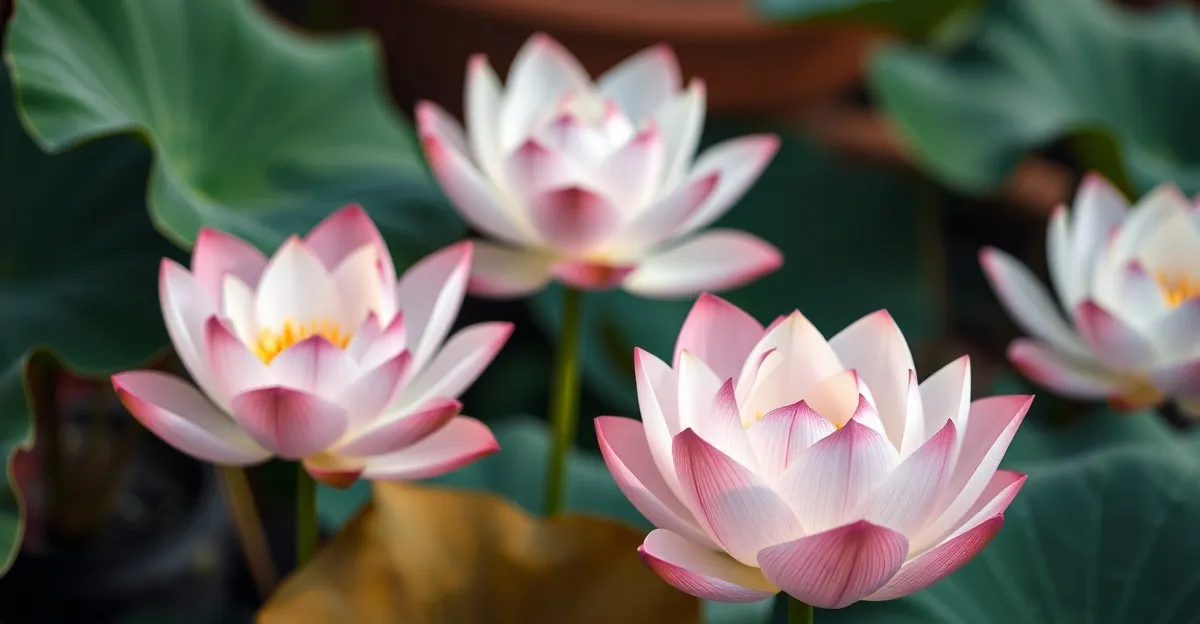
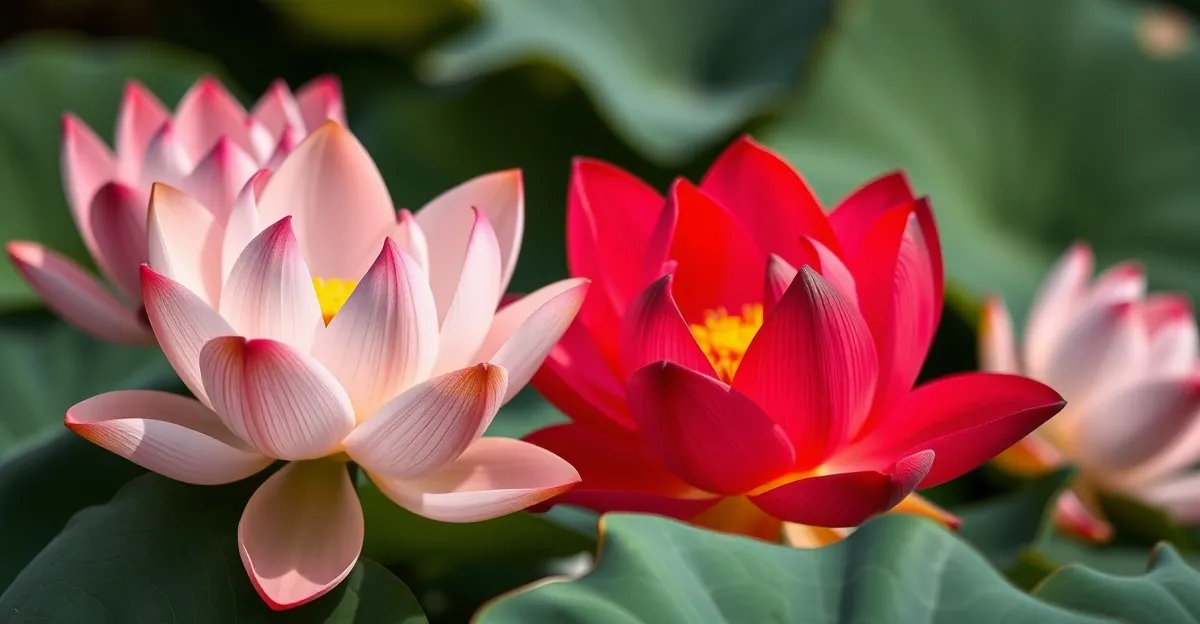
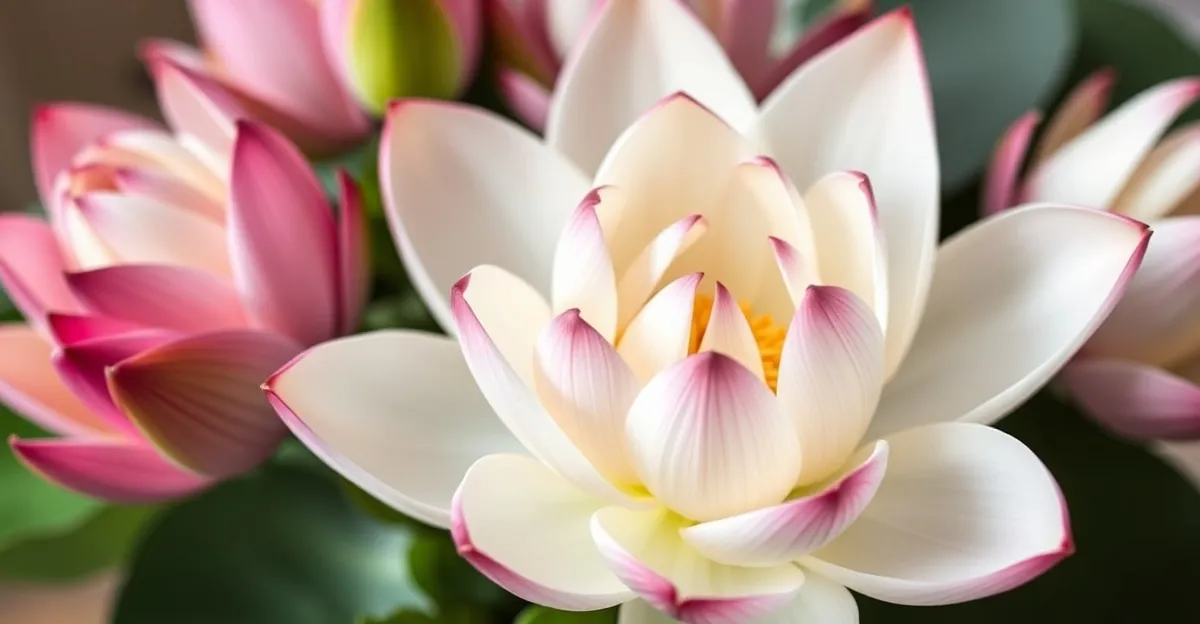
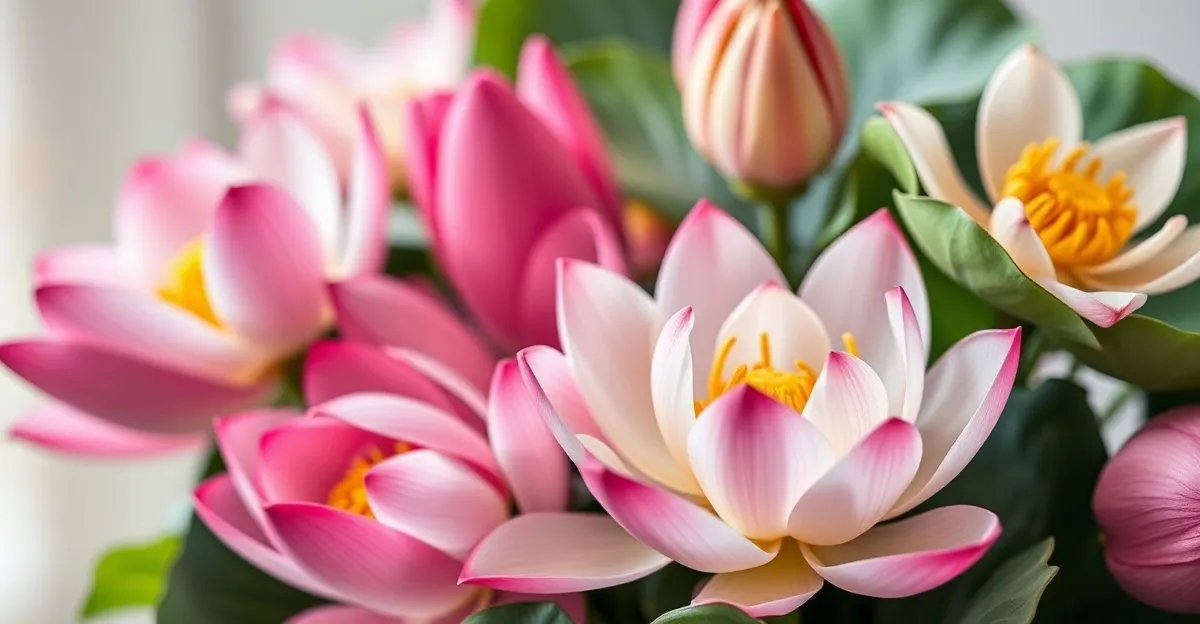
The History and Origin of the Lotus
Explore the ancient history of the lotus flower — from Egyptian sacred pools to Balinese temple carvings — and why it remains so meaningful in Bali today.
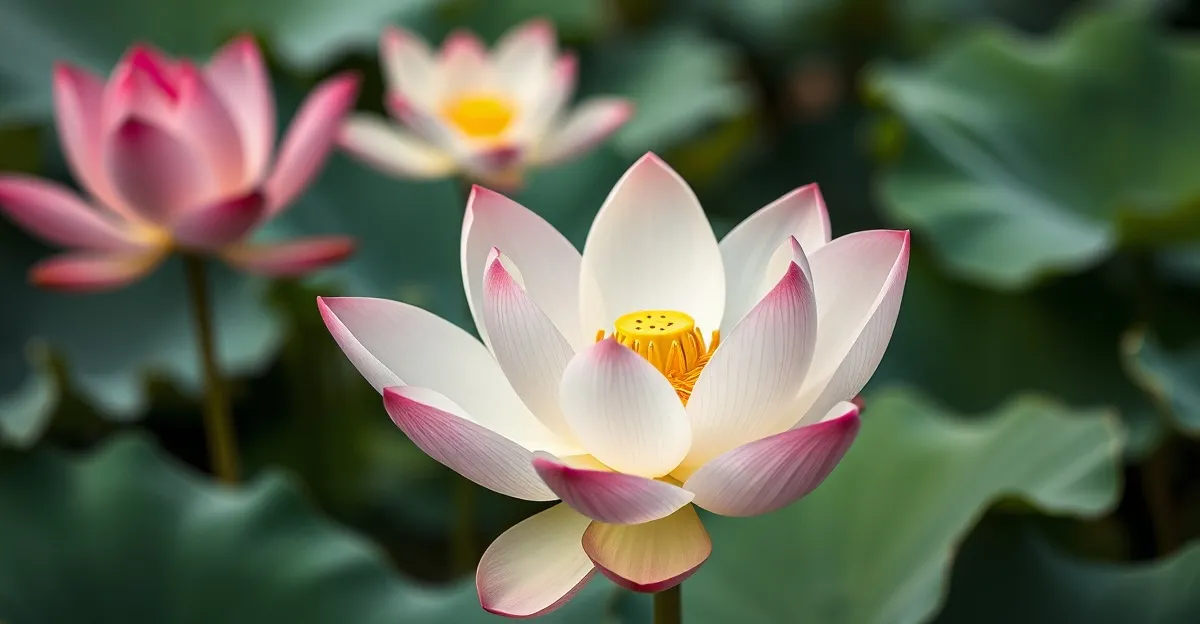
Few flowers have accumulated as much meaning across as many civilisations as the lotus. In Bali, it is everywhere — carved into stone gates, woven into daily offerings, floating in temple ponds, and depicted in the island's rich textile tradition. But the flower's story stretches back thousands of years before Hinduism arrived in the archipelago, reaching into ancient Egypt, early Buddhism, and the earliest agricultural settlements along the Nile and the Ganges.
Understanding where the lotus comes from helps explain why it feels so different from other flowers — why it carries weight rather than lightness, history rather than mere decoration.
Ancient Egypt: the blue lotus and the white
The story of the lotus in human culture begins, as far as written record goes, in ancient Egypt. The Egyptians cultivated two lotus species — Nymphaea caerulea (the blue lotus) and Nymphaea lotus (the white Egyptian lotus) — along the Nile delta from at least 3000 BCE.
For the Egyptians, the lotus was a cosmological symbol. Each morning, the flower opened above the water's surface as the sun rose, and each night it closed and descended below the water. The Egyptians interpreted this cycle as an enactment of creation itself: Ra, the sun god, was sometimes depicted as a child emerging from a lotus at the moment of the world's first dawn.
The blue lotus also appears in Egyptian records as a ritual plant with psychoactive properties — consumed in wine or infused in oil and applied to the skin during religious ceremonies. Modern analysis has confirmed that Nymphaea caerulea contains aporphine alkaloids that produce mild sedative and euphoric effects. Whatever the mechanism, the lotus occupied a position at the boundary between ordinary life and altered or divine states.
India: the padma and Hindu cosmology
When Hinduism formalised its iconography — roughly 1500–500 BCE in the Vedic period, with elaboration continuing through the Puranic texts — the lotus (padma in Sanskrit) became central to how the gods were represented.
Brahma, the creator, is depicted seated on a lotus that grows from the navel of the reclining Vishnu. Lakshmi, goddess of prosperity and beauty, holds two lotus blooms. Saraswati, goddess of knowledge and arts, sits on white lotus. The lotus throne (padmasana) became the standard pose for depicting spiritual elevation.
The symbolism crystallised around a simple observation: the lotus grows in muddy, stagnant water but emerges pure and untouched above the surface. This physical fact became a metaphor for the soul's capacity to achieve purity regardless of the conditions it grows through — one of the most persistent images in Indian philosophical thought.
The lotus mudra (hand gesture) in yoga still reflects this symbolism today: hands cupped like an opening bloom, representing the open heart turning toward light.
Buddhism and the spread eastward
When Buddhism emerged from the same north Indian cultural milieu in the 5th century BCE, the lotus was already deeply embedded in the symbolic language. The Buddha's birth story describes lotus flowers blooming beneath his feet as he took his first steps. The Blue Lotus Sutra and White Lotus Sutra are among the most important texts in Mahayana Buddhism.
The lotus spread eastward as Buddhism moved through Southeast Asia. In Cambodia, the Angkor temples are dense with lotus imagery. In Thailand, lotus buds are prepared as offerings at temples daily. In Java and Bali, as Hindu-Buddhist culture arrived — likely around the 1st to 5th centuries CE, carried by Indian traders and the Indianisation of the Majapahit empire — the lotus arrived with it.
Bali's position as the last significant stronghold of Hindu-Balinese culture in the archipelago means that lotus symbolism here has been preserved and elaborated across more than a millennium, while elsewhere in Indonesia it was largely displaced by Islam from the 13th century onward.
The lotus in Balinese Hindu culture
In Balinese Hinduism (Agama Hindu Dharma), the lotus retains all of its Indian origins but has also been localised and woven into the specific ritual fabric of island life. The eight-petalled lotus (padma astadala) represents the eight sacred directions and appears in temple architecture across the island — from Pura Besakih on the slopes of Gunung Agung to the smallest family temple (sanggah) in a home compound.
The padmasana — the high stone throne found in temple courtyards — is directly named after the lotus. It is the seat prepared for the supreme deity during ceremonies. When you see one in a temple compound, often as the highest structure in the courtyard, you are looking at an architectural lotus throne.
Lotus flowers are part of daily canang sari offerings, used in purification ceremonies, and central to the elaborate offerings prepared for major festivals like Galungan and Kuningan. For odalan temple anniversaries and floral offerings, lotus plays a recurring role in the ceremonial calendar.
Where Bali's lotus comes from
Most of the lotus available to Bali's florists is grown locally — the Tabanan regency, with its flat rice paddies and irrigation channels, supports lotus cultivation alongside rice farming. Gianyar and parts of Klungkung also have lotus ponds. You will see them floating in the decorative ponds outside hotels in Nusa Dua and Sanur, in the kolam (ritual pools) at larger temples, and in the traditional markets of Denpasar.
White and pink lotus are the most common varieties. The rarer yellow and purple varieties require more specific growing conditions and are less consistently available. Because the flower is local, it is also relatively affordable — a fact that makes it accessible for everything from daily offerings to elaborate wedding florals.
The humidity and warmth of Bali actually suits lotus well. The plant evolved in tropical and subtropical waterways across South and Southeast Asia, and the island's climate — temperatures between 25°C and 32°C year-round, high humidity — is essentially ideal for it.
The lotus in contemporary Bali
Today the lotus occupies an interesting position in Bali's flower culture. It is simultaneously a sacred symbol with ancient roots and a contemporary design element used in hotels, spas, and boutique flower arrangements throughout the island.
The wellness industry that has grown so substantially in Ubud and Canggu has adopted lotus imagery extensively — not always with deep knowledge of the symbolism, but with a genuine sensitivity to its associations with mindfulness, purity, and transformation. You find lotus in meditation spaces, yoga studios, retreat branding, and the kind of villa florals that appear on Instagram daily.
This dual existence — sacred and aesthetic — is not in tension in the way it might be in other cultures. Bali has long accommodated beauty and devotion in the same space. The flower floats above the water regardless of who is watching.
For context on flower styling ideas for a Bali wellness spa, lotus remains one of the most requested statement blooms in the island's growing retreat and spa sector.

The team
your florists
weekly subscription · Bali
We write about flowers because we love them. We deliver them because someone should — properly, weekly, across Bali.
— heyflowerPay once for 3, 6, or 12 months, no auto-renewal.
FAQ
Where does the name "lotus" come from? The English word "lotus" comes from the Greek lōtos, which was used to describe several plants including Nymphaea species. The Greek name itself may have Semitic roots, possibly from Hebrew or Phoenician. The Sanskrit padma is a separate word with deep roots in the Vedic tradition.
Are the lotus and the water lily the same plant? They are related but distinct. True lotus belongs to the genus Nelumbo, while water lilies belong to Nymphaea. The plants look similar and share similar habitats, and historically many cultures used the names interchangeably. True lotus (Nelumbo nucifera), the species most common in Balinese Hindu symbolism, is the pink or white bloom you see in Bali's temple ponds.
Why does the lotus close at night? Lotus blooms are thermonastic — they open and close in response to temperature changes rather than light alone. As temperatures drop at night, the flower closes; as warmth returns in the morning, it opens. This cycle, which ancient Egyptians and Indians both observed, gave rise to the flower's association with daily renewal and resurrection.
Has the lotus always had spiritual significance, or was it originally a food source? Both, simultaneously. Lotus rhizomes, seeds, and young leaves are edible and were important food sources in ancient Egypt, India, and China. Spiritual significance and practical utility developed in parallel, which is common for plants that were central to early agricultural communities. Today lotus seeds and rhizomes (akar teratai) are still eaten in Chinese and Vietnamese cuisine.
Is the lotus Bali's national or state flower? Indonesia's national flower is the moon orchid (Phalaenopsis amabilis), the jasmine (Jasminum sambac), and the Rafflesia (Rafflesia arnoldii) — three flowers designated to represent different aspects of Indonesian identity. The lotus is not officially designated but holds the most significant ceremonial status in Bali specifically.
The lotus's story — from ancient Egypt to Bali's temple pools to the wellness studios of Canggu — is one of the longest unbroken relationships between a flower and human meaning in the world. That depth is visible in every bloom that opens above the water. For context on another flower with a similarly rich cross-cultural history, the piece on the history and origin of the chrysanthemum explores how a flower from very different origins achieved equally widespread ceremonial significance across Asia.
At heyflower.co, we source fresh lotus from local Balinese growers and deliver beautiful arrangements across the island. Every lotus bloom carries this extraordinary history. Explore our subscription plans for regular delivery of Bali's most sacred and beautiful flowers.
More on Lotus