Odalan temple anniversaries and floral offerings
Learn what odalan temple anniversary ceremonies involve, which flowers are used in the elaborate floral offerings, and how Bali's 6,000-plus temples keep this tradition alive.
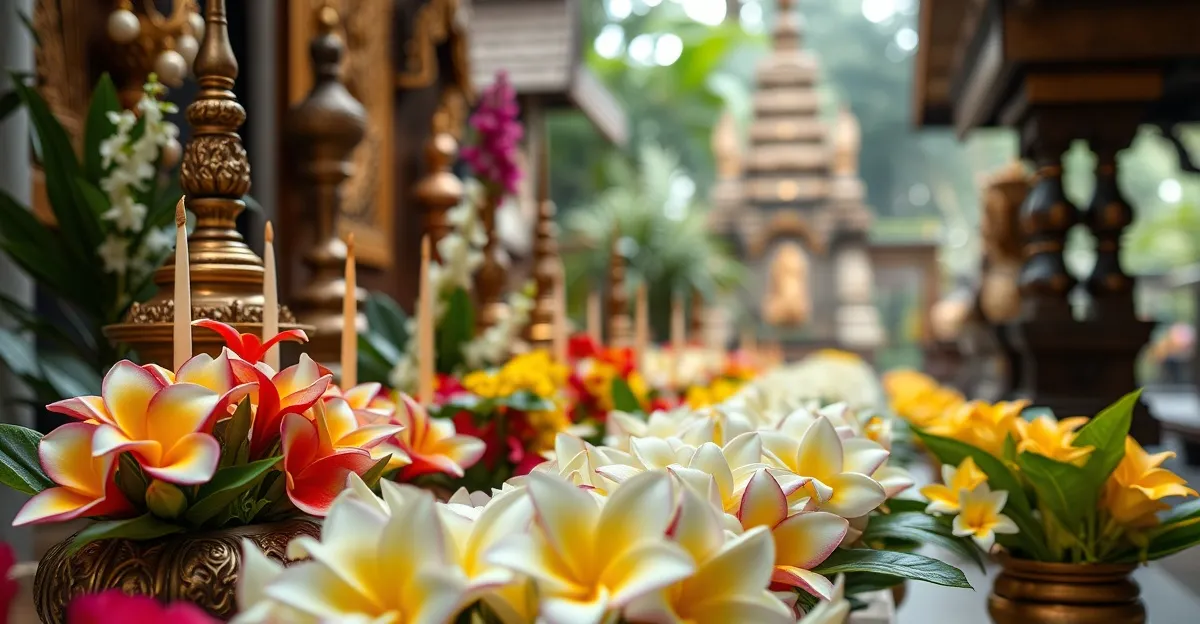
Every temple in Bali has its birthday. Not in the Gregorian sense, but in the Balinese Pawukon calendar — every 210 days, on the anniversary of its consecration, each of Bali's estimated 6,000 temples comes alive with ceremony. These odalan are staggered throughout the year, meaning that somewhere on the island, every single day, at least one temple is holding its anniversary celebration.
For a flower lover, this is remarkable: Bali's odalan culture represents an almost uninterrupted demand for ceremonial flowers, rotating across the island, day after day, 365 days a year.
What odalan means
The word odalan derives from the Balinese root "edal" — to leave one's place, to be in the world. An odalan is the time when a temple's gods and ancestral spirits are believed to descend and be present in the temple, available for direct prayer and communication.
The ceremony honours the temple's founding and reaffirms the spiritual contract between the community (krama pura) and the divine forces the temple serves. Odalan can be simple half-day affairs for small household shrines or multi-day events with full gamelan orchestras, dance performances, and elaborate overnight prayer vigils for the major state temples.
Every household in the temple's community (typically a banjar) is expected to contribute offerings — including flowers — and participate.
The role of flowers in odalan
Flowers are not peripheral to odalan — they are architectural elements. The offering towers (banten tegeh) that women carry on their heads to temple during odalan incorporate living and cut flowers into their structure. Without flowers, the physical appearance of the offerings is incomplete, and a visually sparse offering is considered spiritually inadequate.
The main flower categories for odalan offerings:
Jepun (frangipani): White frangipani forms the crown of the most sacred offerings. At major odalan, whole branches rather than individual flowers may be used at the padmasana shrine. Pink and yellow frangipani varieties appear in more decorative contexts.
Gumitir (marigold): Yellow-orange marigold strings are ubiquitous at any odalan. They frame shrine entrances, hang from bamboo structures, and appear in the base layers of all offering types. Their abundance means they're often the first flower you see from a distance when a temple is in ceremony.
Cempaka (Magnolia champaca): The golden-yellow cempaka flower, found on tall trees throughout Bali, has an intensely sweet scent. At odalan, cempaka flowers are placed in the highest offerings and around sacred statues. You can smell a well-attended odalan's cempaka from fifty metres away.
Pucuk merah (red hibiscus): Red hibiscus is mandatory in directional offerings for Brahma. At odalan, it appears in the southern-facing elements of offering arrays and in the red flower groupings on offering towers.
Chrysanthemum: Both white and yellow chrysanthemum are practical workhorses of odalan decoration — they hold up reasonably well in Bali's heat for the multi-day ceremonies, whereas more delicate flowers may wilt before the ceremony concludes.
How temple decoration works during odalan
The physical temple decoration for odalan is a collective community project. Members of the banjar begin days in advance:
- Penjor poles: Bamboo poles are erected at the temple entrance and along the approach road, decorated with coconut frond weavings, marigold strings, and fresh flower bundles.
- Shrine decoration: The innermost shrines receive direct flower placement by the temple's priest (pemangku), who follows precise rules about what goes where.
- Gateway decoration: The candi bentar (split gate) entrance is framed with fresh flower garlands — often marigold, frangipani, and young coconut frond weavings.
- Offering platforms (bale): These become flower-covered surfaces during ceremony, as each family deposits their banten for blessing.
For the larger odalan at important temples — Pura Luhur Batukaru in the Tabanan highlands, Pura Kehen in Bangli, the sea temples at Uluwatu and Rambut Siwi — the scale of floral decoration requires weeks of preparation and involves the entire community.
Piodalan and private temple anniversaries
As well as the public odalan at village and state temples, every family compound in Bali has its own private family temple (sanggah or merajan), which also has an odalan. These private odalan are less elaborate but equally important to the family.
Private odalan typically involve:
- Preparing elaborate banten (offerings) for two to three days in advance
- Inviting a pemangku to lead prayers
- Presenting flowers on all household shrines
- Cooking ceremonial foods
The flowers for a private odalan might be purchased from the morning market or, in rural areas, gathered from the compound's own garden. A typical family might spend Rp 150,000–400,000 on flowers and offering materials for their private odalan, depending on compound size and the family's circumstances.
Galungan and Kuningan: flowers in 10-day Balinese celebrations provides additional context on how major festivals intersect with the individual temple anniversary cycle.

The team
your florists
weekly subscription · Bali
We write about flowers because we love them. We deliver them because someone should — properly, weekly, across Bali.
— heyflowerPay once for 3, 6, or 12 months, no auto-renewal.
The economic side of odalan flowers
With 6,000-plus temples and odalan every 210 days, the math means an average of about 30 odalan ceremonies happening somewhere in Bali on any given day. Each of those ceremonies requires flowers. This creates a remarkably steady baseline demand that underlies the entire Balinese flower economy.
The areas that supply most of Bali's ceremonial flowers are the cooler highland regions: the Bedugul plateau in Tabanan regency (particularly around Candikuning and Pancasari villages), and the upland areas near Kintamani. These areas supply marigold, chrysanthemum, roses, and seasonal blooms to the lowland markets.
For florists and flower subscription services operating in Bali, understanding the odalan cycle helps with planning. A florist who knows which major temples are celebrating that month can anticipate spikes in demand and price.
FAQ
How do Balinese people know when their temple's odalan is? The odalan date is fixed on the 210-day Pawukon calendar from the original temple consecration date. It's passed down through the temple's records and community memory. Each banjar maintains a calendar of its temples' odalan dates, and reminders are typically circulated via community messaging apps a week or two in advance.
Can I visit a temple during odalan? Yes — the outer courtyard of most temples is accessible to respectfully dressed visitors during odalan. Wear a sarong and sash. Some inner areas require devotees only. During large odalan, the atmosphere is welcoming and the visual spectacle of the flower-covered offerings is extraordinary.
What is a banten tegeh and why are flowers important to it? A banten tegeh (literally "tall offering") is a tower of fruits, cakes, and decorative elements that women carry on their heads to temple. Fresh flowers are incorporated at multiple levels, particularly at the crown. The beauty and care of the banten reflects the devotion of the family who made it.
How long does an odalan last? Small private odalan might last a few hours. Mid-sized village temple odalan run for one to two days. Major state temple odalan can last three, five, or even eleven days for the most important temples. The longer the ceremony, the more flowers are required — and replenished daily.
Do the flowers have to be fresh for each day of a multi-day odalan? Yes — fresh flowers are required for each day's offerings. Wilted flowers are removed and replaced each morning. For multi-day odalan at important temples, this means significant ongoing flower procurement throughout the ceremony period.
Ready to bring fresh flowers to your Bali home or event? Explore our weekly flower subscription and get handpicked blooms delivered to your door every week.



