Protea in Balinese ceremonies: traditional uses in Bali
Does protea have a place in Balinese Hindu ceremonies? An honest look at the traditional role of flowers in Bali's ritual life and where protea fits.
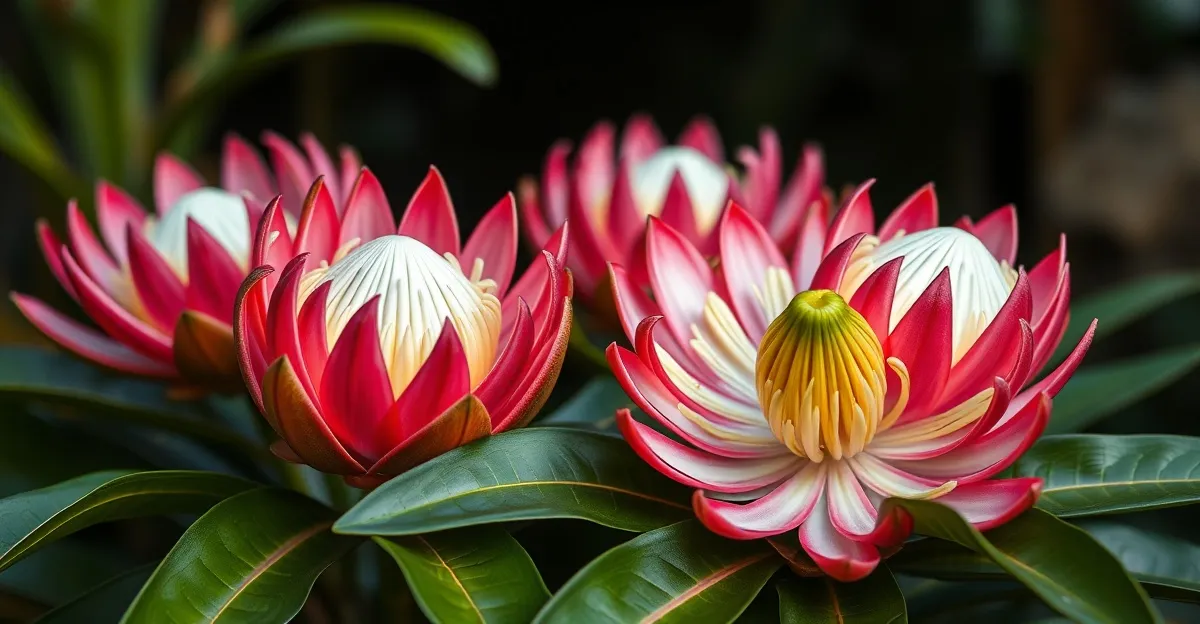
Flowers are not decoration in Balinese culture. They are communication — between humans and the divine, between the living and the ancestral, between the physical world and the spiritual one. Every canang sari (daily offering), every penjor pole during Galungan, every flower strewn at a temple gate carries specific intention. Understanding this context helps answer the question of where a foreign flower like protea does and doesn't fit.
How flowers function in Balinese Hindu ritual
The Balinese Hindu tradition weaves flowers into almost every aspect of spiritual life. The canang sari — the small woven palm-leaf tray filled with flowers and other offerings that Balinese women prepare and place multiple times daily at home shrines, temple gates, and business entrances — uses specific flowers for specific reasons.
Each colour carries meaning in this context: white flowers (often frangipani or jasmine) are associated with Iswara, the manifestation of God in the East. Red flowers relate to Brahma in the South. Yellow is associated with Mahadeva in the West, and blue or black (often represented by dark flowers or leaves) with Wisnu in the North. This directional, colour-coded relationship between flowers and the divine is deeply embedded.
The flowers used in offerings must be fragrant and beautiful — they represent the finest that nature offers, a sincere gift. Frangipani (jepun), jasmine (melati), marigold (jepun kuning), hibiscus (pucuk), and various tropical flowers native to Bali have established roles within this framework.
Where protea sits in this tradition
Protea has no traditional role in Balinese Hindu ceremony. It arrived in Bali as an imported premium cut flower in relatively recent decades — well after the ceremonial traditions were established — and has no accumulated meaning within the ritual vocabulary.
This is worth stating clearly without judgment: protea is not excluded from ceremonial use because it's considered inappropriate; it simply hasn't been incorporated into a tradition that predates its availability. Whether it might eventually find a ceremonial role is an open question.
Currently, protea functions in Bali primarily as a prestige decorative flower — for weddings (including ceremonies that incorporate Balinese Hindu elements), for hotel and villa decor, and for gifting within the cosmopolitan expat and international community. It doesn't appear in canang sari, it's not used in temple offerings, and it's not part of the flower vocabulary for ngaben (cremation ceremonies) or odalan (temple anniversary) celebrations.
For a deeper look at what happens during temple anniversary celebrations and the flowers involved, see our guide on Odalan temple anniversaries and floral offerings.
Protea in modern Bali ceremonial life
There is one growing area where protea does appear in ceremony-adjacent contexts in Bali: the international or multicultural wedding ceremony. Bali has become one of the world's most popular wedding destinations, attracting couples from Australia, Europe, the Americas, and Asia who want to marry on the island. Many of these weddings incorporate elements of Balinese aesthetics — the architecture of the venue, the ceremonial clothing, the kecak music and traditional dance — without being Balinese Hindu ceremonies in a formal sense.
In these hybrid celebratory contexts, protea appears frequently. Its combination with tropical foliage, frangipani, and other Bali-specific elements creates arrangements that feel both internationally luxurious and locally rooted. A wedding arch at a Jimbaran cliffside venue or an Ubud jungle resort might combine King Protea with temple frangipani, heliconia, and monstera leaves — a visual language that speaks to the international character of modern Bali.
The growing role of protea in Bali's luxury hospitality sector
While not ceremonial in the traditional sense, Bali's five-star hotels and private villa compounds have developed their own ritual of aesthetic presence — the daily flower arrangement in the lobby, the flowers placed on the pillow during room turndown, the arrangements at the entrance to a spa. These are small, daily acts of beauty that carry their own kind of meaning.
Protea has a significant role in this modern ceremonial landscape. Its longevity (10–14 days in good conditions), its impact, and its premium associations make it a preferred choice for high-end properties in Nusa Dua, Seminyak, and Uluwatu. In this context, the flower has developed a kind of place in Bali's aesthetic culture, even if it has no role in the island's spiritual traditions.
For spa contexts in particular, see how flowers are used in flower styling ideas for a Bali wellness spa — protea frequently appears in these settings as a statement bloom that communicates luxury and care.
Flower headdresses and personal ceremony
One area where modern Bali ceremony and flowers intersect is the tradition of flower headdresses — worn by Balinese women during temple ceremonies, and increasingly incorporated into wedding and photoshoot aesthetics. Traditional headdresses use frangipani, jasmine, and other local blooms.
Could protea find its way into ceremonial headdresses? In a strictly traditional context, no — the materials are prescribed. But in the more fluid space of Bali's modern multicultural wedding ceremonies, some brides have incorporated protea elements into custom headdresses. The scale and weight of King Protea make it impractical for most wearable applications, but smaller pincushion proteas and leucadendron have appeared in contemporary bridal hair pieces.

The team
your florists
weekly subscription · Bali
We write about flowers because we love them. We deliver them because someone should — properly, weekly, across Bali.
— heyflowerPay once for 3, 6, or 12 months, no auto-renewal.
Respect and cultural sensitivity
For anyone visiting or living in Bali who engages with Balinese Hindu ceremonies — as a guest, as a neighbour, or as a resident — the most important thing to understand is that the flower traditions in these contexts are deeply meaningful and not interchangeable.
Bringing protea to a Balinese ceremony as a decoration or gift without being asked to contribute may be well-intentioned but could land oddly if the context is a strictly traditional one. When in doubt, follow the lead of your Balinese host, ask what would be most welcome, or bring no flowers at all and simply bring your presence.
Outside of strictly traditional contexts — at multicultural weddings, at expat celebrations, or as part of Bali's thriving modern hospitality culture — protea is entirely appropriate and genuinely appreciated.
FAQ: Protea and Balinese ceremony
Can I use protea in a canang sari offering? While there's no formal prohibition, canang sari traditionally use flowers that carry established meaning and are easily available locally. Protea isn't used in this context, and inserting foreign flowers into the offering wouldn't be part of the tradition.
Are there any Balinese ceremonies that could incorporate protea? Modern multicultural weddings in Bali often incorporate protea. In strictly traditional Balinese Hindu ceremonies, protea doesn't have an established role.
What flowers are most important in Balinese ritual? Frangipani (in white and yellow varieties), jasmine, marigold, hibiscus, and various local tropical flowers are the most commonly used. Each has specific associations within the ritual colour and directional system of Balinese Hinduism.
Is it disrespectful to bring protea to a Balinese temple? Not inherently. Visitors to temples in Bali typically bring offerings prepared by a local — you wouldn't typically prepare your own offering flowers as a visitor. If you're bringing a personal gift to a Balinese host around a ceremony, asking about preferences is always the respectful approach.
Is protea available at local Bali markets? Protea is occasionally available at larger flower markets in Denpasar (particularly the Pasar Kemboja night flower market), but it's more reliably sourced through florists who maintain import supply chains. Local markets primarily stock locally grown and tropical flowers.
Ready to bring fresh flowers to your Bali home or event? Explore our weekly flower subscription and get handpicked blooms delivered to your door every week.
More on Protea