Can protea grow in Bali? A florist's perspective
A Bali florist's honest take on whether protea can be grown locally, why it's challenging, and where the island's protea supply actually comes from.
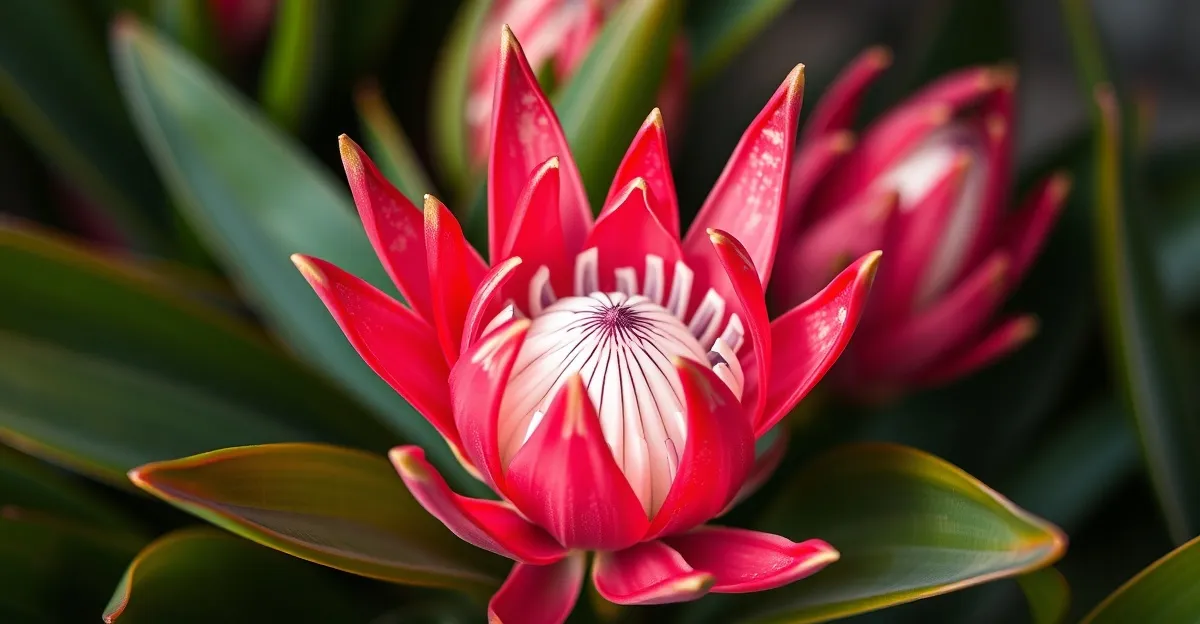
This question comes up fairly often — usually from customers who've just seen a protea arrangement and want to know if they could grow their own, or from people who are curious about where the flowers are actually coming from when they order in Bali. It's a good question, and the honest answer is: locally grown protea in Bali is extremely rare, and for good reason.
The climate mismatch
Protea is native to the fynbos region of South Africa's Western Cape, one of the world's six recognised plant kingdoms and home to extraordinary botanical diversity. The fynbos climate is Mediterranean — warm, dry summers; cool, wet winters; low-nutrient, acidic soil; and very little humidity.
Bali is, by every measure, the opposite. The island sits just 8 degrees south of the equator with a monsoon-driven climate: high humidity year-round (typically 70–85%), a wet season from around November to March that brings regular heavy rain, and a dry season from April to October that is still far more humid than anything the fynbos ever experiences.
Protea's deep discomfort with humidity is the core problem. The plants are prone to root rot and fungal disease in consistently wet or humid conditions. Their adapted root systems, which thrive in free-draining, nutrient-poor soils, struggle in the rich, moisture-retentive volcanic soils that make so much of Bali's agriculture flourish.
Why Bali's altitude doesn't fully solve the problem
Bali does have highland areas — the regions around Kintamani, the slopes of Gunung Agung and Gunung Batur, and the Bedugul highlands — that are cooler and experience different weather patterns from the coast. Bedugul, at around 1,400 metres above sea level, has a genuinely cooler, cloudier climate that supports flowers like roses, chrysanthemums, and even some temperate annuals.
Could protea survive in Bedugul? With significant effort and specific soil management, possibly — but it's not commercially viable. The humidity remains challenging even at altitude, the winters don't provide the cold, dry period that stimulates protea's growth cycle, and the soil would need substantial amendment to create the acidic, fast-draining conditions protea requires.
In comparison, marigolds and several other commonly-used flowers do thrive in Bali. You can read about what actually grows well in can marigold grow in Bali? A florist's perspective for a comparison with a flower that genuinely suits the island's growing conditions.
Where does Bali's protea come from?
The protea you find in Bali's florist shops and subscription arrangements is imported — predominantly from South Africa and Australia, with some supply from Thailand and Colombia. South Africa is the most significant source, as it's the global leader in commercial protea cultivation and export.
The import chain is roughly: grower in the Western Cape → export handling → air freight (often through Singapore or Kuala Lumpur as transit hubs) → Ngurah Rai International Airport → Bali distributor → florist.
This journey typically takes 3–5 days, and the cold-chain management during transit matters enormously. Well-handled protea arrives firm, fresh, and with most of its vase life intact. Poorly managed cold-chain results in flowers that look fine initially but decline rapidly within 2–3 days.
Reputable Bali florists with established supplier relationships typically receive well-handled stock. For event orders, it's worth asking specifically when your florist's next shipment arrives — for a wedding or significant occasion, you want flowers delivered close to the event date rather than those that have been sitting at a distributor for several days.
The cost implication of imported protea
Import logistics, cold-chain management, customs clearance, and the premium nature of protea as a flower combine to make it one of the more expensive options on a Bali florist's menu. Expect to pay significantly more per stem for protea compared to locally grown chrysanthemums, gerberas, or the abundant tropical flowers that Bali produces.
This cost is simply the reality of the flower's origin. That said, protea's exceptional vase life — typically 10–14 days with good care — means the cost-per-day calculation is more favourable than it might first appear. A protea arrangement at Rp 500,000 that lasts two weeks represents better value than a rose arrangement at Rp 350,000 that lasts five days.
Is there any local protea growing in Bali?
There are occasional hobbyist gardeners in the highlands who have experimented with growing protea, and there are some botanical gardens in Indonesia — particularly in the Java highlands — that maintain protea specimens. But there's no established commercial protea cultivation in Bali or wider Indonesia.
The lack of a suitable natural climate, combined with the complexity of soil management and the significant available alternatives in tropical floriculture, makes commercial investment in local protea growing an unlikely prospect for the foreseeable future.
For florists and customers in Bali, protea will remain an imported premium. That's not a criticism — it's simply the geography. And for arrangements where protea's presence is genuinely meaningful, the import cost is worth bearing.

The team
your florists
weekly subscription · Bali
We write about flowers because we love them. We deliver them because someone should — properly, weekly, across Bali.
— heyflowerPay once for 3, 6, or 12 months, no auto-renewal.
What local flowers offer a comparable look?
If protea's structural, bold quality is what appeals but the cost is a consideration, Bali does offer some locally grown alternatives that carry a similar architectural impact.
Bird of paradise (strelitzia) grows readily in tropical climates and has a similarly dramatic, statement-making quality. Heliconia — particularly the hanging red varieties — has scale and presence comparable to large protea arrangements. Anthurium in bold red or white has a waxy, structural quality that works in similar design contexts.
For mixed arrangements that achieve a "protea feeling" at lower cost, a florist might anchor the composition with these local flowers and use a single statement King Protea as the focal point, reducing the number of imported stems without losing the overall effect.
FAQ: Protea growing in Bali
Could I grow protea in pots in Bali? In an air-conditioned space with very well-draining, acidic potting mix, it's theoretically possible to keep a protea alive. But it would not thrive, and the constant battle against humidity and root rot would be discouraging for most gardeners.
Does Thailand grow protea commercially? Yes — some highland regions of Thailand (particularly Chiang Rai) do produce protea commercially, and some of Bali's supply comes from this source. Thai-grown protea is generally good quality.
Why is imported protea sometimes in better condition than local roses? This comes down to the handling and cold-chain quality for each supply type. Well-imported protea with consistent cold chain often arrives in better condition than locally grown roses handled with less care.
How can I tell if the protea I've received was well-handled in transit? Fresh-smelling flowers with tight, firm petals and no discolouration at the stem base are signs of good handling. Soft petals, a slightly sour smell, or blackening near the stems suggest temperature management issues during transit.
Are there any other South African flowers that face the same growing challenge in Bali? Yes — many fynbos plants face similar challenges. Leucadendron and pincushion protea (leucospermum) are in the same Proteaceae family and share similar growing requirements. Most are imported alongside protea.
Ready to bring fresh flowers to your Bali home or event? Explore our weekly flower subscription and get handpicked blooms delivered to your door every week.
More on Protea