The History and Origin of the Tulip
From Central Asian wildflowers to Ottoman palaces, Dutch mania, and modern Bali flower markets — the extraordinary history and origin of the tulip.
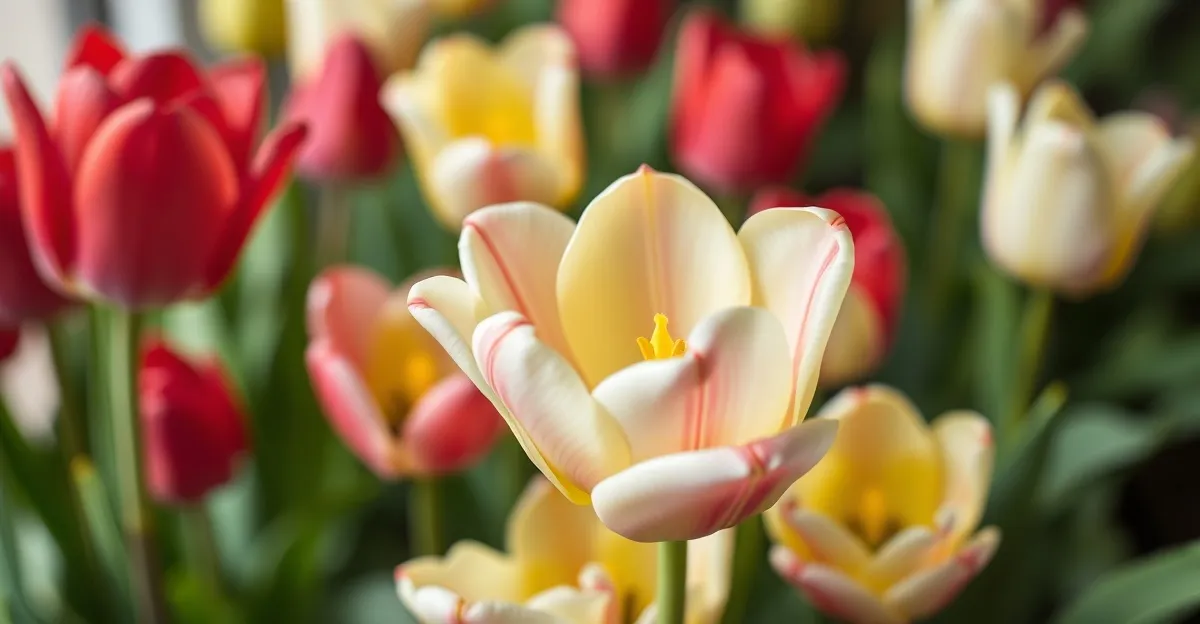
The tulip's story is one of the most extraordinary in the natural world. A wildflower from the mountains of Central Asia somehow became the subject of the world's first speculative financial bubble, the national symbol of a northern European nation, and eventually found its way to flower markets in Bali. The journey covers five centuries, multiple cultures, and involves everyone from Ottoman sultans to Amsterdam merchants to Javanese highland farmers.
Origins in the Wild: Central Asia and the Silk Road
The tulip genus (Tulipa) is native to a band of territory stretching from the Mediterranean coast east through Central Asia — through what is now Turkey, Iran, Afghanistan, and into Kazakhstan and Siberia. Wild tulip species still grow in these landscapes today, appearing each spring in alpine meadows, on rocky hillsides, and in the steppe grasslands at various elevations.
Botanists have identified somewhere between 75 and 150 true wild tulip species, though the exact number depends on how you define species boundaries. The ancestral homeland appears to be the Tian Shan mountain range in Central Asia — a region that also produced other significant bulb flowers including some wild onion relatives and various lily species.
The tulip's path westward followed the routes of human movement. Nomadic peoples of the Central Asian steppe used and noticed the flower across millennia. As the Silk Road trading network developed and empires rose and fell across the region, the tulip accompanied human culture toward the west.
The Ottoman Golden Age: Paradise in a Garden
The flower enters recorded history with unmistakable clarity in the Ottoman Empire. Turkish sultans and their courtiers were passionate gardeners, and the tulip — already growing wild in Anatolia — became the preeminent garden flower of Ottoman civilisation.
The word "tulip" in English comes from the Turkish tülbend or lâle, and there's a dispute about the etymology. One influential theory suggests that the name derives from the resemblance of the flower to a turban (tülbend in Turkish), and that early European visitors to Ottoman gardens misidentified the flower's name as the word for the headdress. Another theory maintains that the Turkish lâle was the original name and that tulip entered European languages through a different linguistic pathway. What's certain is that the flower was deeply embedded in Ottoman culture by the fifteenth century.
Suleiman the Magnificent and Imperial Gardens
During the reign of Suleiman the Magnificent (1520–1566), tulips were cultivated in the imperial gardens of the Topkapi Palace in Constantinople. Artisans produced tulip motifs on tiles, textiles, manuscripts, and ceramics across the Ottoman world. The distinctive elongated, pointed tulip form that appears in Islamic art of this period — different from the open cup of today's commercial varieties — was bred specifically in Ottoman gardens.
The tulip in Ottoman culture carried meanings of paradise, divine perfection, and the transient beauty of earthly life. In Persian and Turkish poetry, the flower was central: poets wrote of the tulip as representing both the burning heart of a devoted lover and the fleeting nature of beauty.
The Lale Devri: The Tulip Era
The high point of the Ottoman tulip obsession came during the early eighteenth century, during the reign of Ahmed III, a period historians call the Lale Devri — the Tulip Era. A genuine mania for rare tulip varieties swept through Ottoman elite culture. Thousands of varieties were cultivated and catalogued. Private tulip festivals were held at night in palace gardens, with illuminated lamps and caged nightingales creating theatrical settings for the flowers.
Special characteristics were prized: petals should be long, pointed, and dagger-like; colours should be pure and saturated; the flower's form perfectly symmetrical. This was nothing like the round, open tulip that the Dutch would later develop — it was an elongated, almost calligraphic form, bred for precision and refinement.
The Tulip Reaches Europe: A Sixteenth-Century Import
The tulip arrived in Western Europe in the mid-sixteenth century. The Flemish botanist Carolus Clusius is often credited with introducing tulip bulbs to the Netherlands in 1593, when he planted a collection brought from the Ottoman Empire in the newly established botanical garden at Leiden. He reportedly refused to sell or share his bulbs initially, which led to thefts from his garden — arguably the first instance of the tulip's capacity to drive people to irrational behaviour.
The flower rapidly became a sensation in Dutch and Flemish botanical and gardening circles. Its novelty, its vivid colours, and the extraordinary "broken" tulip varieties — flowers whose petals were streaked and flamed with contrasting colours — made it intensely desirable. (The cause of the "breaking" effect, which was considered a special feature, was later identified as a tulip-specific virus — botanical beauty produced by disease.)
Tulip Mania: The World's First Financial Bubble
Between 1634 and 1637, the Netherlands experienced one of the most remarkable economic events in history: Tulpenwoede, or Tulip Mania. Prices for rare tulip bulbs rose to extraordinary levels. A single bulb of the most prized variety, Semper Augustus, reportedly sold for the equivalent of a skilled craftsman's annual salary. Futures contracts were written for bulbs not yet planted. People traded their houses, their livestock, and their life savings for tulip bulbs they never physically handled.
In February 1637, the market collapsed. Buyers failed to appear at a routine auction, and within days, the entire tulip market fell to near-worthless levels. Many people were financially ruined. The episode has been studied by economists, historians, and behavioural scientists ever since as a case study in speculative market psychology.
The interesting botanical coda to this story: the virus that caused the "broken" tulip varieties that were most prized and most expensive was making the plants weaker with each generation. The most valuable tulips were slowly dying, and their extraordinary beauty was a symptom of their deterioration.
The Dutch and Global Tulip Production
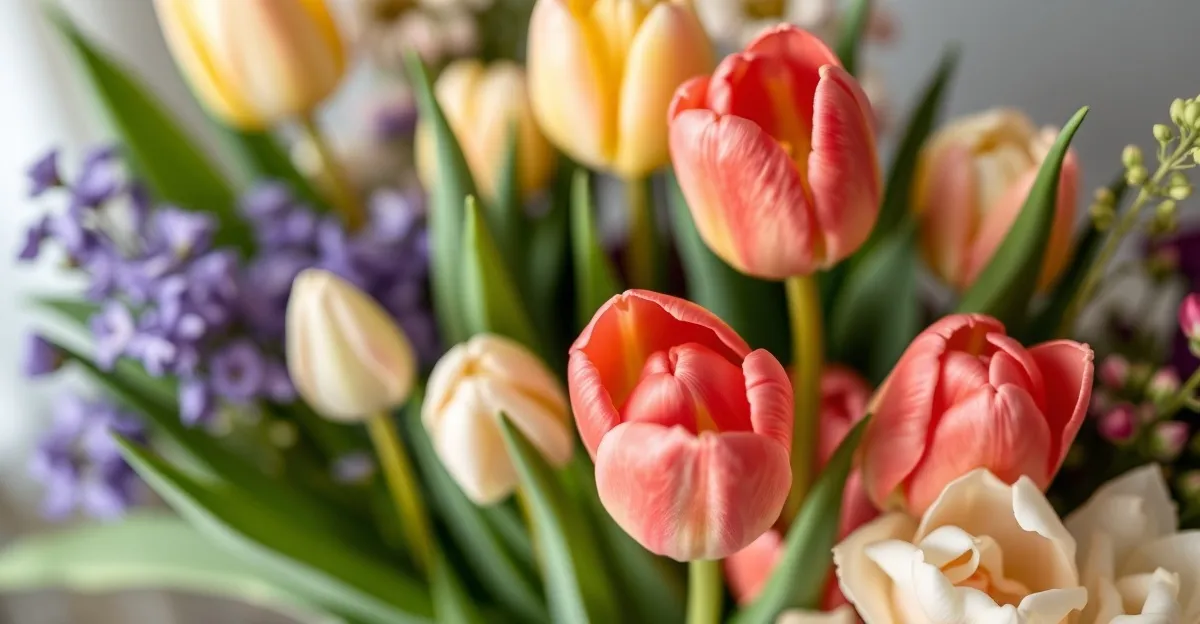
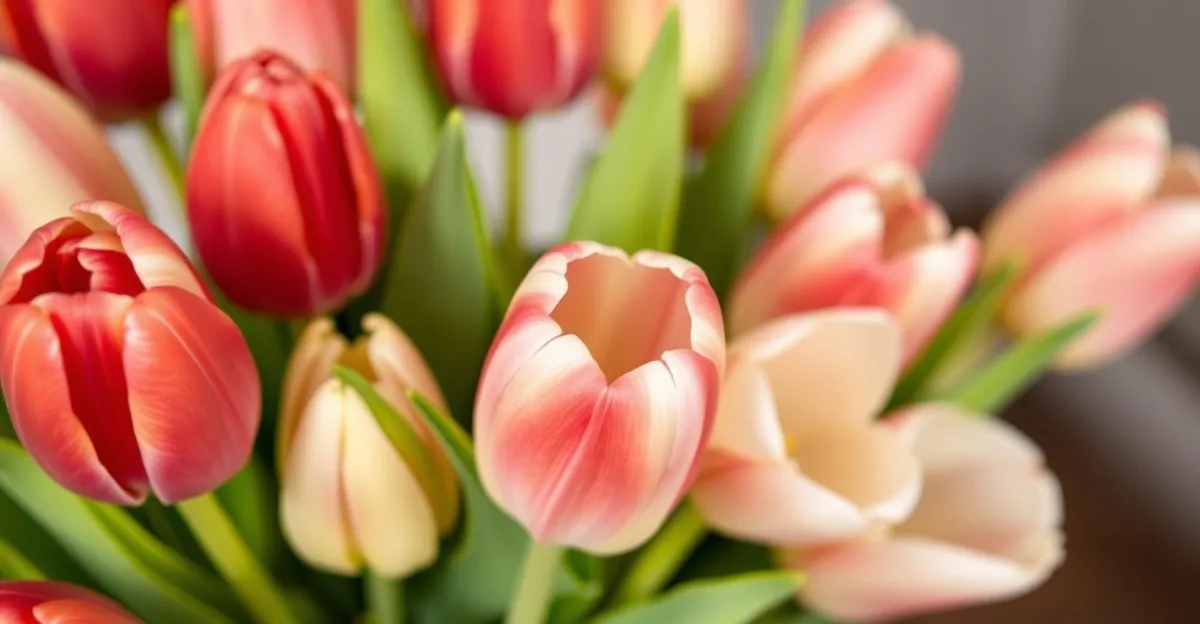
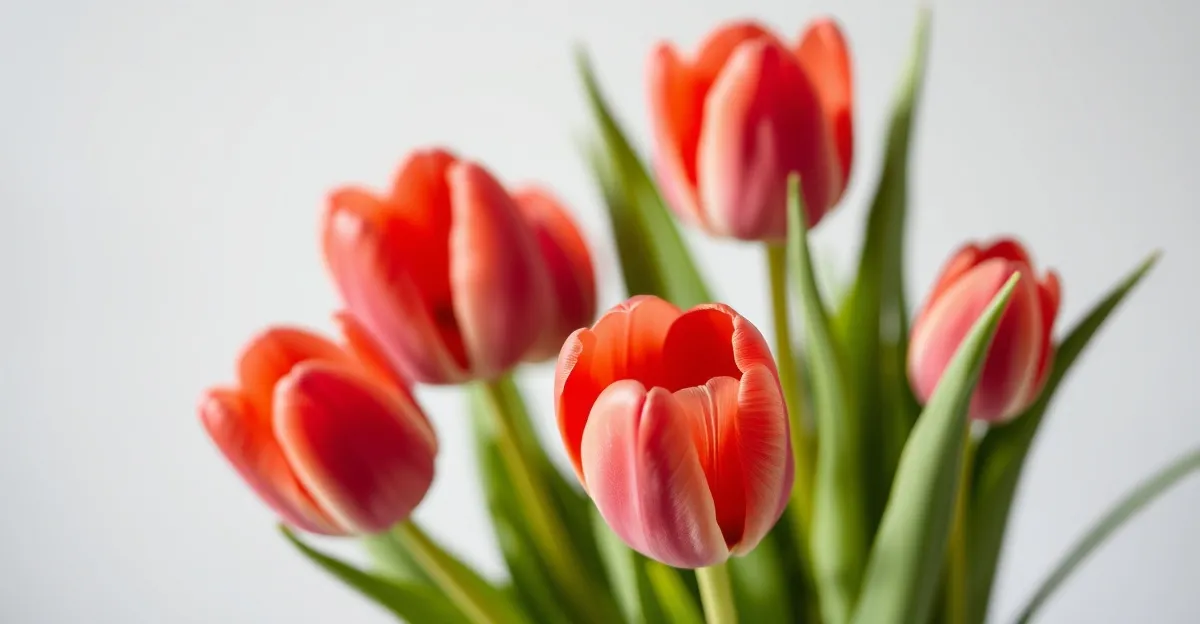
After Tulip Mania, the Netherlands retained its position as the world's dominant tulip culture. Dutch growers, particularly in the Bollenstreek (Bulb Region) between Haarlem and Leiden, developed commercial bulb cultivation on a massive scale. Through the nineteenth and twentieth centuries, systematic hybridisation produced the modern commercial tulip: a round-cupped, sturdy-stemmed flower in an enormous range of colours, designed for mass production, long transport, and good vase life.
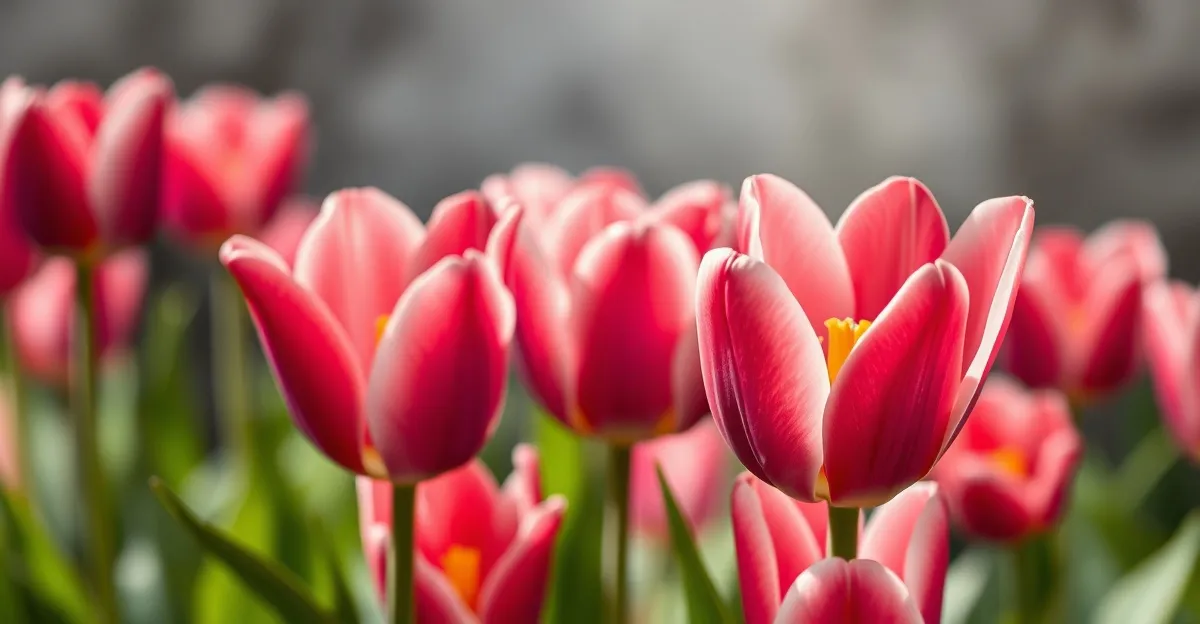
Today, the Netherlands produces approximately 3 billion tulip bulbs per year, the vast majority of which are exported worldwide. Dutch tulip fields — visible from the air as ribbons of colour in the flat Dutch landscape each spring — are one of the most famous horticultural spectacles on earth.

The team
your florists
weekly subscription · Bali
We write about flowers because we love them. We deliver them because someone should — properly, weekly, across Bali.
— heyflowerPay once for 3, 6, or 12 months, no auto-renewal.
Tulips in Bali: The End of a Long Journey
When a tulip arrives in a Canggu villa or a Seminyak hotel lobby today, it has usually come from one of two places: the highlands of Java, where cool-climate flower farms have been established at altitude to supply Indonesia's domestic market, or directly from the Netherlands by air freight.
Either way, the flower has completed a journey of many thousands of kilometres, following a trade route — if a very different one — that in some sense connects back to the same Central Asian origins that sent tulip bulbs westward five centuries ago.
For residents of and visitors to Bali who want fresh tulips delivered to their door, heyflower.co sources from both domestic highland farms and Dutch imports depending on quality and availability. We deliver to Canggu, Berawa, Pererenan, Seminyak, and Kerobokan every Monday.
Frequently Asked Questions
Where did the tulip originally come from?
Wild tulip species are native to Central Asia — primarily the Tian Shan mountain range and surrounding steppe and alpine environments spanning from the Mediterranean eastward through Turkey, Iran, and Afghanistan to Kazakhstan. The flower was cultivated in the Ottoman Empire for centuries before reaching Western Europe in the mid-sixteenth century.
Why is the tulip so associated with the Netherlands?
The Netherlands became the centre of commercial tulip cultivation after Dutch botanist Carolus Clusius introduced Ottoman tulip bulbs to the Leiden botanical garden in 1593. The subsequent commercial development of the Dutch bulb industry, including the famous (and cautionary) Tulip Mania of 1634–1637, cemented the flower's association with Dutch culture and commerce. Today the Netherlands produces approximately 3 billion tulip bulbs annually.
What caused the "broken" tulips that were most prized during Tulip Mania?
The dramatic flaming and streaking of colours in the most prized Tulip Mania varieties was caused by a mosaic virus called Tulip Breaking Virus. The virus disrupts the tulip's ability to produce uniform colour pigmentation, creating the dramatic striped and flamed patterns that were considered beautiful. Ironically, the virus weakened the plants, and the most valuable tulips were slowly declining. Modern commercial tulips are bred to be virus-free.
When were tulips first brought to Indonesia?
The exact date of the first tulip import to Indonesia isn't well-documented, but commercial tulip cultivation in Java's highlands developed primarily in the twentieth century, following the establishment of highland flower farms that serve the domestic Indonesian cut flower market. The Dutch colonial connection likely facilitated early introduction of tulip knowledge and material.
Why are some tulip varieties called "parrot" or "fringed"?
These are cultivar group names describing specific petal characteristics. Parrot tulips have dramatically ruffled, twisted, or fringed petals that create an extravagant, almost feathered appearance — the name comes from the resemblance to a parrot's feathers. Fringed tulips have delicately serrated petal edges that create a lace-like border effect. Both groups were developed through selective breeding and remain popular for their unusual beauty.
More on Tulip