How to Preserve a Tulip Bouquet After the Event
Want to keep your tulip bouquet as a lasting memory? Here are the best preservation methods for Bali's tropical climate, from drying to pressing to resin.
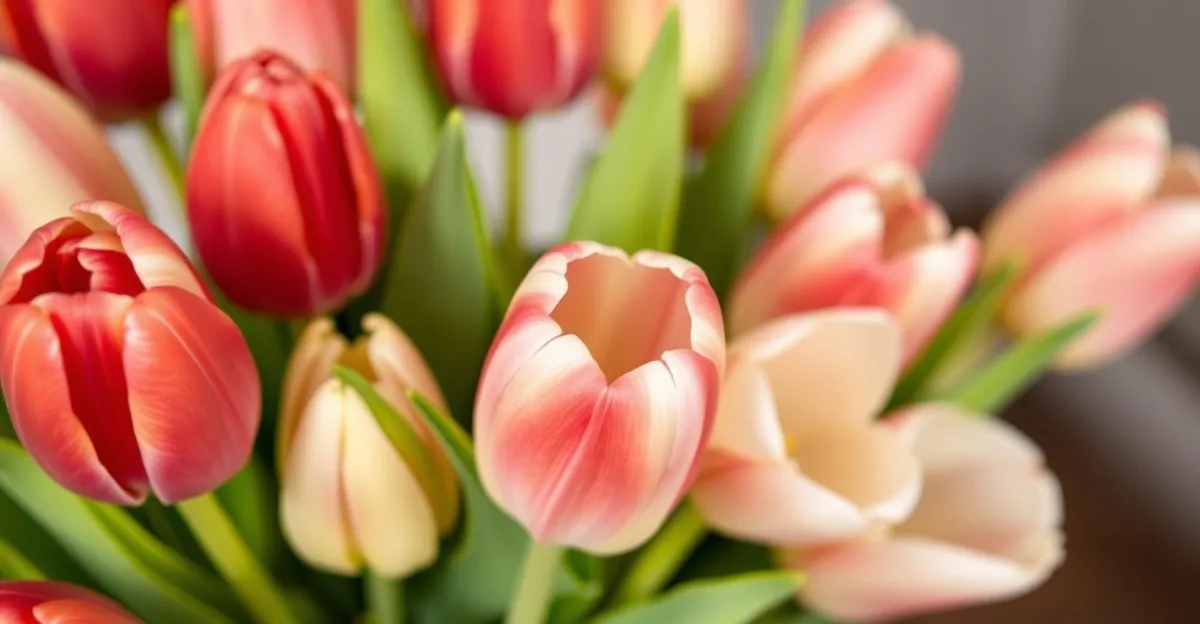
There's a specific kind of feeling that comes when a beautiful bouquet is fading and you're not ready to let it go. Perhaps they were birthday tulips in the most perfect shade of coral you've ever seen. Maybe they were your wedding bouquet, or a gift from someone who chose them with real intention. Whatever brought these particular flowers into your hands, the impulse to preserve them is understandable.
The challenge with tulips is that they're especially complicated to preserve. Their petals are thin and moisture-rich, they contain a lot of water in their stems, and they have a strong tendency to collapse or change shape as they dry. The same qualities that make them alive and beautiful when fresh make preservation more technically demanding.
But it can be done, and in Bali's climate — with its additional challenges of heat and humidity — there are specific approaches that work better than others. Here's the honest guide.
Before You Start: Set Realistic Expectations
Preserved tulips will not look like fresh tulips. This is true of all preserved flowers, but it's especially worth saying clearly for tulips because the gap between fresh tulip beauty and preserved tulip beauty can be significant.
What you're preserving is the essence of the flower — its colour, its basic form, its emotional resonance — not its living quality. A pressed tulip petal is translucent, delicate, and beautiful in a way that is entirely its own, distinct from the living flower. A silica-dried tulip bloom retains more three-dimensional form but becomes papery and fragile.
The goal is creating a beautiful memento, not recreating the fresh bouquet. With that expectation in place, let's look at what works.
The First Step: Catching the Right Moment
Timing is everything in tulip preservation. You want to start the preservation process when the flowers are still in good condition — not already spent, bruised, or heavily open.
For most preservation methods, the ideal tulip state is mid-bloom: past the tight bud stage (where they're most resistant to drying evenly) but before they're fully open and the petals begin to thin and curl. In practical terms, this often means preserving flowers on day three or four of their vase life — while they're at their most beautiful and before any decline begins.
In Bali's heat, this window comes earlier than it would in a temperate climate. Don't wait until day six thinking they'll still look the same — plan to start preservation at the point when the flowers look best.
Method 1: Air Drying
Air drying is the simplest approach. Remove the flowers from water, strip the lower leaves, tie the stems together loosely with string, and hang them upside down in a cool, dry, dark location with good airflow.
In Bali: The main challenge is humidity. Air drying works best in environments below 50% humidity. Most of Bali runs at 70 to 85% humidity during the wet season and 60 to 75% during the dry season. This creates a real risk of mould forming on the petals before they fully dry, particularly with tulips' moisture-rich tissue.
For air drying tulips in Bali to have any chance of success:
- Do it during the dry season (May to September)
- Use a consistently air-conditioned room with airflow — not just cool, but actively ventilated
- Check daily for any sign of mould and remove affected flowers immediately
- Allow four to six weeks rather than the two to three weeks that works in a temperate climate
The result: Air-dried tulips tend to collapse somewhat — the petals thin and curl as they dry, and the flower's characteristic cup form becomes less defined. Colours fade and shift: reds become burgundy, yellows become straw-gold, pinks become dusty mauve. The result is lovely in its own way, but visually quite different from the fresh flower.
Method 2: Silica Gel Drying
Silica gel drying is the method I recommend for Bali conditions. It's faster (days rather than weeks), produces better colour retention, and the sealed container environment defeats the humidity problem.
How to Do It
- Fill an airtight container with a 3 to 5 centimetre layer of silica gel crystals (available in craft stores and online in Indonesia).
- Cut tulip stems short — leaving just a few centimetres below the bloom is enough; you're preserving the flower, not the whole stem.
- Place blooms gently face-up in the silica layer, with some space between them.
- Very slowly and carefully pour more silica gel around and over the petals, using your fingertips to work crystals gently between petals so every surface is covered.
- Seal the container completely.
- Leave in a cool, dry location (an air-conditioned room is ideal) for five to ten days depending on bloom size and how open the flowers were when you started.
- Gently pour off the silica gel and use a very soft brush to remove any remaining crystals from the petals.
The result: Significantly better than air drying for tulips. Colours retain much more vibrancy — a red tulip preserved this way stays a deep, rich red. The three-dimensional form is largely maintained. The petals will be delicate and slightly papery to the touch, but the flower retains a beautiful, recognisable form.
Method 3: Pressing Individual Petals
Pressing whole tulip blooms isn't practical — they're too three-dimensional and moisture-rich to press cleanly. But individual petals pressed carefully produce beautiful results.
How to Press Tulip Petals in Bali
- Separate individual petals carefully from blooms that are fresh but at a good stage.
- Lay each petal flat on a sheet of absorbent paper.
- Critically for Bali's climate: add a layer of silica gel crystals between the pressing layers. The silica will draw moisture out much faster than paper alone in a humid environment, significantly reducing mould risk.
- Add more paper layers and weight with heavy books.
- Change the paper layers every two days for the first week.
- After three to four weeks, the petals should be fully pressed and dry.
Displaying pressed petals: Pressed tulip petals framed behind glass are genuinely beautiful — the translucency of the pressed petal in light is unlike anything else. An arrangement of pressed petals from a wedding bouquet tulip, pressed alongside small companion flowers and leaves, mounted on cream card and framed, makes a meaningful and visually striking piece of art.
Method 4: Glycerine Treatment
Glycerine treatment replaces the water in flower tissue with glycerine, producing preserved flowers that remain soft and slightly pliable rather than dry and brittle. It works better with foliage and certain thick-petalled flowers than with delicate blooms.
For tulip petals specifically, glycerine treatment often produces mixed results — the petals can absorb unevenly and sometimes collapse or discolour. However, for tulip leaves and stems, glycerine treatment can produce beautiful, preserved material that combines well with silica-dried blooms in a display.
Method: Mix one part glycerine with two parts warm water. Cut stems at an angle and place in the glycerine-water mixture. Leave for one to three weeks, checking regularly, until the foliage feels soft and slightly tacky (the sign that glycerine has replaced the water content). Remove and wipe clean with a soft cloth.

The team
your florists
weekly subscription · Bali
We write about flowers because we love them. We deliver them because someone should — properly, weekly, across Bali.
— heyflowerPay once for 3, 6, or 12 months, no auto-renewal.
Method 5: Resin Encapsulation
Resin preservation — encasing dried flower material in clear epoxy resin — is popular for creating permanent decorative items from wedding or significant-occasion flowers. Tulip petals preserved in resin can produce beautiful jewellery, coasters, paperweights, and wall art.
Important: Resin encapsulation requires completely dry flower material. Any residual moisture will cloud the resin irreversibly. Silica gel-dried tulip petals or blooms are the right starting material.
In Bali, there are skilled resin artisans who specialise in this kind of work. If you want a truly beautiful, professional result — a resin sphere containing your wedding bouquet tulips, or a set of coasters with preserved petals from a significant occasion — commissioning a local artist is worth considering rather than attempting it yourself.
For ongoing supplies of beautiful tulips to enjoy fresh — without the preservation anxiety — heyflower.co delivers Monday subscriptions and one-time orders to Canggu, Berawa, Pererenan, Seminyak, and Kerobokan.
Frequently Asked Questions
Can I preserve a tulip bouquet in Bali's humid climate?
Yes, but method selection matters. Air drying is risky in Bali's humidity due to mould. Silica gel drying in a sealed container is the most reliable method because it creates its own moisture-controlled environment. The dry season (May to September) is better for any preservation work.
How long does a preserved tulip last?
Properly preserved and stored tulips can last for years. The critical factors are keeping them away from direct sunlight (which fades colours), high humidity (which can cause deterioration over time), and physical disturbance (dried flowers are fragile). Framed behind glass or displayed in a sealed glass cloche, preserved tulips can remain beautiful indefinitely.
Will the colour of my tulips change during preservation?
Some colour change is inevitable. Silica gel drying produces the least colour change — vibrant reds and pinks retain good saturation. Air drying produces the most change — colours fade and shift significantly. Yellow tulips tend to dry to a warm amber or straw colour. Red may deepen to burgundy. The colour change is part of the preserved flower's character rather than a flaw.
Can I preserve the whole tulip stem or just the blooms?
Silica gel drying works best for blooms alone or with very short stem sections. Long stems can be air-dried, but in Bali's humidity, they often develop mould before drying completely. A practical approach is to preserve the blooms via silica gel and the leaves/stems separately via glycerine, then reassemble or display separately.
What's the most beautiful way to display preserved tulip petals?
Framing is probably the most visually impressive option. Silica-dried blooms or pressed petals arranged on neutral-toned card or linen, with a label noting the occasion, make a genuinely beautiful piece of art. For wedding flowers specifically, a frame that includes a photo of the bride with her bouquet alongside preserved petals from that bouquet creates a meaningful and beautiful memorial. Shadow boxes allow three-dimensional silica-dried blooms to be displayed, which shows off the preserved form better than flat framing.
More on Tulip