The history and origin of the statice
Trace the history and origin of statice from its Mediterranean coastal roots to its role as a beloved dried flower and Bali florist staple.
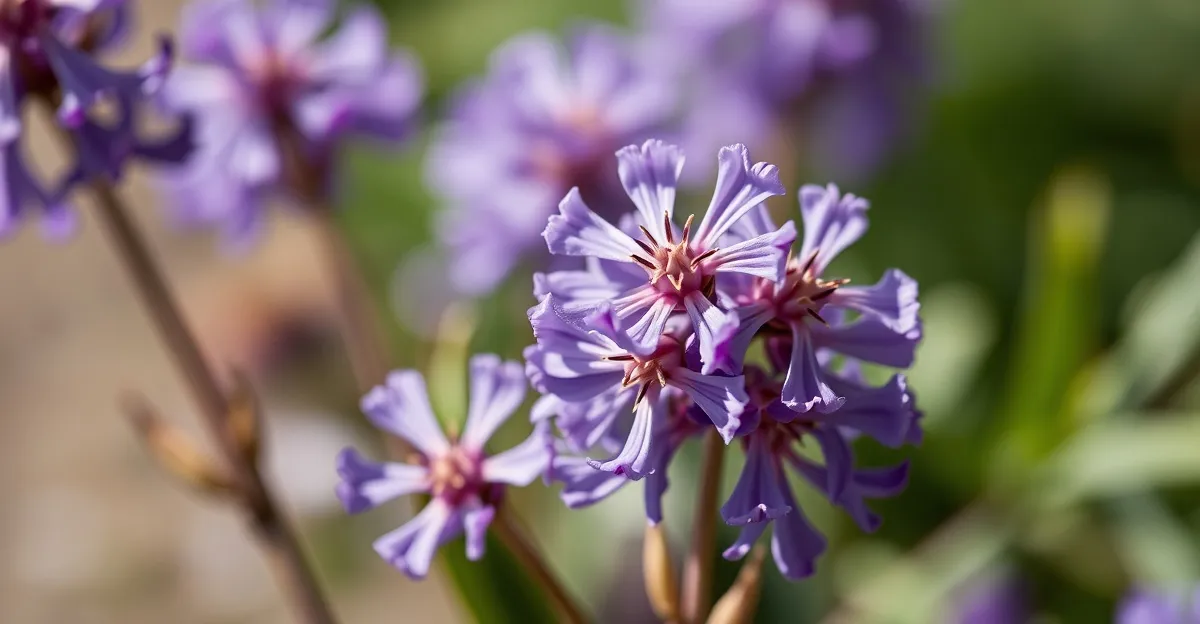
Few flowers have traveled as far from their origins as statice. A plant that spent millennia clinging to salt-sprayed cliffs along the Mediterranean coast is now one of the most widely used flowers in tropical florist shops from Bali to Bangkok. Understanding where statice came from — and why it became so ubiquitous — tells you a great deal about what makes it genuinely special, not just convenient.
The botanical origins: Mediterranean coast and salt marshes
Statice belongs to the genus Limonium, within the family Plumbaginaceae. The name Limonium comes from the Greek word leimon, meaning "meadow" — specifically the kind of damp, coastal meadows where the plant was first observed growing wild. This is a bit misleading, because while statice does grow in low-lying coastal areas, it's particularly associated with the dry, rocky, salt-tolerant conditions of Mediterranean cliff faces and sea marshes.
Limonium sinuatum, the species most people mean when they say "statice," is native to the Mediterranean basin: the coastal regions of southern Europe (Spain, Portugal, the south of France, Italy, Greece), North Africa (Morocco, Algeria, Tunisia), and parts of the Middle East. It thrives in conditions that would kill most garden plants — high salinity, poor soil, intense sun, and seasonal drought.
This tolerance for difficult conditions is not incidental to statice's success as a cut flower. The same cellular adaptations that allow statice to survive salt stress and dry heat — the papery texture of its petals, the reduced water content of its flower tissue, the branching structure that maximizes surface area while minimizing moisture loss — are exactly what make it so durable after cutting and so effective at drying naturally.
Ancient uses and early cultivation
There's limited specific historical documentation of statice as a cultivated flower before the modern era, but Limonium species were known to ancient Mediterranean cultures. Greek and Roman herbalists documented various Limonium species, primarily for medicinal rather than ornamental use — the roots and leaves of several species were used as astringents and in treatments for mouth sores and digestive complaints, properties linked to the tannins that give the plant its salt tolerance.
As an ornamental plant, statice likely entered European garden culture during the Renaissance period, when Mediterranean coastal plants were being systematically catalogued and collected by botanists across Northern Europe. The plant would have been valued initially as a botanical curiosity — a coastal species transplanted to the controlled environment of formal gardens. Its flowering habit, producing clouds of small papery blooms, would have attracted attention in an era when complex, frilly flowers were fashionable.
The Victorian era and the dried flower revolution
Statice's trajectory as a popular flower accelerated dramatically during the Victorian era in Britain and Europe (roughly 1837–1901). This was the golden age of dried flower arrangements, pressed botanical specimens, and elaborate decorative arts that incorporated natural materials. The Victorian fascination with death, memory, and preservation — expressed through elaborate mourning customs, hair jewelry, and memorial keepsakes — created a strong cultural appetite for flowers that could endure.
Statice was perfectly positioned to benefit from this cultural moment. It dried more beautifully than almost any other widely available flower, retaining both its form and its color (unusual in dried flowers, which typically fade) for months or years. It became a staple of Victorian parlor arrangements, funeral wreaths, and memorial pieces. The associations between statice and remembrance, memory, and enduring love that persist to this day were largely codified during this period.
The Victorian language of flowers (floriography) gave statice specific meanings: success, remembrance, and the idea that beauty and memory endure beyond the moment. These meanings weren't random — they were an organic expression of what the flower actually did: it persisted, it maintained its form, it kept its color.
The 20th century: commercial cultivation and global expansion
The modern cut-flower trade transformed statice from a garden curiosity and dried-flower staple into a globally produced commodity. The Netherlands, which became the center of the European cut-flower industry in the 20th century, developed highly productive statice cultivars and greenhouse growing methods that allowed year-round production. Dutch breeders created varieties with longer, straighter stems, more abundant flower clusters, and a wider color range than wild Limonium sinuatum.
Commercial production also expanded to other regions with suitable climates: California, Kenya, Ecuador, Israel, and Australia all became significant statice producers in the late 20th century. This global production network is what makes statice available year-round in florist shops far from its Mediterranean homeland — including in Bali, where statice arrives primarily from Java and Dutch imports via Jakarta.
The development of air freight as a regular component of the flower supply chain from the 1960s onward meant that fresh statice could reach tropical markets that would have previously received only dried statice, if any at all.
Why statice keeps its name and identity despite renaming
In the mid-20th century, botanists reclassified the original Statice genus, moving most species into the genus Limonium. Officially, what florists call "statice" is now Limonium sinuatum. But the old name has proven remarkably durable in the trade — florists, flower buyers, and customers worldwide still call it statice, making it one of the clearest examples of a common name outlasting a botanical reclassification.
This persistence is itself a kind of testament to the flower's identity: statice has been known by that name for long enough, and across enough cultures and flower traditions, that no reclassification could displace it.

The team
your florists
weekly subscription · Bali
We write about flowers because we love them. We deliver them because someone should — properly, weekly, across Bali.
— heyflowerPay once for 3, 6, or 12 months, no auto-renewal.
Statice in the modern Bali flower scene
Statice arrived in Bali's flower market through the same channels as many imported cut flowers — initially as imported dried bunches from Europe and Australia, then increasingly as fresh stems via Jakarta's wholesale importers and Java's growing regions. Today it's a consistent presence in every Bali flower market, from Pasar Kumbasari in Denpasar to the informal flower stalls that line the road through Ubud.
Its role in Bali combines its global functions (filler, texture, dried arrangements) with some Bali-specific applications — particularly in the layered, abundant ceremony-style arrangements that Bali florists create for the island's constant stream of weddings, retreats, and luxury events. The history and origin of the astilbe offers a parallel story for another flower with European roots that has found a place in Bali's tropical floral culture.
FAQ
Why is statice sometimes called "sea lavender"? Sea lavender is the common name for Limonium latifolium and related species — close botanical relatives of the standard statice (Limonium sinuatum) with a broader, more cloud-like form. Both are in the same genus and share similar characteristics, leading to some overlap in common names. The "sea" in the name refers to their coastal native habitats.
Were there statice varieties other than the standard purple/white? Wild Limonium sinuatum is naturally variable in color, ranging from purple through pink, white, and yellow. Modern commercial breeding has extended this range and stabilized specific color forms as consistent cultivars — the reliable lavender, hot pink, white, and yellow varieties available today are the product of decades of selective breeding.
When did dried statice become a popular craft flower? While dried statice was used decoratively throughout the 19th century, the modern craft and dried-flower boom really accelerated in the 1970s and 1990s. The recent resurgence of interest in dried and preserved flowers from around 2018 onward has made statice popular again in a new context.
Is there a meaningful difference between Dutch-grown and Java-grown statice? Quality and consistency differ. Dutch-grown statice, produced in controlled greenhouse conditions by specialized cultivars, tends to have longer stems, more uniform color, and longer vase life. Java-grown statice is more variable but supports local supply chains and has lower transport emissions. For premium arrangements where consistency matters, Dutch-grown has an edge.
Has the meaning of statice changed over time? The core associations — remembrance, lasting love, endurance — have remained remarkably stable from the Victorian era to the present. The flower's inherent qualities (it literally persists and maintains its beauty) are such a good fit for these meanings that the symbolic association has proven durable.
Ready to bring fresh flowers to your Bali home or event? Explore our weekly flower subscription and get handpicked blooms delivered to your door every week.
More on Statice