The history and origin of the iris
From ancient Egypt to contemporary Bali — the remarkable history of the iris flower across civilisations, cultures, and centuries of human devotion.
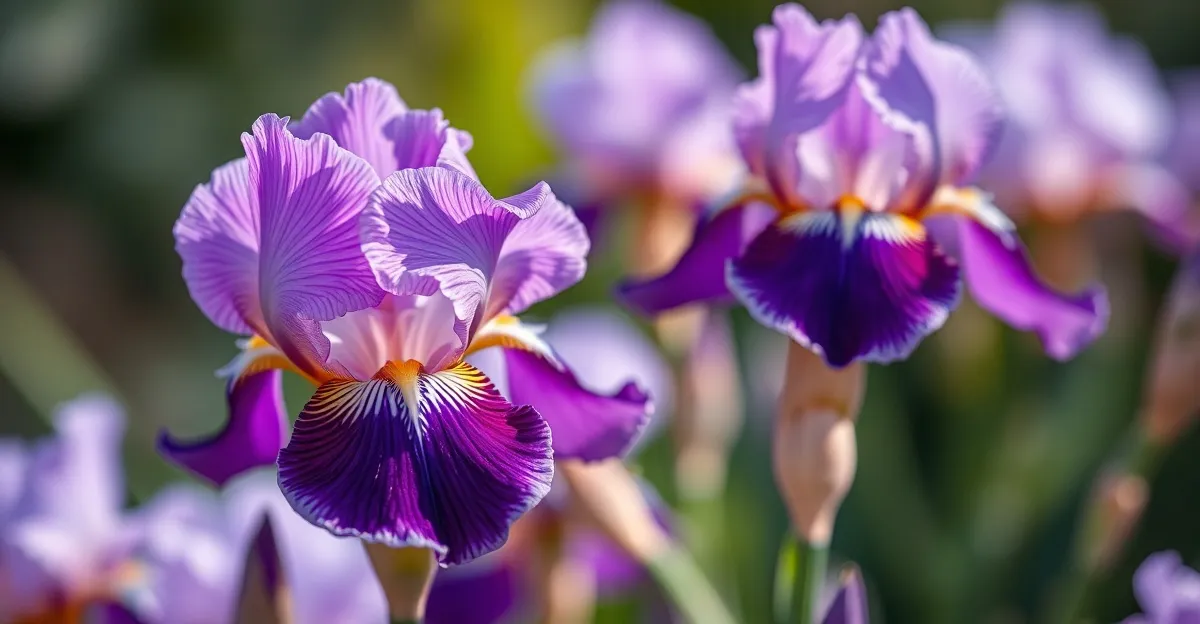
Few flowers have been as consistently venerated across human history as the iris. From ancient Egyptian tomb paintings to the royal seal of France, from Japanese samurai culture to the manicured gardens of 19th-century England, the iris has been present at the significant moments of civilisation with a consistency that speaks to something deep in its relationship with humanity.
Understanding this history adds an entirely different dimension to every iris arrangement we create at heyflower.co. Here is the full story.
Ancient Origins: Egypt and the Classical World
The oldest known depictions of iris in human culture appear in ancient Egyptian wall paintings dating to approximately 1479–1458 BCE, during the reign of Pharaoh Thutmose III. The flower appears in murals at Karnak — the great temple complex at Thebes — among botanical illustrations of plants collected during military campaigns to the eastern Mediterranean and the Levant.
This places the iris in human cultural consciousness for at least 3,500 years, making it one of the most historically documented of all ornamental flowers.
The Greek Goddess Connection
In Greek mythology, Iris was the goddess of the rainbow — the winged messenger who carried communications between the Olympian gods and the world of humans. The philosopher-naturalist Theophrastus, a student of Aristotle writing around 300 BCE, gave the flower the name iris because its extraordinary colour range seemed to reflect the rainbow's spectrum.
This naming was deliberate and meaningful. The iris wasn't merely a pretty flower to the ancient Greeks — it was associated with divine communication, with the bridging of different realms of existence, and with the beauty that comes from transition and movement between states.
Iris the goddess is depicted in ancient Greek art with wings and the caduceus (a herald's staff), often shown as a female figure carrying messages between Zeus and Hera or between the divine and human worlds. The flower that bore her name carried these associations of communication and mediation into every culture that subsequently adopted it.
Roman Adoption
The Romans adopted Greek botanical knowledge wholesale, and the iris continued to be cultivated and valued in Roman gardens. Roman physicians used iris root (orris root) medicinally — it was valued as a purgative, a treatment for skin conditions, and, when dried and powdered, as a perfume fixative. The dried orris root has a subtle violet scent that intensifies over years of storage, and it was a component of some of the earliest perfumes in Western history.
The Medieval Period: Sacred and Medicinal
In the medieval Christian world, the iris took on sacred significance. The three petals of many iris varieties were seen as a symbol of the Holy Trinity. The iris also became associated with the Virgin Mary — the sword-like leaves suggesting the "sword that pierced her heart" (a reference to Luke 2:35), while the flower itself symbolised her purity.
Medieval physicians continued to value orris root in pharmacy. The Materia Medica tradition that ran from ancient Greece through Islamic scholarship and into medieval European medicine maintained iris in an important medicinal role.
Islamic Golden Age Contributions
During the Islamic Golden Age (8th through 13th centuries), Arab and Persian scholars were the foremost botanists and physicians in the world. They translated and expanded Greek botanical knowledge, and their herbals and pharmaceutical texts preserved iris cultivation and medicinal use at a time when this knowledge might otherwise have been lost.
Persian garden design — which became enormously influential in both Islamic and European horticulture — featured iris as a significant ornamental plant. The geometric Persian garden with its formal channels and raised beds was designed partly to showcase iris and other spring flowers in their full glory.
The Fleur-de-Lis: Iris and French Royalty
One of the most significant moments in the iris's political history came in France. The fleur-de-lis — that distinctive three-petalled heraldic emblem that became synonymous with the French monarchy — almost certainly depicts an iris rather than a lily, despite its name.
The emblem appears in French royal heraldry from the reign of King Clovis I in the 5th century, with the legendary story that the flower was given to Clovis as a divine sign at a moment of military crisis. Botanical historians have long noted that the form of the fleur-de-lis is far closer to an iris bloom than to a lily.
By the 12th century, the fleur-de-lis appeared on the royal seal of Louis VII, and it remained the emblem of French royalty until the Revolution. This connection between the iris and royal authority shaped how the flower was perceived across Europe — as a flower of dignity, nobility, and formal power.
Japan: The Iris Festival and Samurai Culture
In Japan, the iris (ayame) developed entirely independent cultural associations that parallel but differ from the European traditions.
The Japanese Boys' Day festival (Tango no Sekku, now celebrated as Children's Day on 5 May) traditionally incorporated iris prominently. Iris leaves were floated in bathwater, iris flowers decorated homes, and the sword-like shape of the leaves was associated with martial virtue and the courage expected of young men.
The visual similarity between iris leaves and sword blades gave the plant strong associations with the samurai class. In Japanese hanakotoba (the language of flowers), iris communicate courage, good news, and loyal love — qualities all appropriate to the warrior's path.
Japan developed some of the world's most refined iris cultivation traditions. The Edo hanashobu (Japanese water iris) were developed into extraordinary ornamental forms by Japanese horticulturalists during the Edo period (1603–1868), producing blooms of remarkable size and delicacy that were shown in competitive exhibitions and were subjects for the great ukiyo-e print artists.

The team
your florists
weekly subscription · Bali
We write about flowers because we love them. We deliver them because someone should — properly, weekly, across Bali.
— heyflowerPay once for 3, 6, or 12 months, no auto-renewal.
Victorian England: The Iris Craze
The Victorian era's passionate interest in gardens and botanical collection created another peak moment in iris history. European hybridisers in the 19th century began crossing different species and varieties to produce new forms with increasing vigour.
The tall bearded iris was developed into the spectacular range of forms known today through intensive Victorian and Edwardian hybridisation programmes. By the late 19th century, hundreds of named iris varieties were in cultivation, and iris societies were publishing journals and holding competitive shows.
The English word "iris" itself carried new cultural weight in this period — it appeared in novels, poetry, and art with increasing frequency, always carrying connotations of beauty, wisdom, and a certain elevated refinement.
Iris in Indonesia
Iris arrived in Indonesia through Dutch colonial horticultural networks during the 19th and early 20th centuries. The Dutch were passionate flower cultivators, and Dutch botanists and colonial administrators established botanical gardens across the Dutch East Indies that served as centres for the propagation and study of both local and imported ornamental plants.
Today, Dutch iris grown in Indonesia's highland regions — Java's Bandung and Dieng Plateau areas, and Bali's Bedugul region — supply a significant portion of the cut iris available in Bali's flower markets. The flower that was named after a Greek goddess, used in Egyptian temples, and worn on French royal seals now makes its way from Indonesian highland farms to Canggu living rooms.
For a practical guide to caring for iris in Bali's conditions, our article on how to care for iris in Bali's humid climate covers everything you need to know. And if you're curious about what different iris colours communicate, our piece on iris colours and what each one symbolises is the complete guide.
Frequently Asked Questions
How old is the cultivation of iris as an ornamental flower?
The oldest known depictions of iris in a cultural context date to ancient Egypt around 1479–1458 BCE, placing intentional cultivation of iris at a minimum of 3,500 years ago.
Why is the iris named after a Greek goddess?
The Greek botanist-philosopher Theophrastus named the flower iris after the rainbow goddess because of the flower's extraordinary colour range, which he saw as reflecting the rainbow's spectrum.
Did the fleur-de-lis really represent an iris?
Botanical historians broadly agree that the fleur-de-lis symbol more closely resembles an iris than a lily, despite the name. The French royal emblem likely depicted an iris.
When did iris arrive in Indonesia?
Iris were introduced to Indonesia through Dutch colonial horticultural networks during the 19th and early 20th centuries.
What is orris root?
Orris root is the dried rhizome of certain iris species (particularly Iris pallida and Iris germanica). It was used medicinally for millennia and, when dried and powdered, produces a subtle violet scent. It remains an important ingredient in perfumery as a scent fixative.
The iris you receive from heyflower.co carries 3,500 years of human history and devotion. We source these remarkable flowers from Indonesia's finest highland growers and deliver them fresh to homes and villas across Bali on a weekly, fortnightly, or monthly subscription. There's something meaningful about bringing that history into your everyday space — explore our plans and let us bring it to you.
More on Iris