How to preserve an iris bouquet after the event
Keep your special iris bouquet long after the occasion with these florist-tested preservation methods — adapted for Bali's humid tropical climate.
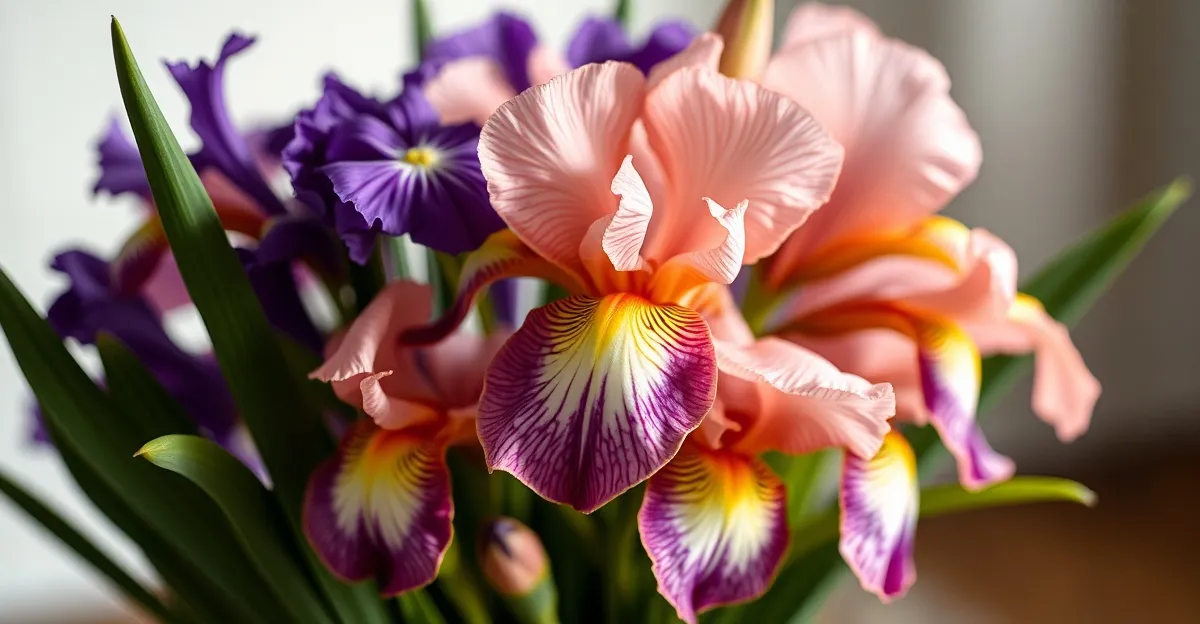
There's a particular kind of attachment that forms around a meaningful bouquet. The iris arrangement from a wedding, a graduation, a significant birthday, or a deeply personal gift carries a memory that you want to hold onto beyond the flowers' natural life. The good news is that iris, while not the easiest flower to preserve, can be preserved beautifully with the right technique — and in Bali's tropical climate, technique genuinely matters more than it would in a cooler, drier place.
This guide covers the main preservation methods for iris bouquets in Bali, what to realistically expect from each, and the specific considerations that apply in our tropical environment.
The Right Moment to Begin Preservation
Timing is everything with flower preservation, and iris have a specific window that makes this more critical than with many other flowers.
Iris bloom sequentially — the lowest bud opens first, with subsequent buds following over the next few days. For preservation, you want to work with flowers that are just past their absolute peak but not yet declining. An iris that has fully opened but still has firm, vibrant petals and no brown edges is at the ideal stage for preservation.
If you wait until the iris shows visible decline — browning petal tips, wilting, significant drooping — you're trying to preserve the evidence of the flower's age rather than its beauty. In Bali's warmth, this window arrives faster than you'd expect. For an iris arrangement from a Friday evening event, Sunday is often the latest you should begin preservation work.
Method One: Silica Gel Drying
Silica gel is our top recommendation for iris preservation in Bali's tropical climate. It works more quickly than air drying (critically important in humid Bali, where slow drying allows mould to develop), and it produces dramatically superior colour retention.
What You Need
- Food-grade or floral silica gel (available from craft stores, or online — shipped from Singapore or Australia)
- A sealable container large enough to hold the iris heads
- A soft artist's brush for gentle cleanup
The Process
- Cut iris stems down to about five centimetres.
- Pour a shallow layer of silica gel into your sealable container — about three centimetres deep.
- Place each iris head face-up on the gel layer. Don't crowd them.
- Very slowly and carefully, pour silica gel over and around the iris blooms, working it gently between the petals with your fingers or a small spoon. The goal is to support each petal in its natural position as it dries.
- Continue until the iris heads are fully covered by at least two centimetres of silica gel.
- Seal the container.
- Check after three days for small iris; up to five days for large, multi-petalled specimens.
- Iris are ready when petals feel papery to the touch but not brittle.
Results in Bali
Silica gel-dried iris retain remarkable colour — that deep purple or vivid blue stays significantly true to the original. The intricate petal structure of iris dries beautifully in silica gel, maintaining the delicate falls and standards that make the flower so distinctive.
The dried flowers are fragile and humidity-sensitive. Store or display them in sealed glass containers, glass domes, or frames that limit moisture exposure.
Silica gel is fully reusable — spread it on a baking tray and heat in a low oven (around 100°C) for 30 minutes to restore its absorptive capacity.
Method Two: Air Drying
Air drying is accessible, requires no specialist materials, and works for iris — but in Bali's climate it requires more attention than in temperate countries.
Process
- Strip all foliage from the stems.
- Bundle three or four stems loosely with string.
- Hang upside down in a location with maximum air circulation and minimum humidity.
The challenge in Bali: high humidity means air drying takes longer than ideal, and the extended drying period creates a window for mould. To counter this, use an air-conditioned room, position a small fan to circulate air around the hanging flowers, and check every two days for any mould formation.
Air-dried iris will fade from their original vivid colours to muted, antique versions. The deep purples become dusty mauve. Blues become pale grey-blue. This faded quality has its own beauty — particularly for interior styling in Bali's mix of natural and contemporary aesthetics — but it's different from what you started with.
Iris that have dried in their open, fully-bloomed state preserve their characteristic shape better than those dried in bud.
Method Three: Pressing Individual Petals
The three-dimensional complexity of iris makes pressing an entire bloom challenging — you can't easily flatten an iris as you would a pansy or cosmos. However, individual iris petals press beautifully and can be used to create botanical art.
Process
- Carefully detach individual petals from the iris bloom.
- Arrange them on blotting paper or watercolour paper, slightly separated.
- Cover with another sheet of blotting paper.
- Place under a stack of heavy books.
- In Bali's humidity, place silica gel packets around the pressing arrangement to absorb moisture.
- Leave for three to four weeks, checking occasionally.
Pressed iris petals retain surprisingly good colour and the delicate venation patterns that make the petals so beautiful under close examination. They can be arranged under glass in frames or incorporated into botanical greeting cards and journal covers.

The team
your florists
weekly subscription · Bali
We write about flowers because we love them. We deliver them because someone should — properly, weekly, across Bali.
— heyflowerPay once for 3, 6, or 12 months, no auto-renewal.
Method Four: Photography as Preservation
Sometimes the most honest response to a beautiful Bali iris arrangement is to photograph it extraordinarily well before it fades.
Bali's light is exceptional for flower photography. The warm, golden morning and late afternoon light creates conditions that professional photographers travel specifically to capture. A dedicated 30-minute photography session with your iris arrangement — in beautiful Bali light, against interesting natural backgrounds — produces memories that genuinely outlast any physical preservation attempt.
Consider this especially if you're not set up for silica gel or air drying, or if the iris are already at peak bloom and the preservation window is very short.
What to Expect Realistically
No preservation method recreates the living flower. What you're preserving is a beautiful reminder — the colour, shape, and presence of a moment. In Bali's climate, silica gel gives you the closest result to the original flower; air drying gives you the most accessible but most changed result; photography gives you the most reliable memory.
For ongoing flower joy without the preservation stress, our anniversary flower subscription ideas that keep giving guide explores the alternative philosophy: rather than preserving one bouquet forever, create a practice of regular fresh flowers that continuously celebrate the things worth celebrating.
Frequently Asked Questions
Can iris flowers be air dried in Bali's humidity?
Yes, but it requires help — an air-conditioned room, good air circulation, and monitoring for mould. Results are achievable but less predictable than in drier climates.
How long does silica gel take to dry iris flowers?
In Bali's tropical conditions, small to medium iris typically dry fully in three to four days in silica gel. Larger or more complex blooms may need up to five days.
Do preserved iris flowers keep their colour?
Silica gel-dried iris retain colour very well. Air-dried iris fade to muted, antique tones that many people find beautiful in their own right.
Can I display preserved iris in Bali's humidity?
In a non-sealed display, preserved flowers in Bali's humidity will gradually reabsorb moisture and soften. For best longevity, display under glass (domes, sealed frames) or in an air-conditioned room.
What's the most reliable preservation method for iris in Bali?
Silica gel drying is consistently the most reliable in Bali's climate, primarily because it works quickly (reducing the mould risk that extended air drying creates) and produces the best colour retention.
While we can't make fresh flowers last forever, we can make sure you're never without them. At heyflower.co, our flower subscription service delivers beautiful iris and seasonal blooms across Bali weekly, fortnightly, or monthly — because the right answer to "how do I keep this bouquet?" is sometimes "by getting a new one." Explore our subscription plans today.
More on Iris