Iris in Balinese ceremonies: traditional uses in Bali
How iris flowers fit into Bali's rich ceremonial landscape — exploring where this non-native bloom appears in island celebrations and what it communicates.
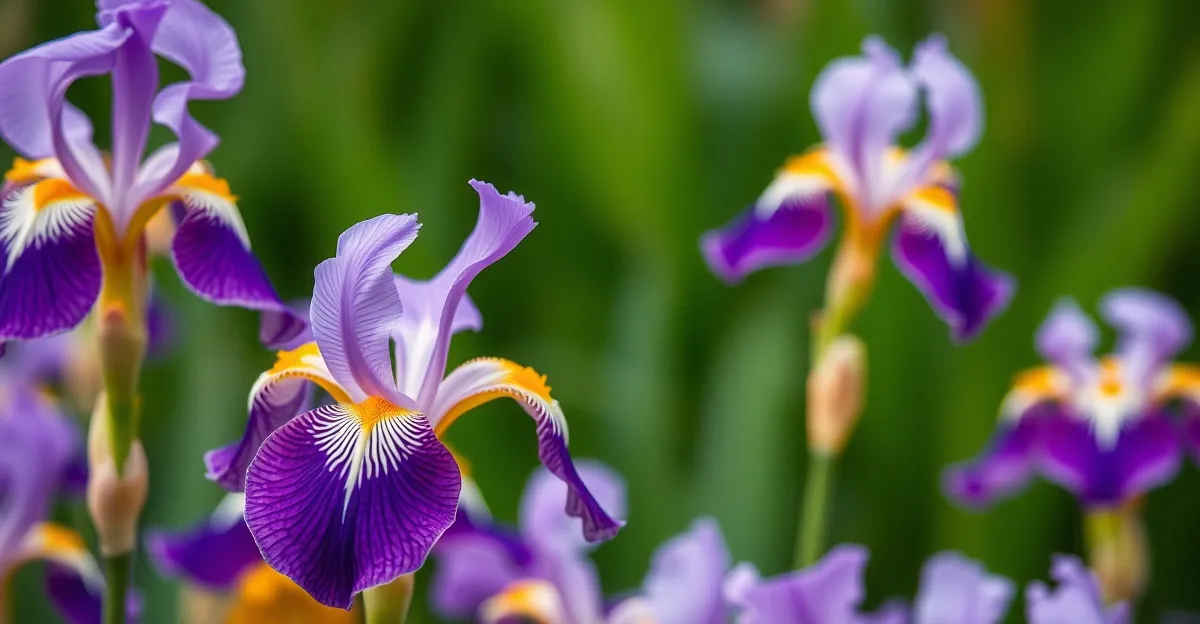
Bali is one of the most flower-saturated cultures on earth. Every morning, millions of small woven offerings called canang sari appear on doorsteps, temple stairs, and shop entrances across the island, each filled with flowers, rice, incense, and intention. Flowers are not decoration here — they are devotion made visible, a daily renewal of relationship between human and divine.
Into this extraordinary flower culture, the iris arrived as a guest rather than a native. Understanding how iris flowers have found their place — and where they don't quite fit — in Bali's ceremonial landscape is a genuinely interesting question for anyone living on or visiting the island who loves both the flower and the culture.
Bali's Ceremonial Flower Tradition
To understand where iris fit, it helps to understand the core of Bali's ceremonial flower practice.
Balinese Hinduism (Agama Hindu Dharma) understands the visible world as suffused with divine presence. Every object, space, and relationship has a spiritual dimension that must be honoured through ritual. Flowers participate in this through their beauty, their impermanence, and their sensory qualities — they offer something beautiful and fleeting to the gods, mirroring the precious transience of human life.
The specific flowers used in ritual are traditional and locally rooted:
Frangipani (jepun) — The island's most sacred flower, present in nearly every offering and ceremony. White and yellow varieties are most common in ritual contexts.
Marigold (jempiring gede) — The orange-gold colour brings warmth and abundance to offerings. Widely used in piles of cut blooms arranged around offerings and altars.
Hibiscus (pucuk merah, red hibiscus) — Associated with particular deities and ceremonies.
Jasmine — White, fragrant, and associated with purity.
Celosia — The feathery, flame-shaped flower that appears in abundant ceremonial displays.
Kenanga and kamboja — Ylang-ylang and frangipani varieties used in garlands and scented offerings.
These are the flowers of the sanggah (family temple), the village temple, and the great mother temple of Besakih. They've been used in Balinese ceremony for centuries, and their specific placements and meanings are encoded in religious practice.
Where Iris Appear in Bali's Ceremony Culture
Iris don't appear in the ritual core of Balinese ceremony — in the canang sari, the banten, or the specific offerings made to the temple's deities. They carry no assigned position in Balinese Hindu religious texts or in the oral traditions that guide ceremony practice.
But this doesn't mean they're absent from Bali's ceremonial world. In the decorative frame around ceremony — the visual abundance of flowers that accompanies celebration — iris have found a place.
Festival Decoration
At major festivals like Galungan and Kuningan — which celebrate the triumph of good over evil and the return of ancestral spirits — households and communities prepare elaborate decorations. The penjor (towering ceremonial bamboo poles) are decorated with palm-leaf weavings, fruit, and flowers. The feast preparations involve both ritual offerings and abundant decorative display.
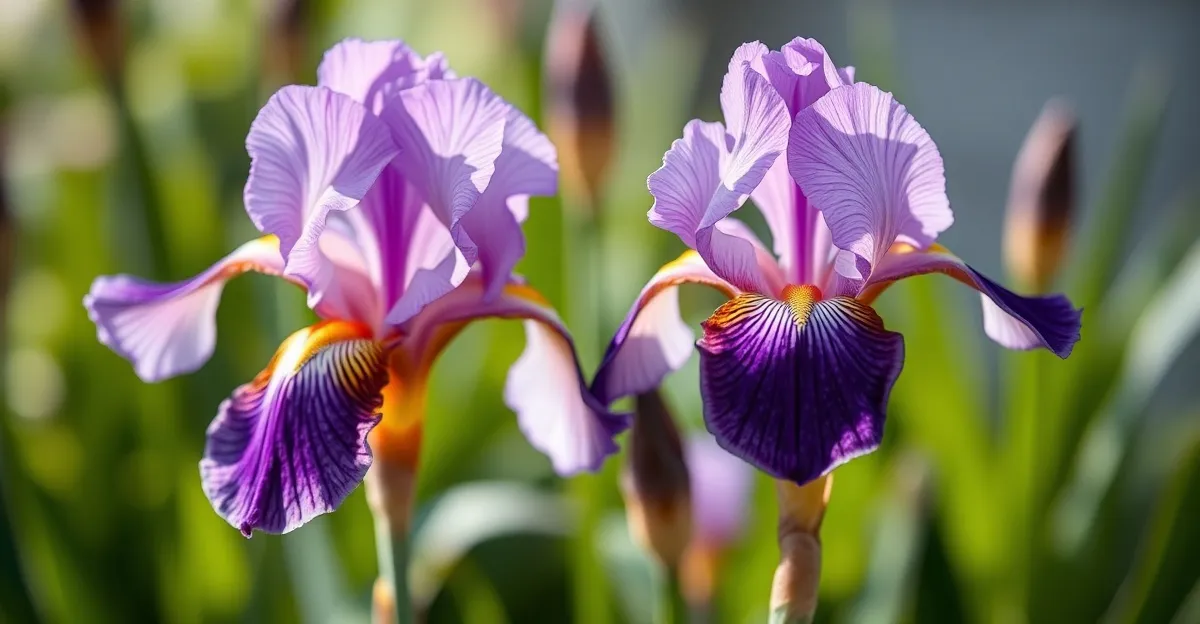
In these decorative contexts, dahlias, chrysanthemums, roses, and increasingly, iris, appear in the flower arrangements that frame ceremonial spaces. They're not placed in the ritual offerings themselves, but in the visual celebration that surrounds them.
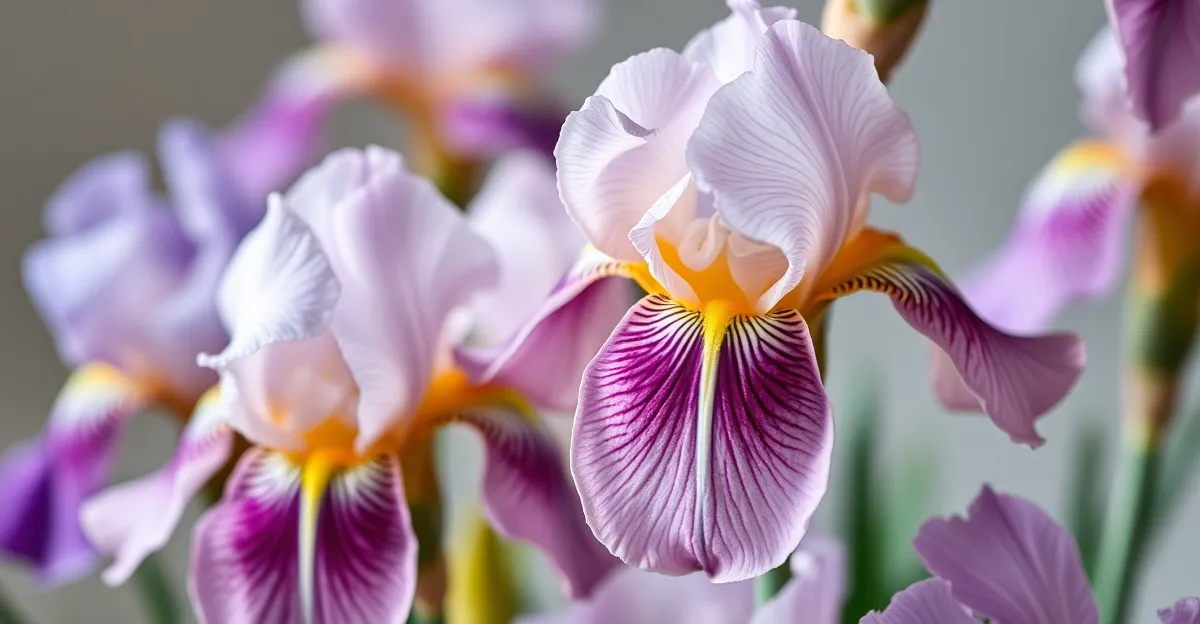
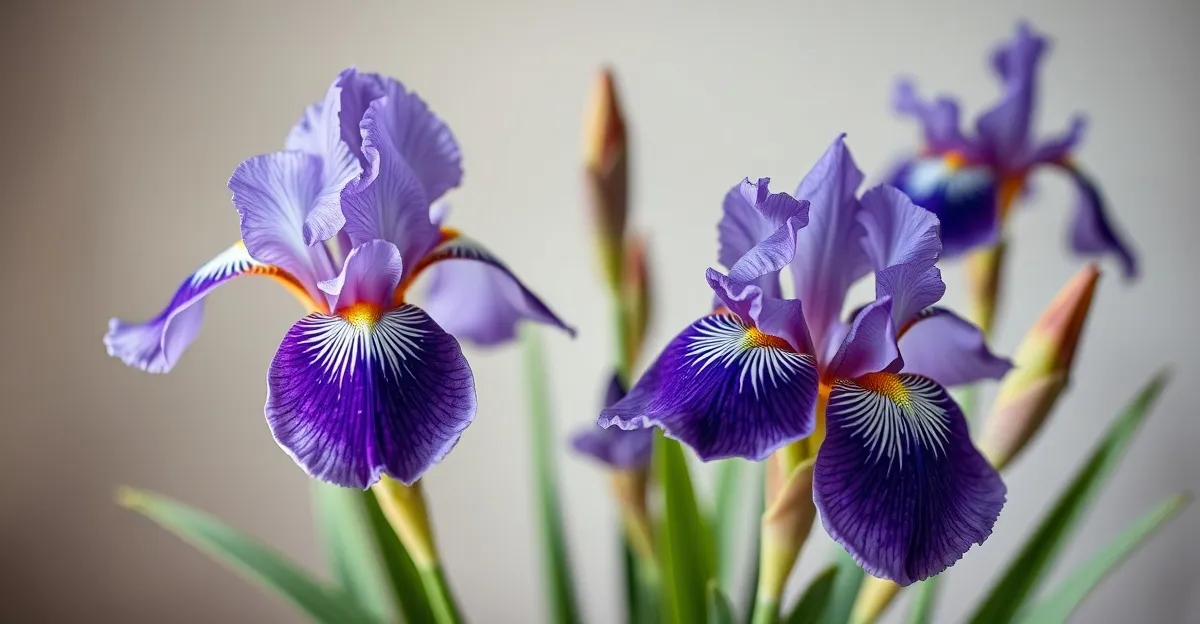
Purple and white iris in particular fit the aesthetic of major Balinese festivals, where abundant, beautiful flowers signal the importance and joyfulness of the occasion.
Community Celebrations and Village Ceremonies
Bali's community life is organised around a dense calendar of village ceremonies (upacara desa) that mark agricultural cycles, temple anniversaries, and the Saka and Pawukon calendars. These ceremonies involve significant communal effort to prepare ceremonial spaces, feast tables, and decorative arrangements.
In villages with access to markets and the resources to use imported flowers, iris occasionally appear in the decorative arrangements of these celebrations. They're used for their beauty and visual impact rather than for any specific ritual meaning.
Contemporary Balinese Weddings
Modern Balinese weddings occupy a fascinating space between traditional religious ceremony and contemporary celebration. The ritual elements — the mekala-kalaan ceremony, the priestly blessings, the specific offerings — follow traditional forms. But the reception and celebration spaces increasingly incorporate contemporary floristry alongside traditional decorative elements.
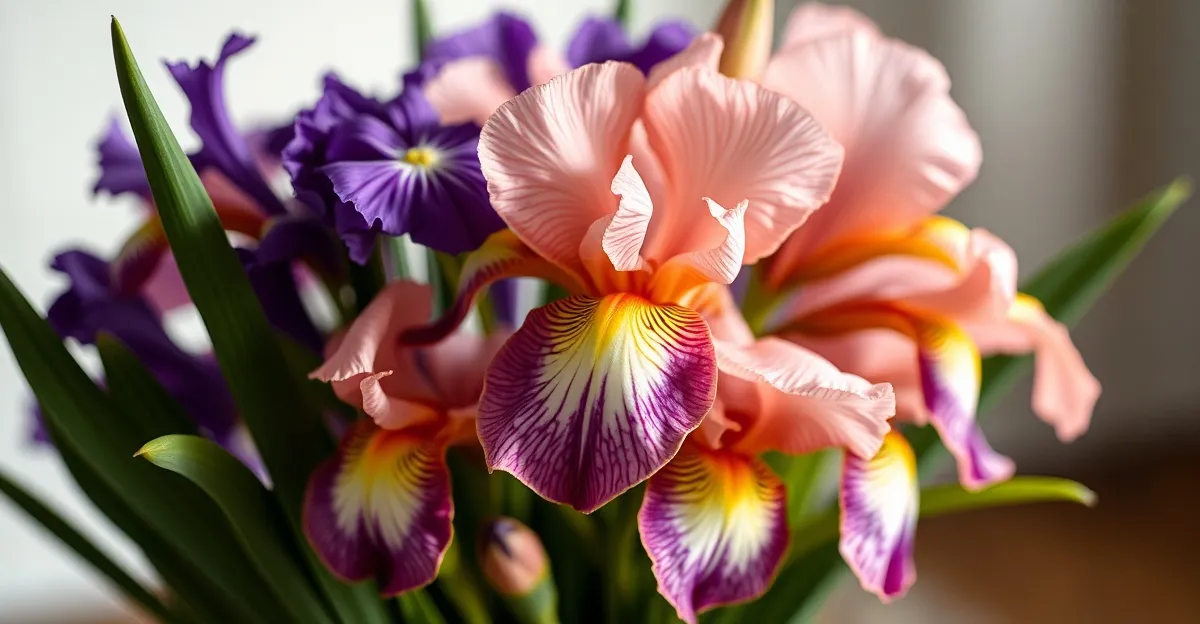
Iris appear frequently in contemporary Balinese wedding reception arrangements, particularly where couples or their families want a blend of international sophistication and local tropical character. A reception table with purple iris alongside tropical greenery and traditional Balinese carved wood and textile elements creates a beautiful hybrid aesthetic that feels genuinely of its moment.
The Ngaben Cremation Context
The ngaben cremation ceremony is Bali's most visually spectacular and emotionally complex ritual. It's a celebration of the soul's liberation — a joyful event despite the grief of loss — decorated with extraordinary colour and abundance.
In some families' ngaben preparations, iris appear in the decorative flower arrangements that embellish the ceremonial structures. White and purple iris carry associations (in Western tradition) of spiritual passage and divine communication that make them conceptually fitting for a ceremony focused on the soul's journey. However, their use here is decorative rather than ritual.

The team
your florists
weekly subscription · Bali
We write about flowers because we love them. We deliver them because someone should — properly, weekly, across Bali.
— heyflowerPay once for 3, 6, or 12 months, no auto-renewal.
Iris and the International Bali Community
Much of the most explicit ceremonial use of iris in Bali actually comes from the island's large international community. Expats from Europe, Australia, and North America who celebrate significant life events in Bali — weddings, milestone birthdays, memorial services — bring their own flower traditions to the island, and iris feature prominently in these traditions.
This creates an interesting ceremonial presence for iris in Bali that sits somewhat outside of traditional Balinese culture but has become part of the island's broader ceremonial flower landscape. For more on how to incorporate iris into Bali's diverse ceremonial life, our guide on iris in wedding bouquets: ideas, meanings, and pairings covers the wedding context in full.
Caring for Iris Through Bali's Ceremonial Calendar
One practical consideration for anyone using iris in Bali ceremonies: the ceremonial calendar creates periodic demand peaks. Major festivals, particularly Galungan (occurring every 210 days), Christmas (significant to Bali's Christian and international communities), and wedding season, all create demand spikes that can affect iris availability.
Planning your ceremonial flower orders well in advance — particularly for iris, which depend on highland supply chains — ensures you get the quality and quantity you need without disappointment.
Frequently Asked Questions
Do iris have a traditional role in Balinese Hindu ceremony?
No — iris are not traditional Balinese ceremonial flowers and don't appear in the ritual offering tradition. They're used in decorative contexts alongside ceremonies rather than in the ritual elements themselves.
Can iris be included in Balinese wedding flower arrangements?
Yes — iris work beautifully in the decorative and reception elements of Balinese weddings, where contemporary floristry exists alongside traditional ceremonial elements.
Are iris appropriate to bring to a Balinese temple ceremony?
A bouquet of iris won't cause offence, but it's culturally out of step with ceremonial practice. Local ceremonial flowers or asking your host what's appropriate is more fitting.
When are iris most available in Bali for ceremonies?
Iris are available year-round from highland suppliers, with the best quality in dry season (April through October). For festivals and ceremony peaks, ordering in advance ensures availability.
What's the most culturally appropriate flower gift for a Balinese ceremony?
Contributing to the traditional ceremonial flowers — frangipani, marigold, and local flowers used in offerings — is more culturally resonant than Western-style iris arrangements. Ask your Balinese host what's most useful for the specific ceremony.
For ceremony flowers that understand Bali — both the island's traditions and its international character — heyflower.co is the Canggu florist that knows both worlds. Our subscriptions and event orders bring premium iris and seasonal blooms to your home and celebrations across the island. Explore what we offer and let us help make your occasions beautiful.
More on Iris