The History and Origin of the Daisy
From ancient Egyptian garlands to Victorian love tokens, the daisy has a rich and fascinating history. A florist's guide to this beloved flower's origins.
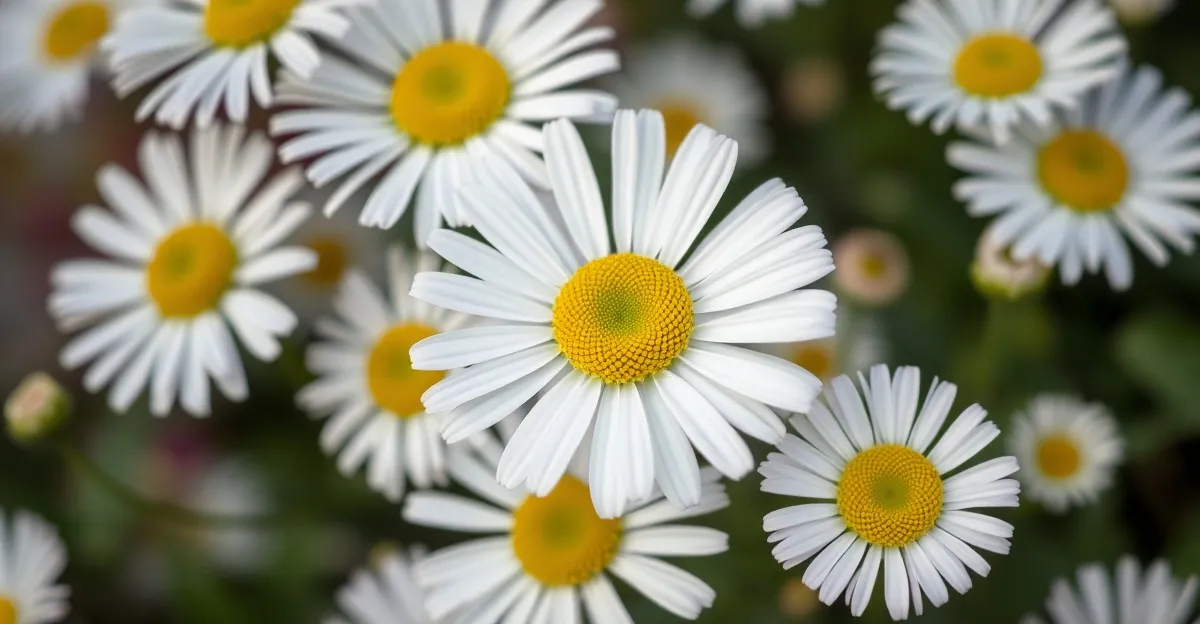
There is something almost paradoxical about the daisy. It is the most ordinary flower in the world — the one that grows in lawns and roadsides without asking permission, the flower children make chains from on summer afternoons — and yet it has one of the richest, most layered histories of any plant in cultivation. Poets wrote odes to it. Roman legions carried it in their medicine kits. Victorian lovers pulled off its petals to divine the secrets of their hearts.
Understanding the daisy's history does not diminish its everyday simplicity. It makes that simplicity more interesting — a kind of depth-through-modesty that the flower has been practicing for roughly four thousand years.
The Botanical Origins of the Daisy
The word "daisy" covers a large family of plants — the Asteraceae family — which is one of the most species-rich plant families on Earth, containing somewhere between 23,000 and 32,000 species depending on how they are classified. This family includes not just the flowers we call daisies but also sunflowers, chrysanthemums, marigolds, and even everyday vegetables like artichokes and lettuce.
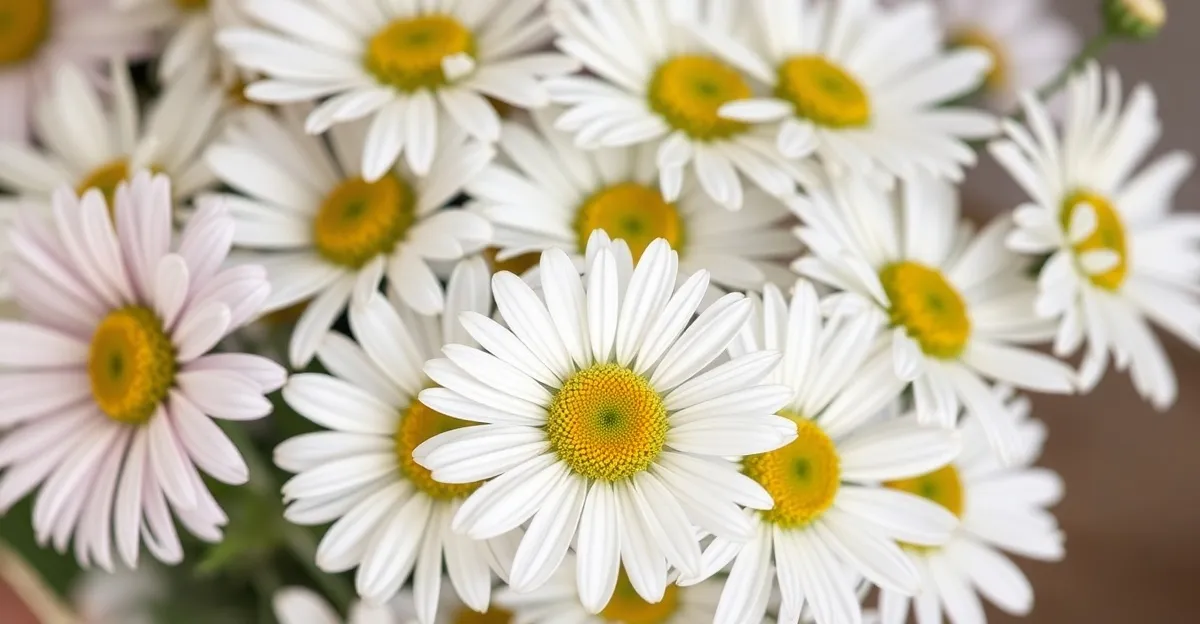
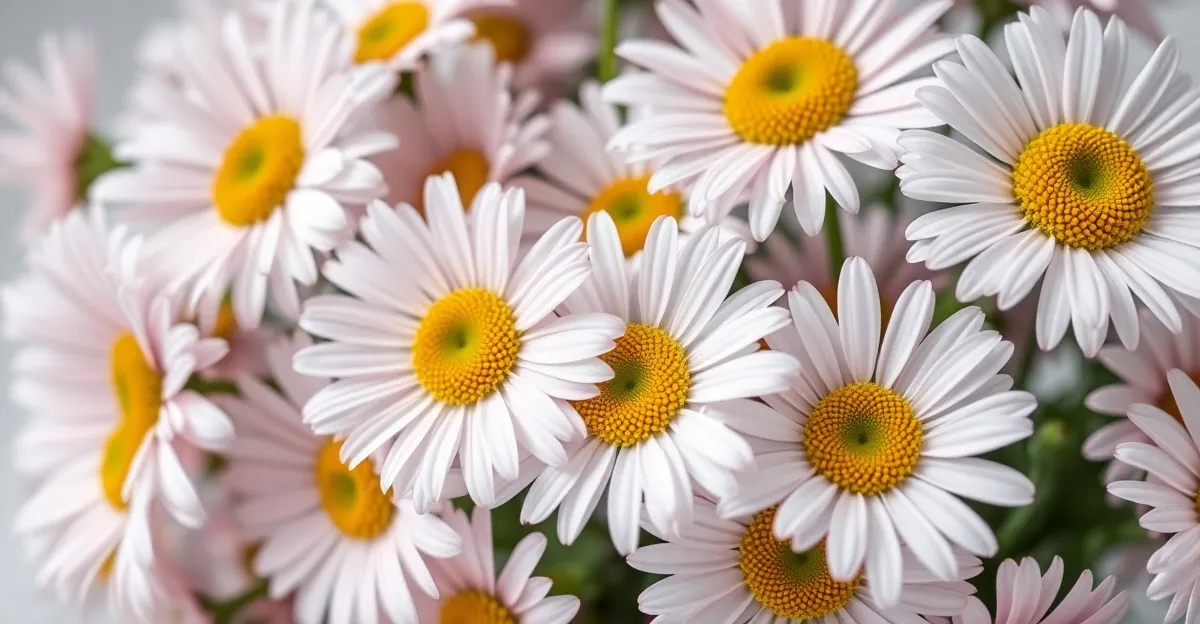
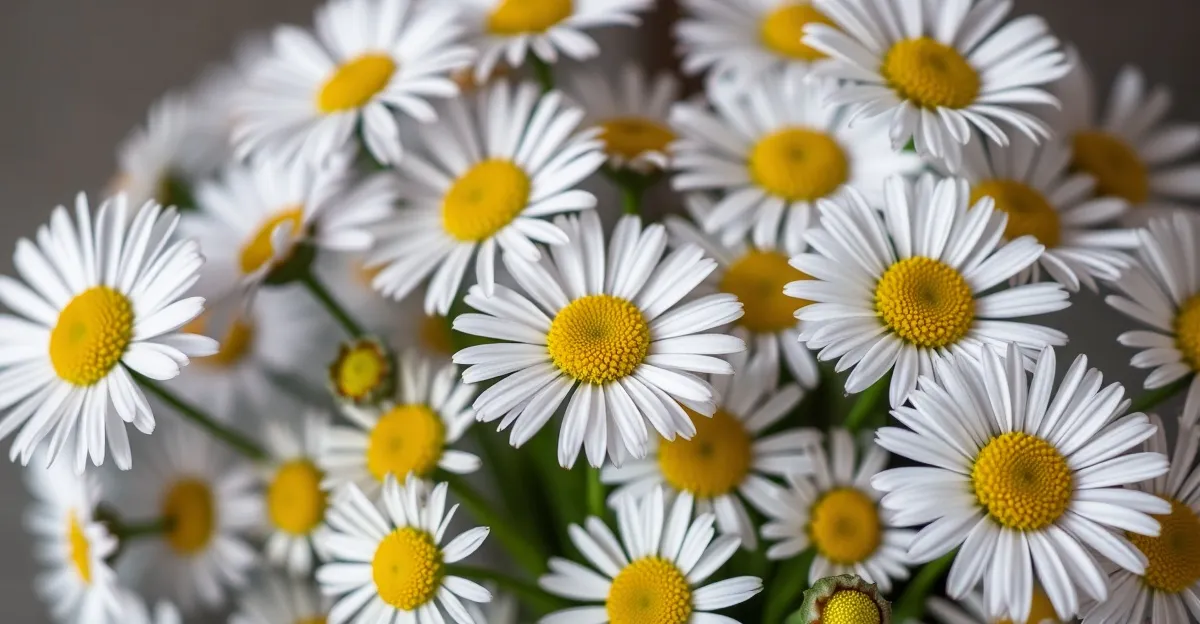
Within this vast family, the flower most commonly called "the daisy" in English is Bellis perennis — the common European daisy or lawn daisy — native to central and northern Europe and western Asia. This small white-petalled flower with a yellow disc centre is the ancestor of much of what we understand culturally as "daisy," and its simple beauty has fascinated humans since prehistoric times.
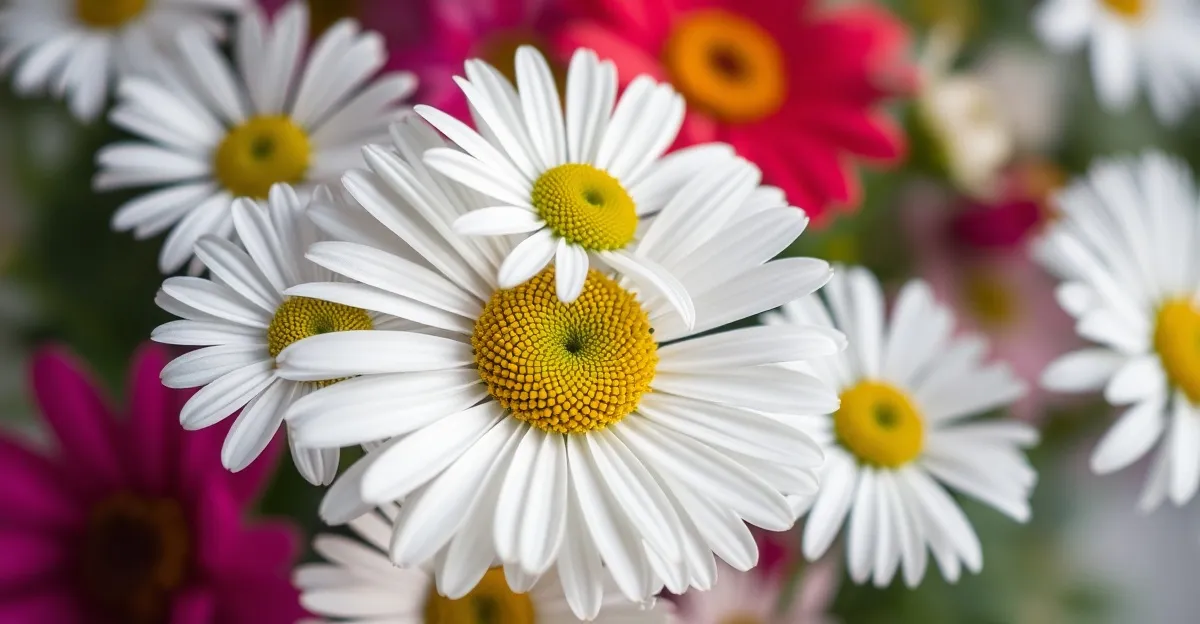
The gerbera daisy (Gerbera jamesonii), which dominates modern floristry including in Bali, has a separate origin: it is native to South Africa and was first formally described by Scottish botanist James Harvey in 1881 in the Barberton region of what is now Mpumalanga province. Its common names include Barberton daisy, Transvaal daisy, and African daisy.
Ancient Daisy: Egypt, Greece, and Rome
The earliest archaeological evidence of humans using daisies comes from ancient Egypt, where daisy garlands have been found in tombs dating back to at least 1500 BCE. Egyptian gardens cultivated daisies, and the flowers appear in paintings and decorative motifs throughout the ancient world.
In ancient Greece, daisies were associated with Artemis, goddess of the hunt and of nature. The flower's clean white petals and its tendency to grow wild and unpruned resonated with Artemis's domain — the untamed, the forest, the free. This association gave daisies a particular resonance in rural and hunter communities throughout the ancient Greek world.
Roman soldiers carried the common daisy as a medicinal plant rather than an ornamental one. Daisy juice (extracted from the petals and leaves) was used to treat wounds on the battlefield — Roman military physicians packed wounds with daisy-soaked bandages because the plant has genuine antiseptic and anti-inflammatory properties. When Roman legions marched through Europe, they spread daisies along their routes, which is partly why the common daisy is found throughout former Roman territories.
The Roman naturalist Pliny the Elder wrote about daisies in his encyclopedic work Naturalis Historia (77 CE), noting their medical applications and wide distribution across the known world.
Medieval Daisy: The Language of Love
In medieval Europe, the daisy became one of the most symbolically loaded flowers in the entire botanical vocabulary — which is remarkable given its apparent simplicity.
In the tradition of courtly love, daisies were associated with loyal, patient, faithful love. The French word for daisy, marguerite, became one of the most popular women's names in medieval Europe precisely because of these associations. Margaret of Anjou, Queen of England in the fifteenth century, used the daisy as her personal badge, and the flower appears throughout medieval heraldry and poetry.
Geoffrey Chaucer, writing in the fourteenth century, was a devoted celebrant of the daisy. His poem Prologue to the Legend of Good Women describes his reverence for the daisy with the kind of intensity usually reserved for religious subjects. He rises early to watch daisies open with the morning sun, describing the experience as one of the great pleasures of his life. This is not ironic or metaphorical — Chaucer genuinely loved daisies, and he makes the case for their beauty with considerable eloquence.
Dante also referenced the daisy in his poetry, and the flower appears throughout medieval Italian literature as a symbol of pure love and faithful devotion.
The "He Loves Me, He Loves Me Not" Tradition
The practice of pulling daisy petals to determine whether a beloved loves you — "he loves me, he loves me not" — is recorded in European folklore from at least the medieval period, though it likely predates written record. The tradition transforms the daisy's natural structure (the alternating petals around the disc) into a kind of binary oracle.
In French, the tradition is effeuiller la marguerite (plucking the daisy), and it remains culturally embedded enough that any modern French person immediately understands the reference. The same tradition exists in German (Er liebt mich, er liebt mich nicht), Italian, and most other European languages, suggesting its age and depth in the culture.
The Daisy in Renaissance and Early Modern Europe
The Renaissance brought renewed interest in all things classical, and the daisy — beloved by ancient Greek and Roman writers — received a corresponding surge of attention from botanists, artists, and poets.
Botanical illustration flourished in the sixteenth and seventeenth centuries, and the daisy appears in virtually every major herbal of the period. John Gerard's Herball (1597), one of the most influential English botanical texts ever written, describes several daisy varieties with considerable accuracy and enthusiasm. Gerard notes both the medicinal applications (treating bruises, wounds, and joint pain) and the ornamental qualities of various daisy species.
In Renaissance art, the daisy appears frequently as a symbol in religious paintings — particularly in images of the Virgin Mary and the Christ child, where its white petals represent purity. Botticelli's paintings include daisy imagery, as do works by Fra Angelico and Albrecht Dürer.
The Victorian Language of Flowers and the Daisy
The Victorian era formalised what had been an informal flower language into something approaching a complete symbolic system. The Victorian language of flowers (floriography) assigned specific meanings to hundreds of flowers, and the daisy received several distinct meanings depending on the variety.
The common daisy (Bellis perennis) was assigned the meaning "I will think of it" or "Innocence" — a gentle, open sentiment suited to the flower's unpretentious character. The garden daisy more broadly was associated with "Beauty unknown to possessor" — the idea that the daisy's beauty is so natural and unassuming that the flower itself does not know how lovely it is.
Daisies were among the most popular flowers in Victorian posy-making — the small, tightly arranged bouquets (tussie-mussies) that people carried as personal fragrance and communication devices in an era before modern hygiene and when speaking directly was considered indelicate. A tussie-mussie containing daisies communicated innocent affection and sincere feeling without the heat of roses.
The Gerbera's Journey from South Africa to the World
While all of this history was unfolding around Bellis perennis and its European relatives, the flower that would eventually come to dominate global floristry — the gerbera daisy — was growing wild in South Africa, essentially unknown to European botanists until the late nineteenth century.
When James Harvey formally described and named the gerbera in 1881, he could not have anticipated that within a century it would become one of the most commercially important cut flowers in the world. The first significant botanical collection of gerberas reached Europe in the 1880s, and horticultural breeding began almost immediately. British gardener Robert Jameson (after whom Gerbera jamesonii is named) grew one of the first significant collections in the UK.
By the early twentieth century, Dutch and German flower breeders had begun the hybridisation work that would eventually produce the enormous, structurally perfect gerbera blooms we see in florists today. The Dutch flower industry — which industrialised cut flower growing and distribution in the twentieth century more comprehensively than any other country — played a crucial role in making gerberas globally available.
Today, gerbera daisies are one of the top five most commercially grown cut flowers in the world, alongside roses, chrysanthemums, carnations, and tulips.

The team
your florists
weekly subscription · Bali
We write about flowers because we love them. We deliver them because someone should — properly, weekly, across Bali.
— heyflowerPay once for 3, 6, or 12 months, no auto-renewal.
Daisies in Bali's Story
In Bali, the daisy's story is more recent than in Europe but no less interesting. The island's cut flower industry developed significantly in the late twentieth century, driven partly by tourism demand and partly by the global expansion of Dutch-influenced flower trading networks. Highland farms near Bedugul began growing gerberas in earnest from the 1980s and 1990s, and today Bali's gerbera production supplies both domestic and some export demand.
For a local florist perspective on how daisies grow in Bali's unique climate and terrain, our article can daisy grow in Bali? a florist's perspective covers the practical details of highland cultivation and home growing.
In Balinese ceremonial tradition, daisies do not carry the same deep ritual significance as locally important flowers like frangipani, gardenia, and jasmine. But in contemporary Bali, gerberas have found a place in everything from villa decoration to wedding florals to the daily fresh arrangement that many Canggu residents order through services like heyflower.co.
The Daisy in Literature and Culture
The daisy's literary history extends far beyond Chaucer. Wordsworth wrote "To the Daisy" — actually three poems by that title — celebrating the flower's democratic cheerfulness, its refusal to be only beautiful when conditions are perfect, its presence in ordinary fields rather than only in cultivated gardens. Blake included daisies in his botanical imagery. Tennyson, Keats, Shelley — virtually every English Romantic poet encountered the daisy and found something in it worth writing about.
In American literature, Emily Dickinson — a passionate gardener and botanical enthusiast — referred to herself in letters as "Daisy" and wrote poems about the flower's quiet persistence. F. Scott Fitzgerald named his most haunting romantic symbol Daisy in The Great Gatsby — a choice that carries all the flower's associations of innocent appearance concealing complexity.
The daisy's cultural presence in music, visual art, children's literature, and popular culture throughout the twentieth and twenty-first centuries is so extensive as to be almost invisible — it has become background to our world in the way that only things of genuine and lasting beauty manage.
Frequently Asked Questions
Why is the daisy called "day's eye"?
The Old English name daeges eage ("day's eye") refers to the common daisy's habit of closing its petals at night and opening them again at sunrise. The yellow disc at the centre was seen as a small sun, and the opening and closing tracked the movement of the actual sun across the sky. This name predates any other English term for the flower and is one of the oldest documented plant common names in the language.
When did gerbera daisies become popular in floristry?
Gerbera daisies began to appear in commercial floristry from the early twentieth century after Dutch and German breeders developed cultivars with the large, structured blooms suitable for cut flower use. Their rise to global floristry dominance accelerated from the 1960s and 1970s as Dutch flower auction systems made them available year-round at consistent quality.
Are daisies native to any part of Asia?
The Asteraceae family includes Asian members, but the classic European daisy (Bellis perennis) and the South African gerbera are not Asian natives. Some daisy-family plants are native to Asia, particularly chrysanthemums (originally from China) and some smaller Aster species. The daisies found in Bali's floristry are all cultivated varieties grown from originally non-Asian species.
Did ancient Asian civilizations use daisies?
Chrysanthemums, which are in the same Asteraceae family as daisies, have a very long history in Chinese and Japanese culture. However, chrysanthemums and the European/African daisies are separate plants with separate cultural histories. The daisy as understood in Western tradition did not have an equivalent cultural role in ancient Asian civilizations, which had their own distinct symbolic flower languages.
What was daisy medicine used for historically?
Historically, daisy species (Bellis perennis in particular) were used medicinally for: wound healing and infection prevention (the plant does have genuine mild antiseptic properties), treating bruises and joint inflammation, digestive complaints, and respiratory conditions. Modern herbalism still uses daisy preparations to some extent, though it has been largely superseded by more potent and targeted medicines.
The daisy has been with us for as long as we have been paying attention to flowers. From Egyptian tombs to Chaucer's morning walks to Bali's highland farms, this extraordinarily simple bloom has accumulated meaning without ever losing its essential character: open, honest, cheerful, faithful. That combination of depth and simplicity is rare in any form of beauty.
At heyflower.co, we source beautiful highland-grown gerbera daisies from Bali's finest farms and deliver them fresh to homes and villas across the island. Explore our flower subscription plans and bring this ancient, endlessly beautiful flower into your Bali home every week.
More on Daisy