The History and Origin of the Calla Lily
The calla lily's journey from African wetlands to Bali's finest florists is a fascinating story of botany, art, and cultural transformation. Read it here.
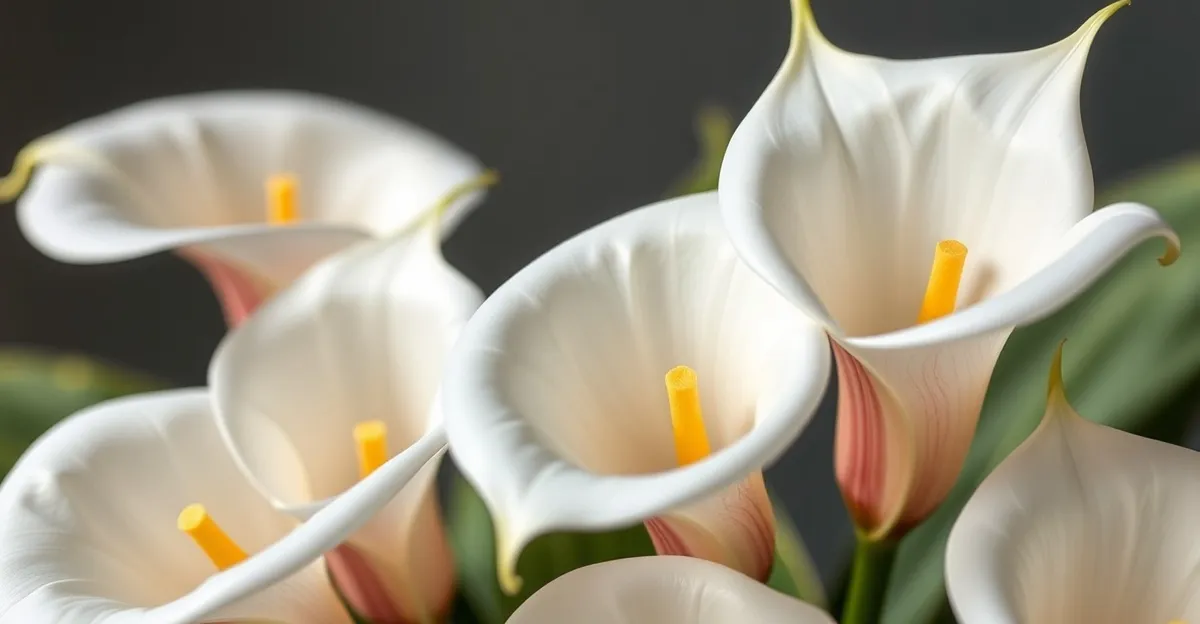
The calla lily has a paradox at its centre: it is not a lily. This simple taxonomic fact turns out to be the starting point of a history far more interesting than most flowers can claim — a history involving botanical misidentification, Renaissance art, Diego Rivera's obsession, a revolution in bridal floristry, and a journey from South African wetlands to the highland farms of Bali.
Understanding where the calla lily actually comes from, and how it acquired the meanings we attach to it today, reveals a flower that has been consistently more interesting, more adaptable, and more culturally significant than its serene, architectural face might suggest.
The Name Problem: Not a Lily at All
Let us begin with the taxonomic confusion, because it matters for everything that follows.
The calla lily (Zantedeschia aethiopica, along with its coloured relatives in the Zantedeschia genus) is a member of the Araceae family — the aroid family. Its relatives include the peace lily (Spathiphyllum), the anthurium, the philodendron, and the common elephant ear. None of these are lilies in any botanical sense.
The true lilies belong to the genus Lilium in the family Liliaceae — a completely different botanical family with different structure, different reproductive biology, and different evolutionary history.
How did the confusion arise? The name "calla" comes from the Greek kalos, meaning beautiful — a characteristically direct ancient Greek quality assessment. Early European botanists who first described the plant were working within a naming convention that used "lily" loosely for any elegant, large-flowered bulbous or rhizomatous plant. The name stuck despite centuries of increasingly sophisticated botanical understanding.
The genus name Zantedeschia was given in the 1820s by the German botanist Kurt Sprengel, honouring Giovanni Zantedeschi, an Italian botanist. The species name aethiopica is a historical misnomer — "Ethiopian" was used by early European botanists as a general term for sub-Saharan Africa, even though the plant is specifically South African rather than Ethiopian.
Origins in South African Wetlands
The calla lily's true home is the Cape Floristic Region and surrounding areas of South Africa — one of the world's most extraordinary biodiversity hotspots, containing a greater concentration of unique plant species per unit area than almost anywhere else on Earth.
In the wild, Zantedeschia aethiopica grows in moist to wet habitats: along stream banks, in seasonal wetlands, in the rich valley soils of the Western Cape. The species thrives in areas with a Mediterranean-type climate — warm, dry summers with mild, wet winters — though it has demonstrated remarkable adaptability to a wider range of conditions.
The plant's natural community includes other iconic South African species: Cape reeds, water lilies (actual lilies in this case), various wetland grasses and sedges. In spring, wild calla lilies in the Cape create sweeping white displays that are genuinely breathtaking — one of the Southern Hemisphere's most spectacular wildflower phenomena.
The coloured varieties that modern florists use — the deep purples, pinks, yellows, and oranges — are primarily hybrids derived from other Zantedeschia species native to Southern and East Africa. Zantedeschia rehmannii (the pink calla), Zantedeschia elliotiana (the yellow-spotted calla), and several others have been combined through selective breeding to produce the colour range available today.
First Contact with European Botany
The Cape of Good Hope region was a significant stopping point for European ships engaged in the spice trade with Asia from the late fifteenth century onward. Dutch, Portuguese, English, and French sailors stopped at Cape Town (originally a Dutch East India Company settlement) on their way to and from the East Indies, and botanical specimens collected in the region began making their way to European botanical gardens and collections from the sixteenth century onward.
The first documented European botanical description of Zantedeschia aethiopica appears in the late sixteenth century. Clusius (Charles de l'Écluse), the Flemish botanist who was instrumental in introducing the tulip to the Netherlands, described a plant matching the calla lily in his writings of the 1590s, noting its unusual structure and striking white spathe.
Formal introduction of living specimens to European gardens appears to have begun in the early seventeenth century. The Chelsea Physic Garden in London had specimens by the mid-seventeenth century. French botanical gardens in Paris received plants from the Cape region through French East India Company connections.
The Calla Lily in European Art
Once calla lilies entered European botanical collections and gardens, they quickly attracted the attention of artists. The flower's structural clarity — the clean architectural form, the smooth spathe, the elegant proportions — made it an exceptional botanical illustration subject and, eventually, a subject in its own right.
By the eighteenth century, calla lilies appeared in Dutch and Flemish still life paintings alongside roses, tulips, and other prized horticultural subjects. These were not casual inclusions — botanical accuracy in still life painting was a marker of both scientific and artistic sophistication, and painters competed to depict the most exotic and recently introduced specimens.
The symbolic vocabulary being developed around the calla lily in these paintings drew on the flower's visual qualities: the white spathe's purity, the cup-like form's receptivity and abundance, the upward-facing bloom's spiritual aspiration.
In religious art, the calla lily began appearing in nativity scenes and images of the Annunciation from the eighteenth century onward, supplementing and sometimes replacing the white lily (Lilium candidum, the Madonna Lily) that had previously dominated these compositions. The calla lily's specific visual qualities — the smooth, modern-looking form — gave religious paintings a different quality from the more fussy, multi-petalled traditional lily.
Victorian England and the Bridal Association
The nineteenth century saw the calla lily's reputation solidify in both horticultural and cultural terms. Victoria's England had a passion for new botanical specimens, and the calla lily — large, white, structurally extraordinary — became a greenhouse favourite among the wealthy.
The development of the Victorian language of flowers gave the calla lily formal symbolic meanings: "magnificent beauty" was the primary assignment, along with "purity" and more ambiguously, associations with transformation and transition. These meanings gave florists and gift-givers a framework for incorporating calla lilies into the symbolic communication system that Victorian society built around flowers.
The bridal association developed naturally from these meanings. A flower meaning "magnificent beauty" and "purity" was an obvious choice for wedding ceremony and bouquet use, and by the late Victorian period, calla lilies were well-established in upper-class bridal florals.
Diego Rivera and the Mexican Cultural Identity
One of the most unexpected chapters in the calla lily's history is its absorption into Mexican cultural identity through the extraordinary art of Diego Rivera, the muralist whose work defined Mexican national self-expression in the early twentieth century.
Rivera painted calla lilies obsessively throughout his career — in still life compositions, in portraits of Mexican women carrying armloads of the white flowers to market, in vast murals depicting Mexican life. His paintings of flower vendors carrying calla lilies are among the most recognized images in all of Mexican art.
Rivera's calla lily paintings are not simply botanical appreciation. They are statements about Mexican beauty, indigenous dignity, and the earthy sensuality of Mexican life. The women in his paintings are often indigenous or mestiza, carrying flowers that were themselves transplants — European in name, South African in origin, yet depicted as inseparably Mexican. The calla lily in Rivera's work becomes a symbol of Mexico's capacity to absorb and transform the world's beauty into something unmistakably its own.
This cultural transformation meant that in Mexican contexts, calla lilies carry warmth and celebration rather than the solemnity they carry in Anglo-American cultural contexts — a perfect example of how a flower's meaning is constructed by the culture that receives it.
Frida Kahlo and Personal Symbolism
Rivera's partner Frida Kahlo also incorporated calla lilies into her self-portraits and personal visual language, though with somewhat different emphasis — for Kahlo, the calla lily's association with the feminine body and with transformation took on specific personal resonance given her own experiences with physical pain and medical transformation.
Together, Rivera and Kahlo's engagement with the calla lily gave it a layer of art historical significance that few flowers can match.
The Twentieth Century: Floristry Industrialisation and Global Spread
The industrialisation of cut flower production in the Netherlands through the twentieth century transformed the global availability of many flowers, including calla lilies. Dutch growers and breeders who already had strong connections to South Africa through historical links developed commercially viable calla lily cultivation, producing the long-stemmed, uniformly perfect blooms that modern floristry depends on.
The development of the Zantedeschia hybrid colour range — through deliberate crossing of species with different coloured spathes — expanded the calla lily from a single white species into the extraordinary palette of deep purples, pinks, yellows, and corals available today. This hybridisation work, largely completed in the second half of the twentieth century, created the modern florist's calla lily.
Global air freight made these flowers available worldwide, and by the late twentieth century, calla lilies were firmly established as one of the world's most important luxury cut flowers.

The team
your florists
weekly subscription · Bali
We write about flowers because we love them. We deliver them because someone should — properly, weekly, across Bali.
— heyflowerPay once for 3, 6, or 12 months, no auto-renewal.
Calla Lily in Bali's Story
In Bali, the calla lily's story is relatively recent. The island's cut flower industry developed its current form in the latter twentieth century, and while white calla lilies are now grown commercially in Bali's highland areas (particularly around Bedugul), coloured varieties are primarily sourced from Java or imported.
What is particularly interesting about Bali's relationship with calla lilies is how the flower has been absorbed into a culture with entirely different aesthetic and spiritual frameworks. For Balinese Hindus, the calla lily does not carry the Western funerary association and is received as a beautiful, sophisticated flower without a specific ceremonial role. For Bali's international community, it carries all the Western associations. For the island's Chinese-Indonesian community, specific care around colour choices is warranted.
In a single delivery from heyflower.co to a Bali address, the same calla lily arrangement might be received as a romantic gesture, a premium lifestyle accessory, a sophisticated design statement, or a culturally neutral beautiful flower — depending entirely on who opens the door. That extraordinary multicultural adaptability is, in its way, the most Balinese thing about this deeply un-Balinese flower.
For a practical guide to growing calla lilies in Bali's specific conditions, can calla lily grow in Bali? a florist's perspective covers the highland farming reality and home gardening options. For the full spectrum of what different calla lily colours communicate, see our calla lily colors and what each one symbolises guide.
Frequently Asked Questions
Why is Zantedeschia aethiopica called "Ethiopian" when it comes from South Africa?
The species name aethiopica reflects a historical European geographic confusion where "Ethiopia" or "Aethiopia" was used as a general term for sub-Saharan Africa. When European botanists assigned the species name in the eighteenth century, the specific region of origin (what is now South Africa) was not always clearly distinguished from "Africa" broadly. The name is a historical artifact and is not considered accurate today, but it persists because changing established species names requires careful taxonomic process.
When did calla lilies become popular as wedding flowers?
Calla lilies became established in bridal floristry through the Victorian era (mid to late 1800s), when their association with purity and magnificent beauty aligned perfectly with bridal symbolism. Their popularity in weddings accelerated through the twentieth century as commercial cultivation made them more widely available. They were particularly fashionable in 1920s-1930s Art Deco aesthetics and have maintained consistent bridal popularity since.
Are there any calla lily relatives that grow natively in Southeast Asia?
No — the Zantedeschia genus is African in origin, and no native Southeast Asian relatives of the calla lily exist. The aroids related to calla lilies that grow in Southeast Asia (such as the colocasia/taro family) are much larger, agricultural-type plants rather than ornamental flowers.
How has calla lily cultivation changed over the past century?
Modern calla lily cultivation has been transformed by: hybridisation to create the colour range (non-existent before the twentieth century), controlled environment growing to produce year-round supply, post-harvest technology to extend vase life, and global logistics to make highland-grown flowers available in coastal cities within hours. A Victorian florist would be astonished by the quality, quantity, and colour range of calla lilies now available.
What makes calla lilies so enduring in both art and floristry?
The answer probably lies in the flower's structural perfection — its form is so complete and so resolved that it looks as though it was designed rather than evolved. This quality means it does not date: a calla lily arrangement made in 1920 looks as contemporary as one made today because the flower itself is outside of stylistic time. Art and design movements come and go; the calla lily simply continues being exactly what it is.
From South African wetlands to Renaissance paintings, from Diego Rivera's murals to Bali's highland farms, the calla lily has traveled extraordinary distances — geographic, cultural, and symbolic — without ever losing its essential character. That combination of adaptability and integrity is perhaps its greatest achievement.
At heyflower.co, we source beautiful calla lilies from Bali's finest highland growers and design arrangements that honour the flower's singular history. Explore our flower subscription plans and experience the pleasure of this remarkable flower in your Bali home every week.
More on Calla lily