Picking the right vase for your restaurant booth
The right vase for a restaurant booth balances aesthetics with practicality. A guide for Bali restaurant owners choosing vessels that survive the service.
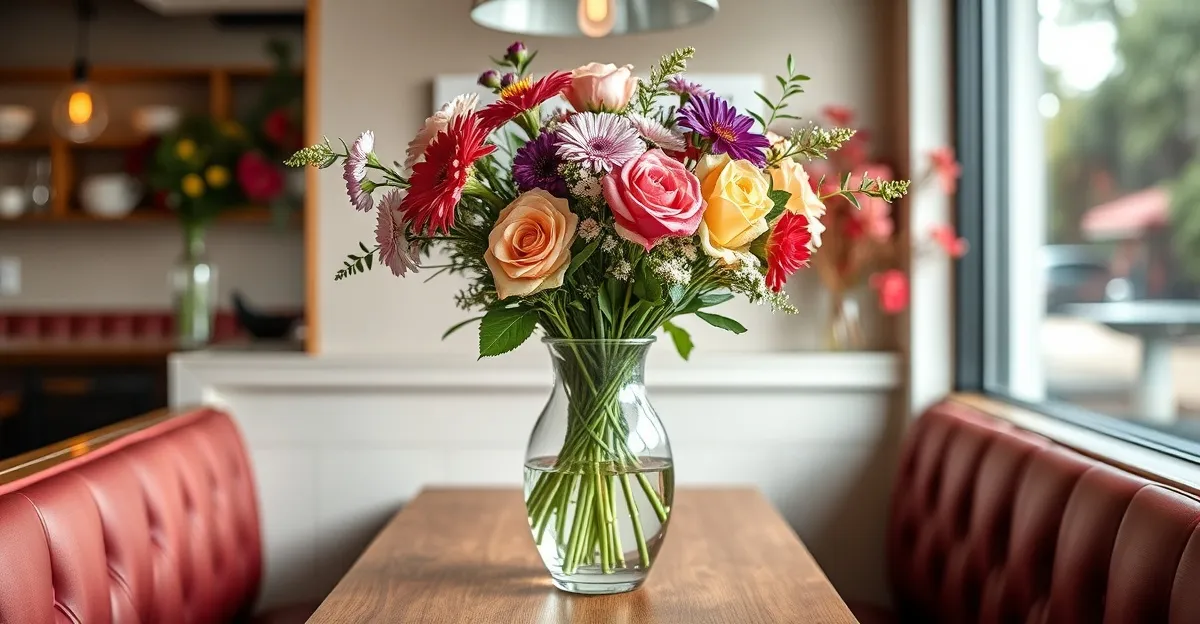
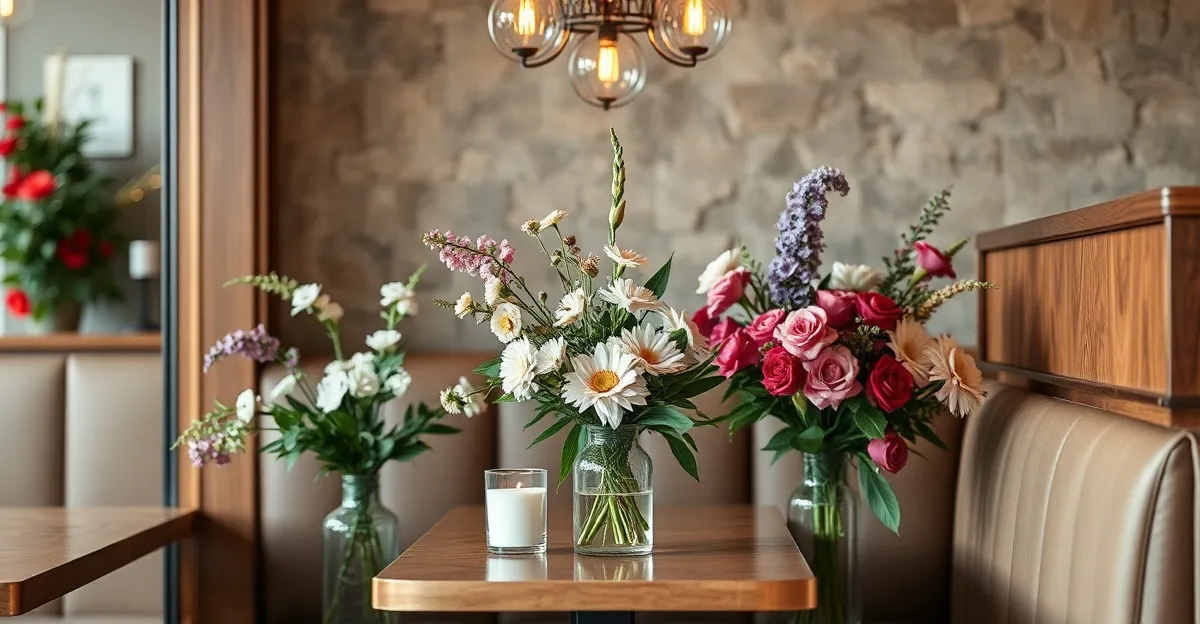
In a restaurant booth, the vase is part of the table setting. It's as visible to diners as the cutlery and the glassware, and it communicates something about the care and quality of the establishment in the same way those elements do. The wrong vase — mass-produced plastic, cracked ceramic, or something that looks like it was borrowed from a home kitchen — undermines the experience even when the flowers themselves are beautiful.
Getting the booth vase right is particularly important in Bali, where the design bar for restaurant interiors has risen substantially and guests — a significant proportion of whom are well-traveled international visitors — notice.
Size and proportion for a booth table
A booth table is compact. Most restaurant booths seat two to four people across a table that's 60–90cm wide. The flower arrangement sits at the center of this table as part of the overall table composition (with condiments, candles, and place settings). The vase needs to:
- Be small enough to leave meaningful table space for food and drinks
- Be low enough not to block sightlines across the table
- Be stable enough that it doesn't tip when guests reach across
The right maximum dimensions for a booth vase: 8–10cm wide at the base, 15–20cm tall maximum. Bud vases in the 10–12cm range that hold one or two stems are ideal for intimate booths. For larger table configurations or booth-style banquettes, a slightly wider vessel (12–15cm) with a more generous cluster works.
Material choices and what they say about your restaurant
Ceramic: The most versatile material for restaurant booth vessels. Ceramic can be refined (porcelain, matte white) or rustic (terracotta, hand-thrown), matching the design language of virtually any restaurant aesthetic. It's durable enough for daily service use, easy to clean, and available locally at accessible prices from Bali's ceramics producers.
For a fine-dining or considered-casual restaurant (the Locavore/Bridges type of Ubud operation, or the upscale Seminyak dinner spots), matte white or charcoal ceramic is the right register. For a more relaxed, Balinese-influenced restaurant, natural terracotta or an earthy glaze communicates warmth and connection to local craft.
Clear glass: Practical and universally appropriate. The transparency means water condition is immediately visible — murky water is immediately obvious — which incentivizes proper maintenance. Glass also disappears visually, letting the flowers be the focus. Simple glass cylinder bud vases are the lowest-cost option that still looks intentional.
Bamboo tubes: For restaurants with a strong eco-identity or a traditional Balinese aesthetic, a sealed bamboo tube used as a bud vase is distinctive and authentic. The limitation is hygiene — bamboo requires thorough drying between uses to prevent mold, and a split or cracked bamboo tube needs to be replaced immediately in a food-service context.
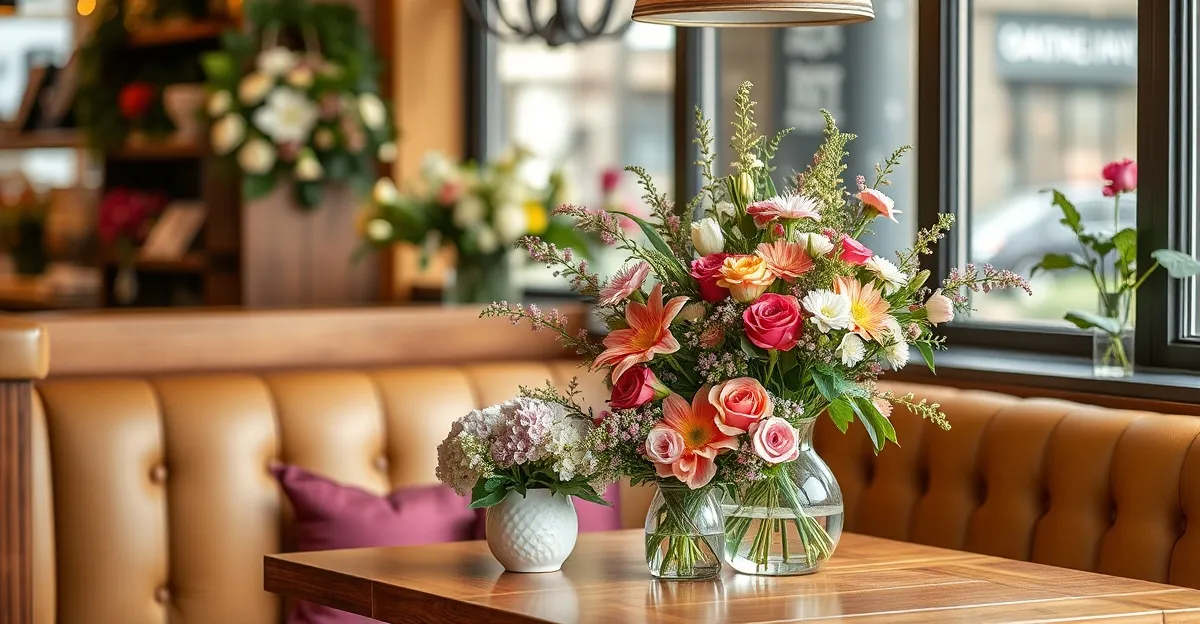
Brass or copper: A small brass bud vase on a restaurant table reads as elegant and adds warmth. Works particularly well in restaurants with warmer interiors — rich wood, leather booth seating, candlelight. Less suited to bright, modern, or eco-focused spaces.
Stone: Small carved stone or marble bud vases are heavy, stable, and look expensive. They're genuine objects in a way that cheap glass cylinders aren't. For restaurants wanting to make a statement through their table setting details — as the best Bali fine-dining restaurants do — a small carved stone bud vase is an investment in perceived quality.
Stability across a full service day
Restaurant vases tip. Guests reach across tables for condiments, their arm catches the vase, and if the vase isn't stable or isn't positioned correctly, it goes over. In a restaurant with cloth napkins and wooden floors, a tipped vase is at minimum an embarrassment and at maximum a significant cleanup problem.
The solutions:
Low center of gravity: Choose vases that are wider at the base than at the neck. Even a small wide base dramatically improves stability compared to a narrow cylinder.
Weight: Heavy vases don't tip. A small carved stone bud vase is essentially impossible to accidentally tip. A heavy ceramic piece with thick walls is significantly more stable than a thin glass cylinder of the same height.
Positioning: Place the vase at the center-back of the table (away from the eating area), not at the center-front where reaching across the table is more likely to disturb it.
Vessel fill: Fill the vase with enough water and the stems create their own weight. An almost-empty vase with one lightweight stem and very little water is the most tippy configuration. Keep vases well-filled.
Buying consistent booth vases for the whole restaurant
A restaurant with eight booths needs eight identical (or at minimum visually consistent) vases. Buying from local markets requires checking that enough matching pieces are available, or accepting variation. Both Jalan Raya Mas ceramics studios and the craft markets at Sukawati in Gianyar can often supply consistent quantities of the same design if you ask and plan ahead.
For glass cylinders (the most standardized option), Ace Hardware and homeware shops throughout Bali stock them in quantities. Buying 10–15 at once is straightforward and the per-piece cost is very low.
For restaurants that want distinctive local ceramics but need consistency, commissioning a batch from a local ceramicist is possible. Several Ubud studios accept commercial orders — the lead time is 2–4 weeks and the per-piece cost rises with order quantity minimums, but the result is vessel-as-brand-identity rather than vessel-as-commodity.
For guidance on choosing the right flowers to place in your restaurant booth vessels, affordable corporate event bouquets that still look premium covers the sourcing principles that apply to restaurant operations needing consistent quality at sustainable cost.

The team
your florists
weekly subscription · Bali
We write about flowers because we love them. We deliver them because someone should — properly, weekly, across Bali.
— heyflowerPay once for 3, 6, or 12 months, no auto-renewal.
Cleaning and maintenance in a food service setting
Restaurant vases are food service equipment. They need to be maintained to food service hygiene standards, not home standards.
Between water changes (every 2 days): Empty, rinse with hot water, refill with clean water. Re-trim stems.
Weekly: Full wash with mild soap or diluted food-safe sanitizer. Rinse thoroughly. Allow to dry completely before refilling.
Monthly: Inspect for cracks, chips, or surface damage. Replace any damaged pieces. Cracked ceramic can harbor bacteria and is not appropriate in a food service environment.
For bamboo vessels: Dry completely after every use. Replace at the first sign of cracking, splitting, or mold.
Coordination with the overall table setting
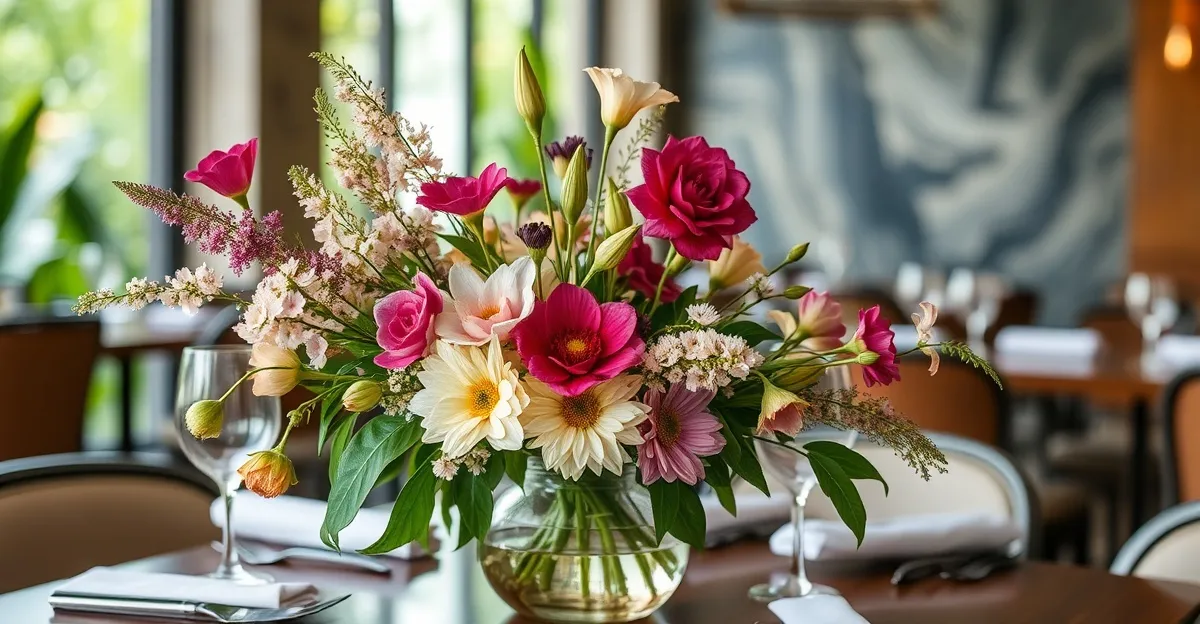
The booth vase doesn't exist in isolation — it's part of a table setting that includes glassware, crockery, cutlery, and condiments. Consider:
Material family: If your crockery is matte white ceramic, a matte white ceramic bud vase creates a coherent table. If you use rustic terracotta plates, a terracotta vessel feels connected.
Color: Neutral vessel colors (white, charcoal, natural clay, clear glass) work with any flower selection. A colored vessel limits which flowers look good in it.
Scale: The vase should be a minor element of the table setting, not the dominant one. If the glassware is generous and the crockery is substantial, a larger bud vase can hold its place. On a minimal modern table setting, a very simple, small bud vase is more appropriate.
FAQ
What size vase is right for a restaurant booth table? Maximum 10cm wide at the base and 20cm tall for most booths. Bud vases in the 10–15cm height range work for single stems. Keep the vase small enough to leave meaningful table space for food and drinks.
Should restaurant booth vases all match? Yes. Consistent vases across all booths communicate professionalism. Variation reads as inconsistent design. Buy matching sets or commission consistent local pieces.
Is glass or ceramic better for restaurant booth vases? Both work well. Glass is more practical (visible water level) and lower cost. Ceramic is more aesthetic and communicates more quality. For a mid-range to upscale restaurant, ceramic is the better investment.
How do I prevent restaurant booth vases from tipping? Choose vessels with a wide base and low center of gravity, or deliberately heavy pieces (thick ceramic, small stone vases). Position at the back of the table rather than the center-front.
Where can I buy matching booth vases in Bali? Jalan Raya Mas in Ubud for handmade ceramics. Ace Hardware for glass cylinders in quantity. Sukawati craft market for a mix of options. Commission local ceramicists for custom matching sets.
Ready to bring fresh flowers to your Bali home or event? Explore our weekly flower subscription and get handpicked blooms delivered to your door every week.
More on restaurant booth