Flower arrangement ideas for your restaurant booth
Flowers in restaurant booths create intimacy and atmosphere. Arrangement ideas for Bali restaurants that look beautiful, survive service, and enhance the dining experience.
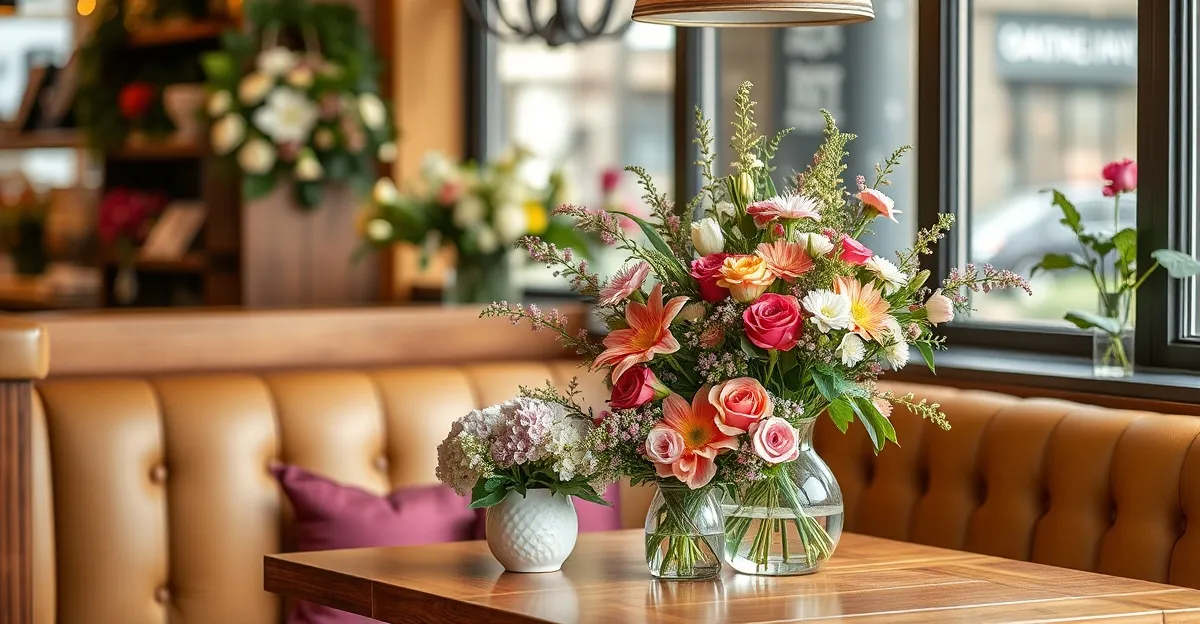
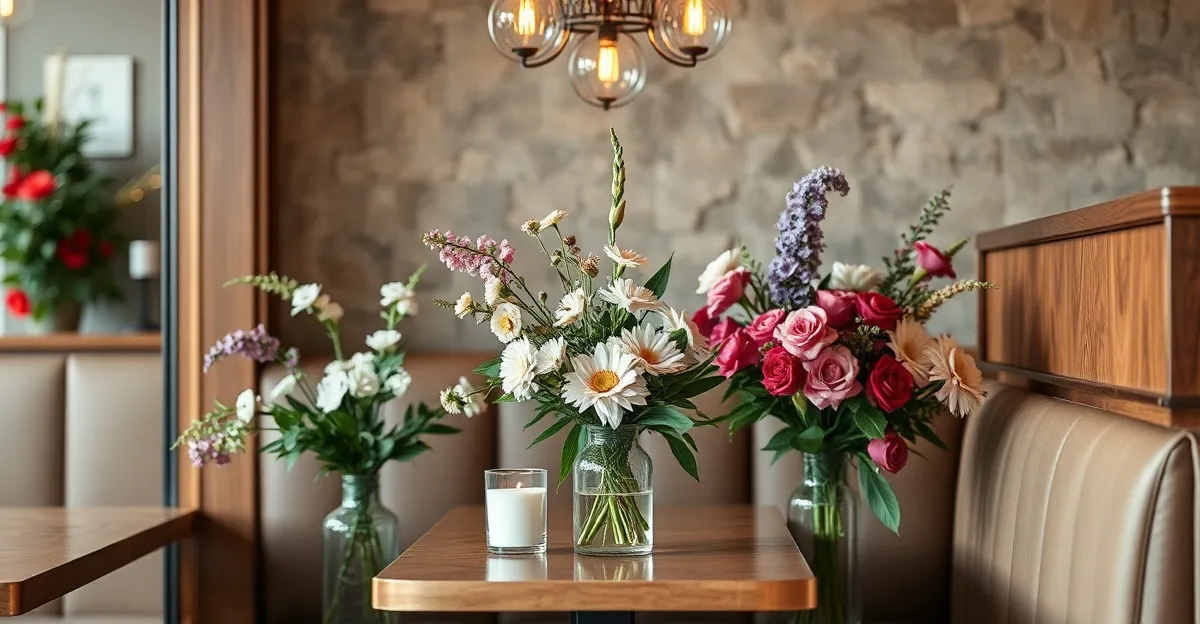
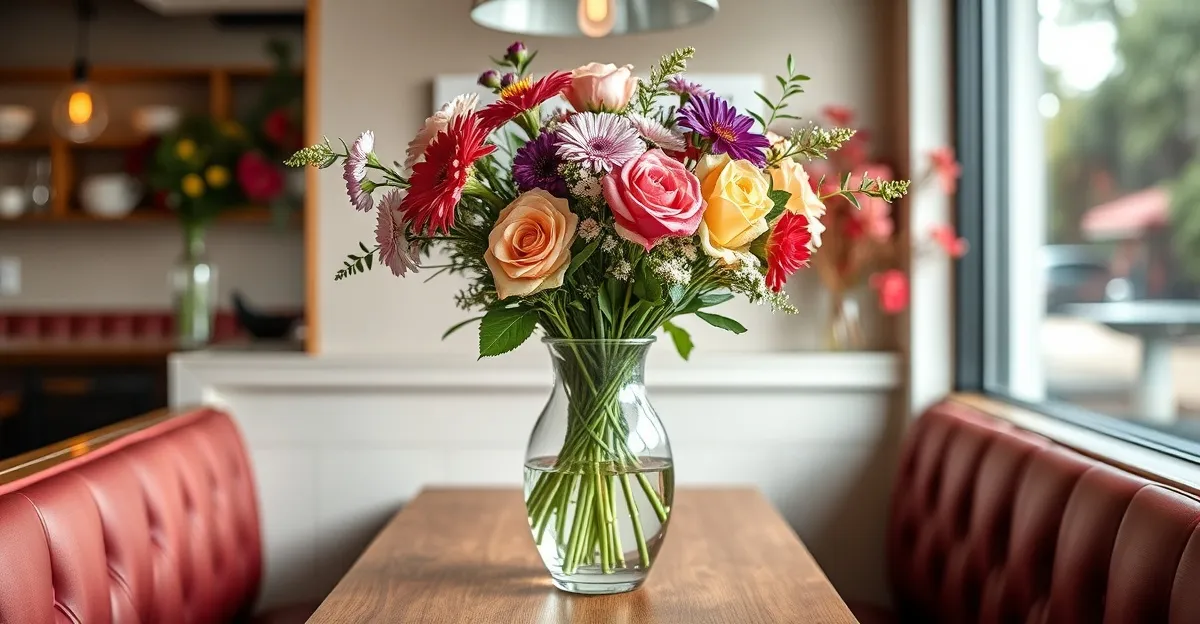
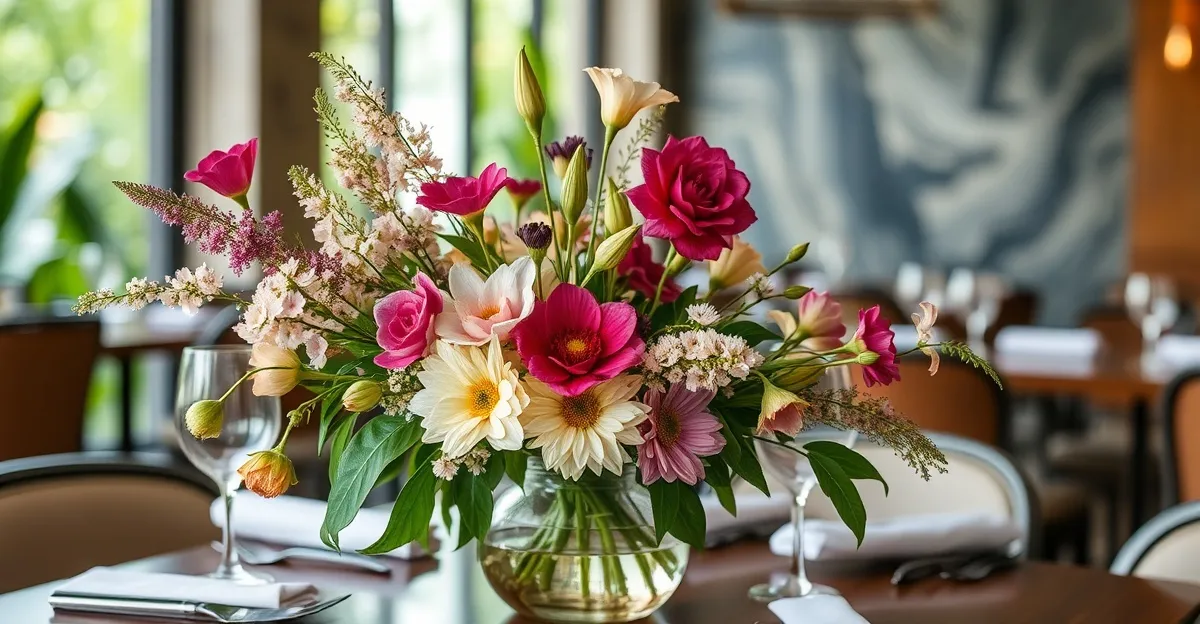
A restaurant booth is a different kind of flower location from every other place in the building. It's intimate — guests are close to the arrangement, often across a small table where a centerpiece is part of the immediate sensory experience rather than a background detail. Done well, a flower in a restaurant booth creates a sense of occasion. Done poorly — a wilted carnation in a plastic sleeve on a sticky table — it drags the whole dining experience down.
Bali's restaurant scene has evolved considerably in the last decade. From the high-end fine dining at Locavore in Ubud to the casual beach-facing operations in Seminyak and the rice terrace restaurants in the Ubud corridor, the expectation for thoughtful interiors — including flowers — has risen across the board. Here's how to get booth flowers right.
What makes a restaurant booth different from other locations
Proximity: Diners sit close to booth centerpieces. This means the arrangement is scrutinized up close rather than appreciated from a distance. Details matter more — wilted individual petals, murky vase water, stems that haven't been trimmed properly. But it also means that a beautiful, small arrangement has more impact than a large one seen from far away.
Height: Too tall and you block the view across the table. Restaurant booth centerpieces should be low enough that diners can see each other clearly — a maximum of 25–30cm tall for intimate two-to-four person booths. Low and wide arrangements work better than tall ones in this context.
Scent: Diners are smelling their food. Strong flower fragrance competes with the kitchen's work. Use low-scent or scent-free varieties. This is even more important in a restaurant than in a spa, because food aroma is the centrepiece of the whole experience.
Durability through service: Restaurant booth flowers are in place through lunch service, the afternoon gap, and dinner service. They need to look good from noon to midnight, seven days a week. Varieties that hold their appearance through a full service day are essential.
Arrangement styles that work in restaurant booths
The single bud vase: Clean, minimal, and completely appropriate for any restaurant aesthetic. One beautiful flower — a single rose, an orchid stem, an anthurium — in a narrow vase at the center of the table. This approach is used in some of Bali's most respected restaurants precisely because it communicates restraint and quality. A single stem says "we chose this carefully" in a way that a cluster of carnations from the market doesn't.
The compact cluster: Three to five short-stemmed flowers in a low, wide-mouthed vessel. The arrangement should be dense and well-composed, not sparse. Three chrysanthemums with a few stems of eucalyptus or tropical foliage create a compact, polished look that's easy to maintain. Replace individual stems as they fade without redoing the whole arrangement.
Bud vase collection: For restaurants with a bohemian or artisanal identity — the kind of Ubud restaurant that uses mismatched ceramics and serves food on banana leaves — three small bud vases in a loose cluster at the center of the booth table can look entirely deliberate and beautiful. Each with a single stem. No matching required.
Floating blooms in a shallow dish: The Bali spa aesthetic brought to the restaurant table. A small flat dish with clean water and two or three floating frangipani or gardenia heads creates an entirely different table atmosphere from a conventional vase arrangement. This works particularly well in restaurants with a spiritual or wellness dimension — and in Bali, that category is large.
Flower varieties that work through a full service day
Chrysanthemums: The practical choice. Lasts 10–14 days, holds petals cleanly, no significant scent. Both pompom and spray varieties work for restaurant booths — pompoms for a more dense, compact look; spray chrysanthemums for something with a lighter quality.
Orchid sprays: Particularly useful for higher-end restaurants that need the arrangement to communicate quality. A single white dendrobium spray in a clear glass or matte ceramic vase is unmistakably elegant. Lasts 14–21 days. No scent. No petal drop.
Carnations: Useful for their color range and longevity. Restaurants wanting to coordinate booth flowers with their brand palette — a restaurant with deep green and terracotta branding can match with burgundy carnations and terracotta vessels, for example — will find carnations offer more color options than most other affordable varieties.
Anthuriums: A single anthurium per booth is the high-impact, low-maintenance choice for contemporary Bali restaurants. The sculptural quality works well in modern interiors, the longevity (14–21 days) reduces restocking frequency, and the no-scent profile is ideal for a food-service environment.
Local tropical foliage: For restaurants with an explicitly Balinese or tropical identity, foliage arrangements without cut flowers communicate a commitment to local materials and a sophisticated aesthetic. A small vessel of monstera, heliconia, or alocasia at each booth table is striking and completely at home in the Bali context.
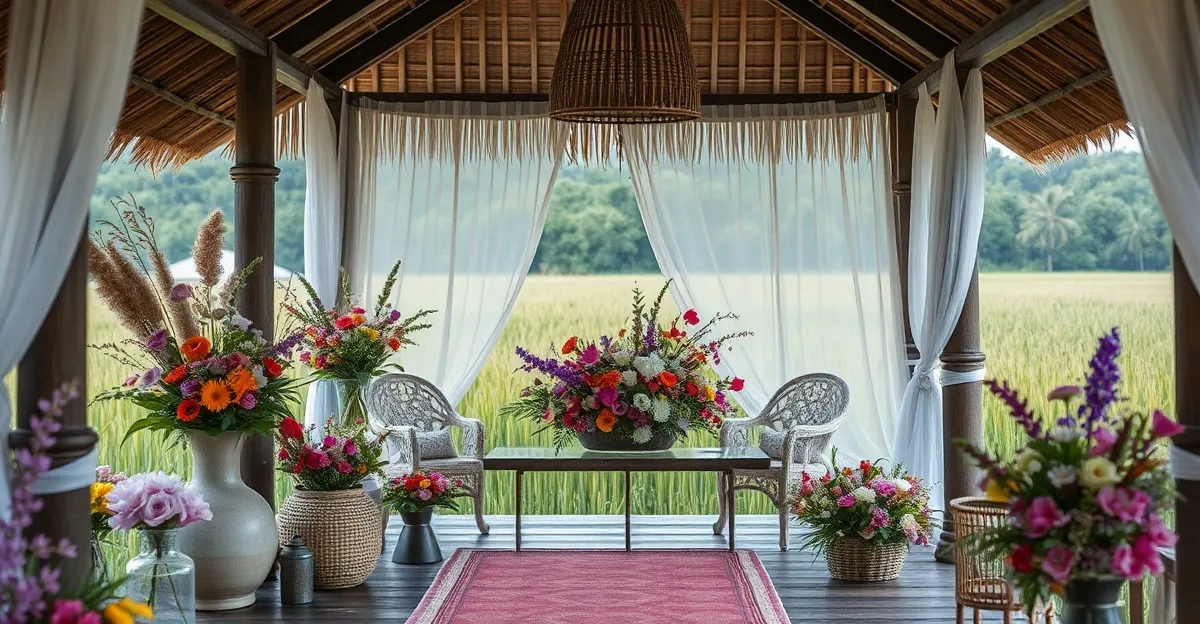
For restaurants thinking about flowers as part of a broader hospitality and event strategy, event flower packages for a rice field pavilion in Bali covers large-scale Bali floral event thinking that applies to restaurants managing private dining events.
Coordinating booth flowers with the overall restaurant
Booth centerpieces don't exist in isolation — they're part of the whole restaurant atmosphere. The arrangement style should connect to what's happening in the rest of the space.
If the restaurant has a large statement arrangement at the entrance or at the bar, the booth arrangements can be simpler — they're accents to the main feature, not competing statements. If the entrance and bar are relatively unadorned, booth flowers carry more of the decorative weight and can be slightly more generous.
Match the vessel to the table surface. A wooden rustic table suits a terracotta or unglazed ceramic vessel. A marble or polished concrete table suits glass or matte ceramic. The vessel should look like it belongs on the table, not like it was placed there from a different restaurant.
Color coordination across the booth table is more important in a restaurant than in a home, because guests are paying attention to the table as part of the experience they've paid for. A single color per arrangement — all white flowers, all blush, all terracotta — looks more considered than a mixed palette in a small booth setting.

The team
your florists
weekly subscription · Bali
We write about flowers because we love them. We deliver them because someone should — properly, weekly, across Bali.
— heyflowerPay once for 3, 6, or 12 months, no auto-renewal.
Practicalities of booth flower management
Changing water in situ: In a busy restaurant, you can't remove vases from tables during service to change water. Use a small ladle or a squeeze bottle to remove old water and add fresh water without moving the arrangement. Alternatively, use a vessel with a liner (a small inner container) that can be lifted out for cleaning.
Staff responsibility: Assign booth flower maintenance to a specific opening checklist item. Water check and stem removal should happen before service, not during or after. A three-minute morning routine keeps booth arrangements consistently presentable.
Multi-booth consistency: If your restaurant has six or twelve booths, consistency matters. Identical arrangements in identical vessels across all booths read as professional. Variation between booths reads as inconsistent and slightly chaotic — fine in some contexts, but most Bali restaurants are aiming for a more composed impression.
Budget per booth: A single bud vase with an anthurium stem costs around Rp 30,000–50,000 per booth and lasts two weeks. For a restaurant with ten booths, that's Rp 300,000–500,000 per fortnight — an extremely modest investment relative to the experience impact.
The best flowers for a dinner party host gift in Bali covers the flowers that guests associate with quality and generosity — useful reading for understanding what your booth flowers are communicating to diners.
FAQ
How tall should a restaurant booth flower arrangement be? No taller than 25–30cm for a two-to-four person booth. Diners should be able to see each other clearly across the table. Low and wide arrangements work better than tall ones in this intimate setting.
What flowers should be avoided in a restaurant booth due to scent? Lilies, tuberose, hyacinths, and strongly fragrant rose varieties. Strong flower scent competes with food aromas, which is never desirable in a restaurant context.
How often should restaurant booth flowers be refreshed? With chrysanthemums or carnations: every week. With anthuriums or orchids: every two weeks. Water should be changed every two days regardless of variety.
Should all booths in a restaurant have identical arrangements? Yes, for consistency. Identical arrangements in identical vessels communicate professionalism and intentional design. Variation across booths reads as accidental rather than considered.
What's the most cost-effective booth flower approach for a Bali restaurant? A single anthurium stem in a ceramic bud vase per booth. At Rp 30,000–50,000 per stem with a two-week lifespan, the cost per booth per day is minimal and the impact is significant.
Ready to bring fresh flowers to your Bali home or event? Explore our weekly flower subscription and get handpicked blooms delivered to your door every week.
More on restaurant booth