Flower styling ideas for a Bali rice field pavilion
A rice field pavilion in Bali is one of the world's most distinctive settings. Here's how to style flowers that honour the landscape, hold up in open-air conditions, and photograph beautifully.
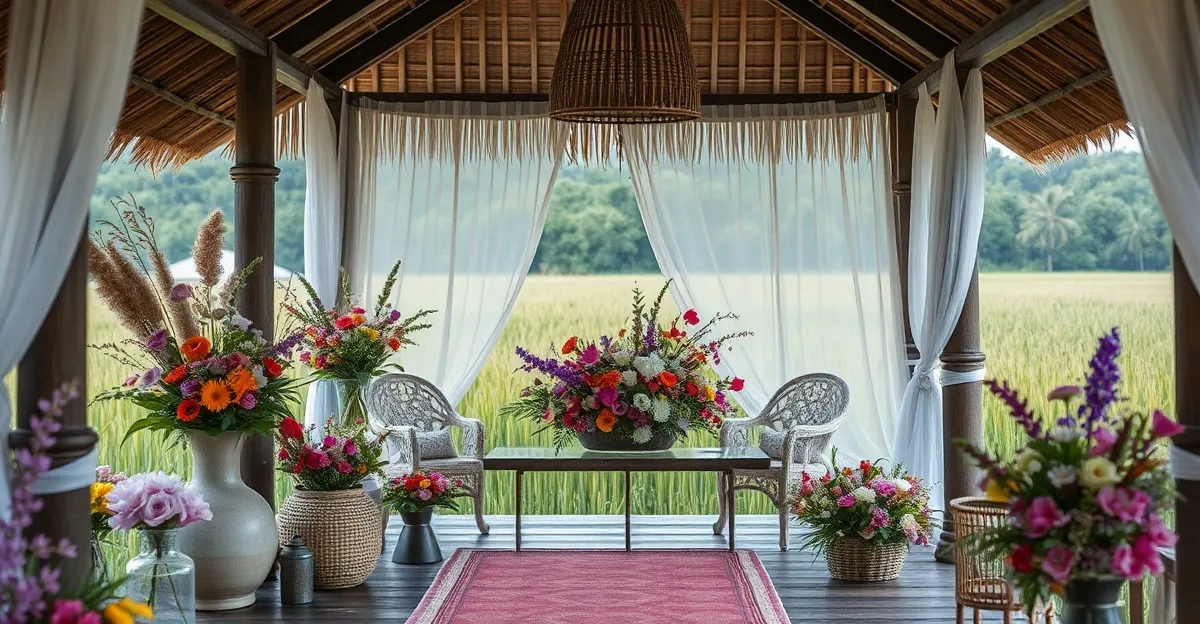
A rice field pavilion in Bali is a specific kind of magic. Whether it's a simple bamboo platform rising above terraced paddies in Tegallalang, a formal restaurant pavilion set among Ubud's sawah, or a purpose-built event space with sweeping views across green rice terraces, these settings carry a visual and emotional weight that few venues in the world can match.
Styling flowers for a rice field pavilion presents a particular creative opportunity — and a particular set of practical challenges. The flowers need to work with one of the island's most powerful natural backdrops, survive open-air conditions, and contribute to a sense of occasion without disconnecting from the agrarian, earthy character of the setting.
The rice field aesthetic and what it demands
Rice terraces in Bali — most famously at Tegallalang, Jatiluwih, Sidemen, and across the hills around Ubud — create a visual landscape defined by layered greens, the gleam of water in paddies, and the horizontal lines of terraced cultivation. The palette is almost entirely green and earth tones, punctuated by the occasional colour of flowering weeds or seasonal crops.
Flowers in a pavilion within this landscape need to make sense against that backdrop. A few principles:
Warm tones photograph well against rice field greens: Orange, yellow, red, and warm pink flowers create contrast with the intense green without clashing. Cool blues and purples can disappear into the green background in photographs.
The scale of the setting demands generous arrangements: Wide, open pavilions over rice fields are large spaces. Modest arrangements look proportionally lost. Scale up — more volume, larger containers, bolder variety choices.
Organic and local choices feel authentic: Flowers that look like they might have been found in a Balinese market or garden feel more at home in a sawah setting than tightly designed arrangements of imported flowers. The rice field aesthetic values things that look grown rather than manufactured.
Resilience matters: Rice field pavilions are typically open-air or at best semi-covered. Wind, direct sun during the day, and the humidity of a rice-growing microclimate all affect flowers.
Best varieties for a rice field pavilion
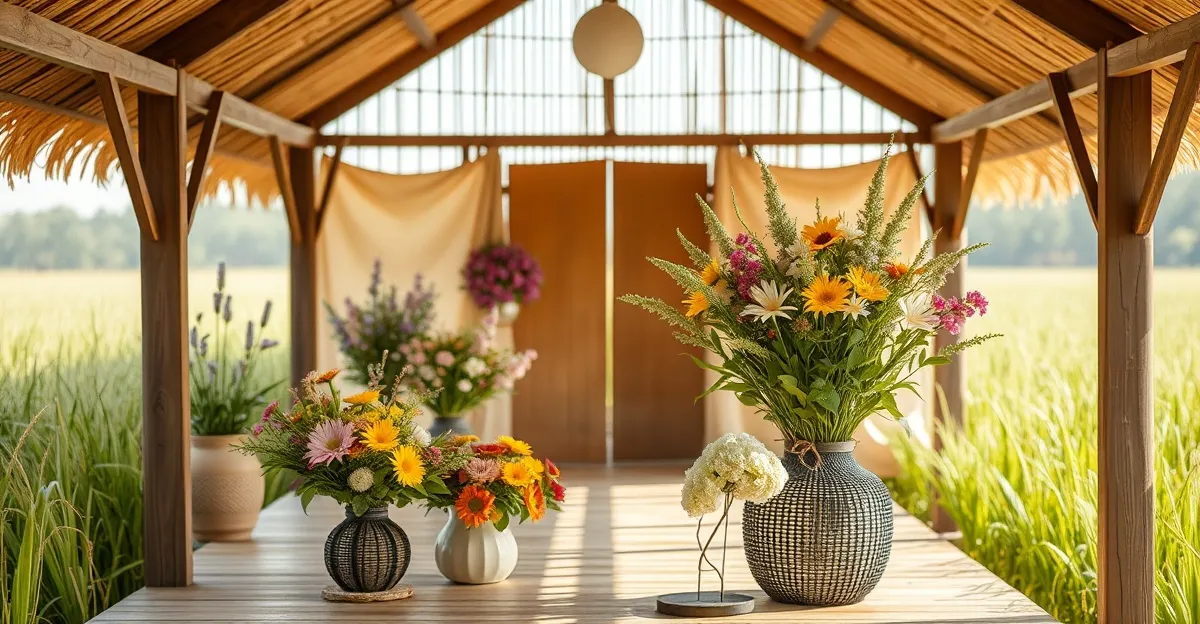
Marigolds: The most appropriate flower for a rice field setting in Bali. Marigolds are grown in the highlands near the rice-producing areas, used in offerings throughout the region, and their bright orange and yellow tones create the most beautiful visual contrast with the deep green of rice paddies. A mass planting of marigolds in terracotta pots is one of the most naturally beautiful flower arrangements possible in this setting.
Sunflowers: Grown locally and widely available from Balinese market suppliers, sunflowers are bold enough to read across an open pavilion and warm enough in tone to complement the rice field palette. In a large ceramic or bamboo container, a generous bunch of sunflowers against a sawah background is immediately striking.
Anthuriums: For any position in direct sun or exposed to the elements, anthuriums are the most reliable choice. The waxy surface handles UV, humidity, and wind better than almost any other variety, and they're available in warm tones (red, orange, blush) that suit a rice field palette.
Bird of paradise: The tall, architectural form of bird of paradise creates impact at a distance in an open pavilion setting. The orange-and-blue colour combination reads well against green and photographs dramatically with rice terraces as a backdrop.
Heliconia: Big, bold, and tropical. In a pavilion setting that opens onto rice fields, heliconia with its dramatic sculptural form creates arrangements that read clearly from across the space.
Local seasonal blooms from the market: Going to the Gianyar or Ubud market and choosing whatever is fresh and local that week creates an organic, seasonal quality that suits a rice field pavilion setting. The variety changes, the colours shift with the season, and the flowers feel genuinely of Bali.
For more on how to select and pair locally available tropical blooms, pairing snapdragon with other blooms: a florist's guide covers the principles of creating seasonal, mixed arrangements that hold together visually.
Containers for a rice field pavilion
The container choice is especially important in a setting defined by its natural materials and agrarian character:
Large terracotta urns: The most appropriate container for a rice field setting. The earthy, warm tone of aged terracotta belongs in this landscape in a way that glass or chrome never would. A large terracotta urn with a substantial tropical arrangement near the pavilion entrance is a classic, effective choice.
Bamboo containers: Cut bamboo sections work beautifully as simple vases in a rice field pavilion. They're often freely available on-site (bamboo grows prolifically near Balinese rice areas) and feel completely native to the setting.
Woven bamboo or rattan baskets: For table arrangements, a woven basket filled with a loose market arrangement looks at home in a sawah setting in a way that a conventional flower vase doesn't.
Wooden vessels: Simple carved wood or raw log sections as vases or holders suit the rustic, natural aesthetic. These can sometimes be sourced from the market or craft area in Ubud.
Heavy glazed Balinese ceramics: The ceramic tradition in Pejaten and the villages around Ubud produces beautiful pieces in earthy, unglazed tones that suit rice field settings. A handmade Balinese pot from a local artisan is both a beautiful container and a piece of genuine craft.
Placement strategy for a rice field pavilion
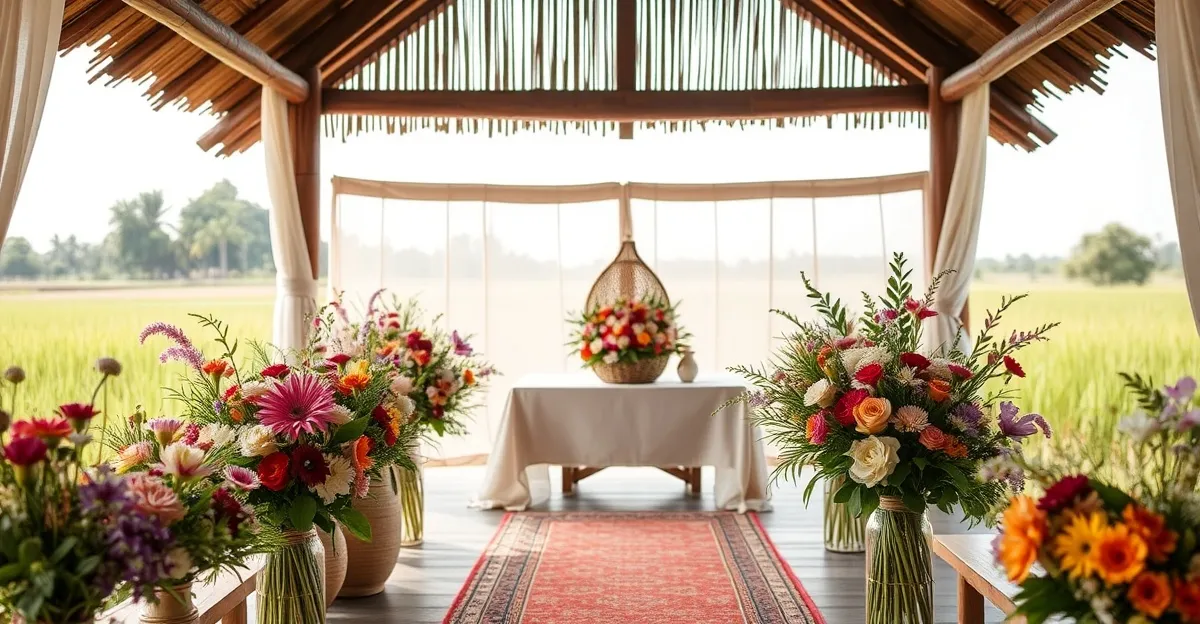
The view-facing side: The side of the pavilion that opens onto the rice terraces is the natural focal point for photography. Arrangements here — low on table surfaces, substantial at the front edge of the pavilion — will be photographed constantly. These need to be the best-maintained and most visually appropriate arrangements.
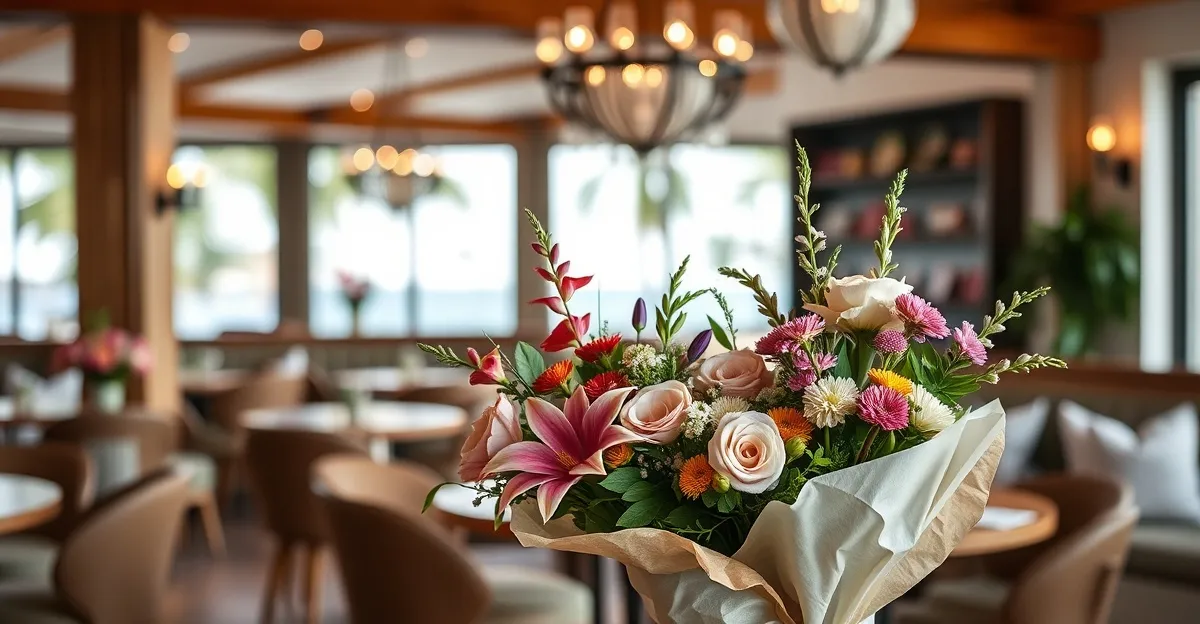
Entrance or arrival point: Where guests or visitors first step into the pavilion, a meaningful arrangement creates the transition from pathway to experience. This is also the arrangement most likely to appear in social media posts, positioned with the rice terraces visible behind.
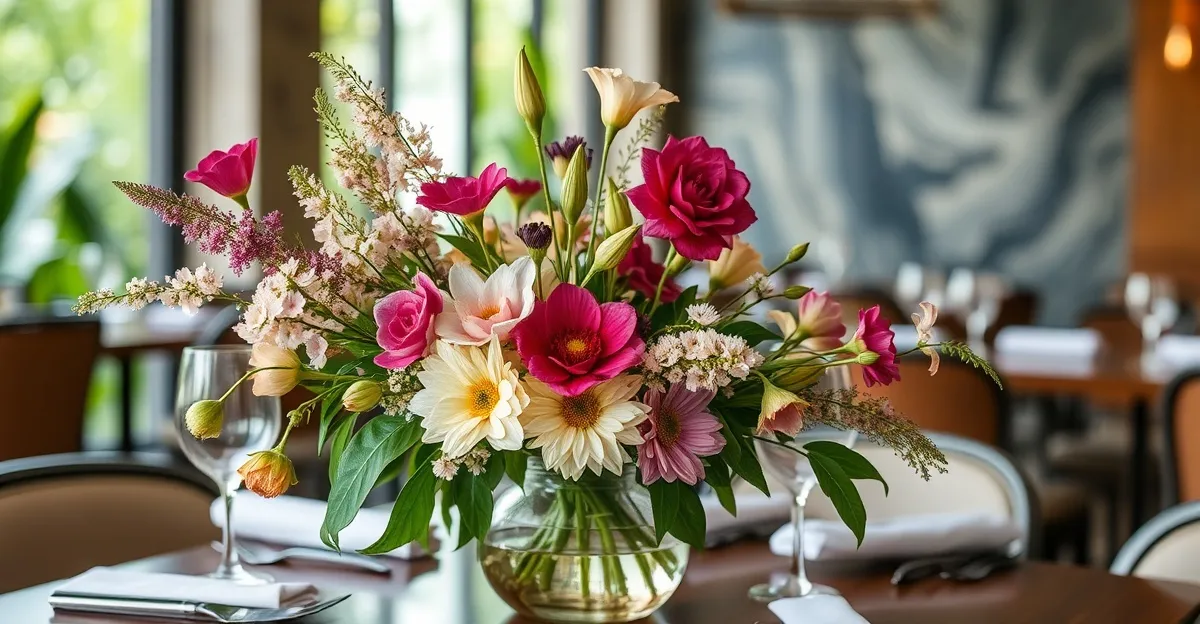
Dining tables: For pavilions that serve as restaurants or event dining spaces, table arrangements should be low enough not to obstruct the view (the view is why guests are there), but present enough to signal care. A low, wide ceramic bowl with a loose arrangement of marigolds and tropical foliage is typically appropriate.
Bar or service area: For any pavilion with drink or food service, a small arrangement near the service point anchors the functional space within the overall aesthetic.
Rice field edge: If the pavilion has access to the rice field itself, a few marigold plants in terracotta at the field edge create a visually poetic connection between the cultivated flowers and the cultivated paddies.
Maintaining flowers in a rice field environment
The microclimate of a rice field pavilion is typically humid (from the irrigation water in the paddies), warm, and exposed to direct sun during midday. Practical maintenance:
Shade arrangement during peak sun: If arrangements can be moved during the hottest hours (11am–3pm), this significantly extends vase life. If they can't be moved, use only the hardiest varieties in directly sun-exposed positions.
Daily water changes: In humid, warm conditions, stagnant water deteriorates rapidly and causes bacterial growth that shortens flower life. A daily water change in all arrangements is the single most effective maintenance habit.
Twice-weekly purchasing: Rather than trying to make weekly purchases last in challenging outdoor conditions, buying twice per week in smaller volumes ensures the pavilion always looks fresh.
Insect management: Rice field environments have active insect populations. Some flowers attract insects that can be inconvenient in a dining or event context. Marigolds are actually natural insect repellents — one more practical reason they suit this setting so well.
For a comprehensive view of which flower varieties hold up longest in Bali's outdoor conditions, 14 flowers that handle Bali humidity like champs gives direct comparative information.

The team
your florists
weekly subscription · Bali
We write about flowers because we love them. We deliver them because someone should — properly, weekly, across Bali.
— heyflowerPay once for 3, 6, or 12 months, no auto-renewal.
Special considerations for event styling
When a rice field pavilion hosts a formal event — a wedding, a private dinner, a cultural celebration — the flower brief needs to balance the everyday aesthetic with the occasion's special character:
Scale up generously: The open landscape and wide pavilion demand larger-than-normal arrangements to create an appropriate sense of occasion.
Add ceremonial touches: For Balinese-inspired events, elements from the offering tradition — marigold petal pathways, flower-scattered table surfaces, canang sari-style arrangements at the pavilion entrance — create authentic cultural texture.
Evening versus daytime: Rice field pavilions look quite different at different times of day. The afternoon golden hour, when the terraces glow, is the most photographically dramatic moment. For events timed around this window, warm-toned flowers (orange, gold, warm pink) in the arrangements will pick up the golden light beautifully.
For a complementary perspective on event flower packages at a rice field pavilion specifically, event flower packages for a rice field pavilion in Bali goes deeper on the event brief and package structures.
Budget for a rice field pavilion flower programme
Budget varies significantly by whether this is a private pavilion, a restaurant, or a commercial event venue:
- Private pavilion or family residence: Rp 300,000–600,000 per week for seasonal market flowers in natural containers
- Restaurant or café pavilion: Rp 600,000–1,500,000 per week with twice-weekly refresh for dining tables and entrance
- Event venue: Rp 1,000,000–3,000,000 per week for ongoing presentation, plus event packages as needed
A weekly subscription simplifies purchasing and ensures fresh flowers arrive consistently without requiring the team to manage ordering separately each week.
Frequently asked questions
What single flower best captures the spirit of a Bali rice field pavilion? Marigolds. They're used in daily offerings across the rice-growing areas of Bali, they're the right colour to complement the green of the paddies, they're locally abundant, and they hold up well in open-air conditions.
How do I keep table arrangements from wilting during a lunch service in full sun? Choose hard tropicals only for sun-exposed tables — anthuriums and marigolds specifically. For shaded tables, you have more variety options. Change water daily and consider adding flower food to the water.
Can I grow my own flowers in the paddies or garden adjacent to a rice field pavilion? Some varieties grow very well in Bali's highland rice-growing climate — marigolds particularly, and some heliconia. Growing your own supply, even partially, creates an authentic connection between the space and its surroundings that guests appreciate.
What's the most popular flower arrangement format for a rice field restaurant in Bali? Low, wide arrangements in terracotta or bamboo containers on dining tables, combined with a more substantial arrangement at the entrance. The combination of everyday table accents and a welcoming entrance piece covers the most important visual moments.
How does flower styling change between Bali's wet season and dry season at a rice field pavilion? Wet season rice terraces are more lushly green and the paddies more actively flooded — the visual backdrop is more intense. In dry season, the terraces may be drier or in different crop stages. Flower choices don't need to change dramatically between seasons, but the visual contrast between flowers and the background will be different.
A rice field pavilion in Bali offers a setting that has no equivalent anywhere else in the world. Flowers chosen to complement the sawah landscape — locally grown, warm in tone, arranged in materials that belong to the earth — create moments of cultivated beauty within one of Bali's most iconic natural environments.
Ready to bring fresh Bali flowers to your home, villa, or venue every week? Explore our weekly flower subscription and get handpicked blooms delivered to your door every week.
More on rice field pavilion