Flower styling ideas for a Bali fine dining restaurant
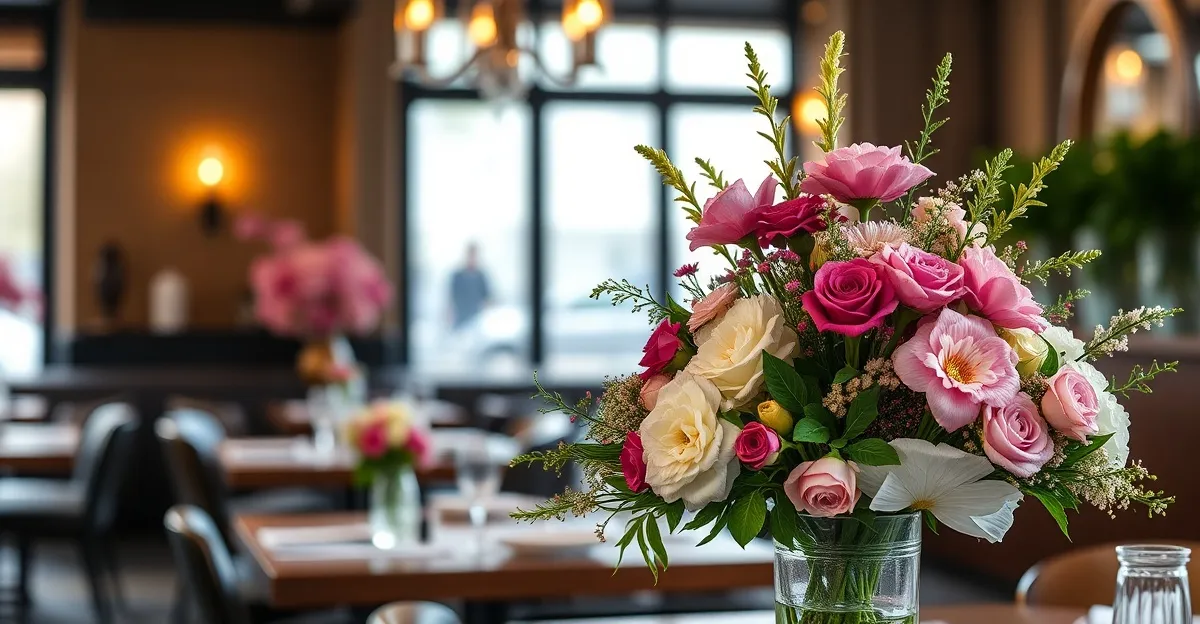
Flowers in a Bali fine dining restaurant are part of the experience. Styling ideas that match the island's top dining aesthetic and photograph beautifully.
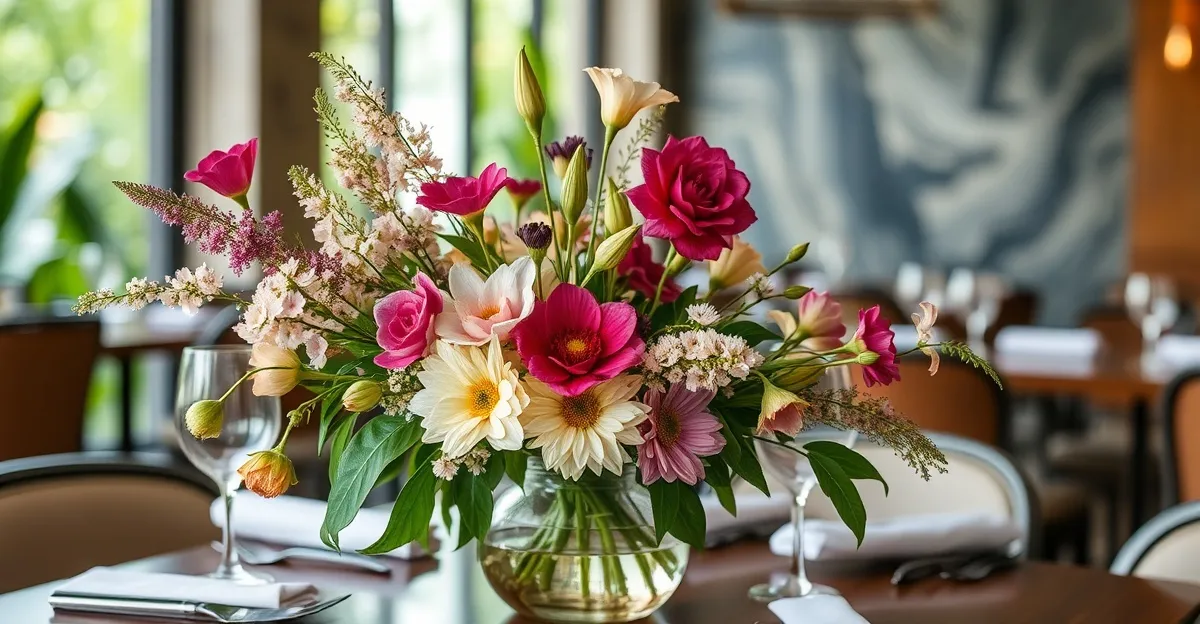
Bali's fine dining scene is small but serious. Locavore in Ubud, Mozaic, Merah Putih in Seminyak, Sarong — restaurants that have earned international recognition and attract a discerning clientele who notice every element of the experience. At this level of dining, flowers are not optional. They're part of the composition, as considered as the plate presentation, the wine program, and the lighting design.
For any restaurant aspiring to this level — or already operating within it — here's how to approach flower styling with the seriousness it deserves.
Fine dining flowers: the underlying principles
Fine dining flower styling operates under principles that differ from other restaurant contexts:
Edit rather than add: More flowers is not better at a fine dining level. The right three stems in the right vessel communicates more refinement than a generous bunch in a standard ceramic jug. Restraint is a sign of confidence.
The flowers serve the experience, not themselves: A fine dining arrangement should enhance the atmosphere without becoming the conversation. Guests should feel the presence of flowers without necessarily stopping to analyze them.
Scent-neutral is mandatory: At a fine dining table, the food is the sensory centrepiece. Any flower fragrance that's perceptible at table level is competing with the chef's work. All table flowers in a fine dining restaurant must be scent-free.
Quality visible up close: Fine dining guests are close to table flowers. They will look. The quality of the flowers, the vessel, the water, and the arrangement will be assessed at a level of detail that doesn't apply in casual dining.
Photography-aware: A significant portion of fine dining guests photograph their table. The arrangement appears in these photos — as background, as detail, or sometimes as the subject itself. An arrangement that looks considered and beautiful in a photograph serves the restaurant's social media presence.
The entry and bar: where boldness is appropriate
In a fine dining restaurant, the rule of restraint applies primarily to table flowers. At the entrance, at the bar, and in transition spaces, a bolder aesthetic is appropriate — and in some cases, the entry statement is where the restaurant's visual personality is most fully expressed.
The reception statement: The arrival experience at a fine dining restaurant should begin with a flower moment. A single large architectural arrangement — a very tall vessel with dramatic botanical specimens, or a dense, curated arrangement at a considered focal point — tells the guest from the first moment that everything here has been thought about. Bali's best restaurants invest here.
At Locavore-level properties, the entry flower changes with the tasting menu seasons, connecting the visual arrival to the culinary philosophy inside. This level of integration is a signal of genuine thought about the guest experience.
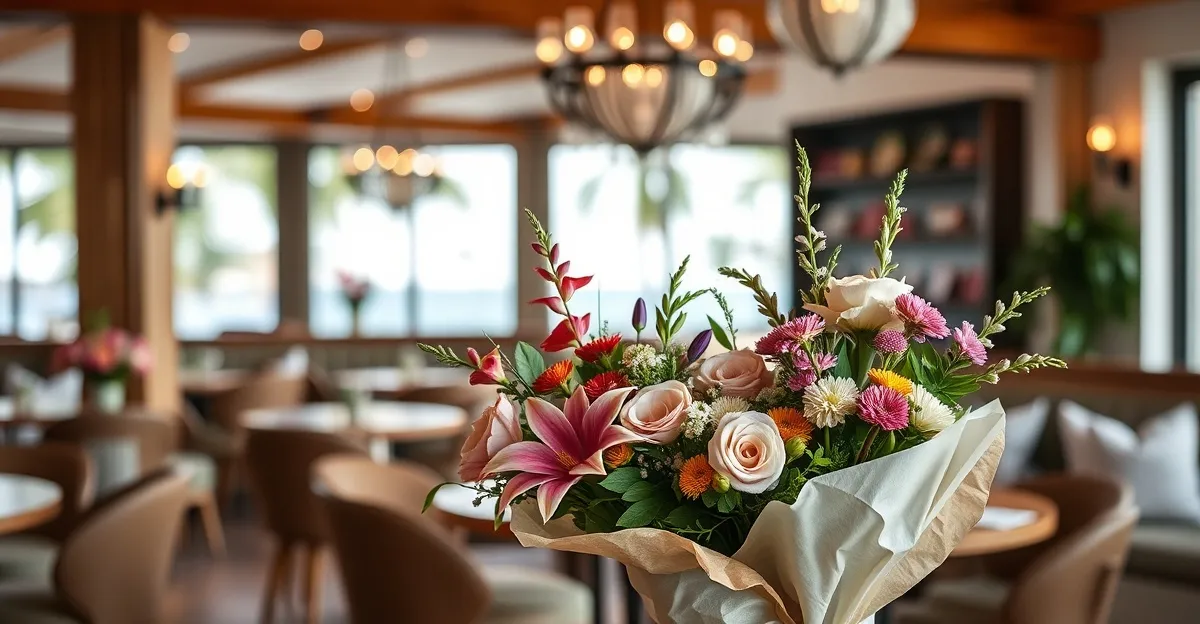
Bar flowers: The bar is a social space within the restaurant — more relaxed, more conversational, potentially photographed from multiple angles. Bar flowers can afford to be slightly more generous and expressive than table arrangements. An abundant bunch of seasonal flowers in an interesting vessel, positioned where it's visible to seated bar guests, creates the kind of casually beautiful moment that's distinctive of Bali's best dining environments.
Table flower styling
This is where fine dining requires the most specific thinking. The constraints:
- Must not block sightlines across the table (under 25–30cm tall)
- Must be scent-free
- Must not drop petals or shed debris on food surfaces
- Must look beautiful in detail, not just from a distance
- Must coordinate with the table setting (linen, crockery, glassware, candles)
Given these constraints, the options that work:
Single stem in a considered vessel: The most refined approach. One flower of exceptional quality — a perfect rose bud, a white orchid spray, a calla lily, an anthurium — in a carefully chosen vessel. The vessel must be as beautiful as the flower. A locally made ceramic bud vase from Ubud, or a small carved stone dish with a single stem, communicates quality at a level that a standard glass cylinder cannot.
Minimal three-stem cluster: Three stems of a single variety, very tightly arranged, in a low vessel. Three perfect white roses at full bud stage. Three white ranunculus. Three white anemones (when available). Three white lisianthus. The consistency — same flower, same stage, same tight arrangement — reads as deliberate curation.
Floating bloom dish: A flat stone or ceramic dish with one or two perfect floating blooms — frangipani, gardenia, lotus when available — and clean water. This is completely Balinese in reference, beautiful in detail, and has zero risk of debris or scent intrusion. Replace the blooms for each service.
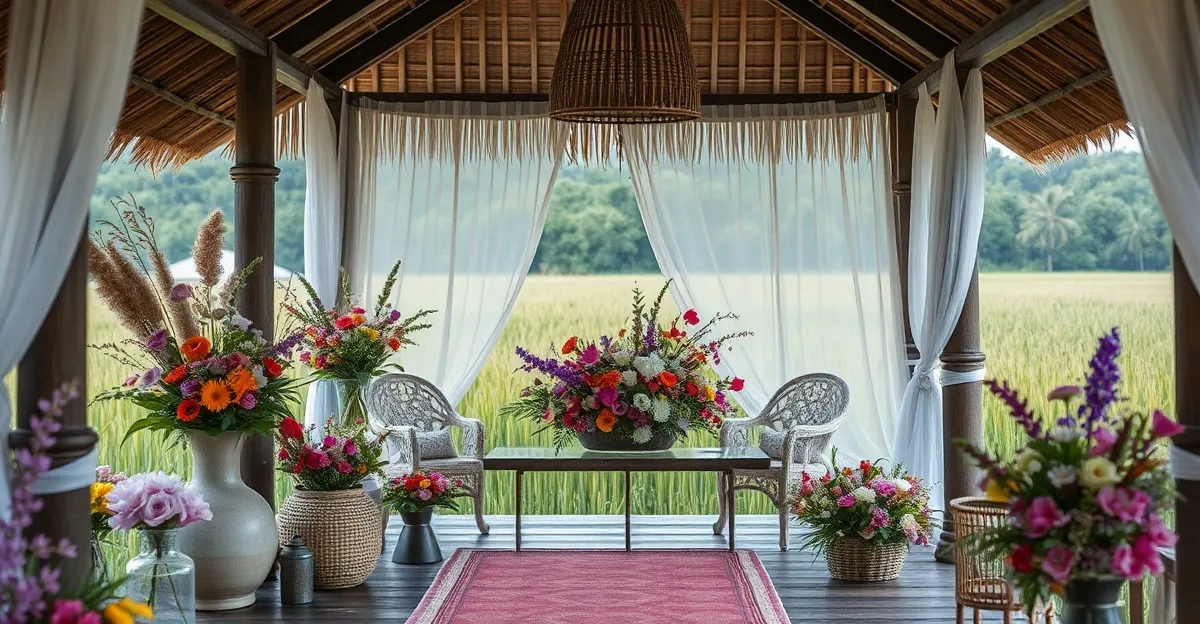
No flowers at all on the table: Some of Bali's finest dining experiences — particularly those in dramatically beautiful natural settings (rice terrace views, ocean views, jungle immersion) — deliberately choose not to put flowers on tables, because the natural environment outside is the arrangement. This is a valid decision that only works when the view is doing that work.
Seasonal and local sourcing as a philosophy statement
For fine dining restaurants that have built their identity around local sourcing and Balinese ingredients — as several of Bali's top restaurants have — the flower program should reflect the same philosophy. This means:
Using locally grown and seasonally available flowers: What's growing in Bali's highlands, in local gardens, in the restaurant's own or supplier garden. This changes month to month, which is an asset rather than a problem — it communicates a live connection to the island's agricultural cycle.
Working with local flower growers: The same kind of direct relationships that fine dining kitchens build with farmers can be applied to flowers. A relationship with a flower grower in Bedugul, or a cut flower specialist in the Kintamani area, gives the restaurant access to exceptional quality with full provenance.
Bali-specific varieties: Using flowers that are specific to or particularly excellent in Bali — local orchid varieties, highland roses, traditional ceremonial flowers like marigold or canang sari frangipani in an updated context — creates a flower program that's specific to this place, not generic fine dining.
For restaurants that want to understand the cultural dimensions of Balinese flowers alongside their botanical qualities, delphinium in Balinese ceremonies: traditional uses in Bali and calla lily in Balinese ceremonies: traditional uses in Bali provide context that's useful for building a culturally aware fine dining flower program.

The team
your florists
weekly subscription · Bali
We write about flowers because we love them. We deliver them because someone should — properly, weekly, across Bali.
— heyflowerPay once for 3, 6, or 12 months, no auto-renewal.
Coordinating flower styling with interior design
Fine dining restaurants invest in interior design at a level that casual restaurants don't. The flower styling must be coordinated with this investment, not working across it.
The florist or stylist managing a fine dining restaurant's flowers needs to understand the color palette, the material language, the lighting conditions, and the seasonal shifts of the interior. A flower that looks extraordinary in warm candlelight might look wrong under cool daylight service conditions.
Vessel coordination: The bud vases and arrangement vessels should be sourced as part of the interior design process, not added afterward. They should be in the same material and aesthetic family as the crockery, the glassware, and the furniture. A restaurant using handmade Balinese ceramics on the table should have flower vessels from the same aesthetic tradition — not an imported commercial vase from a general housewares shop.
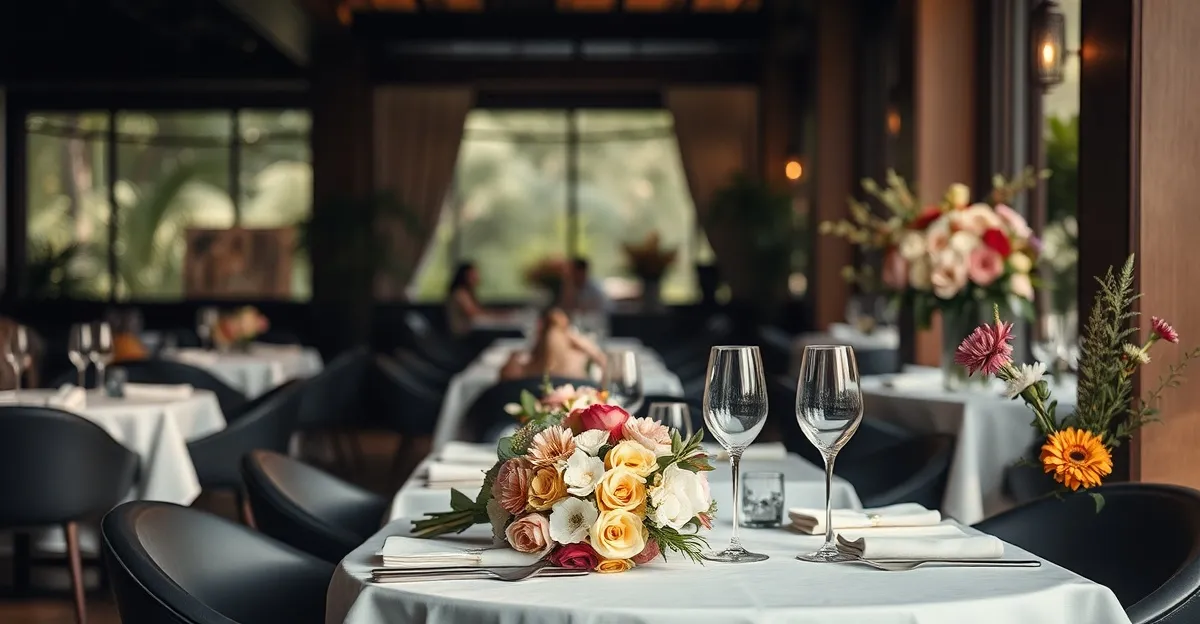
Color coordination: Fine dining table settings are composed images — tablecloth color, plate design, glassware, candles, and flowers together. The flower color should enhance this composition. Typically this means one or two colors maximum, and those colors should relate to the linen and crockery palette rather than contrast with it.
Seasonal menu alignment: If the restaurant's tasting menu changes seasonally, the flower program should change in alignment. This creates a coherent guest experience where every element — the food, the flowers, the overall presentation — reflects the same seasonal moment.
Managing the flower program at a fine dining level
Fine dining flower styling is not a weekly market run. It requires a florist relationship — a supplier who understands the restaurant's aesthetic, can consistently deliver appropriate quality, and can accommodate the occasional special request for extraordinary events or seasons.
This means:
- A regular delivery schedule (weekly is standard for fresh flowers at table level)
- Clear communication about the aesthetic parameters
- A vetting process for new flower varieties before they appear on tables
- A budget that reflects the quality level required
For high-end events within the restaurant — private dining, special occasion dinners, press events — the flower level should step up correspondingly. The regular program sets the baseline; events set the ceiling.
How to write a note that comes with each subscription delivery is relevant reading for understanding how to build and communicate a consistent flower relationship with a supplier — the principles of clear brief and regular communication apply to a fine dining context.
FAQ
What's the most appropriate flower for a fine dining table in Bali? A single perfect stem in an exceptional vessel: a white orchid spray, an anthurium, a calla lily, or a tight rosebud. The variety matters less than the quality of the individual stem and the vessel it's in. Scent-free is non-negotiable.
Should fine dining table flowers match across all tables? Yes. Variation between tables reads as inconsistency at a fine dining level where guests are paying for a consistent quality experience. The same arrangement, the same vessel, across all tables — refreshed to the same standard.
How often should fine dining flowers be replaced? For table flowers: every 5–7 days to maintain the quality of presentation that fine dining guests expect. For bar and entry arrangements: every 7–10 days with appropriate variety selection.
What vessels are appropriate for fine dining table flowers in Bali? Handmade local ceramics (from Ubud's studios), small carved stone dishes, or quality glass — all in small scale appropriate to the table. The vessel should be as beautiful as the flower. Avoid mass-produced commercial vases.
Who manages the flower program for a Bali fine dining restaurant? Ideally, a designated florist relationship — a local Bali florist who understands the restaurant's aesthetic and can deliver consistently. Some higher-budget operations employ an in-house stylist or work with a florist who does weekly arrangement service on-site.
Ready to bring fresh flowers to your Bali home or event? Explore our weekly flower subscription and get handpicked blooms delivered to your door every week.
More on fine dining restaurant