Picking the right vase for your outdoor pavilion (bale)
Choose the ideal vase for a Balinese bale pavilion — materials, shapes, and styles that work with open-air conditions and Bali's design language.
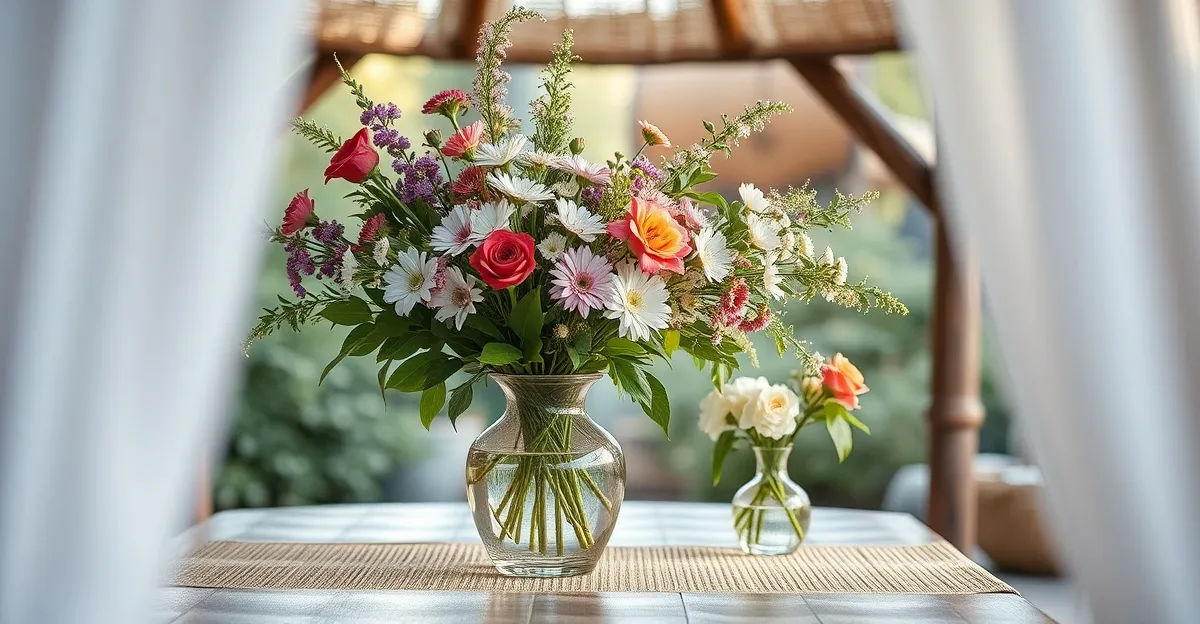
What makes a bale vase choice different
The bale occupies a middle ground between indoor and outdoor — sheltered from rain but exposed to humidity, breeze, and often some degree of sun. This semi-outdoor environment shapes everything about what makes a good vase choice here.
Unlike a pool deck where you're working with a fully exposed outdoor space, a bale usually provides enough shelter that you can use a somewhat wider range of materials and flower types. But unlike a fully indoor room, you still need to think about wind stability, humidity-resistant materials, and the aesthetic context of a distinctly Balinese architectural space.
The bale also has strong aesthetic character. Whether traditional and carved or modern and minimalist, it's rarely a neutral backdrop. A vase that doesn't engage with the space's character will look out of place, so the choice involves both practical and aesthetic judgment.
Traditional bale: materials that belong
For traditional stone or bamboo bales — the kind common in compound gardens throughout Ubud, Gianyar, and Klungkung — certain materials feel native to the space in a way that others simply don't.
Volcanic stone (paras): Local black or grey volcanic stone is carved into everything from temple walls to garden furniture in Bali. A simple carved paras stone bowl used as a vase — either for water and cut stems, or for floating flowers — feels organically right in a traditional bale. It won't tip, won't rot, and the surface patinas beautifully over time. These are available at stone craft workshops throughout Gianyar and the Ubud area for IDR 150,000–500,000 depending on size.
Terracotta with natural glaze: Thick-walled, handmade terracotta from Pejaten village (near Tabanan) is the defining Bali ceramic material. In a traditional bale, unglazed or lightly glazed terracotta pots look entirely at home. They weather well outdoors, won't crack in Bali's temperature cycles, and the warm earth tones complement carved stone and dark timber perfectly.
Woven bamboo with glass insert: A traditional approach used throughout Balinese craft practice — a woven bamboo sleeve around a glass cylinder or jar that holds water. The bamboo provides the visual character; the glass holds the water without allowing it to seep through. You can buy these at craft markets or have them made inexpensively at any bamboo workshop.
Clay-fired ceremonial vessels: Bali has a strong tradition of clay vessels used in ceremony and household ritual. Repurposed or reproduction versions of these — low bowls, rounded pots — make beautiful vases in a traditional bale context. They often come with interesting surface textures from the firing process.
Modern bale: vessels for contemporary spaces
Contemporary villas in Canggu, Seminyak, and Pererenan often feature bales with an architectural aesthetic — clean lines, polished surfaces, neutral palette. The vessel choice here needs to match that design language.
Architectural concrete: Cast concrete in simple geometric forms — a low cylinder, a rectangular trough, a tapered square planter — suits a modern bale perfectly. The grey or white tone works with contemporary colour palettes, and the weight provides excellent stability. Several workshops in Kerobokan produce these for Bali's villa and hospitality market.
Powder-coated steel: A slim, powder-coated steel cylinder or angular vessel looks sharp in a modern bale setting. Black or matte white are the most versatile finishes. Steel weathers fine under a bale roof as long as it's not in direct rain — if you're in a more exposed position, opt for marine-grade powder coating.
High-quality glazed ceramics: Unlike traditional rough-fired terracotta, sleek high-gloss or matte glazed ceramics suit contemporary spaces. A pair of identical matte white cylindrical vases flanking the bale entrance is both practical and sophisticated. Look for studio ceramics at the galleries and design stores in Seminyak and Kerobokan.
Size and scale: matching the bale's proportions
Bales come in very different sizes, from intimate two-person meditation platforms to large gathering pavilions. The vase choice should be proportionate.
For a small personal bale (seating two to four people), one or two pieces of modest scale — a single 20cm stone bowl with floating frangipani, or a low ceramic planter with five stems of orchids — is appropriate. Going larger will crowd the space.
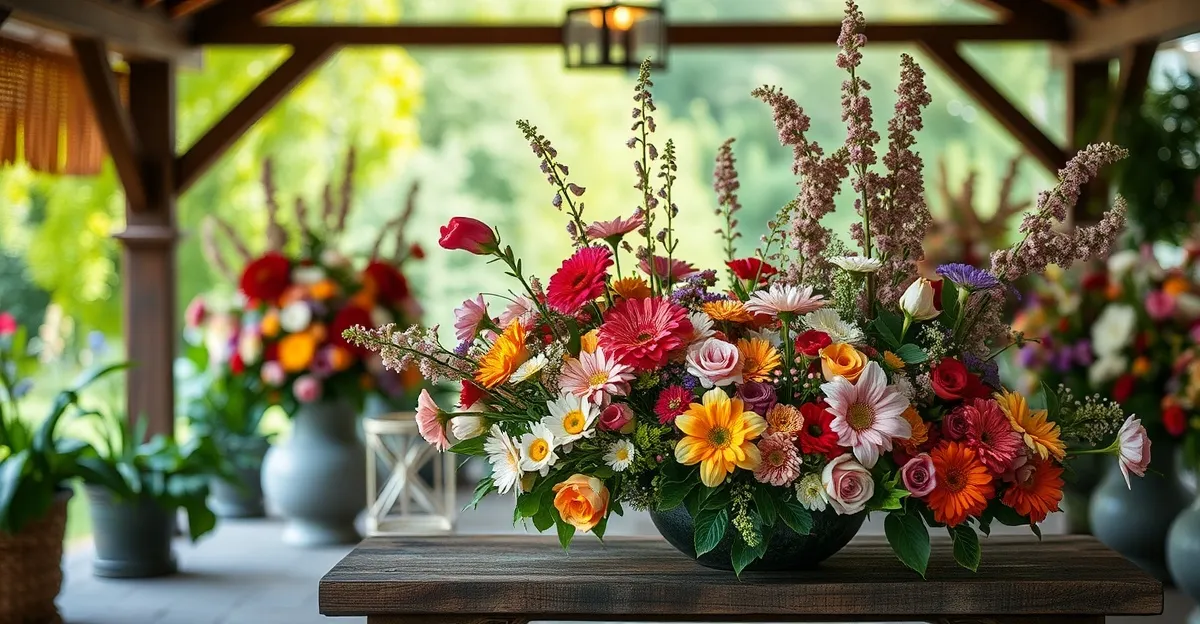
For a mid-sized family or dining bale, a centrepiece of some visual significance (a large heliconia arrangement or a generous cluster of tropical roses) can anchor the central table, with smaller matching pieces near the entrance or at the pillars.
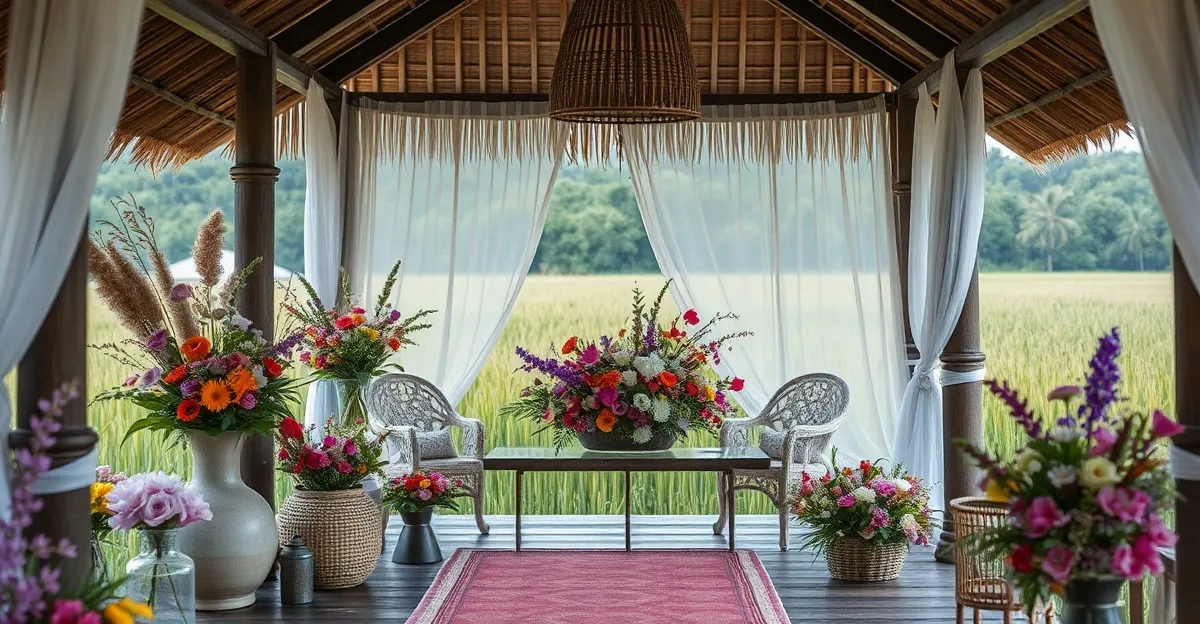
For a large event or gathering bale at a villa or resort property, think in terms of pairs and repetition: matched planters at each pillar, uniform vessels on any permanent tables, consistent material language throughout. Scale individual pieces up proportionately — vessels that are too small will simply disappear visually in a large space.
Placement-specific vessel considerations
Where in the bale you place the flowers affects what kind of vessel you need.
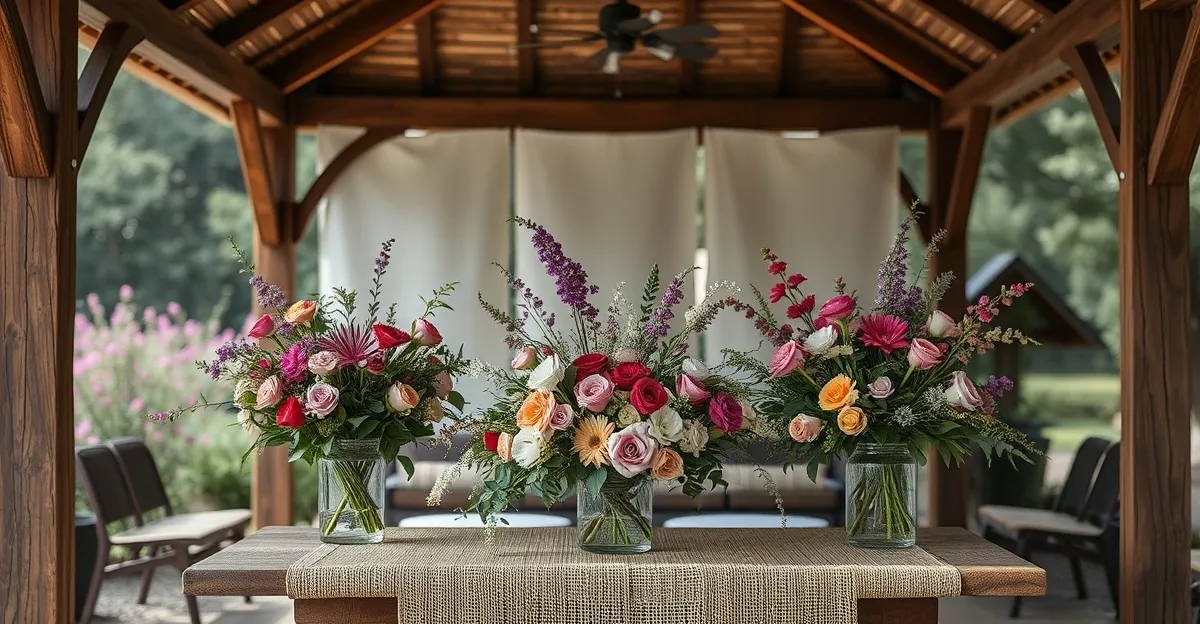
Centre table: Needs to be low enough not to obstruct sightlines across the table, but substantial enough to hold a meaningful arrangement. A wide, low bowl or tray with a maximum height of 20–25cm is ideal.
Entrance or threshold: This is the most visually important spot in any traditional bale — the threshold marks the transition between ordinary space and the bale's particular atmosphere. A pair of matching planters here, one on each side, creates a welcoming gate effect. These need to be stable and substantial, with heavy bases that won't shift.
Against carved pillars or walls: Here you have more flexibility on height — a taller arrangement makes sense architecturally and frames the pillar rather than competing with it. A slim vase or planter at 30–40cm tall, pushed close to the base of the pillar, suits this placement well.
Overhead beam hangings: A bamboo segment or hanging vessel suspended from a beam requires different thinking entirely. The vessel needs to be lightweight (since it's hanging), watertight, and positioned to avoid dripping water onto seating below. Small hollowed bamboo sections sealed at the base work perfectly here. Flower arrangement ideas for your outdoor pavilion (bale) covers suitable flower choices for each of these positions.

The team
your florists
weekly subscription · Bali
We write about flowers because we love them. We deliver them because someone should — properly, weekly, across Bali.
— heyflowerPay once for 3, 6, or 12 months, no auto-renewal.
Caring for vases in an open-air bale
The main maintenance concern for bale vases is humidity-driven mould and algae growth in the vase water. In a semi-outdoor humid environment, this happens faster than indoors. Use a drop of bleach or a piece of copper wire coiled in the bottom of the vase to slow bacterial growth, and rinse vessels thoroughly when you change the flowers.
After heavy rain, check that water hasn't pooled inside or around uncovered open-topped vessels — though this is more a concern for pool decks than for a sheltered bale.
If you're maintaining multiple vases in a large bale, consider using the same vessel type throughout. Buying in small sets rather than individual pieces is usually more economical, and the visual consistency of matched vessels throughout the space looks significantly more considered than a collection of unrelated pieces. Ivory flower arrangements for villa interiors covers how consistent material and colour language strengthens interior floral displays — the same principle applies to bale styling.
FAQ
What is the most authentic vase material for a traditional Balinese bale? Volcanic stone (paras), handmade terracotta from Pejaten, and woven bamboo with glass inserts are all authentically Balinese. Any of these will feel genuinely at home in a traditional bale setting.
Can I use indoor vases in a bale if it's well-sheltered? If the bale has a solid roof and the vase position is well away from rain and direct sun, indoor-quality vessels can work. The main additional consideration is stability — ensure the base is wide enough that a breeze won't tip it.
How many vases does a standard bale need? For a small personal bale: one or two. For a family-sized dining bale: two to four (centrepiece plus entrance pieces). For a large gathering bale: as many as needed to fill the space proportionately without cluttering it.
Should vase materials match the bale's building materials? Not necessarily match, but respond to them. Carved stone bales suit rough-textured stone or terracotta vessels. Modern concrete bales suit smooth concrete or architectural ceramics. The relationship should feel coherent.
Where can I find bale-appropriate vases and planters in Bali? Stone craft workshops in Gianyar and around Ubud for paras stone vessels. Pejaten village (Tabanan) for quality terracotta. Kerobokan and Seminyak interiors stores for modern concrete and ceramic options. Craft markets at Sukawati for woven bamboo holders.
Ready to bring beautiful flowers to your Bali bale? Explore our weekly flower subscription and get handpicked tropical blooms delivered to your door every week.
More on outdoor pavilion (bale)