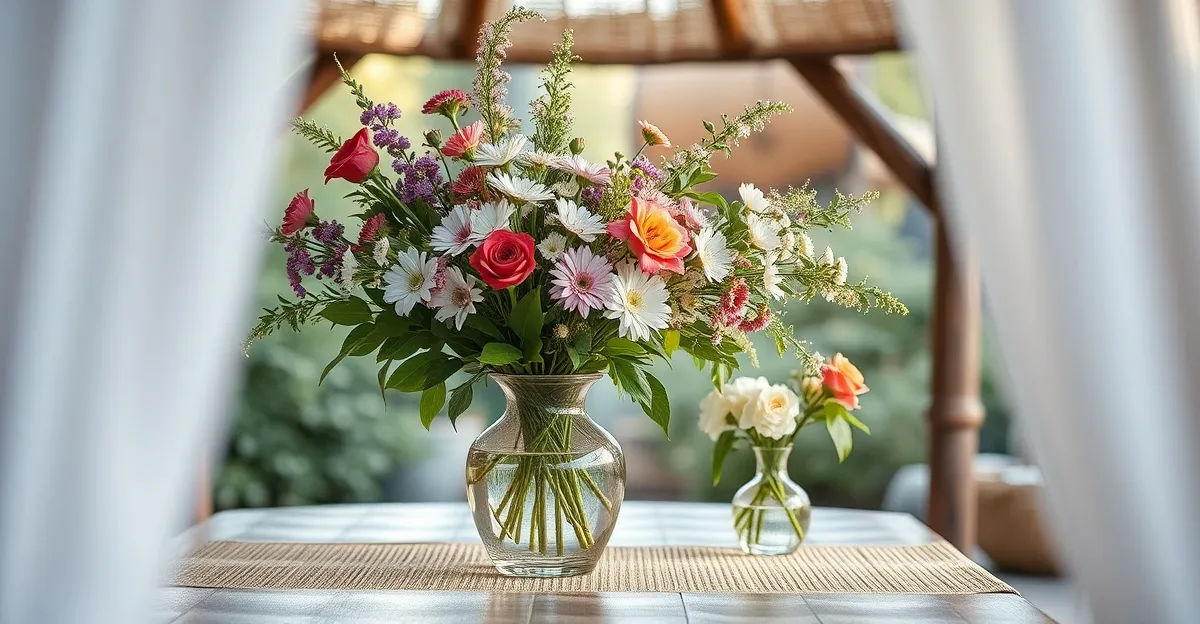
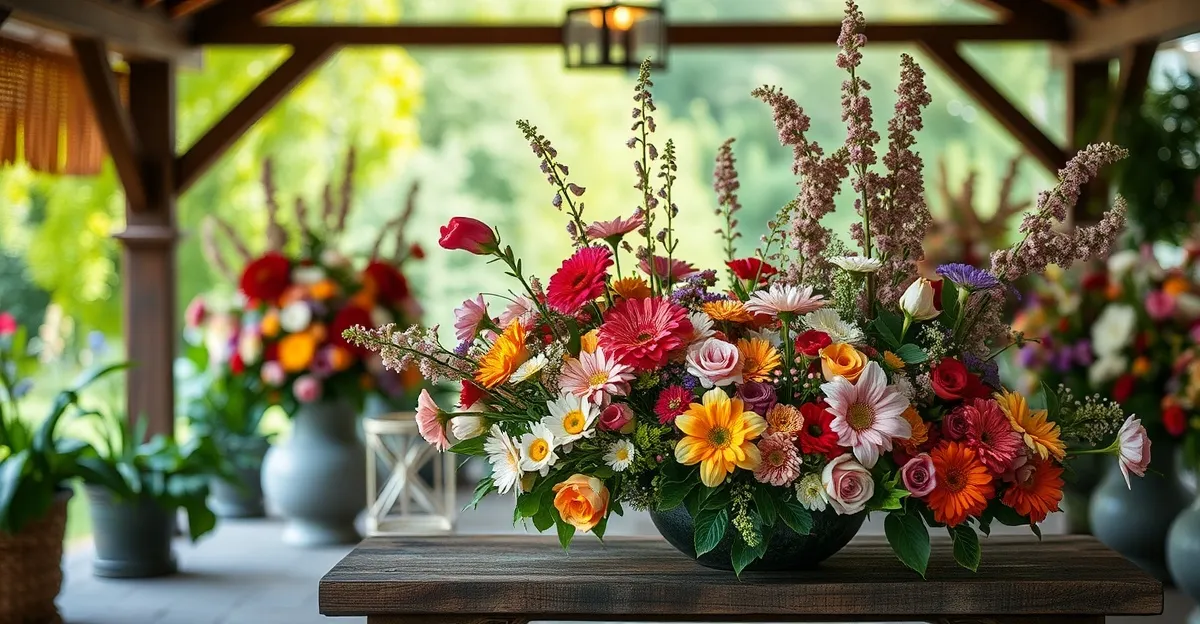
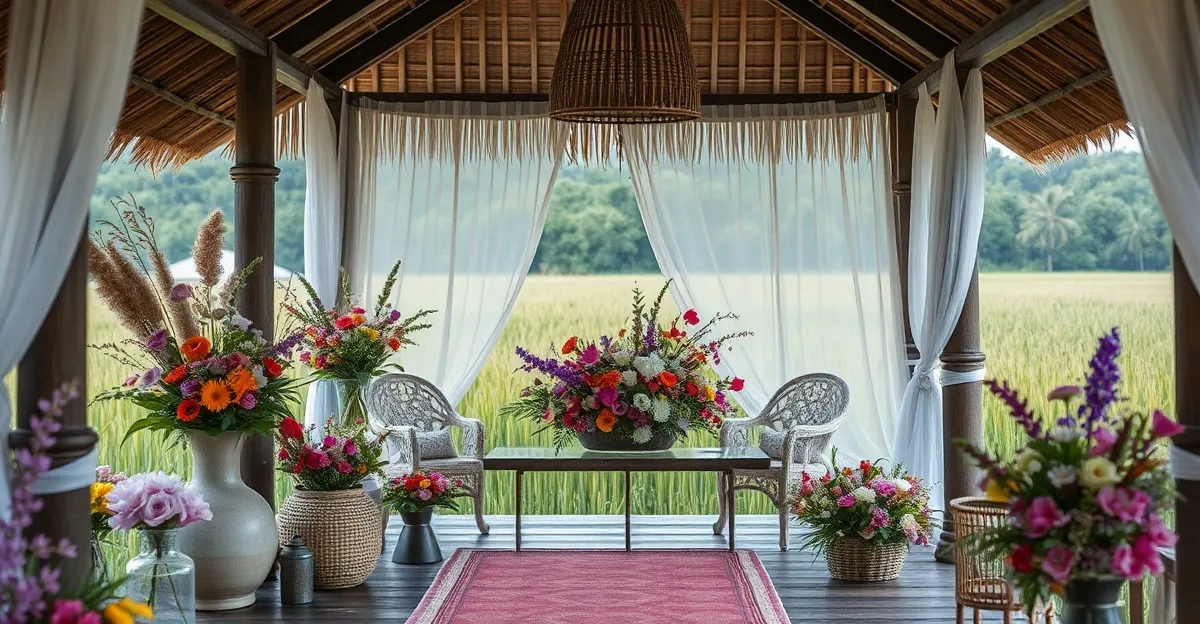
Low-maintenance flower setups for a outdoor pavilion (bale)
Easy-care flower setups for Balinese bale pavilions — durable tropical blooms and simple arrangements that need minimal attention in Bali's climate.
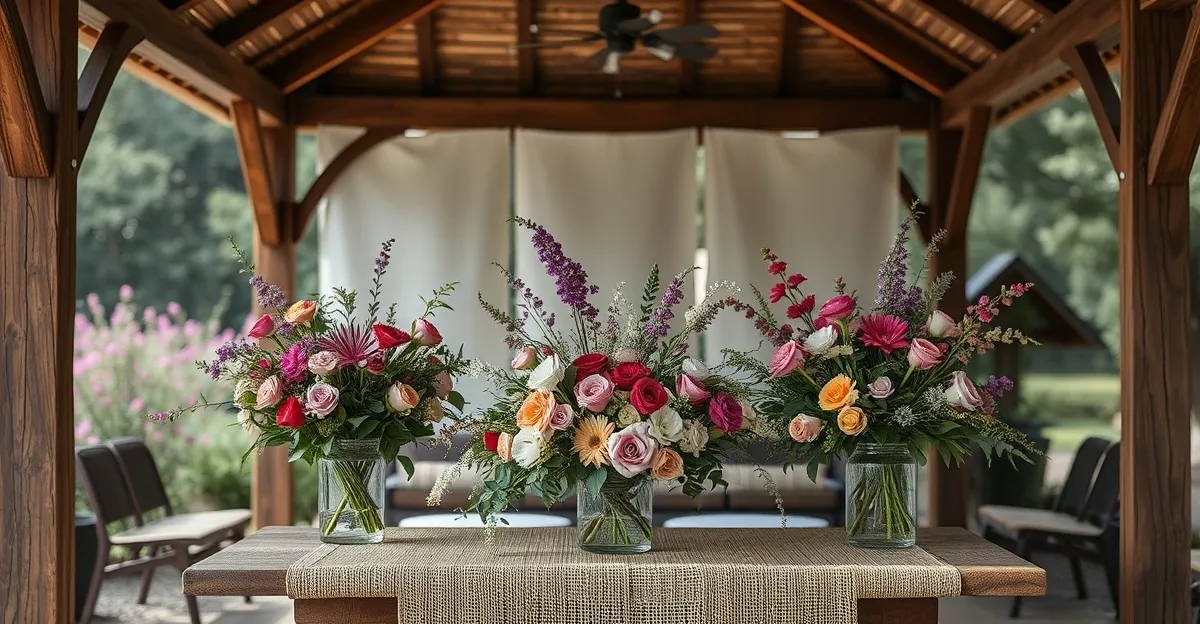
Why low-maintenance matters in a bale setting
The bale is a space for relaxing, not working. If your flower arrangement in the bale requires fussing over every other day, it defeats the purpose of the space. The ideal bale flower setup is one you notice and enjoy without having to think about — fresh-looking most of the time, easy to refresh when it's time, and not prone to creating mess when things eventually fade.
This is very achievable in Bali, because the island's native and widely grown flowers include some of the most durable cut flowers anywhere. You don't need imported roses or temperature-sensitive blooms to make a bale beautiful. You need the right local flowers in the right setup.
The most durable flowers for a bale environment
The bale's semi-outdoor conditions sit between an interior room and a pool deck — usually shaded from direct sun but exposed to humidity and gentle airflow. This actually favours a wider range of flowers than a fully exposed outdoor space.
Heliconia: The benchmark for low-maintenance tropical flowers. In a shaded bale, heliconia can last 12–15 days with just a water top-up every three days. No pruning, no fussing with stems, no special care required. The range of varieties available in Bali — upright yellow and orange rostrata, dramatic hanging lobster-claw, smaller bihai forms — means you can find something that suits any bale aesthetic.
Tropical orchids (Dendrobium): Dendrobium sprays are almost indestructible under a bale roof. 12–14 days is routine. The only attention they need is a water change every two to three days. They come in white, yellow, purple, and pink — all work beautifully in Balinese settings.
Torch ginger: Another Bali native that handles the climate effortlessly. A few stems of torch ginger in a stone planter under the bale roof can look pristine for 10 days with minimal intervention. The bright red form is visually striking against carved stone or dark timber.
Anthuriums: Excellent in the semi-shade of a bale. 8–12 days with water changes every two to three days. The architectural quality of the spathe means they still look structured and deliberate even as they age, unlike roses or softer flowers that begin to look tired as they fade.
Tropical foliage: Monstera, philodendron, large palm leaves, and traveller's palm fronds last much longer than cut flowers in a humid, semi-shaded environment — sometimes three to four weeks. Using foliage as the backbone of a bale arrangement, with flowers added as accent, creates something that requires flower replacement every 10–14 days while the overall display continues to look lush in between.
Three low-effort setup approaches
The foliage-forward arrangement: Build the base of the display entirely from large tropical leaves, which can last weeks in the bale's humidity. Add five to seven heliconia or orchid stems as colour. When the flowers begin to fade after 10–12 days, remove them and replace — the foliage structure remains. This approach is particularly effective in large bales where the display needs volume.
The single-variety cluster: Choose one flower type (all white Dendrobium, or all yellow heliconia, or all red anthurium) and use it without mixing. A cluster of eight to ten identical stems in a substantial stone vessel. This approach requires no arrangement skill — just fill the vessel with water and add the stems. It also means all stems reach the end of their life at roughly the same time, making replacement simple and decisive.
The floating bowl rotation: A wide, low stone or ceramic bowl in the centre of the bale table, filled with water and fresh frangipani. Replace the flowers every one to two days by collecting from the frangipani trees present in virtually every Balinese compound. Zero cost, one minute of effort per replacement, and a display that always looks fresh and intentionally Balinese.
Reducing effort through smart setup
Beyond flower choice, the setup itself can dramatically reduce how much attention the arrangement needs.
Use large-volume vessels: A stone planter holding five litres of water needs topping up every three to four days. A small ceramic vase holding half a litre needs topping up daily. In a bale where you might not pass through every day, the larger vessel is significantly more practical.
Add copper or bleach to the water: A small piece of copper placed in the vase water, or a single drop of household bleach, substantially slows bacterial growth. This is particularly helpful in the warm, humid conditions of a bale, where water degrades faster than in an air-conditioned room.
Place arrangements where you walk past naturally: Near the bale entrance, beside the seating area you use most, or on the central table. Arrangements you interact with daily get maintained without effort — you notice when they need attention and deal with it immediately. Arrangements tucked in corners get forgotten.
Keep spare stems in a bucket: If you receive a flower delivery, keep six to ten extra stems in a bucket of water in a cool indoor spot (the kitchen or a shaded utility area). When the bale arrangement starts to thin out mid-week, you can add fresh stems quickly without waiting for the next delivery.

The team
your florists
weekly subscription · Bali
We write about flowers because we love them. We deliver them because someone should — properly, weekly, across Bali.
— heyflowerPay once for 3, 6, or 12 months, no auto-renewal.
Matching the maintenance schedule to how you use the bale
How you use the bale affects what maintenance schedule is realistic.
If you're in the bale daily — morning yoga, afternoon work, evening drinks — you'll naturally tend to the flowers without needing to remember to do so. A flower that needs attention every two to three days is entirely manageable.
If the bale is more occasional — weekends only, or for guests — build in a longer-lasting setup. Heliconia and foliage-forward arrangements that need attention every five to seven days are the right choice. Refresh before guests arrive and the display will hold across their visit.
For a rental property bale where you're not present at all, brief your cleaner or caretaker on a two-minute weekly routine: top up water, remove fully spent stems, add fresh stems from any delivery that arrived. This doesn't require skill — just a basic checklist. What happens on temple days for your subscription delivery is useful context for property managers working around Bali's religious calendar.
FAQ
What flower needs the least care in a Balinese bale? Heliconia in a heavy stone planter under the bale roof is the least demanding option. With a water top-up every three to four days and a full replacement every 12–14 days, it's as close to set-and-forget as cut flowers get.
Can I mix dried and fresh flowers in a bale arrangement for lower maintenance? Yes, and it works well in traditional Balinese settings. Dried pandan weavings, dried tropical seed heads, and dried palm flower stalks can form the permanent base of an arrangement, with fresh flowers added and rotated more frequently. The dried elements last indefinitely in the bale's humidity.
How does wet season affect bale flower maintenance? Wet season (November–March) actually extends flower life slightly in a shaded bale — the humidity keeps petals from drying out. The increased humidity can also accelerate mould in vase water, so more frequent water changes (every two days rather than three) are advisable.
Is it difficult to maintain a bale arrangement without floral knowledge? Not at all, if you stick to single-variety arrangements of durable flowers. Refilling water, removing spent stems, and adding fresh ones doesn't require any skill. A delivery subscription and a simple weekly maintenance routine is all that's needed.
What is the most cost-effective low-maintenance bale setup? The floating frangipani bowl costs almost nothing if you have frangipani trees on the property (as most Bali compounds do). For a cut flower arrangement, a weekly subscription covering one medium arrangement of heliconia or orchids is typically IDR 150,000–250,000 per week and requires minimal additional effort.
Ready to bring beautiful, easy-care flowers to your Bali bale? Explore our weekly flower subscription and get handpicked tropical blooms delivered to your door every week.
More on outdoor pavilion (bale)