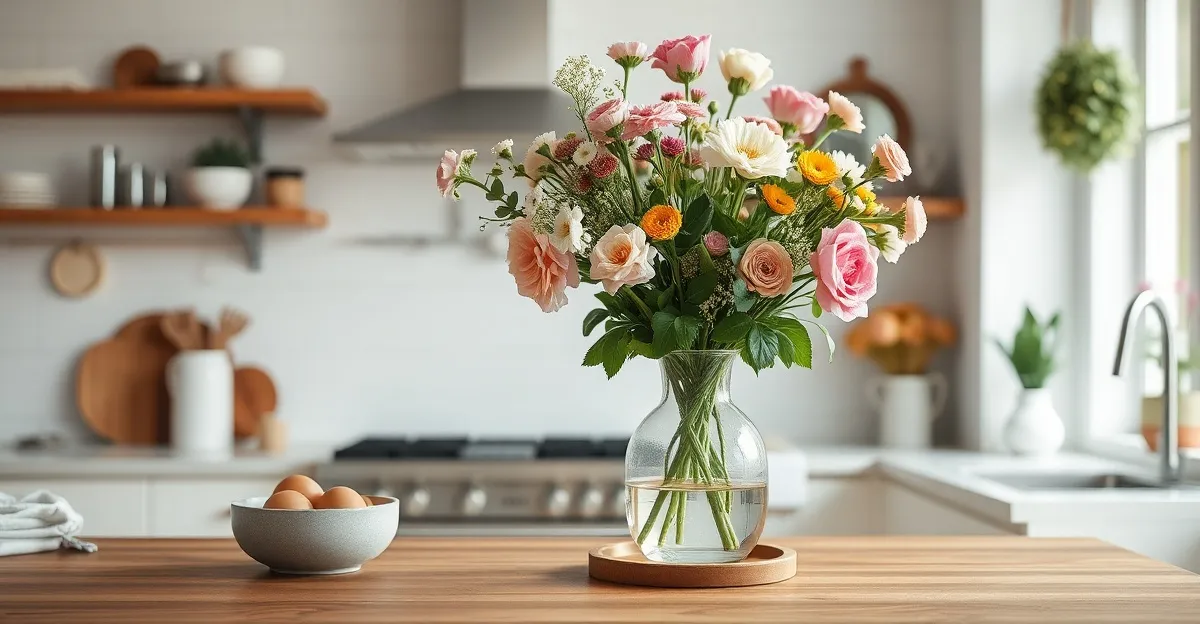
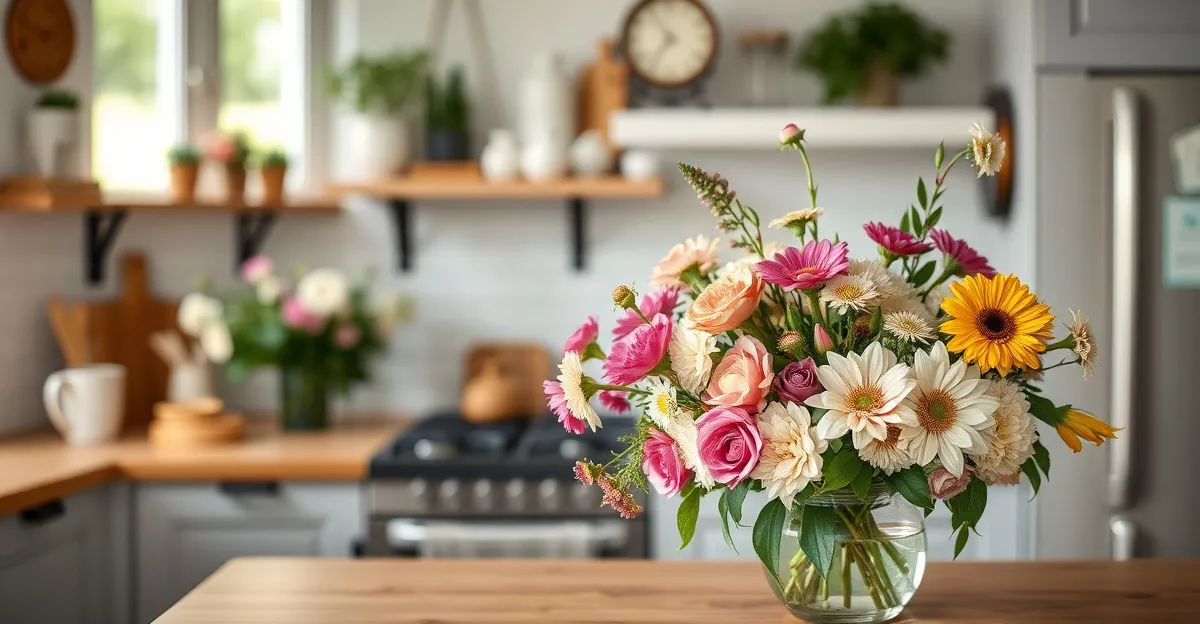
Low-maintenance flower setups for a kitchen
The best low-maintenance flower setups for a Bali kitchen — which flowers to choose, how to place them, and how to keep them fresh in a tropical climate.
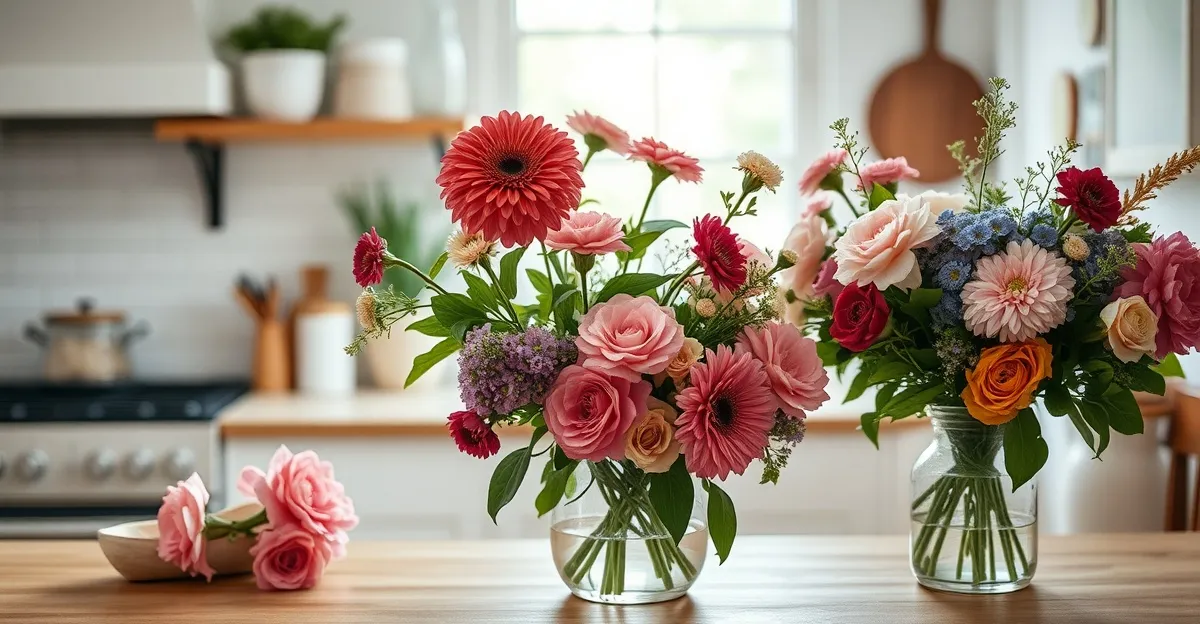
The kitchen is the room where flowers are most likely to be forgotten. There is food prep to manage, hot steam rising from pots, cooking smells that compete with anything fragrant, and surfaces that tend to fill up with practical things rather than decorative ones. And yet, a small arrangement of flowers in the kitchen does something that flowers in other rooms do not quite achieve: it makes the room feel inhabited and loved rather than simply functional.
In Bali, the kitchen challenge is compounded by tropical conditions. The combination of heat from cooking, humidity from Bali's climate, and the occasional cooking steam creates a more demanding environment for cut flowers than most rooms in the villa or home. The solution is not to give up on kitchen flowers — it is to choose the right ones.
What "low maintenance" actually means for kitchen flowers
Low maintenance, in this context, means three things:
- Long vase life in difficult conditions: The flowers should be hardy enough to handle heat, steam, and fluctuating conditions without wilting quickly
- Minimal daily attention required: You should not need to change water daily or monitor the arrangement closely — every two or three days is sufficient
- Simple, quick setup: The arrangement should not require advanced floristry skills; something you can put together in two minutes with fresh flowers from the market
A low-maintenance kitchen flower setup is not a compromise. Many of the most beautiful flowers for kitchens are low-maintenance precisely because they are suited to conditions humans also thrive in.
The best flowers for Bali kitchen setups
Anthurium
If you had to name one flower for a Bali kitchen, it would be anthurium. Grown locally, always available, exceptional longevity (two to three weeks in a clean vase), and requiring nothing more than a water refresh every few days. The glossy, architectural quality of white or red anthurium looks beautiful against teak kitchen benches, stone splashbacks, and tiled surfaces.
In Bali kitchens, which often have open-air or semi-open-air designs, anthurium handles the cross-ventilation and occasional humidity spikes better than any delicate flower.
Tropical leaves and foliage
Sometimes the most effective kitchen arrangement is not flowers at all — it is a collection of dramatic tropical leaves in a tall vase. Monstera, banana leaf, heliconia leaves, or palm fronds require almost no attention, last weeks, and bring a strong design quality to a kitchen without the fragility of cut blooms.
A single large monstera leaf in a tall, narrow vase on a kitchen shelf is a statement that takes approximately ten seconds to set up and lasts a fortnight.
Chrysanthemum
Underrated in premium contexts, chrysanthemums are exceptional for kitchen use. They are robust, long-lasting (seven to twelve days), available in a huge range of warm and neutral colours, and genuinely unfazed by kitchen heat and humidity. In Bali they are affordable and widely available — meaning you can replace them weekly without it feeling like a significant expense.
Golden chrysanthemums look particularly beautiful in Bali kitchens — they connect to the golden tones of teak and the warm quality of tropical light.
Alstroemeria
Multiple blooms per stem mean that alstroemeria stays looking full and beautiful as individual flowers open and drop. They last five to seven days in kitchen conditions, come in a wide range of colours (yellow, orange, coral, pink, white, purple), and are reliably available in Bali. They require nothing more than clean water and a trim every few days.
Spray roses in sealed bud
If you want something that looks more refined and premium in a kitchen arrangement, spray roses in sealed bud condition will last four to six days even in kitchen heat, and they open gradually to reveal a beautiful fully-opened form. Look for spray roses (multiple small blooms per stem) rather than single large roses for kitchen use — the multiple blooms mean the arrangement stays interesting for longer.
Herbs as flowers
Do not overlook the possibility of using culinary herbs as the flower arrangement itself. A glass jar of fresh basil or mint, a bunch of rosemary in a ceramic pot, or a small collection of herb plants in terracotta pots on the kitchen window sill are simultaneously functional and beautiful. In Bali, where fresh herbs are available at almost every pasar (market), this approach is inexpensive and endlessly renewable.
The Italian and Indian herb gardens that many Bali villa kitchens maintain — lemongrass, pandan, kaffir lime, basil, mint — are attractive enough to bring from the garden into the kitchen as both ingredient and decor.
Setup styles that work in kitchens
The single-stem bud vase approach
One or two small bud vases, each containing a single flower stem, arranged near the kitchen window or on a shelf. This is the most low-maintenance setup possible — you replace one stem at a time rather than the whole arrangement. It also allows you to mix flowers without committing to a full arrangement: one anthurium, one alstroemeria, one chrysanthemum.
For Bali kitchens, ceramic bud vases from Ubud's craft markets work beautifully. They are inexpensive enough to have several and versatile enough to suit any flower type.
The herb-and-flower jar
A large glass jar or ceramic pot with a mix of fresh herbs and one or two flower stems — the intersection of functional and beautiful. Put culinary herbs in first (basil, rosemary, mint), then tuck a stem or two of flower in among them. The herbs provide lush green structure; the flowers add colour. Replace the flowers weekly; the herbs replace themselves (or can be used in cooking and refreshed).
The colour-coded single vessel
Choose one vessel — a good ceramic, a terracotta pot, a glass cylinder — and commit to one colour of flower in it each week. Golden chrysanthemums one week, coral alstroemeria the next, white anthurium the week after. The consistency of the vessel with the variety of the flower creates an evolving kitchen installation that requires no design decisions — just a fresh bunch each week.
The tropical leaf statement
A single dramatic leaf in a tall narrow vase. Monstera, banana, or bird-of-paradise leaf. Lasts two to three weeks. Requires nothing. Looks extraordinary.
Placement principles for kitchen flowers
Avoid direct heat: Do not place flowers directly next to the stove, oven, or anywhere that gets consistently hot when cooking. Heat is the primary enemy of cut flowers in kitchens.
Window sill advantage: Windows create natural light that flowers need, but direct tropical midday sun in Bali will overheat even hardy flowers. A window sill that gets morning light but afternoon shade is ideal.
Counter space reality: Most kitchen counters in active homes fill up fast. A small arrangement in one corner that does not impede prep work is more practical than a generous centrepiece that has to be moved every time cooking happens.
Shelf or windowsill positions: Elevated positions — a shelf at eye height, the windowsill above the sink — keep flowers out of the working zone while still making them visible.
Away from fruit: Ripening fruit (particularly bananas, which are everywhere in Bali) emits ethylene gas that accelerates flower ageing. Keep flowers away from the fruit bowl.

The team
your florists
weekly subscription · Bali
We write about flowers because we love them. We deliver them because someone should — properly, weekly, across Bali.
— heyflowerPay once for 3, 6, or 12 months, no auto-renewal.
Maintenance simplified
For kitchen flowers, the rule is minimal but consistent:
- Every two days: Top up the water if the level has dropped. Do not wait until it is empty.
- Every three to four days: Change the water completely and give stems a fresh diagonal cut.
- When a stem goes: Remove it immediately. Dying plant material in water creates bacteria that shortens the life of everything else in the vase.
- Weekly: Start fresh with new flowers. Kitchen flowers are not worth pushing past their natural lifespan — the visual benefit declines rapidly.
FAQ
What is the best vase for a Bali kitchen? Small, easy to clean, and simple in design. A ceramic bud vase, a glass jar, or a small terracotta pot. Avoid anything with a narrow neck that is difficult to clean (bacteria builds up quickly in tropical conditions). A vase you can reach into and scrub properly is more important in a kitchen than in any other room.
Should I use flower food in a kitchen arrangement? It helps, particularly in the heat of a kitchen environment. Commercial flower food (sachets often included with florist purchases) slows bacterial growth and provides sugar for the flowers. If unavailable, a teaspoon of sugar and two drops of bleach in the water achieves a similar effect.
Can I grow flowers in the kitchen in Bali? Some plants grow beautifully in Bali kitchens: peace lily (spathiphyllum) handles low light and high humidity well, pothos and other aroids thrive in kitchen conditions, and succulent arrangements look attractive on a kitchen sill. These are not cut-flower arrangements but living plants — requiring different (though equally minimal) care.
Are any flowers specifically bad for kitchens? Strongly fragrant flowers (lilies, gardenias, highly scented roses) compete with cooking aromas and can be overwhelming in an enclosed space. Flowers with powdery pollen (lilies specifically) can deposit pollen on food prep surfaces. Delicate flowers that require careful temperature management (ranunculus, peonies) are not worth the effort in a kitchen.
How do I source fresh flowers regularly for a kitchen setup in Bali? Bali's pasar (markets) sell fresh flowers in every neighbourhood. The main flower markets in Denpasar (Pasar Badung area) stock the widest variety. Supermarkets in Seminyak, Canggu, and Ubud also carry ready-made bunches. A weekly flower subscription delivers fresh blooms to your door — low-maintenance flower setups for retail storefronts also covers some useful principles that apply to busy, practical environments like kitchens.
The small joy of kitchen flowers
The kitchen is where most of life in a home actually happens — the daily cooking, the morning coffee, the conversations that happen while food is being prepared. A small arrangement of flowers in this space is not a luxury or a performance. It is the daily equivalent of putting on music while you cook — a small act that makes the ordinary better. In Bali, where fresh flowers are inexpensive and close at hand, there is no reason not to.
Ready to bring fresh flowers to your Bali home or event? Explore our weekly flower subscription and get handpicked blooms delivered to your door every week.
More on kitchen