Low-maintenance flower setups for a entrance
The best low-maintenance flower setups for a Bali home or villa entrance — hardy varieties, practical arrangements, and weekly care that takes minutes.
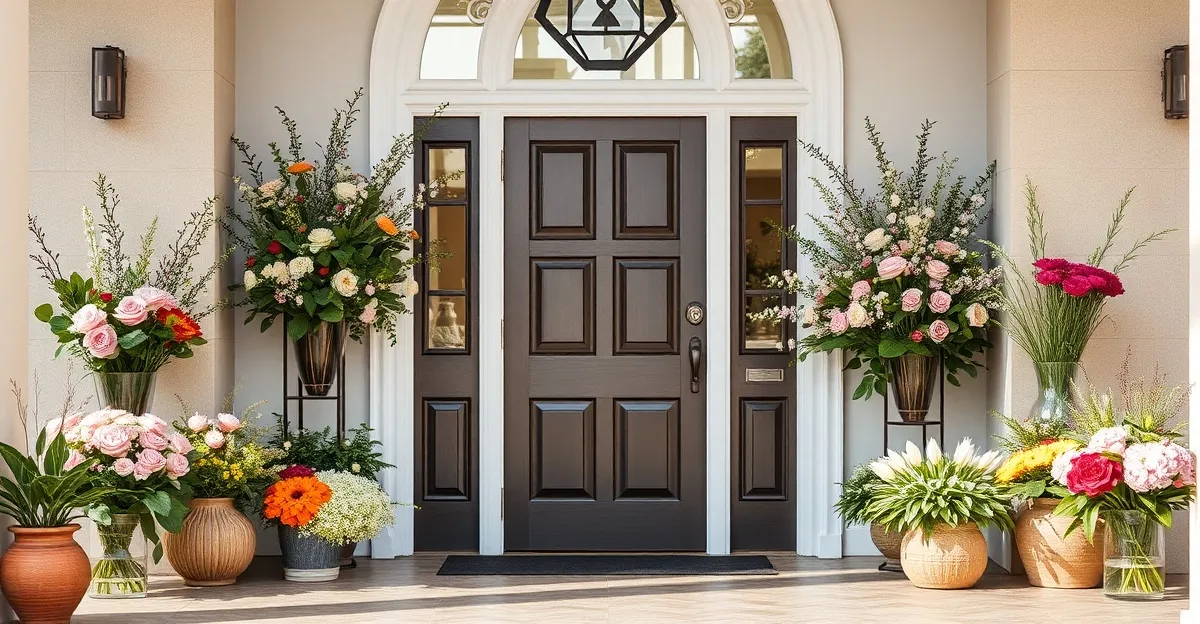
Wanting flowers in your entrance and actually maintaining them there are two different commitments. Many people start with good intentions — a generous arrangement on the console table — but find that within a week the flowers are wilted and the water has gone murky, and the process of replacing them feels like more effort than it is worth. The result is that the entrance reverts to being flowerless.
The solution is not better intentions; it is a better setup. Low-maintenance flower arrangements for an entrance are not a compromise on beauty — they are a specific design approach that accounts for the realities of a busy life, a tropical climate, and the particular challenges of an entrance space.
In Bali, where humidity runs high, temperatures average 28–32°C, and many entrances are semi-outdoor or fully exposed to the elements, a low-maintenance approach is not just convenient — it is often the only way to maintain flowers reliably over time.
What makes an entrance setup genuinely low maintenance
Three criteria:
-
Flower varieties that last without daily attention: Some flowers genuinely need daily water checks, stem trimming, and careful temperature management. These are not entrance flowers. The low-maintenance entrance flower can tolerate three to four days between water changes and still looks presentable.
-
A setup that is easy to refresh: The arrangement should be simple enough that replacing it takes five minutes rather than an hour. A single-stem bud vase cluster is easier to refresh than a complex mixed arrangement that requires re-cutting and re-arranging multiple flower types.
-
An appropriate placement: An arrangement in a semi-outdoor entrance that gets direct afternoon sun will die within a day regardless of the flower choice. Low maintenance requires the right position, not just the right flower.
The five best low-maintenance entrance flower setups for Bali
1. The anthurium singleton
Single anthurium stems in a good vase. Two or three stems of white anthurium in a stone or ceramic vessel. That is the entire setup.
Why this works: Anthurium is grown locally in Bali, available year-round, and has a vase life of two to three weeks in good conditions. It requires water replacement every three to four days and stem trimming every five to six days. Beyond that, it asks almost nothing. It looks architectural, elegant, and intentional.
For an entrance, white anthurium in a matte ceramic vase reads as premium and considered. It photographs well for any rental property listing. It works equally well in a traditional Balinese villa and a modern minimalist space.
Effort level: Minimal. Water change every three to four days. Replace stems every ten to fourteen days.
2. The chrysanthemum cluster
A generous bunch of golden chrysanthemums in a terracotta or ceramic pot. Not a single stem, but a full, abundant cluster — the kind that fills the vessel and creates a warm, dense impression.
Why this works: Chrysanthemums are among the most robust cut flowers available in Bali. They tolerate temperature variation, handle the humidity well, and last seven to twelve days with basic water maintenance. Golden chrysanthemums in a terracotta pot look deeply connected to Bali — warm, abundant, and genuine.
The entrance benefit of chrysanthemums is that a fresh bunch takes thirty seconds to arrange: trim the stems, place in water, done. No complex composition required.
Effort level: Minimal. Water every two to three days. Replace weekly.
3. The tropical leaf statement
A single large tropical leaf in a tall narrow vase. Monstera, banana, heliconia, or palm frond. Nothing else.
Why this works: Tropical leaves last significantly longer than cut flowers — often two to three weeks. They require almost no care: fresh water when first placed, then a top-up every few days. A single monstera leaf in a dark ceramic vase at an entrance makes a strong design statement with near-zero maintenance commitment.
For entrances that are semi-outdoor or exposed to more variable conditions, tropical foliage outperforms cut flowers significantly.
Effort level: Extremely minimal. Water top-up every three to four days. Replace every one to two weeks.
4. The bud vase cluster
Five to seven small bud vases in a cluster, each with one or two stems. The individual stems can be mixed or matched — one alstroemeria, one chrysanthemum, one eucalyptus sprig in each vase.
Why this works: The cluster reads as a composed arrangement from a distance, but it is maintained individually — you replace one or two stems at a time as they fade rather than the whole arrangement at once. This reduces the effort of any single maintenance moment and allows the arrangement to stay presentable for longer overall.
In Bali, ceramic bud vases from the craft markets are inexpensive enough to build a collection of seven to ten without significant cost, and the variety of forms available means each can be slightly different while sharing an overall aesthetic.
Effort level: Low. Individual stems replaced as needed. Complete refresh weekly or fortnightly.
5. The living plant with weekly flower accent
A permanent plant in an attractive pot, with one or two cut flower stems added alongside for freshness.
A peace lily (spathiphyllum) in a large ceramic pot, with a single stem of orange alstroemeria tucked alongside the plant. Or a lush pothos in a hanging basket, with a few stems of white lisianthus placed in a small vessel at the base.
Why this works: The permanent plant provides structure and greenery fifty-two weeks of the year, requiring only normal plant care (water every three to four days for most tropical plants in Bali). The cut flower adds colour and life with a very small weekly commitment — one or two stems in a small vase.
This setup is ideal for entrances where consistent maintenance is genuinely difficult — the plant carries the visual presence even when the cut flower element is temporarily absent.
Effort level: Low. Plant care every three to four days. Cut flower accent replaced weekly.
Placement principles that reduce maintenance
Avoid direct afternoon sun: In Bali, the afternoon sun (roughly 12:00–4:00 PM) is intense enough to wilt most cut flowers within hours if they are in a south or west-facing position without shade. Entrances with shade from a roof overhang, a wall, or a tree are far better flower environments than those in direct sun.
Stay near a water source: The nearer the entrance arrangement is to a tap or kitchen, the more likely you are to maintain it consistently. An arrangement that requires carrying water a long distance gets refreshed less often than one you can service from a nearby source.
Choose a stable surface: In Bali entrances with air flow (open design, fans, cross-ventilation), choose a vase that is heavy enough to be stable. Knocked-over vases with murky water are both a maintenance problem and a mess. Stone, heavy ceramic, or any vessel weighted with pebbles at the base stays put.
Semi-outdoor considerations: For entrances that are genuinely outdoor (post-gate, pre-covered area), opt for living plants rather than cut flowers as the primary element, with cut flowers only where there is reliable shelter.
Minimal maintenance routine
For a genuinely low-maintenance entrance setup, the entire maintenance routine should take no more than five minutes:
- Every two to three days: Check water level. Add fresh water if low. Look for any obviously wilted stems.
- Once a week: Remove any faded stems. Refill with fresh water. Trim stems at a diagonal angle. If all flowers are done, take thirty seconds to put fresh ones in — one or two stems of whatever is available.
- When replacing: Have fresh stems ready before removing the old ones. The vase does not need to be elaborately cleaned between every replacement — a quick rinse suffices for a between-week replacement.
That is the full routine. Five to ten minutes per week is enough to maintain a consistently beautiful entrance arrangement.

The team
your florists
weekly subscription · Bali
We write about flowers because we love them. We deliver them because someone should — properly, weekly, across Bali.
— heyflowerPay once for 3, 6, or 12 months, no auto-renewal.
Sourcing flowers for low-maintenance setups
The most common barrier to maintaining entrance flowers is sourcing. If getting fresh flowers requires a special trip to a distant market, it will not happen consistently.
In Bali, fresh flowers are accessible enough that this barrier is low:
- Weekly delivery: A flower subscription delivers fresh flowers to your door each week, eliminating the sourcing problem entirely
- Supermarkets: Bali's larger supermarkets (Bintang in Canggu, Seminyak; Carrefour; Pepito) carry ready-made flower bundles
- Local markets: Most Balinese neighbourhood markets (pasar) sell basic flowers — chrysanthemums, marigolds, local tropical varieties — at very low prices
- Roadside vendors: Along many main roads in Bali, particularly between Denpasar and Ubud, roadside flower sellers offer fresh chrysanthemums, marigolds, and other locally grown varieties
For more on styling your entrance with specific arrangement ideas, flower arrangement ideas for your entrance covers the full range of design approaches.
FAQ
Which single flower is best for a Bali entrance if I want maximum life with minimum effort? White anthurium. Two to three stems in a good vase, water changed every three to four days. Will look beautiful for two to three weeks. No other cut flower comes close to that combination of longevity, availability, and visual quality in the Bali context.
Can I go two weeks without changing the entrance flowers? With anthurium or tropical foliage, yes — if the vase is kept topped up with water, the arrangement will survive and look acceptable for two weeks. For most other cut flowers, ten days is the maximum. The entrance is the most visible placement in the home; pushing beyond the natural lifespan of the flowers damages the impression you are trying to create.
Should I use flower food for entrance arrangements? Yes, particularly in semi-outdoor entrances where heat and air movement accelerate water bacterial growth. Commercial flower food sachets are available from florists and some supermarkets. Without them, a tablespoon of sugar and a drop of bleach in the water is a reasonable substitute.
Is a weekly flower subscription worth it for just the entrance? For many villa owners and residents, yes. The convenience of weekly delivery eliminates the sourcing friction, and the weekly cadence matches the natural replacement cycle of most cut flowers. Many subscribers find that once fresh flowers are arriving weekly without effort, they add arrangements to other rooms as well — the entrance is just the beginning.
What is the cheapest reliable entrance flower setup in Bali? Golden chrysanthemums in a terracotta pot. Available at any pasar for Rp 15,000–30,000 per bunch. Hardy enough to last a week in the entrance. Warm and welcoming in appearance. The terracotta pot can be sourced from any garden market for Rp 30,000–80,000. Total cost per week: approximately Rp 20,000–30,000.
Making it a habit rather than a project
The reason low-maintenance entrance flowers work is that they reduce the decision-making and effort to a level where they can become a habit rather than a project. When you know that every week a bunch of chrysanthemums in a terracotta pot on the entrance table is what you do, and that it takes three minutes, you do it. When the arrangement requires specialist knowledge, a trip to the florist, and thirty minutes of arrangement time, you do it once and then let it slide.
Design your entrance flower setup around your real life rather than your aspirational life, and the result will be an entrance that consistently has flowers — which is infinitely better than one that sometimes has beautiful arrangements and often has wilted ones.
Ready to bring fresh flowers to your Bali home or event? Explore our weekly flower subscription and get handpicked blooms delivered to your door every week.
More on entrance