Hibiscus in Balinese Ceremonies: Traditional Uses in Bali
How hibiscus is used in Balinese Hindu ceremonies — from daily offerings to major rites — and what makes this flower so sacred in Bali's spiritual life.
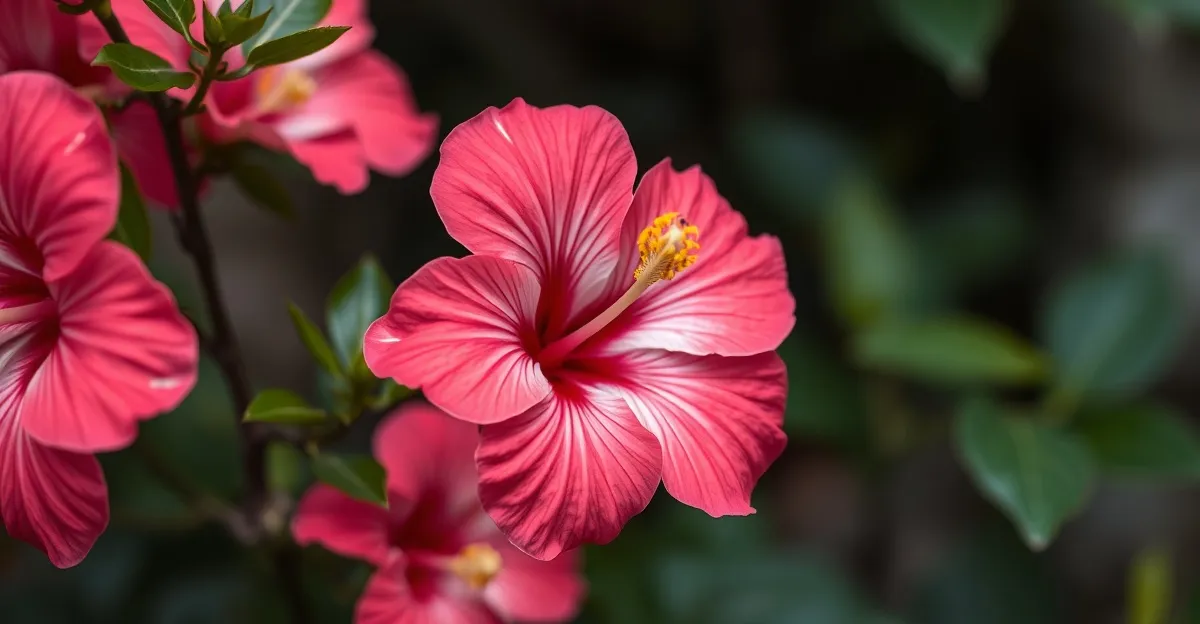
Every morning across Bali, before most of the island has eaten breakfast or checked a phone, Balinese women are at work weaving small palm-leaf trays and filling them with flowers, rice, incense, and prayer. These are canang sari, the daily offerings that mark Balinese spiritual life, and among the flowers most consistently threaded into them, you'll find hibiscus — red, white, sometimes yellow or pink — freshly picked from the garden or bought from the village market.
Hibiscus's role in Balinese ceremony is not decorative in the Western sense. It is functional, symbolic, and spiritually charged. The flower carries specific meanings, is offered to specific deities, and appears in ceremonies from the most intimate daily household rituals to the grandest island-wide celebrations. Understanding how and why hibiscus is used in Balinese ceremonies gives the flower a depth that transforms even casual encounters with it — at a temple gate, in a villa garden, tucked behind someone's ear.
The Foundation: Flowers in Balinese Hindu Practice
Balinese Hinduism (Agama Hindu Dharma) is a distinct tradition that blends Indian Hindu roots with indigenous Balinese animist and ancestor worship traditions. Within this practice, flowers are not merely beautiful — they are vehicles for divine communication.
The Tri Murti (the Hindu trinity of Brahma, Vishnu, and Shiva) are each associated with specific colours and directions, and offerings are composed to reflect these cosmic correspondences. Flowers used in banten (offerings) are chosen with this symbolism in mind.
White flowers represent Iswara and the east; red flowers represent Brahma and the south; yellow flowers represent Mahadewa and the west; black/dark flowers represent Vishnu and the north. Hibiscus appears prominently in this colour-direction system, with red and white hibiscus being particularly significant.
Canang Sari: The Daily Offering
Canang sari is the most fundamental unit of Balinese ceremonial practice — a small, square offering tray (canang) made from young palm leaf and filled with symbolic items. The flowers placed in canang sari follow the directional colour system: white flowers face east, red flowers face south, yellow or golden flowers face west, and blue or dark flowers face north.
Red hibiscus is one of the flowers most commonly used for the south-facing section of canang sari, associated with Brahma (the creator) and the fire element. White hibiscus appears in the east-facing section, associated with Iswara and water.
This daily offering practice means that hibiscus is effectively harvested and offered multiple times each day across the entire island. The demand is such that hibiscus grows in virtually every home compound and is sold by the bundle at every traditional market. The flower is as much a practical agricultural product as it is a sacred item.
Puja and Temple Ceremonies
Beyond daily offerings, hibiscus appears in elaborate temple ceremonies (piodalan or odalan), which occur at each temple according to the Balinese 210-day Pawukon calendar. During these celebrations, offerings become more elaborate and the quantity of flowers required increases dramatically.
Meditating Priests and Flower Offerings
Pedanda (high priests) and pemangku (temple priests) use specific flowers in their ritual practices. Red hibiscus is used in purification and protective rites, and its association with Durga/Kali — the fierce protective mother goddess — makes it appropriate for ceremonies seeking protection from negative forces.
During major ceremonies, hibiscus flowers may be placed on the ground in mandala patterns, woven into towering penjor (decorated bamboo poles that line the streets during Galungan), or arranged on elaborate tiered offerings that take trained hands hours to construct.
Galungan and Kuningan
Galungan is perhaps the most significant recurring celebration in the Balinese calendar, occurring every 210 days to celebrate the victory of dharma (righteousness) over adharma (evil). The ten days of Galungan culminate in Kuningan.
During this period, Bali transforms visually. Penjor decorated with coconut leaves, fruit, and flowers — including hibiscus — line every road. Temples are filled with elaborate offerings. Family compounds become festive and fragrant.
Hibiscus appears throughout Galungan preparations and offerings. Given the festival's connection to ancestral spirits visiting the living world, the flowers used carry additional significance as a welcome for sacred visitors.
Weddings and Life Cycle Ceremonies
Balinese Hindu weddings (pawiwahan) involve extensive floral preparation. While specific flower requirements vary by caste, region, and family tradition, hibiscus is used in various stages of Balinese wedding ceremonies, particularly in offerings and purification rites.
Life cycle ceremonies (manusa yadnya) — including ceremonies for babies, coming-of-age rites, tooth-filing ceremonies (mepandes), and cremation (ngaben) — all involve elaborate offerings and ritual flower use. Hibiscus appears across these ceremonies in context-specific ways.
Tooth Filing Ceremony
Mepandes, the Balinese tooth-filing ceremony performed when young adults reach maturity, is one of the most significant life ceremonies and involves elaborate offerings over multiple days. Flower offerings made during this ceremony reflect its significance as a purification and spiritual elevation rite.
Cremation: Ngaben
The Balinese cremation ceremony is one of the most visually spectacular in the world — joyful, colourful, and communal rather than mournful. It is understood as the release of the soul from its bodily vessel, allowing it to reincarnate or attain liberation.
Ngaben involves enormous quantities of flowers in the construction of the cremation tower (wadah) and the bull-shaped sarcophagus (lembu). The overall aesthetic is one of abundance, beauty, and spiritual richness. White hibiscus, carrying associations with spiritual purity and the sacred, appears in ngaben preparations — though exact flower use varies significantly by caste, region, and family.
Hibiscus in Hair: Beauty and Devotion
One of the most immediately visible expressions of hibiscus's ceremonial role is the practice of wearing it in the hair. Balinese women often tuck a hibiscus bloom — particularly red hibiscus — behind one ear when going to the temple or during ceremonies.
This isn't purely decorative. Flowers in the hair serve as a form of devotional adornment — wearing sacred flowers brings one's body into alignment with the spiritual purpose of the ceremony. The practice mirrors similar traditions in Indian Hindu and Hawaiian contexts, suggesting shared roots or parallel evolution.
The Waru Tree: Hibiscus Tiliaceus in Ceremony
Hibiscus tiliaceus (the waru tree) has its own ceremonial role in Bali distinct from the ornamental hibiscus. Its large leaves are used as wrappers for offerings, and the tree's presence near temples is intentional — it's considered an auspicious tree with protective spiritual qualities.
The wood of waru has historically been used in certain ceremonial constructions, and the tree is planted in sacred spaces across Bali. Walking past a row of waru near a temple is itself a kind of quiet ceremony — the tree marks you as having entered a different kind of space.

The team
your florists
weekly subscription · Bali
We write about flowers because we love them. We deliver them because someone should — properly, weekly, across Bali.
— heyflowerPay once for 3, 6, or 12 months, no auto-renewal.
What This Means for Visitors and Residents
For non-Balinese people living in or visiting Bali, understanding hibiscus's ceremonial role brings richness to everyday encounters with the flower. When you see hibiscus threaded into a canang sari on the pavement outside a shop, you're witnessing a practice with roots stretching back centuries. When you notice hibiscus in a temple arrangement, you're seeing the flower functioning in the role for which it is, in some ways, uniquely fitted in this place.
This doesn't mean non-Balinese people should avoid hibiscus or treat it with excessive solemnity. Hibiscus is also simply a beautiful, joyful flower that grows abundantly in Bali and is available for ordinary gifting and decoration. But knowing its ceremonial dimension adds a layer of appreciation that makes life in Bali richer.
Frequently Asked Questions
Can I use hibiscus from my garden in a canang sari?
If you're Balinese or learning Balinese Hindu practice under appropriate guidance, yes — garden-grown hibiscus is exactly the source used by most households. If you're a non-Balinese resident interested in making offerings, seek guidance from a knowledgeable Balinese mentor rather than improvising independently.
Why is red hibiscus used more than other colours in ceremony?
Red hibiscus is associated with Brahma (the creator) and the south direction in the Balinese Hindu cosmological system. Red also has strong associations with protective feminine deities (linked to Indian Kali/Durga traditions). This dual association makes red hibiscus particularly significant and versatile in ceremonial contexts.
Is hibiscus ever used in black magic or negative rituals in Bali?
Certain flowers are associated with left-hand or protective magic (penglukatan) in Balinese tradition, and hibiscus appears in various purification contexts. However, the vast majority of hibiscus use in Bali is for positive devotional and ceremonial purposes. The idea that hibiscus itself has dark associations is a misunderstanding.
Do Balinese people grow hibiscus specifically for ceremonies?
Yes — virtually every Balinese home compound has hibiscus growing specifically to supply the daily flower needs for canang sari and other household offerings. In this sense, growing hibiscus is itself a form of spiritual preparation.
What should a non-Balinese person do if they find hibiscus in a temple offering?
Leave it where it is. Flowers placed in canang sari and temple offerings are sacred objects in their ritual context. Even as the flowers fade, they should be left to complete their ceremonial function rather than taken as decoration or souvenirs.
A Living Connection
Hibiscus in Bali is a living thread connecting the daily to the sacred, the beautiful to the devotional. Every bloom placed in a morning offering, every flower tucked behind an ear for temple, every red petal brightening a canang sari on a Denpasar pavement — these are moments in a ceremony that has been continuous for centuries.
At heyflower.co, we source and arrange hibiscus and tropical flowers with an awareness of this heritage. Our Bali-based florists know this flower not just as a product but as part of the island's living culture. Explore our flower subscriptions for fresh, locally sourced arrangements delivered weekly across Bali. Also worth reading: the history and origin of the hibiscus for a deeper look at where this remarkable flower comes from.
More on Hibiscus