Flower styling ideas for a Bali jungle retreat
Flower styling in a Bali jungle retreat means working with — not against — one of the world's most powerful natural settings. Here's how to do it with authenticity and practicality.
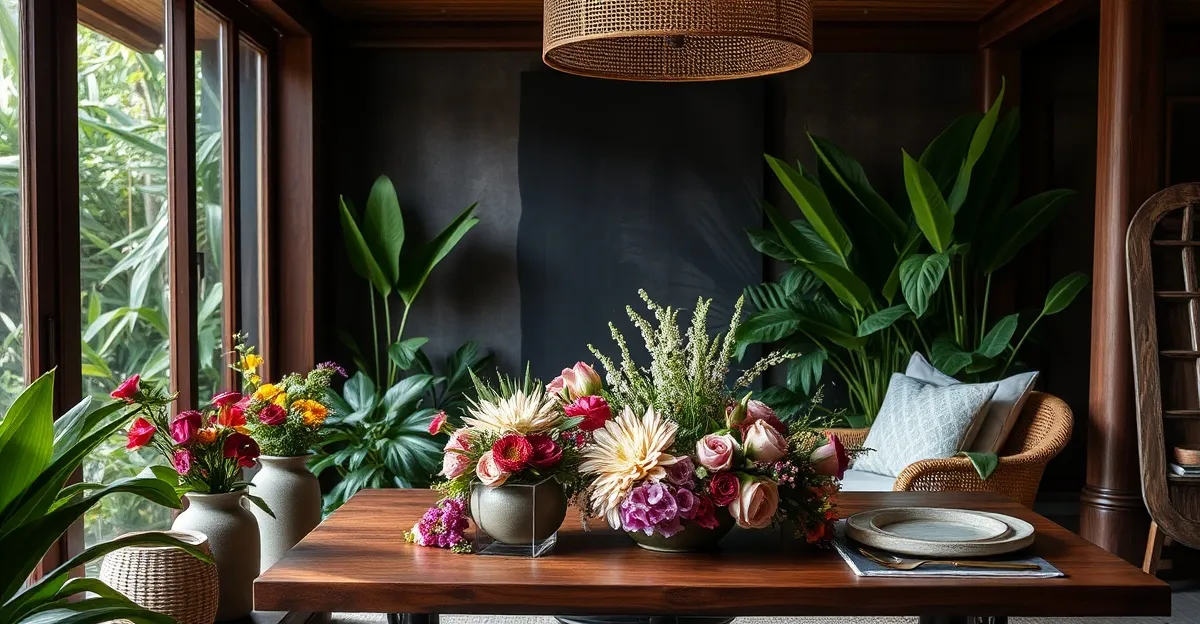
A jungle retreat in Bali is already saturated with living beauty — the sound of water, the layered canopy, the bird life, the quality of light filtering through dense green. Walking into a space like this and adding flowers feels different from decorating an empty room in a city hotel. Here, the flowers are entering a conversation with the surrounding environment, and that conversation needs to feel natural.
The best flower styling for a Bali jungle retreat doesn't try to impose a florist's aesthetic onto a space that has its own powerful visual character. It works with the jungle's palette — deep greens, filtered light, occasional bursts of colour — to create moments of cultivated beauty within a wild setting.
This guide covers which flowers work in jungle retreat environments, how to choose containers and placement that feel native to the setting, and how to manage the practical challenges of tropical humidity and indoor-outdoor flow.
Working with the jungle aesthetic
Jungle retreats in Bali — concentrated most heavily in Ubud, the Ayung River valley, Tegallalang, and the hillside areas of Tabanan — vary considerably in their aesthetic. Some are designed as refined counterpoints to the wild surroundings (teak and glass, white linen, clean lines), while others lean into a more immersive, organic feel (natural wood, stone, foliage walls, open-air structures).
Both approaches need flowers, but the styling differs:
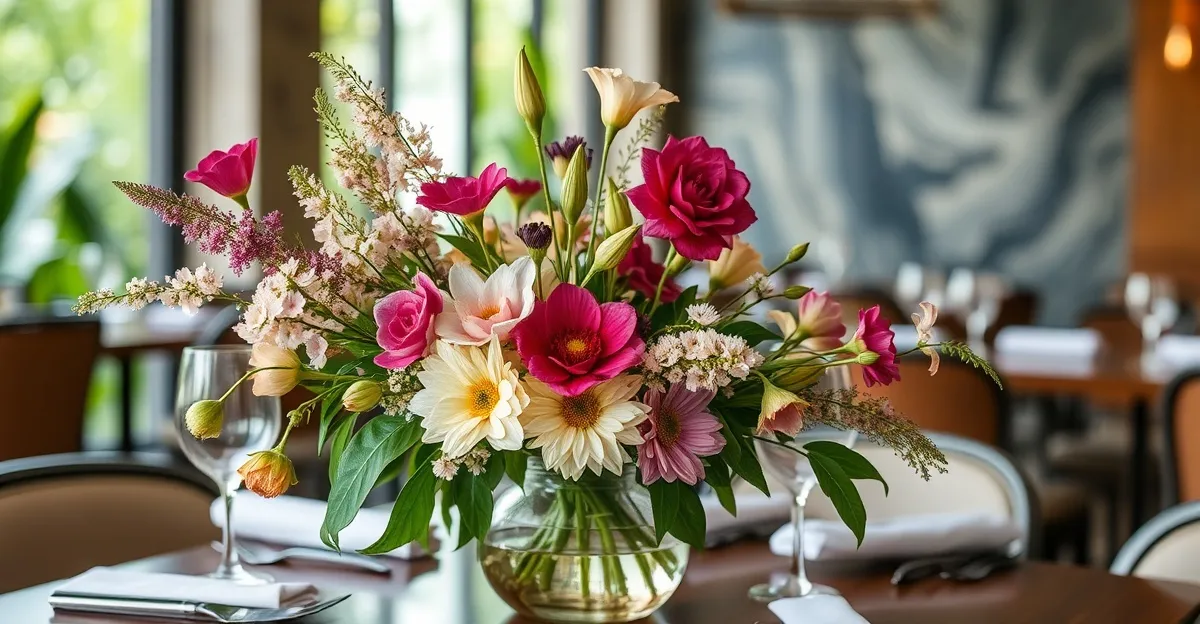
Refined retreats contrasting with the jungle: Here, flowers can be more considered and curated — a single architectural bloom in a clean ceramic vessel, or a tightly arranged composition of a few premium varieties. The flowers are placed deliberately against the wild backdrop as a mark of civilisation. White phalaenopsis orchids, single-stem bird of paradise, or anthuriums in pristine condition work well.
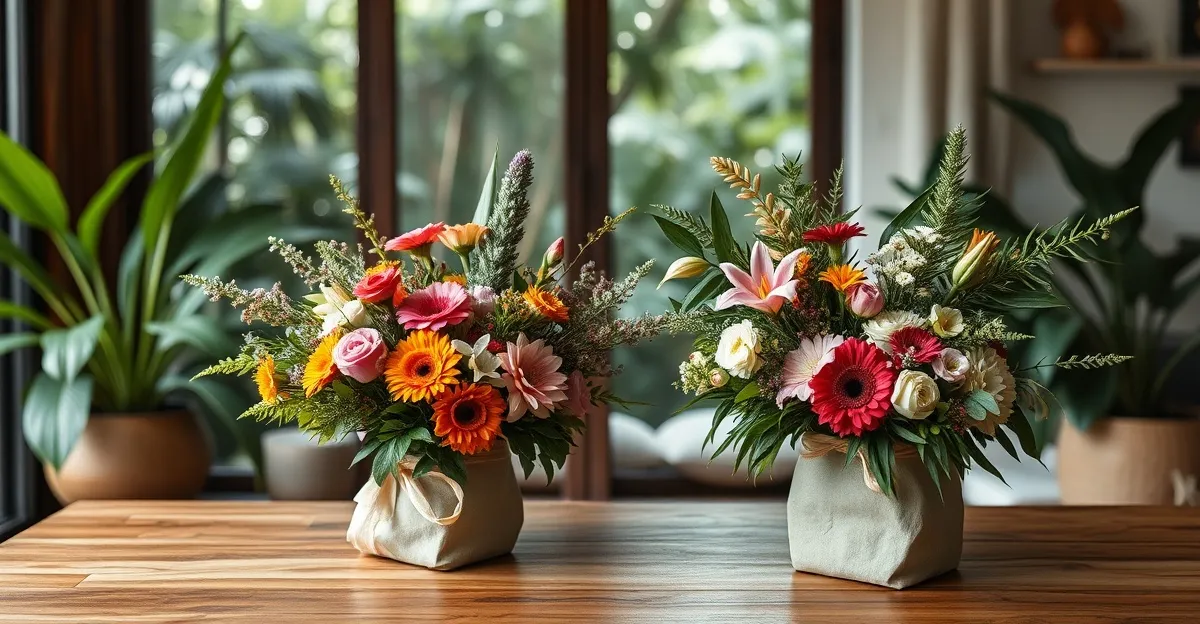
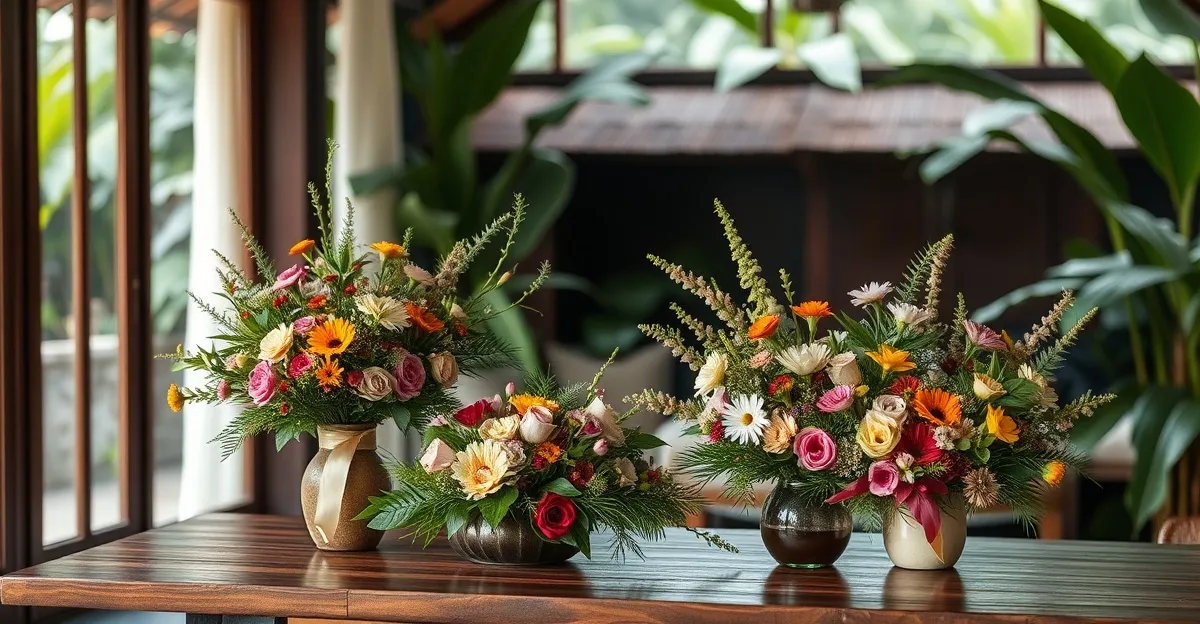
Immersive organic retreats: Flowers should feel like they grew there. Loose, abundant arrangements using locally foraged tropical blooms, foliage from the surrounding garden, and varieties that look native to the setting. Wild ginger flower, local orchid varieties, marigolds, and seasonal blooms from the local market suit this aesthetic. Containers should be terracotta, bamboo, woven baskets, or natural materials.
Varieties that suit jungle retreat environments
Wild ginger flower (torch ginger, Etlingera elatior): One of the most beautiful and dramatically tropical blooms available in Bali's jungle areas. The deep pink to red flower heads are substantial, long-lasting, and feel entirely native to a jungle setting. Available from local suppliers and sometimes from the retreat's own garden.
Ferns and tropical foliage: In a jungle setting, foliage is the foundation rather than the filler. Fern fronds, oversized philodendron leaves, tradescantia, and wild foliage collected ethically from the surrounding environment create lush, atmospheric arrangements at minimal cost.
Local orchid varieties: Bali's jungle areas support a range of native orchid species, and many local suppliers grow varieties that feel more organic and wild than the uniform dendrobiums found in city flower markets. Ask your supplier for what's locally sourced.
Marigolds: Used widely in Balinese offerings in the jungle temple settings of Ubud and its surrounds, marigolds in a terracotta pot feel deeply appropriate in a Bali jungle context.
Heliconias and bird of paradise: These grow naturally in tropical jungle environments and suit the setting because they're visually native to it — they feel found rather than imported.
Seasonal market blooms: The markets of Gianyar and Ubud receive a wide variety of flowers from local growers in the surrounding highlands. Going with whatever's fresh that week creates an authentic, seasonal quality that suits a retreat environment.
For how different colours and varieties carry meaning in Balinese ceremonial contexts — important for retreats that incorporate spiritual or cultural elements — delphinium in Balinese ceremonies: traditional uses in Bali gives useful cultural context.
Placement in a jungle retreat
The key locations for flower styling in a jungle retreat:
Reception and arrival area: The guest's first contact with the retreat. A substantial arrangement here — generous enough to be noticed amid the surrounding greenery — creates a transition from the journey to the retreat experience. Use the most abundant, welcoming arrangement style here.
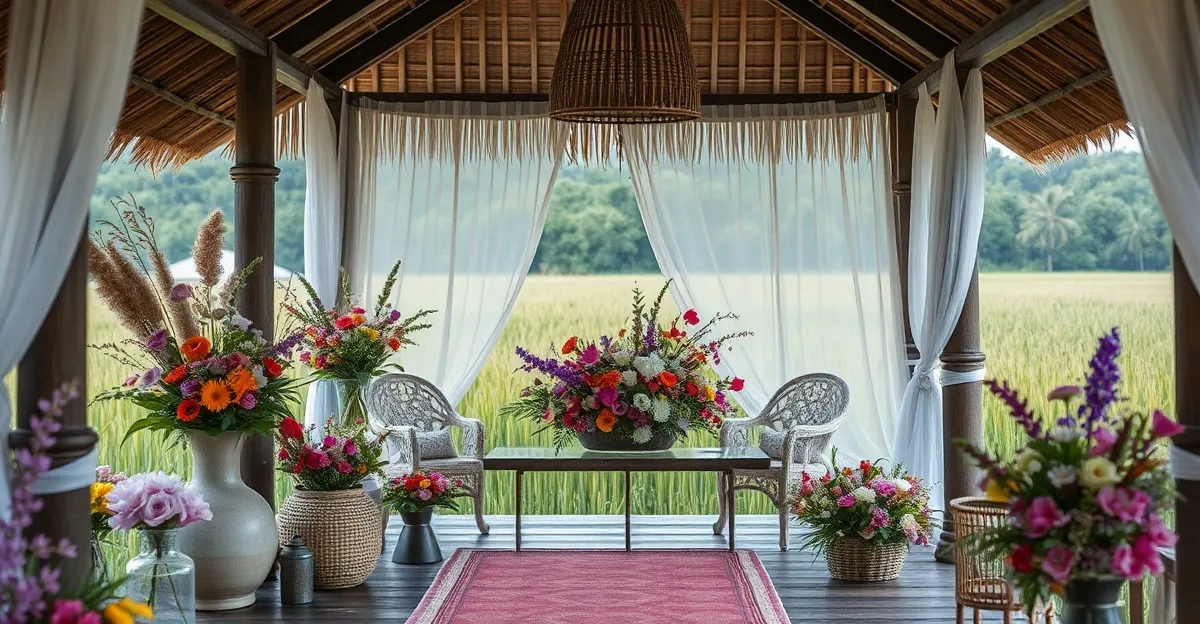
Open-air common areas: Pavilions, shared yoga shalas, meditation spaces, and communal dining areas in jungle retreats are often open or semi-open to the surrounding environment. Flowers here should be chosen for outdoor resilience as much as beauty — anthuriums, heliconias, and tropical foliage rather than delicate garden flowers.
Private villa rooms: For retreat guests, a small bud vase or a single potted orchid in their accommodation creates a personal welcome. In a jungle setting, this can be as simple as a glass jar with a few fresh blooms picked from the garden — the handmade quality suits the retreat aesthetic.
Dining and ceremony spaces: If the retreat has a dedicated dining pavilion or ceremony space for group rituals, a more considered arrangement is appropriate here. This is where you can invest in something slightly more elaborate — a floor arrangement, a centrepiece, or a composition that frames the space for ritual use.
Water features and pools: Floating flowers in a plunge pool, koi pond, or ceremonial bathing pool (kolam) create a beautiful, contemplative detail appropriate to a retreat setting. Frangipani petals, marigold petals, or whole lotus flowers (when available) work beautifully in water.
Containers that suit a jungle setting
Terracotta pots: Ubiquitous in Bali's market, aged terracotta develops a patina that looks beautiful in a jungle setting. The earthy tone works with almost every tropical colour palette.
Bamboo vases: Cut bamboo sections make simple, elegant vases that feel entirely native to a jungle environment. These can be made on-site if the retreat has bamboo growing on the property.
Woven baskets and coconut shells: Natural materials that suit the organic aesthetic of an immersive retreat. Coconut shells lined with foliage and filled with flowers are a particularly Balinese detail.
Stone vessels: River stones, carved stone bowls, and volcanic rock containers suit the geological character of Bali's interior landscape. These work especially well in outdoor settings.
Avoid: clear glass cylinders, plastic containers, or anything that looks imported from a city florist. The container is as important as the flowers in creating authenticity in a jungle setting.

The team
your florists
weekly subscription · Bali
We write about flowers because we love them. We deliver them because someone should — properly, weekly, across Bali.
— heyflowerPay once for 3, 6, or 12 months, no auto-renewal.
Managing flowers in tropical humidity
Jungle environments in Bali — particularly in Ubud and the river valleys — experience some of the highest humidity on the island. This creates specific challenges for flower maintenance:
Accelerated stem decay: High humidity and warm temperatures mean water in vases deteriorates quickly. Change the water daily in all arrangements to prevent bacterial growth that shortens flower life.
Mould on foliage: In very humid environments, some foliage can develop surface mould within a few days. Check arrangements regularly and remove any foliage showing early signs of deterioration.
Insect activity: Open-air and semi-open jungle environments have active insect populations. Some flowers attract insects that guests may find uncomfortable (bees, ants). Choose varieties that minimise this where guests are dining or meditating.
More frequent replacement: Plan for a slightly shorter vase life than in an air-conditioned indoor setting — typically one to two days shorter for cut flowers.
Frequency and budget for a jungle retreat
Jungle retreats typically run on tighter margins than resort properties, and the flower budget needs to be realistic. The advantage is that the setting itself is so abundant that flowers don't need to be elaborate — they just need to feel considered and fresh.
Small retreat (under 10 rooms/villa): Rp 400,000–800,000 per week, using locally sourced varieties and whatever's fresh from the Ubud or Gianyar market
Medium retreat (10–25 rooms): Rp 800,000–2,000,000 per week, with separate arrangements for common areas, dining, and guest rooms
Premium wellness retreat: Rp 2,000,000–5,000,000 per week, including room arrangements, ceremony space, and regular refreshes for common areas
A weekly flower subscription simplifies the purchasing and ensures fresh stock arrives without requiring the retreat operations team to manage it.
Frequently asked questions
Can we use foliage from the retreat's own garden in arrangements? Yes, and this is highly recommended. Locally harvested foliage feels genuinely native to the setting, costs nothing, and creates an authentic quality that guests appreciate. Make sure any foliage harvested from the garden is done sustainably and without damaging the plants.
How do we handle flower styling during retreat spiritual ceremonies? Discuss with the retreat's spiritual guide or the facilitating priest (pemangku) whether specific flowers are appropriate for ceremonies versus general decoration. In Balinese Hindu tradition, flowers for offerings need to meet specific criteria — keep these separate from your general flower styling.
What's the best approach to flowers in an open-air yoga shala? Keep these very simple — a small arrangement in a natural container at the entrance, perhaps, or flowers floating in a bowl of water. Nothing that distracts from the practice space or introduces strong fragrance into a meditation environment.
How do we deal with flowers getting rained on during Bali's wet season? Choose rain-resilient tropical varieties for all outdoor positions. Heliconias, anthuriums, and bird of paradise handle rain well. Any delicate arrangements for covered or semi-covered areas can be brought indoors or repositioned during heavy rain.
Should we tell our florist we're in a jungle setting? Absolutely. This context shapes every part of the florist's approach — variety selection, container choice, arrangement style, and delivery logistics for potentially remote locations. The more context you give, the more appropriate the result.
A Bali jungle retreat already has more natural beauty than most environments in the world. Flowers that honour that context — local, seasonal, placed with intention, and styled to feel found rather than designed — add a layer of cultivated warmth that completes the guest experience.
Ready to bring fresh flowers to your Bali retreat or home every week? Explore our weekly flower subscription and get handpicked blooms delivered to your door every week.
More on jungle retreat