Can Tulip Grow in Bali? A Florist's Perspective
Can you grow tulips in Bali's tropical climate? A Canggu florist explains the real challenges, what's been tried, and where Bali's tulips actually come from.
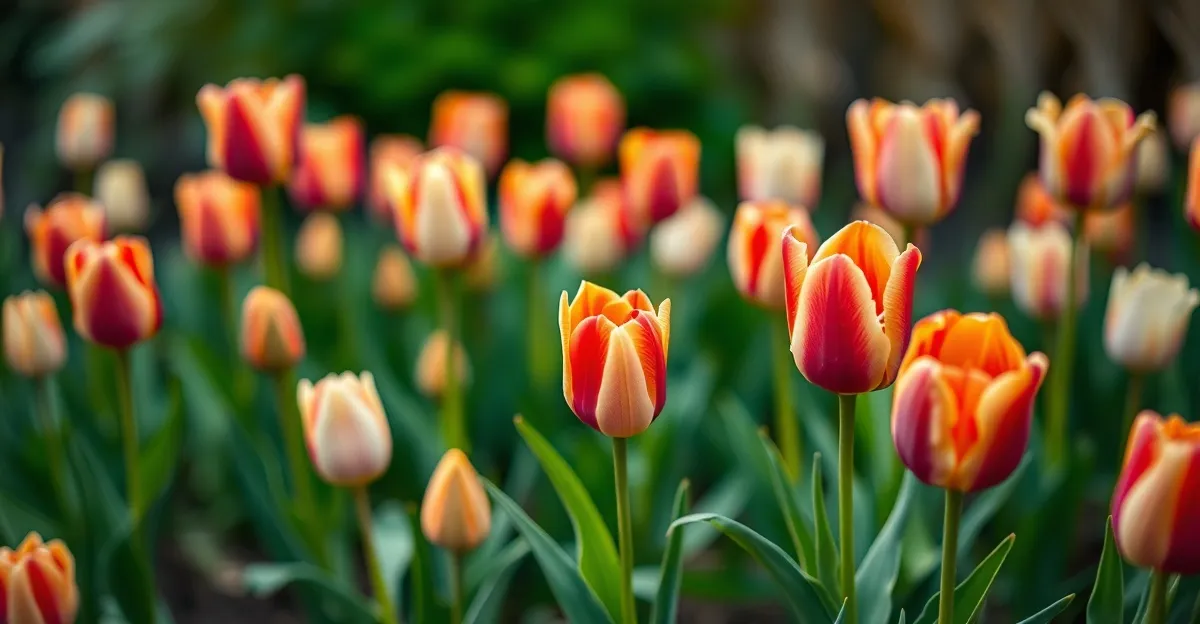
The question arrives in my inbox fairly regularly: can I grow tulips in my Bali garden? Usually it's someone who's recently bought a villa, is setting up a garden, and loves the idea of tulips appearing each spring from bulbs they've planted themselves. It's a beautiful impulse. And the honest answer is more nuanced than a simple yes or no.
The short version: growing tulips in Bali is very difficult, especially at sea level, and almost no one manages to do it as a sustainable garden practice. But the reasons why are interesting, and understanding them tells you something important about how flowers work and why the ones you receive in Canggu and Seminyak have such a remarkable journey behind them.
What Tulips Need to Grow
To understand why Bali is challenging for tulips, you need to understand what the tulip requires at the most fundamental level.
Tulips grow from bulbs. The bulb is a food storage organ — a compressed package of nutrients and cells that contains everything the plant needs to produce its first season of growth. But for the bulb to flower in year two (and year three, and so on), it needs to go dormant. Dormancy is triggered by cold — specifically, an extended period of temperatures below about 9 degrees Celsius, sustained for at least twelve to sixteen weeks. This cold period resets the bulb's internal clock and prepares it to flower again when warmth returns.
Without this cold dormancy, several things happen. The bulb may produce leaves but no flower. The flower that does appear may be weak, small, and carried on a very short stem. The bulb depletes its reserves without successfully regenerating, and dies. In technical terms, it fails to vernalise.
Bali's sea-level temperatures never drop below 23 degrees Celsius, even in the middle of the night in the coldest part of the year. The bulb receives no cold signal. It produces one season of growth — sometimes quite beautiful — and then declines.
What Temperature Does Bali Actually Have?
The climate varies more than visitors often realise. Coastal Bali — Canggu, Seminyak, Kerobokan, Berawa — is consistently warm, with minimal temperature variation through the year and no period even approaching the cold a tulip bulb needs.
Move inland and upward, and the picture changes. Ubud sits at about 300 to 500 metres elevation, and nights there are genuinely cooler. But not cold enough for tulips — nighttime temperatures still rarely drop below 18 degrees.
Bali's true highlands — Bedugul, Kintamani, Candikuning — sit at 1,200 to 1,500 metres or more. Here, temperatures can drop to 10 to 15 degrees at night, particularly during the dry season. This approaches the conditions tulips need for vernalisation, and some growers have experimented here with mixed results. But even these temperatures don't sustain the twelve to sixteen weeks of consistent cold that tulip bulbs require for reliable reflowering.
What Has Been Tried
Across Bali and highland Java, flower enthusiasts have tried various approaches to tulip cultivation over the years. Here's what the experiments have shown.
Cold Storage Pre-Treatment
Some growers chill tulip bulbs in a refrigerator for twelve to sixteen weeks before planting, simulating the vernalisation they would naturally receive in a temperate climate. This technique — called pre-chilling or artificial chilling — can produce a first season of flowering even at sea level.
The results vary enormously depending on bulb quality, chilling duration, the specific variety, and planting conditions. Some people report beautiful flowers; others get disappointing results. Almost universally, the bulbs fail to regenerate for a second season without another round of refrigerator treatment.
This makes tulip cultivation in Bali a one-shot process rather than a sustainable garden practice. You can do it, but it costs significantly more per flower than simply buying cut stems, and the results are unpredictable.
Highland Cultivation
In Bali's Bedugul area and extensively on Java's Dieng Plateau, flower growers have established operations that cultivate tulips (and other cool-climate bulb flowers) at altitude. The cooler temperatures reduce but don't eliminate the need for artificial chilling, and the resulting flowers are sold as cut stems to Bali's florists and markets.
This is where most locally-sourced tulips in Bali's flower markets originate — not from sea-level gardens, but from highland operations that are effectively temperature-managed growing environments.
Container and Pot Growing
Some Bali residents have had limited success growing pre-chilled tulip bulbs in pots placed in consistently air-conditioned rooms. The logic: if you can't get the garden cold enough, create an artificial cold environment. A dedicated air-conditioned growing space at 15 to 18 degrees could theoretically sustain tulip growth, though it would be an expensive and somewhat impractical way to produce a few flower stems.
Where Do Bali's Commercial Tulips Come From?
Most tulips sold in Bali's flower markets and by local florists come from one of two sources.
Java's highland farms: The Dieng Plateau in Central Java is the primary domestic source of tulips and other cool-climate cut flowers sold in Bali. Grown at altitudes above 1,500 metres where conditions are genuinely cooler, these flowers are harvested in tight bud and transported to Bali by road and ferry. Quality varies but is generally good for the price point.
Dutch imports: Premium quality tulips in specific varieties, colours, and sizes that aren't produced domestically are imported from the Netherlands. The Netherlands remains the world's dominant tulip producer, accounting for the vast majority of global tulip cultivation. Dutch tulips arrive by air freight and carry a significant price premium over Javanese-grown flowers, but the quality difference — in stem length, bloom size, colour range, and vase life — is substantial.
When you receive a large, perfectly straight-stemmed tulip with an unusually vivid colour, you're almost certainly looking at a Dutch-grown flower. The Javanese-grown variety will be slightly shorter, slightly less uniform, but genuinely lovely at a more accessible price point.

The team
your florists
weekly subscription · Bali
We write about flowers because we love them. We deliver them because someone should — properly, weekly, across Bali.
— heyflowerPay once for 3, 6, or 12 months, no auto-renewal.
What Can You Actually Grow in a Bali Garden?
If you love the tulip's architectural look and want something to plant in your Bali garden, here are realistic alternatives that will actually thrive.
Agapanthus (African lily): Produces dramatic blue or white ball-shaped flower clusters on tall stems. Grows beautifully in Bali's conditions. The form is completely different from a tulip but it carries some of the same sense of upright, structured beauty.
Gloriosa lily: A tropical climbing plant with extraordinary flowers that reflexed backward in crimson and yellow. It grows vigorously in Bali and has a dramatic, exotic beauty that's entirely at home in this climate.
Hippeastrum (Amaryllis): Grows reasonably well in highland Bali conditions and produces large, showy trumpet flowers in red, pink, white, and striped varieties. Requires some cold period but less than true tulips.
Spider lily (Hymenocallis): Elegant white flowers with long, narrow petals and beautiful fragrance. Genuinely tropical and grows abundantly in Bali's conditions.
For people who want the actual tulip experience in Bali — the colours, the form, the symbolism — the most reliable path is still a good florist relationship rather than garden cultivation. At heyflower.co, we source quality tulips through both Javanese highland farms and Dutch imports depending on availability, and deliver to Canggu, Berawa, Pererenan, Seminyak, and Kerobokan every Monday.
Frequently Asked Questions
Can tulip bulbs survive in Bali's soil?
Tulip bulbs can be planted in Bali's well-draining soil and will typically produce one season of growth if they've been pre-chilled. However, they won't survive as perennial garden plants — the lack of natural cold dormancy means the bulb will deplete itself and not regenerate. Treat them as you would an annual: one season, beautiful results, then new bulbs needed.
Where is the best place in Bali to try growing tulips?
The highland areas around Bedugul and Kintamani offer the closest conditions to what tulips need, with cooler nights that at least partially satisfy vernalisation requirements. If you're determined to try growing tulips in Bali, these locations give you the best chance. At sea level, pre-chilled bulbs in a part-shaded, well-drained location give modest results.
How much do tulip bulbs cost in Bali?
Tulip bulbs suitable for planting aren't widely available in Bali's retail market — most flower bulbs sold locally are tropical varieties. Pre-chilled tulip bulbs suitable for tropical cultivation can be ordered from specialist bulb suppliers in Java or imported. Expect to pay more than you would in a temperate country, as the supply chain is more complex and the bulbs require preparation.
Why are some tulips in Bali markets much more expensive than others?
Price reflects origin and quality. Locally-grown tulips from Java's highlands are more affordable. Dutch-imported tulips, which are larger, more uniform, and available in a wider colour range, command a significant premium — sometimes three to four times the price of Javanese-grown equivalent stems. For everyday arrangements, the Javanese flower is excellent value. For a very special occasion where size and perfection matter, Dutch imports are worth the investment.
Are there any tulip-like plants that actually thrive in Bali?
For something with that architectural, upright stem and bold single bloom character, look at hippeastrum (amaryllis), Gloriosa superba, and some of the larger nerine or crinum lily species. None of these is a tulip, but they share certain visual qualities and will actually thrive in Bali's conditions — which is ultimately more satisfying than a struggling tulip.
More on Tulip