Tropical monsoon flowers: what's in season Nov-Mar
Bali's wet season runs November through March. Here's which flowers thrive in the monsoon, what's locally available, and how to plan beautiful arrangements in the rainy months.
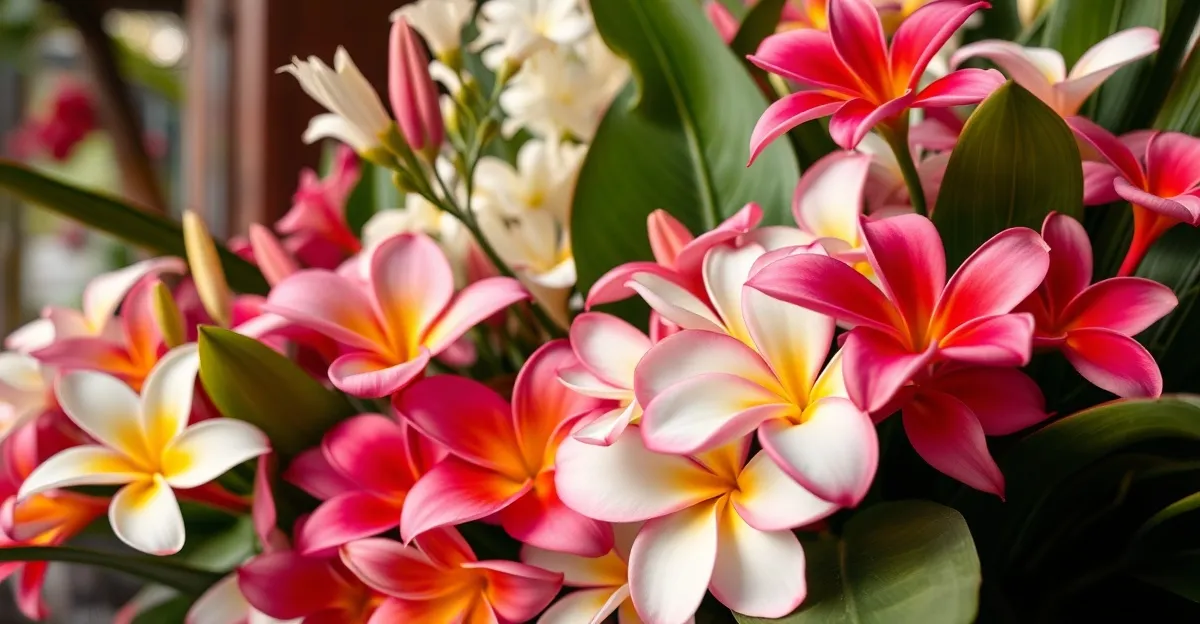
Bali's wet season gets a bad reputation from tourists who imagined clear skies and instead encountered a week of afternoon storms. For florists and people who love tropical plants, though, the monsoon months are a period of extraordinary abundance. The island turns deeply green, rivers run full, and the flowering plants that love humidity and warmth hit their peak.
If you're living in Bali, hosting an event, or running a venue through the November-to-March wet season, here's your guide to what's genuinely in season and how to make the most of it.
Why wet season is good for local flowers
Bali's monsoon brings regular rainfall from around November, with peaks in December through February. Average temperatures remain in the 28–32°C range. Humidity climbs above 80%, sometimes to 90% or higher. These conditions are not comfortable for humans, but they are ideal for the tropical and subtropical plants that form the backbone of Balinese flower culture.
What grows well in monsoon conditions:
- Plants that evolved in rainforest understory environments (orchids, anthuriums, heliconias)
- Plants that use the wet season to produce their most vigorous growth (marigolds, zinnias, tropical foliage)
- Plants with waxy or thick flowers that resist humidity rather than wilting in it
The highland growing areas of Bali — particularly Bedugul, Munduk, Kintamani, and the slopes of Batur — receive more rainfall but also have cooler temperatures (18–22°C) that allow some temperate flowers to grow: local garden roses, carnations, snapdragons, and gerberas. These local-grown temperate flowers are most abundant and affordable in the wet season.
Heliconias: the wet season showpiece
Heliconias are arguably the signature wet season flower of Bali. These relatives of banana plants produce dramatic boat-shaped bracts in red, orange, yellow, and bicolour combinations. The most common varieties in Bali are Heliconia psittacorum (parrot's beak), Heliconia rostrata (hanging lobster claw), and several upright Heliconia caribaea cultivars.
Heliconias thrive in the wet season moisture and heat. By December and January, highland farms around Bangli and the Kintamani caldera produce abundant stocks. The thick, waxy bracts hold up extraordinarily well — a heliconia arrangement in your home or event space can look fresh for two to three weeks, far outlasting any imported flower in the same conditions.
For large arrangements — statement pieces in hotel lobbies, event entrances, or generous home vases — heliconias give architectural drama that's very difficult to achieve with smaller blooms.
Tropical orchids in peak production
Bali's commercial orchid farms are concentrated around Bedugul and the road between Denpasar and Singaraja. Dendrobium orchids — the most commonly grown variety in Bali — produce in cycles, but the wet season warmth and humidity accelerates growth, and farms often have their most abundant supply from December through February.
Bali-grown orchids are significantly cheaper than imported ones: a bunch of twelve Dendrobium stems grown in Bedugul typically costs Rp 25,000–Rp 45,000 depending on colour and season, compared to Rp 80,000 or more for an imported orchid branch. White and purple are most common; yellow, pink, and bicolour varieties are also grown.
Cymbidium orchids from the higher-altitude farms around Kintamani are at their best from November to February, when the cool nights are most consistent.
Marigolds: year-round but at their most abundant
Marigolds (gumitir in Balinese) grow in Bali year-round because they're culturally essential — Balinese ceremony life requires a constant supply. But in the wet season, marigold plants in home gardens and highland farms produce prolifically. The combination of rainfall and warmth encourages bushy growth and heavy flowering.
In the wet season, marigold prices at Pasar Kumbasari in Denpasar and markets in Ubud and Gianyar tend to be lower than in the drier months. If you need large quantities — for an event, a long-running installation, or ceremony use — the November-to-March window is the most cost-effective time to source them.
Anthuriums: strong all wet season
Anthuriums love moisture. The shiny, lacquer-like spathes (what most people call the "flower") hold their colour and shape through weeks of humidity without any of the wilting problems that affect more delicate blooms. Red, pink, white, and orange varieties are all grown commercially in Bali's highland areas.
In wet season arrangements, anthuriums serve as dependable anchors. They look graphic and intentional alongside the looser forms of orchids, heliconias, and tropical foliage. And unlike in drier months when you might need to mist arrangements or add conditioning solutions, anthuriums in wet season humidity often look better than they would in air-conditioned spaces.
Torch ginger (kecombrang): gloriously in season
Torch ginger (Etlingera elatior), called kecombrang in Indonesian, produces its dramatic red-pink flower heads on long straight stalks. Each flower head is a compact, layered arrangement of petals that looks almost architectural. The plants grow in wet, warm forest understorey conditions — exactly what Bali's wet season provides.
From November through March, kecombrang is abundant in the markets around Ubud, Gianyar, and the wholesale markets in Denpasar. It's one of the most distinctly "Bali" flowers you can use in an arrangement. Buds are best for long-lasting displays; partially open flowers are most dramatic visually.
What's less available in wet season
The wet season challenges primarily affect imported flowers. Cold-chain logistics for flying in European roses, peonies, anemones, ranunculus, and lisianthus become more complicated when freight conditions are less predictable. Florists with good supplier relationships can still source these, but expect:
- Higher prices than dry season
- Slightly shorter vase life due to humidity stress
- More limited colour choices as suppliers manage supply more conservatively
This doesn't mean you can't have roses at a wet season event — you absolutely can. It means leaning more heavily on local flowers and using imported varieties as accents rather than anchors tends to produce better results and more sustainable budgets.
For a complete contrast of what's available, bali dry season blooms: what peaks may-sep shows how the available palette shifts across the year.

The team
your florists
weekly subscription · Bali
We write about flowers because we love them. We deliver them because someone should — properly, weekly, across Bali.
— heyflowerPay once for 3, 6, or 12 months, no auto-renewal.
Making wet season arrangements work in humidity
The practical challenge of wet season arrangements isn't sourcing — it's conditioning and display. Humidity keeps many flowers fresh longer, but certain blooms (particularly those with many petals, like garden roses or peonies) can develop mould or browning at petal edges faster in very high humidity.
Tips for wet season arrangements:
- Choose hardy tropicals as the backbone: Heliconias, anthuriums, orchids, torch ginger
- Change vase water every two days: Bacterial growth accelerates in warm temperatures
- Keep arrangements out of standing water at the base: In enclosed spaces with high humidity, still water under vase bottoms can create mould problems
- Use a fan in enclosed spaces: Gentle air circulation prevents humidity-related petal issues
- Cut stems at an angle every few days: Freshens the uptake surfaces and extends vase life
The guide on how to keep tropical flowers fresh in 30°C Bali heat covers the practical care aspects in detail.
FAQ
Is it true that flowers last longer in Bali's wet season? For tropical varieties, yes — the humidity helps. For delicate imported flowers, the effect is mixed: high humidity can extend vase life somewhat, but also increases the risk of petal edge browning and mould on very petalled flowers.
Why are local Bali flowers cheaper in the wet season? Higher supply (gardens produce abundantly in the rain) and lower tourist demand. Fewer events mean less competition for the available stock.
Can I get imported roses in Bali in December? Yes, but they're more expensive and less reliably available than in dry season. Local highland-grown roses from Bedugul are a good alternative and often fresher.
What's the most underrated wet season flower in Bali? Torch ginger (kecombrang). It's extraordinary-looking, locally grown, cheap, and holds up brilliantly. Most imported flower lovers don't know what to do with it, but once you see it in an arrangement, it's hard to go back.
Do flower markets in Bali stay open in the wet season? Yes, year-round. Markets like Pasar Kumbasari in Denpasar and the Ubud flower market operate daily, wet season or not. Ceremony flowers are needed regardless of weather.
Ready to bring fresh flowers to your Bali home or event? Explore our weekly flower subscription and get handpicked blooms delivered to your door every week.



