The History and Origin of the Rose
From ancient Persia to Balinese gardens — the remarkable history of the rose. How did a wild shrub become the world's most beloved flower?
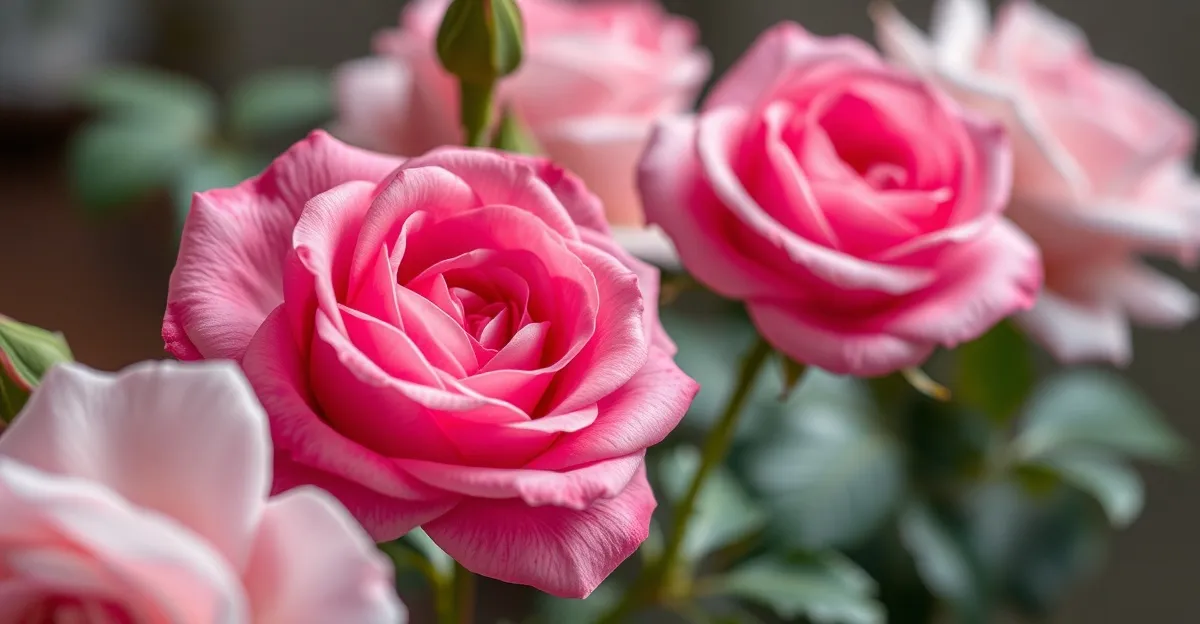
The rose has been cultivated for at least 5,000 years. That makes it the oldest continuously grown ornamental plant on Earth — a remarkable thing when you think about it. Civilisations have risen and fallen, languages have died, and empires have been forgotten, but the rose has persisted: in Persian gardens, Roman ceremonies, medieval medicine cabinets, European royal courts, and today on the terraces of Bali's villas and the breakfast tables of Canggu cafes.
How did a wild thorny shrub from Asia's mountain valleys become the world's most recognised symbol of love and beauty? The story is more interesting than most flowers get.
Wild Roses: The Beginning
The genus Rosa is ancient. Fossil evidence suggests rose-like flowers existed 35 million years ago, which puts the rose well before humans and before most current animal species. The wild roses that gave rise to today's garden varieties come from a much more recent period — somewhere between 5,000 and 10,000 years ago — but the genus itself has deep evolutionary roots.
Wild roses grow across the entire Northern Hemisphere in temperate and cool regions. From Rosa canina (the dog rose of European hedgerows) to Rosa chinensis (the Chinese rose that would transform global breeding) to Rosa damascena (the damask rose of the Middle East, source of attar of roses perfume), the wild relatives of our garden roses are geographically diverse.
What they share: five petals, a central cluster of yellow stamens, thorny stems, and a fragrance that humans across every culture have found irresistible. This fragrance is arguably the rose's most important characteristic evolutionarily — it attracts pollinators — and culturally, it's the quality that first made roses valuable to humans beyond their visual beauty.
Ancient Persia and the First Gardens
The oldest cultivated roses appear in the ancient gardens of Persia (modern Iran). Archaeological evidence and written records from Mesopotamia and Persia indicate that roses were deliberately grown — as opposed to merely gathered wild — from at least 3,000 BCE. The concept of the garden, as a curated natural space rather than a productive farm, was a Persian invention. And roses were central to it from the beginning.
Persian poetry from the earliest periods is saturated with rose imagery. The nightingale and the rose — Bulbul o gol — is a recurring Persian poetic motif in which the nightingale's song is explained by unrequited love for the rose. This metaphor, which connects romantic love to the beauty and unattainability of the rose, traveled from Persian poetry into Arabic literature and eventually into European culture.
The garden of rose and nightingale became so central to Persian cultural identity that "paradise" itself — from the Old Persian pairi-daeza, meaning an enclosed garden — was conceptually tied to the rose garden.
Greece and Rome: The Rose Goes West
Persian roses traveled west with trade, conquest, and cultural exchange. By the time of classical Greece (5th–4th century BCE), roses were being grown across the Mediterranean. Herodotus mentions the famous rose gardens of King Midas in Macedonia. Theophrastus, one of the first systematic botanists, described rose cultivation techniques in his Enquiry into Plants (300 BCE).
The Romans elevated rose cultivation to an industrial scale. Roman demand for roses — for garlands, for petals scattered at banquets and ceremonies, for medicinal preparations, for perfume — was so intense that farmers in Egypt and North Africa grew them specifically for export to Rome. The rose garden became a feature of every wealthy Roman estate.
The Roman phrase sub rosa (under the rose) deserves particular note. A rose hung from the ceiling of a meeting room signified that what was said there would remain confidential. This gave rise to the word "rosette" as a decorative architectural element (a plaster rose was often literally installed in ceilings for this purpose) and contributed to the rose's association with secrets, intimacy, and things spoken in private.
Cleopatra is said to have filled her floors knee-deep in rose petals for Mark Antony's visits. Whether historically accurate, this story captures the Roman-Egyptian world's relationship with roses — flowers of abundance, luxury, and erotic power.
Medieval Europe: From Pleasure to Symbol
With Rome's decline, the rose's cultivation shifted from pleasure gardens to monastery herb gardens. Christian religious culture was initially ambivalent about the rose — its associations with Roman luxury and sexuality sat uncomfortably with early Christian asceticism. But by the medieval period, this had reversed. The rose became deeply intertwined with Marian devotion.
The white rose was adopted as a symbol of the Virgin Mary, representing purity and grace. The red rose was associated with the blood of Christian martyrs. The rosary — the sequence of prayers dedicated to Mary — takes its name from the rose, originally composed of actual rose petals pressed into beads.
This Christianisation of rose symbolism transformed the rose from a pagan pleasure symbol into a sacred one, which ultimately helped ensure its preservation and cultivation through the medieval period's various disruptions.
In secular medieval culture, roses were central to courtly love poetry. The Roman de la Rose (c. 1230–1275), a French allegorical poem running to 21,000 lines, used the rose as its central metaphor for the beloved and for the pursuit of love. This text was read and discussed across educated Europe for two centuries and cemented the rose's place in the Western romantic imagination.
The Dutch and the Birth of Modern Rose Breeding
The transformation of the rose from a largely wild or lightly cultivated plant into the extraordinary range of modern garden roses begins in earnest in the 17th and 18th centuries. The Dutch, who had developed industrial-scale flower cultivation (primarily for tulips), turned their expertise to roses.
But the decisive event in rose history was the introduction of Rosa chinensis — the Chinese rose — to European breeders in the late 18th century. European roses bloomed once per year; Chinese roses bloomed repeatedly through the growing season. When crossed with European varieties, this repeat-flowering trait produced the first modern roses — flowers that bloomed in waves rather than once.
The subsequent century of intensive breeding in France (particularly), England, and Belgium produced the groups we recognise today: hybrid perpetuals, Bourbon roses, tea roses, and eventually hybrid tea roses. Each group represents a step in the intensification of the rose — larger flowers, more petals, wider colour range, longer vase life, stronger fragrance.
Kenya and the Modern Cut Rose Industry
The rose as a commercial cut flower — the stems you receive in a bouquet today — is a relatively recent story. While cut roses have been traded for centuries, the globalisation of the cut flower industry in the 20th century completely transformed rose production.
Today, Kenya is the world's largest exporter of cut roses. The Rift Valley, particularly around the shores of Lake Naivasha at around 1,800 metres above sea level, has conditions almost perfectly suited to rose production: cool nights, warm days, intense equatorial sunlight, and clean water from the lake. Hundreds of farms now grow roses year-round for export to Europe, the Middle East, and Asia.
These Kenyan roses are the likely source of the long-stem roses in many Bali florist arrangements. Colombia is the other major producer for the Americas market. Together, these two countries supply the vast majority of the world's commercial cut roses.

The team
your florists
weekly subscription · Bali
We write about flowers because we love them. We deliver them because someone should — properly, weekly, across Bali.
— heyflowerPay once for 3, 6, or 12 months, no auto-renewal.
Roses in Bali
Roses arrived in Bali through the Dutch colonial period and through the global cut flower trade. The island doesn't have ideal conditions for rose cultivation at sea level, but Java's highlands — particularly the areas around Bandung and Lembang — produce roses for the Indonesian domestic market, including Bali's flower markets.
In Balinese Hindu ceremony, roses occupy a modest but present role. They appear in some offerings, in temple decorations, and increasingly in the contemporary flower arrangements used in Bali's hospitality industry. The rose in Bali is both a globally-traded commodity and a local cultural participant.
Rose in Balinese ceremonies: traditional uses in Bali explores this ceremonial dimension more specifically.
Frequently Asked Questions
What is the oldest cultivated rose variety still grown today?
Rosa gallica 'Officinalis' — the Apothecary's Rose — is one of the oldest continuously cultivated rose varieties, documented since at least the 13th century and likely grown much earlier. Its deep crimson blooms and intense fragrance made it valuable both as an ornamental and a medicinal plant. It's still grown today in heritage rose gardens worldwide.
Why do roses have thorns?
Thorns (technically "prickles" — thorns are modified stems; rose prickles are modified epidermis) evolved as a defence against herbivores and as a climbing mechanism that allows wild rose canes to hook onto nearby plants for support. Modern breeding has produced some thornless or nearly thornless varieties, but most cultivated roses retain this ancestral trait.
When did the red rose become specifically associated with romantic love?
The association of red roses with romantic love was relatively established by the Renaissance period (15th–16th century). Shakespeare's references to roses in romantic contexts (A Midsummer Night's Dream, Romeo and Juliet) both drew on and reinforced this association for English culture. The Victorian language of flowers (floriography) formalised it in the 19th century. Valentine's Day commercial red rose culture became dominant in the 20th century.
What is attar of roses, and where does it come from?
Attar of roses (also called rose oil or rose otto) is the essential oil extracted from rose petals, used in perfumery. It takes approximately 4–5 tonnes of rose petals to produce a single kilogram of attar — which explains its extraordinary price. Bulgaria's Rose Valley and Turkey's Isparta region are the primary producers, using primarily Rosa damascena. It is among the most expensive natural perfume ingredients in the world.
Are there any roses named after Bali or Indonesia?
A number of rose cultivars have been named after tropical or Indonesian references, though dedicated Bali-named varieties are not among the most prominent commercial cultivars. Hybridisers name roses after almost everything — places, people, events — so it's quite possible Indonesian-named varieties exist in specialist collections. For the truly curious, the World Rose Register maintained by the World Federation of Rose Societies is the definitive source.
The rose has been part of human culture longer than most of our familiar institutions. Today it's part of Bali's, too. heyflower.co delivers fresh roses across Canggu, Berawa, Seminyak, Pererenan, and Kerobokan — connecting your home to a 5,000-year story.
More on Rose