The History and Origin of the Frangipani
From the ancient Americas to Balinese temple offerings — the full history of frangipani and how it became Bali's most iconic flower.
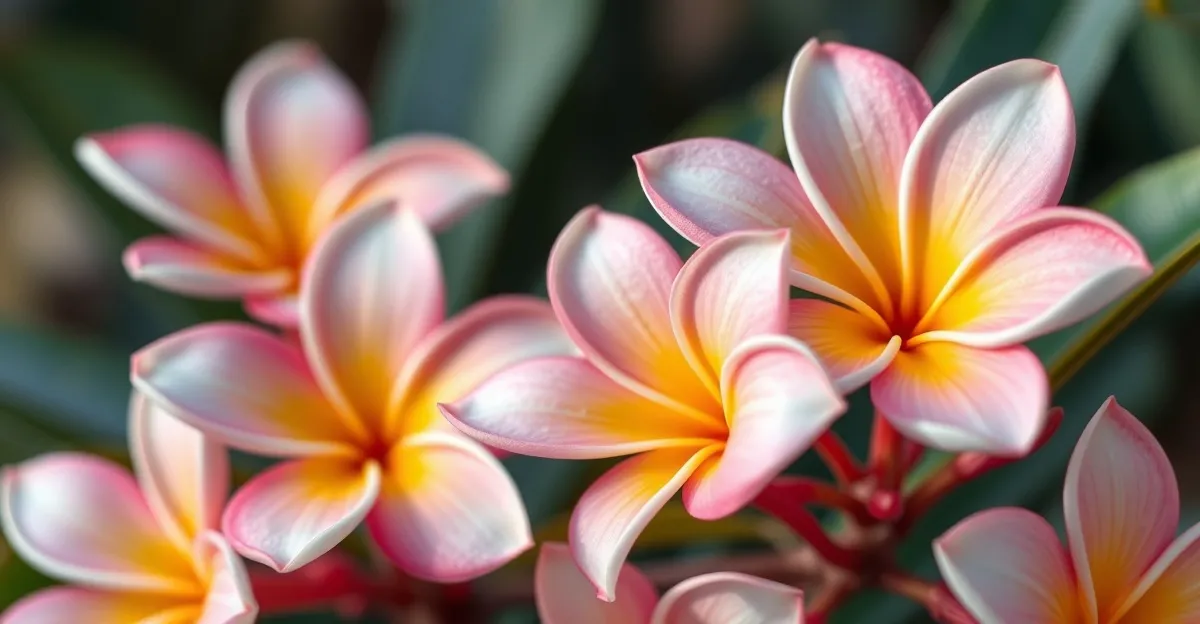
Frangipani has become so completely synonymous with Bali that most people assume it must have grown there forever. Stand under a frangipani tree in a Canggu temple compound, surrounded by offerings of its white blooms and the specific sweetness of its scent, and it's genuinely difficult to imagine the island without it. But frangipani didn't begin in Bali, or in Asia at all. Its story starts thousands of miles away, in the tropical forests of Central America, and the path it took to become the soul of Balinese ceremonial culture is one of the more extraordinary botanical journeys in history.
Origins: The Americas
The Mesoamerican Beginning
The genus Plumeria — the botanical family we know as frangipani — is native to the tropical Americas, from Mexico through Central America into South America and the Caribbean. The trees were growing in these forests long before the earliest known Mesoamerican civilizations.
Indigenous peoples of Mexico, Guatemala, and surrounding regions used frangipani (nicte or suchil in several Mayan languages) in ceremony and medicine for millennia before European contact. The Maya associated the white-and-yellow flower with fertility, life, and — perhaps paradoxically by modern Western thinking — both life's beginning and its ending. The flower appeared in Mayan temple carvings and codices, and was planted at sacred sites.
In Aztec tradition, the flower was associated with Tlazolteotl, a goddess associated with love, fertility, and purification. The Aztecs also used the flowers in medicine and in offerings.
The sap of Plumeria species was used medicinally across indigenous American cultures — as a wound treatment, for skin conditions, and in some traditions for treating fever. Modern research has confirmed that the latex sap contains compounds with genuine antimicrobial properties, suggesting some empirical basis for these applications.
First Contact with Europe
The Spanish colonization of the Americas from the early 16th century brought European scientists and collectors into contact with the full extraordinary diversity of American tropical plants. Plumeria was among the many specimens described, illustrated, and eventually transported to Europe for study and cultivation.
The scientific name honors Charles Plumier (1646–1704), a French Franciscan botanist and one of the most prolific plant illustrators of the age, who traveled extensively in the Caribbean and described hundreds of species in works that became foundational to later botanical taxonomy.
The Name "Frangipani"
The word "frangipani" has a history almost as interesting as the plant itself. The most widely accepted origin story connects the name to a 16th-century Italian nobleman, the Marquis Frangipani, who reportedly developed a perfume based on bitter almonds that was used to scent gloves in Elizabethan-era fashion. When Plumeria flowers arrived in Europe (either physically or as descriptions of their scent), Europeans noted that their fragrance resembled the fashionable Frangipani perfume — and the name transferred to the flower.
Another version of the story holds that Frangipani family members were among the early Spanish explorers who first described the flower's scent to European audiences. The precise origin of the name transfer is debated by botanists and historians, but the connection to the Frangipani family's perfume is the most widely cited explanation.
The Journey to Asia: Portuguese and Dutch Trade Routes
Frangipani's arrival in Asia came through the great European trading empires of the 16th and 17th centuries. Portuguese navigators, who established trade routes connecting the Atlantic, Africa, India, and the East Indies, carried plants both intentionally and incidentally as they moved between ports.
Arriving in South and Southeast Asia
Frangipani was established in South Asia — primarily India, Sri Lanka, and coastal regions — relatively early in the Portuguese trading period (mid-1500s). It adapted to these tropical Asian conditions enthusiastically: the Indian subcontinent's monsoon climate, with its long dry season and reliable wet season, mirrors the Central American conditions Plumeria evolved within.
From India and Sri Lanka, the tree spread eastward through Buddhist and Hindu ceremonial networks — carried along trade routes to Thailand, Cambodia, Burma, and eventually the Indonesian archipelago.
Dutch control of the East Indies (present-day Indonesia) from the early 17th century established extensive botanical gardens and research stations, most famously the Hortus Botanicus in Bogor (Kebun Raya Bogor), which was founded in 1817 but drew on centuries of earlier Dutch botanical collection. These institutions both documented and distributed plant material throughout the archipelago.
Bali: The Complete Integration
By the time frangipani arrived in Bali — likely in the 16th or 17th century, possibly earlier via sea trade that preceded European contact — the Balinese people already had a sophisticated floral ceremonial tradition into which a new, beautiful, fragrant tropical tree could integrate.
Why Bali Absorbed Frangipani So Completely
Most introduced plants are adopted practically — they're eaten, used medicinally, used in construction. Frangipani in Bali went through something more profound: a cultural transformation where a foreign tree became the most emblematic flower of one of the world's most visually rich ceremonial traditions.
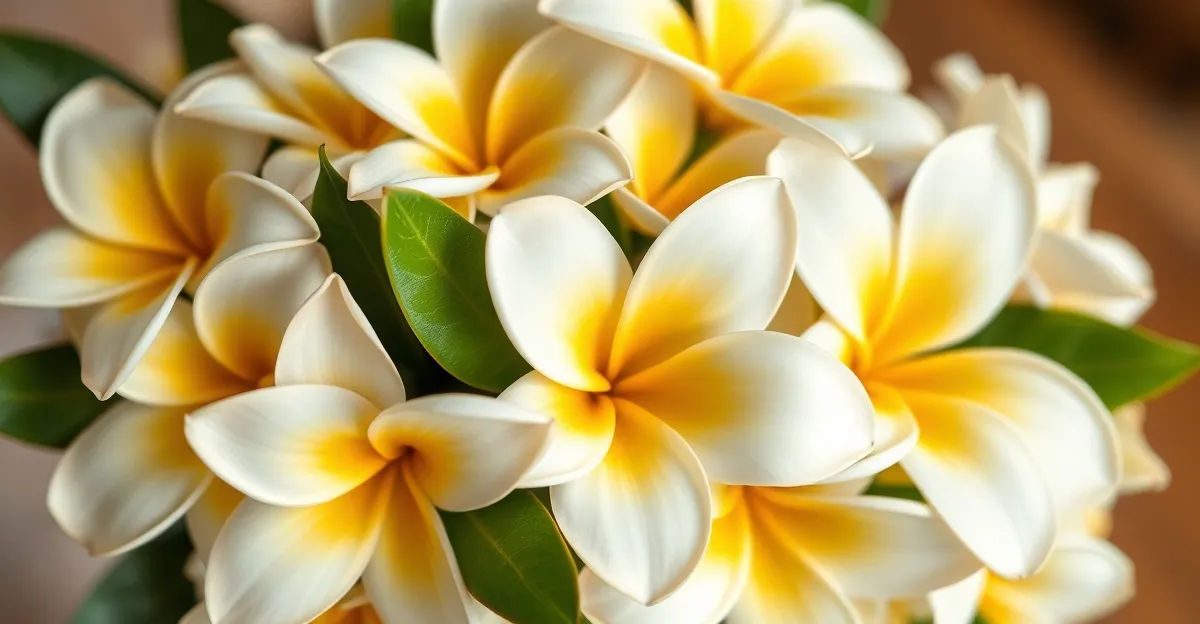
The reasons are multiple. The flower's color — primarily white, with warm yellow — aligns perfectly with Balinese ceremonial color symbolism (white for Iswara, pure divine presence; yellow for Mahadewa, abundance and prosperity). The fragrance, sweet and specific, resonates with Balinese aesthetic traditions where sensory offering is central to devotional practice. The tree's generous, year-round flowering in Bali's climate means it never runs out of fresh material.
The tree also provided something practically important: it grows near cremation grounds reliably because it handles the dry conditions and sandy soils often found in these areas. Its continuous blooming provides ongoing flower supply for offerings to the deceased without requiring a gardener's attention.
The Name in Bali
The Balinese call frangipani jepun. The Indonesian name kamboja refers not to the country Cambodia specifically but derives from an older usage pattern related to the flower's association with temple and memorial spaces in Khmer (Cambodian) culture, from which it spread both linguistically and botanically through maritime Southeast Asia.

The team
your florists
weekly subscription · Bali
We write about flowers because we love them. We deliver them because someone should — properly, weekly, across Bali.
— heyflowerPay once for 3, 6, or 12 months, no auto-renewal.
Frangipani in Bali's Modern Floral Identity
The globalization of Bali as a tourist destination from the 1970s onward exported frangipani to global consciousness as the icon of tropical luxury. Bali's spa culture — which grew enormously through the 1990s and 2000s — used frangipani in marketing, products, and décor so consistently that the flower became a symbol not just of Bali but of tropical wellness globally. Spa brands from Sydney to Stockholm use frangipani imagery to invoke Bali's spirit.
This has created an interesting double life for the flower. In its homeland (tropical Americas), frangipani remains a relatively ordinary garden tree. In Bali, it's sacred, ceremonial, and deeply embedded. And in the global imagination, it's a luxury marker — floating in infinity pools, tucked behind the ears of spa attendants, pressed between the pages of travel memoirs.
All three versions are true simultaneously. The tree travels well, and it carries different meanings to wherever it arrives.
For more on how Bali's ceremonial tradition shapes the use of frangipani specifically, our detailed guide to frangipani in Balinese ceremonies covers the full traditional picture.
Frequently Asked Questions
Is frangipani native to Bali or Indonesia?
No. Frangipani (Plumeria genus) is native to tropical Central America and the Caribbean. It was introduced to Asia through Portuguese and Dutch trade routes from the 16th century onward. Despite its deep cultural integration in Bali, it's a botanical immigrant that has become more culturally significant in Bali than in most of its native range.
What is the original meaning of frangipani in Mesoamerican cultures?
In Mayan tradition, frangipani was associated with fertility, life cycles, and sacred ceremony. Aztec tradition connected it to deities of love and purification. The flower appeared in temple carvings and ceremonial contexts as a symbol of life's divine dimension — associations that resonate interestingly with its later Balinese ceremonial role.
When did frangipani first arrive in Bali?
The exact date is not definitively known. Portuguese traders were present in the Indonesian archipelago from approximately 1511, and Dutch trade dominance began in the early 1600s. Frangipani was likely established in Bali by the 17th century at the latest, and possibly earlier via pre-European sea trade routes connecting Bali with India and Southeast Asia.
Why is frangipani used so extensively at Balinese temples?
The combination of continuous flowering, beautiful white blooms, sweet fragrance, and low maintenance makes frangipani practically ideal for temple grounds. Its white color aligns with Balinese ceremonial color symbolism for purity and divine presence. The practical and spiritual dimensions reinforce each other, making the tree a permanent fixture in the sacred landscape.
What is the scientific name for frangipani?
The genus is Plumeria, named for the French botanist Charles Plumier. The most common Balinese species is Plumeria obtusa (white frangipani) and various cultivars of Plumeria rubra (which produces white, yellow, pink, and red hybrid forms). Plumeria belongs to the family Apocynaceae.
Frangipani traveled from the Americas to become the defining flower of Bali. At heyflower.co, we honor that journey every time we include it in an arrangement. Browse our collections and subscription options at heyflower.co, delivering to Canggu, Berawa, Pererenan, Seminyak, and Kerobokan.
More on Frangipani