The history and origin of the carnation
From ancient Greece to Bali flower markets — the fascinating 2,000-year history of the carnation and how it became one of the world's most popular flowers.
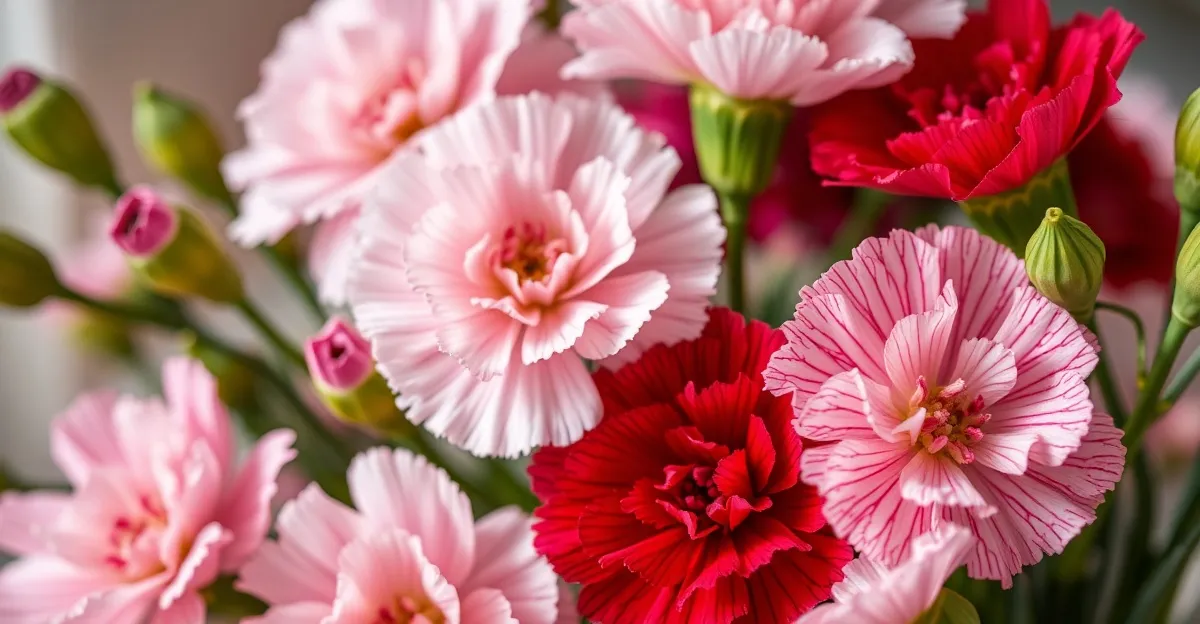
The carnation has been with us for a remarkably long time. Not centuries — millennia. While most people associate carnations with cheap petrol station bouquets or funeral parlour arrangements, the flower's actual history is far more interesting. It stretches from the garlands of ancient Athens to the political upheavals of nineteenth-century Europe to the highland flower farms above Bedugul that supply markets across southern Bali. Few flowers have lived such an eventful life.
The ancient world and the name
Carnations are botanically Dianthus caryophyllus. The genus name Dianthus was coined by the ancient Greek botanist Theophrastus, a student of Aristotle who catalogued plants systematically in the fourth century BCE. It comes from the Greek words dios (divine) and anthos (flower) — meaning, literally, the flower of the gods. Whether Theophrastus intended this as botanical taxonomy or genuine reverence is unclear, but the name stuck.
The common name "carnation" is more contested. One theory traces it to the Latin carnatio (fleshiness), referring to the original pinkish-flesh colour of wild species. Another links it to coronation or coronation flower, from the Latin corona (crown or garland), because carnations were widely used in Greek and Roman ceremonial wreaths. A third, more florid theory connects it to the Incarnation — the Christian theological concept — through medieval religious art where carnations frequently appeared in paintings of the Virgin Mary and the Christ child.
Whatever the etymology, carnations were clearly central to ancient Mediterranean life. The Romans used them in elaborate garlands for festivals and feasts. Ancient texts describe carnation-infused wines. Archaeological evidence places them in funerary contexts as far back as the first century CE.
Medieval Europe and religious symbolism
During the Middle Ages, the carnation became deeply embedded in Christian iconography. Flemish and Italian Renaissance painters placed carnations in countless religious scenes — the red carnation in particular came to symbolise the Incarnation and divine love. Jan van Eyck, Botticelli, Leonardo da Vinci all included them. The carnation was, for several centuries, among the most symbolically weighted flowers in Western visual culture.
Simultaneously, carnations entered European medicine. The flowers were used in tonics and cordials believed to alleviate fever and calm the nerves. Recipes for carnation water and carnation syrup appear throughout medieval herbal manuals. The spicy, clove-like fragrance was considered both pleasant and therapeutically useful.
This is the period when the language of flower colours began to solidify. Red carnations for love and admiration. White for pure love or good luck. Pink for a mother's undying love (this meaning would later tie directly to Mother's Day traditions). The Victorian era would expand this colour vocabulary significantly, but its roots are medieval.
The sixteenth and seventeenth centuries: horticultural obsession
Carnation cultivation became genuinely fashionable in Elizabethan England. The Tudors called them "gillyflowers" and bred them obsessively for colour, fragrance, and petal complexity. Trade networks brought new varieties from the Continent, and by the late sixteenth century, British growers were producing hundreds of named carnation cultivars.
In France, carnation cultivation was similarly elevated. The flowers were grown in heated greenhouses — an enormous expense — by aristocratic families who competed on the novelty and beauty of their specimens. Louis XIV reportedly loved carnations and kept them in the gardens at Versailles.
This is also the period when carnations began serious movement along global trade routes. European explorers and colonists carried plants and seeds wherever they went. By the seventeenth century, carnations were being grown in gardens across Asia, the Americas, and Africa — beginning their journey toward becoming one of the world's most widely cultivated flowers.
The nineteenth century and political meaning
The carnation acquired political symbolism during the nineteenth and early twentieth centuries. Red carnations became associated with socialist and labour movements across Europe — the colour of the movement, worn on lapels for rallies and demonstrations. In Vienna, red carnations were the symbol of the Social Democratic Party. The tradition of the red carnation as a political emblem persisted well into the twentieth century.
In Portugal, the Carnation Revolution of April 1974 — the peaceful military coup that ended decades of authoritarian rule — was named for the red carnations that soldiers accepted from civilians and placed in their gun barrels. It remains one of the most striking images of peaceful political transition in modern history.
The flower's association with Mother's Day is more recent but equally significant culturally. Anna Jarvis, who founded the American Mother's Day holiday in 1908, chose white carnations as its symbol because they were her mother's favourite flower. The association spread globally and remains strong.
Modern commercial production
Today, carnations are one of the three most commercially cultivated flowers in the world, alongside roses and chrysanthemums. Colombia dominates global production, particularly through the Bogotá Savanna region, and exports carnations to the United States, Europe, and beyond by air freight. Kenya, the Netherlands, and Spain are also major producers.
What made carnations commercially dominant is exactly what the ancient Romans and Tudor gardeners recognised: they are durable, visually striking, and adaptable. They can be stored and shipped further than almost any other cut flower. They accept chemical colourings, allowing the production of unnatural shades that other flowers cannot achieve.
The downside of commercial dominance is cultural perception. Mass production pushed carnation prices low, and low prices pushed them into contexts — supermarkets, filling stations, budget arrangements — that eroded their prestige. The boutique flower movement of the early twenty-first century has been recovering carnations from that reputation, and the process is largely complete.

The team
your florists
weekly subscription · Bali
We write about flowers because we love them. We deliver them because someone should — properly, weekly, across Bali.
— heyflowerPay once for 3, 6, or 12 months, no auto-renewal.
Carnations in Bali and Indonesia
In Bali specifically, carnations occupy an interesting middle position. They are widely available and affordable thanks to highland growers in Bedugul and the Bandung area of Java. They appear in Balinese Hindu offerings and ceremonies. They are also increasingly appearing in the kind of sophisticated, premium arrangements that Bali's luxury villa and resort market demands.
The best occasions to gift carnations in the Bali context blend both traditions — the flower's deep symbolic history and its very practical virtues as a cut flower that handles tropical conditions gracefully.
For florists working in Canggu, Berawa, and Seminyak, carnations are a workhorse flower that never stops being useful — whether as the star of a minimalist bouquet or as a textural supporting player among more showy tropical blooms.
Frequently Asked Questions
What does the name Dianthus mean?
Dianthus comes from the Greek dios (divine or of Zeus) and anthos (flower), making the literal translation "flower of the gods." The name was given by Theophrastus, an ancient Greek botanist who was a student of Aristotle.
Where did carnations originally come from?
Wild carnations are native to the Mediterranean region, most likely originating in the eastern Mediterranean — modern-day Greece, Turkey, and the surrounding areas. From there they spread through cultivation across Europe, Asia, and eventually the entire world.
What was the Carnation Revolution?
The Carnation Revolution was a peaceful military coup in Portugal on 25 April 1974 that ended 48 years of authoritarian rule. Soldiers accepted red carnations from civilians and placed them in their gun barrels, creating one of the most iconic images of peaceful political change in modern history.
How long have carnations been cultivated?
Evidence of carnation cultivation dates to at least the first century CE, and Greek and Roman texts suggest use in garlands and ceremonies from at least several centuries before that. The systematic cultivation of named varieties began in earnest in Europe during the sixteenth century.
Why did carnations become associated with Mother's Day?
Anna Jarvis, who founded Mother's Day in the United States in 1908, chose white carnations as the holiday's symbol because they were her own mother's favourite flower. The association spread globally with the holiday itself and persists in many countries today.
Two thousand years of history, and carnations still manage to be one of the freshest-looking flowers on a Monday morning delivery. At heyflower.co, we celebrate flowers with stories — subscribe to receive thoughtfully sourced blooms every week in Canggu, Berawa, Pererenan, Seminyak, and Kerobokan.
More on Carnation