Carnation vase life in the tropics: how long do they last?
Carnations are among the longest-lasting cut flowers you can buy in Bali. Here's the real vase life data and care guide for tropical conditions.
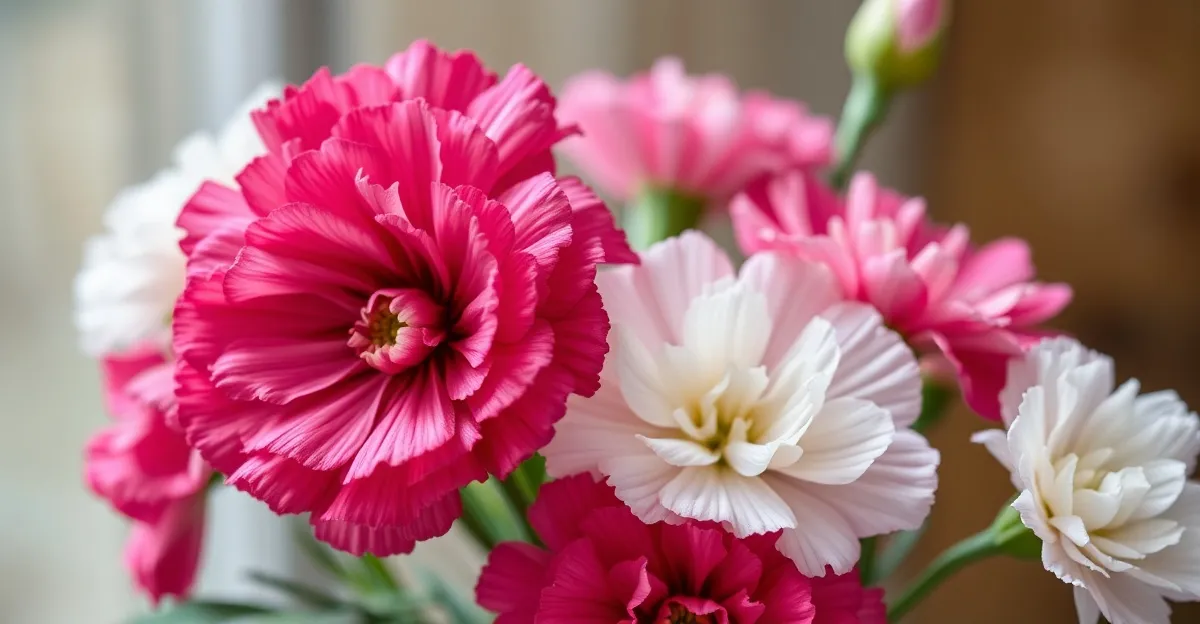
Ask any florist who works in tropical conditions which cut flower gives the best return on longevity, and carnations will be near the top of the answer. This is sometimes surprising to people who've always associated carnations with cheap, wilting arrangements — but that reputation came from how they were often used (crammed into hot display buckets without water changes), not from the flower itself.
A carnation treated with basic respect in Bali's climate will last ten to fourteen days. That's genuinely exceptional for tropical conditions — better than peonies (four to seven days), significantly better than sweet peas (two to four days), and competitive with or better than roses (six to ten days). For a flower with the symbolism and visual appeal of a good carnation, that's remarkable value.
This guide gives you the real numbers, explains what drives longevity in tropical conditions, and provides the care routine that gets you to the fourteen-day end of the range rather than the seven-day end.
The real numbers: what to expect
With careful care in Bali's climate:
- Standard carnations (full-size): 10–14 days
- Spray carnations (multiple smaller blooms per stem): 12–16 days (individual blooms open sequentially, extending the arrangement's life)
- Without any care: 5–7 days before significant deterioration
The range is wide. The difference between ten and fourteen days isn't magic — it's consistent application of the care principles below. In Bali's heat, every neglect compounds faster than it would in a temperate kitchen.
Why carnations last longer than most flowers
The biology helps explain the performance.
Carnation petals are protected by a waxy cuticle — a thin layer of lipid compounds that reduces water loss from petal surfaces. This is the same mechanism plants in warm, dry environments use to survive heat. It's why carnation petals feel slightly firmer and more substantial than rose or peony petals — they're structurally tougher.
The carnation stem is also relatively efficient at water uptake when kept clean. Unlike roses, which have thick stems that can be somewhat prone to blockage, carnation stems are more hollow and open. This means they respond better to the care interventions (fresh cuts, clean water) that maintain water uptake.
What carnations struggle with is the same bacterial challenge all cut flowers face. In Bali's warm water, bacteria multiply rapidly in vase water. The bacteria don't attack petals directly — they colonise the water and then the stem's vascular tissue, blocking water uptake. Without regular water changes, even a carnation's robust vascular system eventually succumbs to bacterial blockage.
Comparing carnation vase life to other popular Bali flowers
| Flower | Average Vase Life in Bali (with care) | | --------------------- | ------------------------------------- | | Anthurium | 14–21 days | | Orchid (Phalaenopsis) | 14–21 days | | Carnation | 10–14 days | | Chrysanthemum | 10–14 days | | Sunflower | 7–12 days | | Rose | 6–10 days | | Peony | 4–7 days | | Sweet pea | 2–4 days |
Carnations are in the "reliably long-lasting" tier of the cut flower world, alongside chrysanthemums, anthuriums, and tropical heliconias. They're solidly better than the premium imported flowers that get most of the attention (peonies, sweet peas, garden roses).
The care routine that makes the difference
These are the actions that separate the seven-day carnation from the fourteen-day carnation:
Day one: preparation
Unpack immediately: Don't leave carnations wrapped in cellophane in Bali's heat.
Cut stems at arrival: A 45-degree diagonal cut, removing 3–5cm. If possible, cut under running water or immediately transfer to water after cutting.
Conditioning soak: Before arranging, let newly cut stems stand in room-temperature water for two to four hours. This initial deep hydration period makes a measurable difference to subsequent vase life.
Remove all leaves below the waterline: Any submerged leaf will decompose in 24–48 hours in Bali's temperatures, feeding bacteria and accelerating vase water decline.
Use flower food: Add the sachet if included, or mix one tablespoon of sugar per litre of water with two drops of bleach.
Ongoing: every 48 hours
Full water change: Drain entirely, rinse vase with hot water, refill with fresh treated water. Don't top up — replace.
Fresh cut: Re-cut 1–2cm off each stem with clean scissors before returning to fresh water.
Check for leaves: Remove any that have migrated below the waterline.
Remove failing blooms: In a mixed bunch, remove individual carnations that are deteriorating before they affect others.
Location maintenance
- Avoid direct sunlight
- Avoid near ripening fruit (ethylene gas)
- Avoid AC vents blowing directly on the arrangement
- Aim for a consistent temperature below 28°C with good indirect light
Wet season vs dry season performance
Dry season (May–September): Carnations perform at their best. Lower ambient humidity means slower bacterial growth in vase water. You can realistically expect twelve to fourteen days with good care. Water in the vase stays cleaner longer, and you have slightly more margin on care frequency.
Wet season (November–March): The peak Bali humidity (85–90%) means bacteria grow faster in the vase and in the air around the arrangement. Expect ten to twelve days maximum with good care. Consider checking and potentially changing vase water daily rather than every 48 hours during the wettest weeks.
Spray carnations: the longevity champions
Standard full-size carnations are already long-lasting, but spray carnations — varieties that produce multiple smaller blooms on branching stems — often last even longer in a vase. The reason: as individual blooms on a spray carnation stem deteriorate, they can be individually removed while the rest of the stem's buds continue to open. This sequential bloom pattern extends the overall arrangement's life significantly.
If you want the longest possible display from carnations, spray varieties are worth considering. They also create a different aesthetic — more delicate and multi-stemmed than the bold full-size blooms — that works well in lighter arrangements and smaller spaces.

The team
your florists
weekly subscription · Bali
We write about flowers because we love them. We deliver them because someone should — properly, weekly, across Bali.
— heyflowerPay once for 3, 6, or 12 months, no auto-renewal.
When vase life isn't going well: troubleshooting
Stems turning slimy within a few days
Bacterial colonisation from dirty vase water or vase. Cut aggressively (5cm or more), clean the vase thoroughly with hot soapy water, and restart with fresh treated water. If this doesn't improve things, the bacteria may be systemic — time to start with fresh flowers.
Blooms splitting at the calyx
Calyx splitting (where the green base splits and petals splay outward unusually) can be caused by temperature fluctuations. It doesn't significantly affect vase life but is aesthetically imperfect. There's no fix; it's a growing or transit condition.
Petals browning at edges
Ethylene damage or heat exposure. Check location — too close to fruit, sun, or heat source. Move immediately. Already-browned edges won't recover but new browning will stop.
Heads drooping despite full vase
Bacterial stem blockage. Re-cut and try the hot water technique: 30 seconds in 60°C water, then transfer to room-temperature treated water. Early-stage drooping responds to this; severe drooping doesn't.
Getting the most from your carnation budget in Bali
Carnations represent excellent value in Bali's flower market. At typically Rp 25,000–50,000 per stem for premium imported varieties, and Rp 10,000–20,000 for standard varieties, they're significantly more affordable than peonies or premium roses while lasting considerably longer.
For a subscription service, carnations are excellent recurring flowers — their longevity means you're getting full value from every delivery rather than watching beautiful blooms deteriorate in three days. At heyflower.co, we include carnations strategically in arrangements where they contribute both beauty and lasting value.
We deliver across Canggu, Berawa, Seminyak, Pererenan, and Kerobokan. For subscription options, visit /#subscriptions. And for the full symbolic picture of carnations before your next gift, our carnation meaning and symbolism guide covers everything you need.
Frequently Asked Questions
Do carnations last longer than roses in Bali?
Yes, in most conditions. A well-cared-for carnation in Bali lasts ten to fourteen days; a well-cared-for rose lasts six to ten days. The carnation's waxy petals and efficient water uptake give it a meaningful longevity advantage in tropical heat.
Why are my carnations lasting only five days when I've read they should last two weeks?
Almost certainly a care issue rather than a flower quality issue. The most common causes: vase not cleaned before use (existing bacteria), no water changes (bacteria accumulation), submerged leaves (bacterial food source), or wrong location (near fruit, direct sun, or heat). Address each of these.
Can I extend carnation vase life by chilling them overnight?
Yes. Overnight refrigeration (4–8°C) significantly slows aging and can add two to three days to carnation vase life. More practically, keeping them in the coolest indoor space available through the hottest part of Bali's afternoon helps. A consistent below-26°C environment is much better for longevity than an air-conditioned space that's off during the day.
Do spray carnations last longer than standard carnations?
Often yes, because individual blooms open sequentially and can be individually removed as they age. A spray carnation stem can remain presentable for sixteen or more days if managed well. For maximum value and display duration, spray carnation varieties are excellent choices.
Should I change carnation water more frequently in Bali's wet season?
Yes. In the wet season's peak humidity (November–March), vase water can turn bacteria-heavy within 36 hours rather than 48. Checking daily and changing every 24–36 hours during the wettest weeks, rather than every 48 hours, makes a real difference to vase life.
More on Carnation