Carnation meaning and symbolism: a full gifting guide
Carnations have one of the richest symbolic vocabularies of any flower. This complete guide covers colour meanings, cultural contexts, and gifting occasions in Bali.
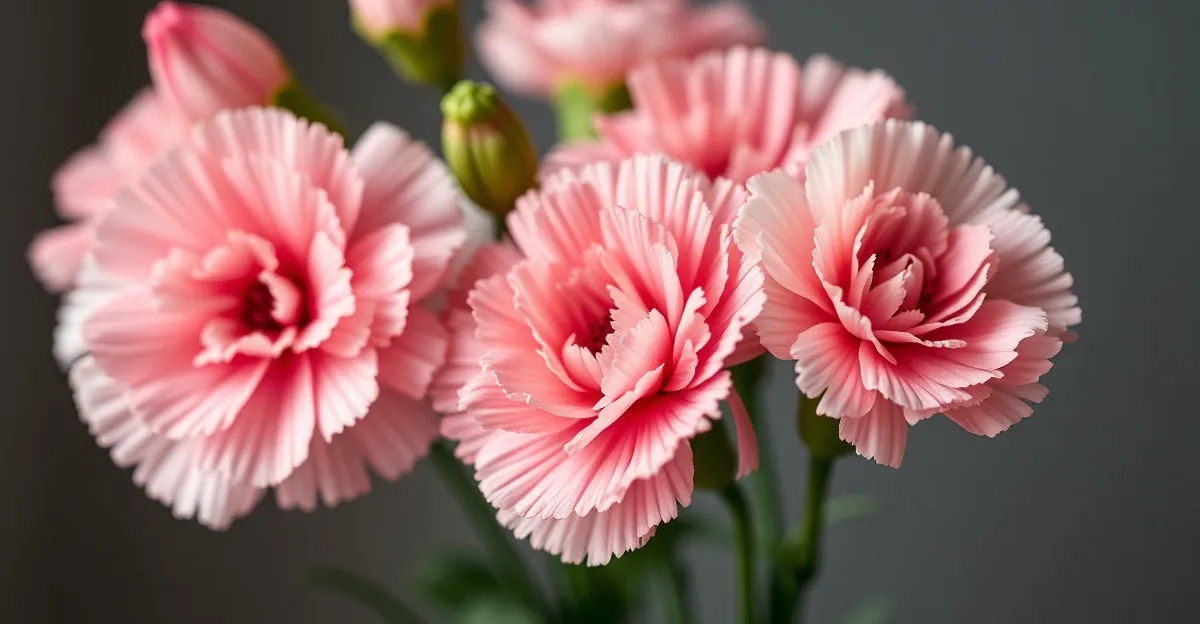
Carnations have had a complicated relationship with their own reputation. For much of the 20th century, they were dismissed as the cheap, filler flower in budget bouquets — the thing that padded out arrangements when better blooms were too expensive. But that reputation is shifting, and not only because the flowers themselves have always deserved better. The carnation's symbolic history is one of the richest in the floral world, spanning ancient Greek ceremony, Spanish flamenco culture, socialist politics, and Korean memorial tradition.
If you're in Bali and wondering whether carnations have a place in your gifting, the answer is yes — more often than you might think, and for more reasons than just price. This guide covers everything you need to know about what carnations mean, how the meaning varies by colour, and when they're the right (or wrong) choice for your occasion.
The ancient origins of carnation symbolism
The carnation's scientific name, Dianthus caryophyllus, contains a clue to its cultural weight. Dianthus translates from Greek as "flower of the gods" — dios (divine/Zeus) and anthos (flower). Theophrastus, the ancient Greek botanist writing in the 4th century BCE, used this name for the genus, suggesting that carnations held sacred significance in Greek culture before the written record of their cultivation.
In Christian iconography, the carnation carries a specific meaning. Legend holds that carnations first grew from the tears of the Virgin Mary as she wept beneath the cross. This association with maternal grief and love gave white carnations particular sacred meaning in Catholic traditions, and pink carnations became associated with a mother's undying love. This Christian symbolism is the origin of carnations' strong association with Mother's Day — still the largest single occasion for carnation gifting worldwide.
What different carnation colours symbolise
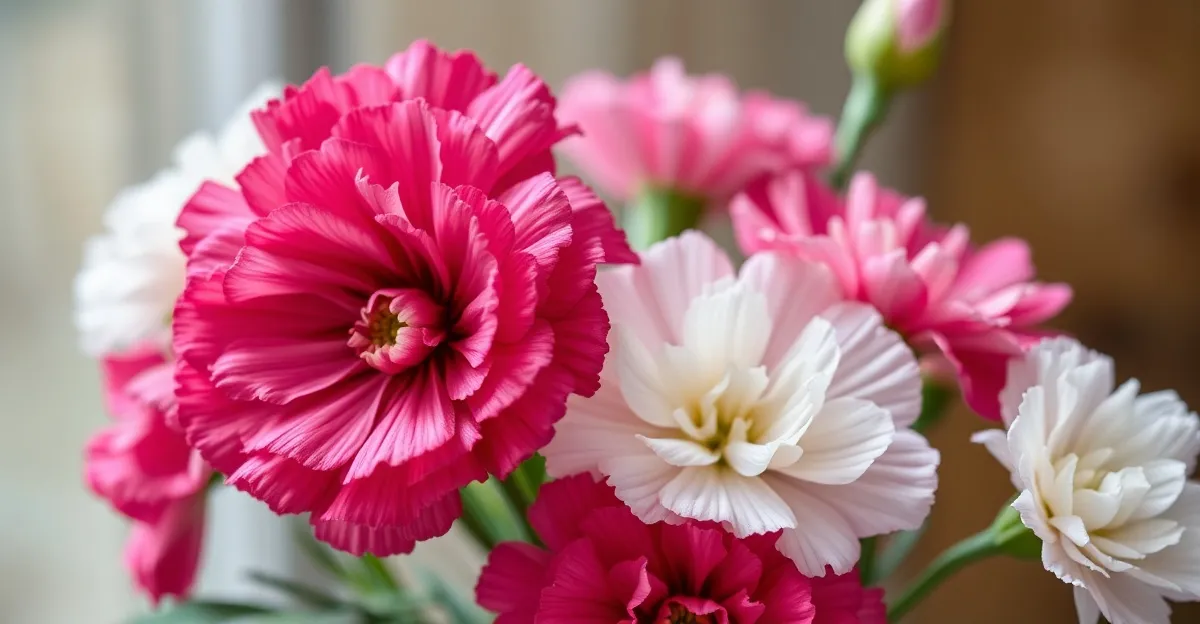
Carnations come in an extraordinary range of colours — from white and pale pink through every shade of red and pink, into purple, yellow, and even green and two-toned striped varieties. Each carries distinct meaning.
White carnations
Purity, good luck, and remembrance. White carnations are significant at both celebrations and memorial occasions. In Korean tradition, white carnations are worn specifically by people whose parents are deceased — a powerful and specific use that makes white carnations a meaningful memorial flower in that culture. In general Western contexts, white carnations suggest innocent love and are appropriate for weddings, baptisms, and occasions marking new beginnings.
Pink carnations (light pink)
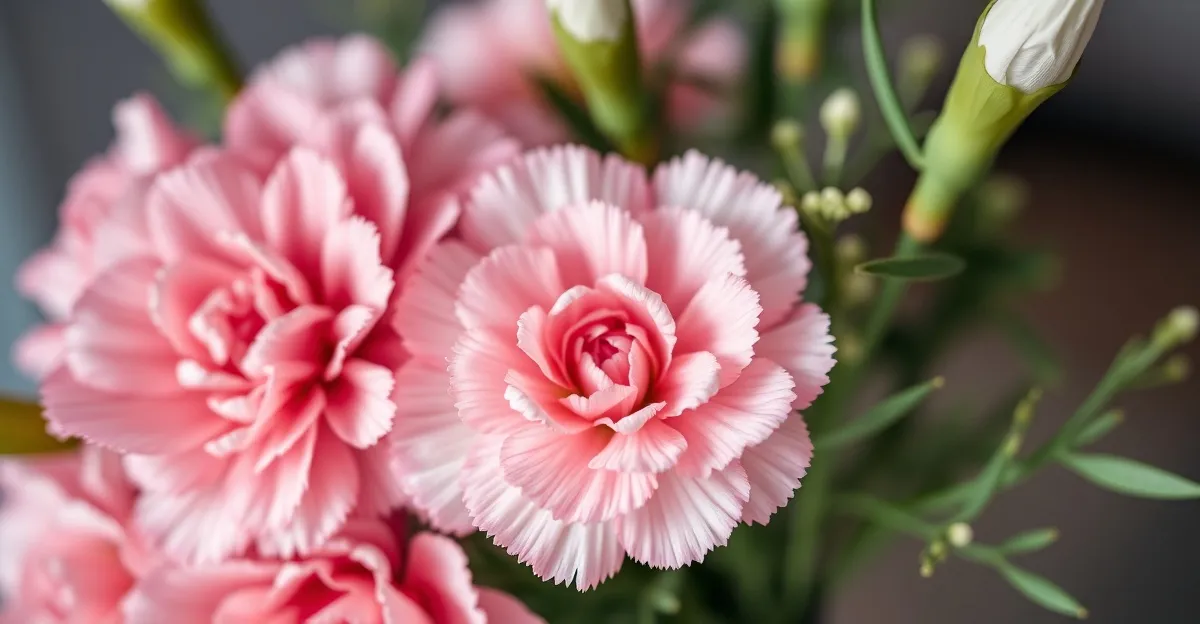
Gratitude, admiration, and maternal love. Light pink carnations are the classic Mother's Day flower — a tradition that began in the early 20th century in the United States and spread globally. They say: I admire you, I'm grateful for you, you are someone I hold in the highest regard.
Deep pink and hot pink carnations
Bright affection and celebration. These convey warmth and energy at a more confident volume than light pink. They're excellent for birthdays, congratulations, and occasions where you want to express genuine, active affection rather than quiet admiration.
Red carnations
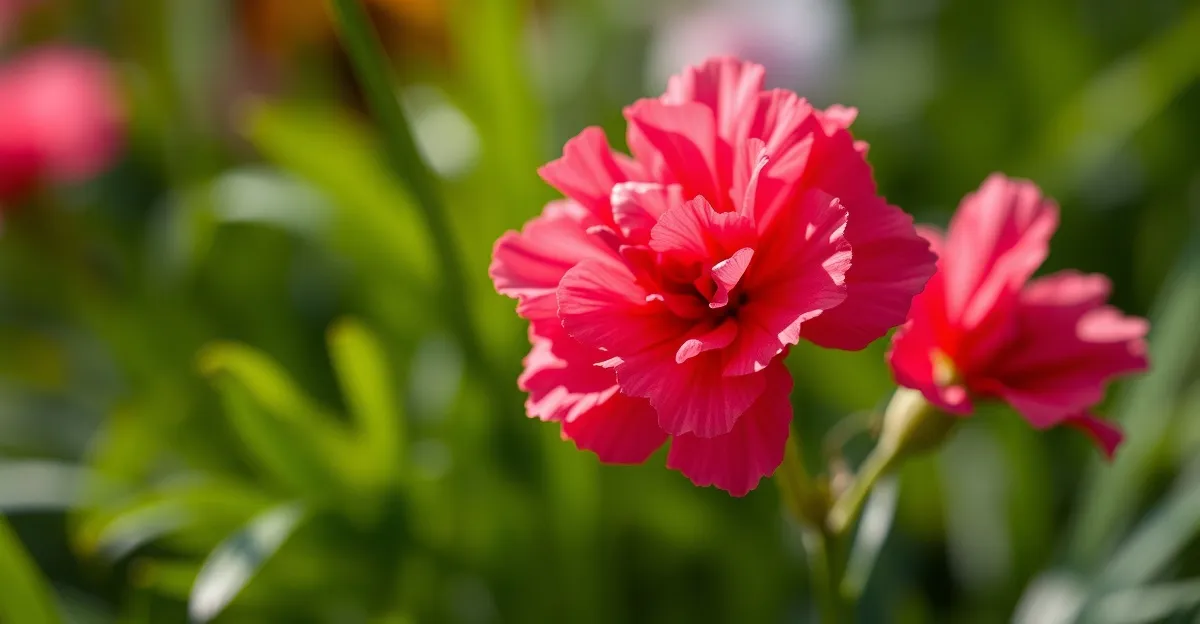
Passionate love, admiration, and deep affection. Red carnations share some symbolic territory with red roses but carry their own distinct quality — where red roses are intensely romantic, red carnations have a warmer, more generous energy. They've also been associated with socialism and labour movements historically (the "red carnation" was a symbol of workers' solidarity in early 20th century Europe), which gives them an interesting dual identity.
Yellow carnations
Disappointment and rejection — this is the notable negative symbolism in the carnation family. Yellow carnations have been associated with disdain and regret in Victorian flower language, and while this meaning is less universally known than it once was, it's worth being aware of. In some contexts, gifting yellow carnations can still carry this unintended message.
Purple carnations
Capriciousness, fickleness, and impulsiveness. Like yellow, purple carnations carry mildly negative meanings in the Victorian flower language tradition. They're beautiful flowers, but as gifts they can signal something you probably don't intend.
Striped carnations
Regret that a love can't be shared, or a refusal in Victorian code. Again, this is historically significant but less universally known today. Striped carnations are visually interesting and make beautiful arrangement flowers — most contemporary recipients won't know the Victorian meaning.
Green carnations
Luck and St Patrick's Day, but also creativity and uniqueness outside that specific Irish-American context. Dyed green carnations have an unusual, interesting quality that makes them appealing in avant-garde arrangements.
Cultural contexts that matter in Bali
Bali's multicultural mix means carnation symbolism reads through multiple lenses simultaneously.
Korean context
In Korean culture, carnations carry some of the most specific flower symbolism of any culture. Red and pink carnations are given on Parents' Day (May 8th) — a direct equivalent to combined Mother's Day and Father's Day. More significantly, white carnations are worn by adults whose parents have passed away. If you're gifting carnations to a Korean expat in Bali, being aware of this colour distinction matters.
Western context
In Western cultures, carnations are most strongly associated with Mother's Day and are broadly positive for most occasions. The Victorian flower language negatives (yellow = disappointment, striped = refusal) are known to enthusiasts but aren't broadly practiced.
Indonesian and Balinese context
Carnations aren't part of traditional Balinese ceremonial culture. They're understood as decorative flowers with generally positive associations, without the specific ceremonial or symbolic weight they carry in Korean or European Catholic traditions. For most everyday gifting occasions in Bali's general community, carnations are simply cheerful, reliable, and long-lasting flowers.
Best occasions for carnation gifting
Mother's Day and parents' celebrations: The strongest traditional occasion. Pink carnations are specifically right here; white carnations honour parents who have passed.
Graduations: Carnations work well for graduation — they're celebratory without being overly romantic, and they last well which is practical for people who are busy celebrating.
Get well: The durability of carnations (they genuinely outlast most flowers in a vase) makes them thoughtful for hospital visits or recovery occasions. Bright pink or red carnations bring warmth and energy.
Thank you: Carnations are underrated as thank-you flowers. Pink carnations in particular are a direct expression of gratitude and admiration.
Valentine's Day: Interestingly, red carnations are more historically appropriate for Valentine's Day than roses — roses only dominated the holiday through 20th century commercial promotion. For someone who knows flower history, carnations are a more interesting choice.
For more ideas on seasonal occasion gifting in Bali, the Mother's Day flower delivery in Bali guide covers timing and ordering practical for major flower occasions here.

The team
your florists
weekly subscription · Bali
We write about flowers because we love them. We deliver them because someone should — properly, weekly, across Bali.
— heyflowerPay once for 3, 6, or 12 months, no auto-renewal.
Carnations in arrangements with other flowers
One reason carnations developed their "filler flower" reputation is that they were often used in large quantities as cheap volume in mixed bouquets. The solution isn't to avoid carnations — it's to use them well. A carnation used with intention, as a feature flower rather than a filler, is a beautiful thing.
Strong pairings: carnations with eucalyptus and simple greenery (minimal and elegant), carnations with ranunculus (layered textures in the same colour family), carnations with spray roses in complementary tones (fullness and texture), carnations with tropical foliage for a distinctly Bali arrangement.
At heyflower.co, we deliver across Canggu, Berawa, Seminyak, Pererenan, and Kerobokan. For carnation arrangements and subscription options, explore at /#subscriptions.
Frequently Asked Questions
Why are carnations associated with Mother's Day?
The association began with Anna Jarvis, who established Mother's Day in the United States in 1908. She chose white carnations to honour her deceased mother. Over time, pink carnations for living mothers and white for those who had passed became the standard. The tradition spread globally and remains the primary occasion for carnation gifting in many countries.
Do carnations have negative symbolism in any Asian cultures?
In Korean culture, white carnations are worn specifically for those who have lost parents — a strong and specific meaning that makes gifting white carnations to a Korean person potentially significant. In other Asian cultures including Balinese and broader Indonesian contexts, carnations don't carry strong negative associations.
Are carnations appropriate for a funeral?
White carnations are appropriate for funeral and memorial occasions in many Western traditions, where they carry meanings of purity and remembrance. In Korean tradition, as noted, white carnations are specifically memorial flowers. Pink, red, or bright carnations are generally not appropriate for condolence occasions.
How long do carnations last in a vase compared to other flowers?
Carnations are among the longest-lasting cut flowers, particularly in their native cool conditions. In Bali's tropical heat, expect seven to fourteen days with good care — significantly longer than peonies (four to seven days) and comparable to or longer than roses. Their durability is a genuine practical advantage.
What is the origin of the red carnation as a socialist symbol?
The association between red carnations and labour movements began in late 19th century Europe. May Day (International Workers' Day) celebrations in Austria and parts of Europe included red carnation wearing. The tradition spread across European socialist and labour movements, giving red carnations a political symbolism quite separate from their romantic or celebratory meanings. This dual meaning is interesting historically but isn't generally known in Bali's contemporary context.
More on Carnation