Seal-and-ship: preserving flowers for mailing overseas
A practical guide to preserving and mailing Bali flowers overseas — pressing, drying, and packaging methods that clear customs and survive the journey.
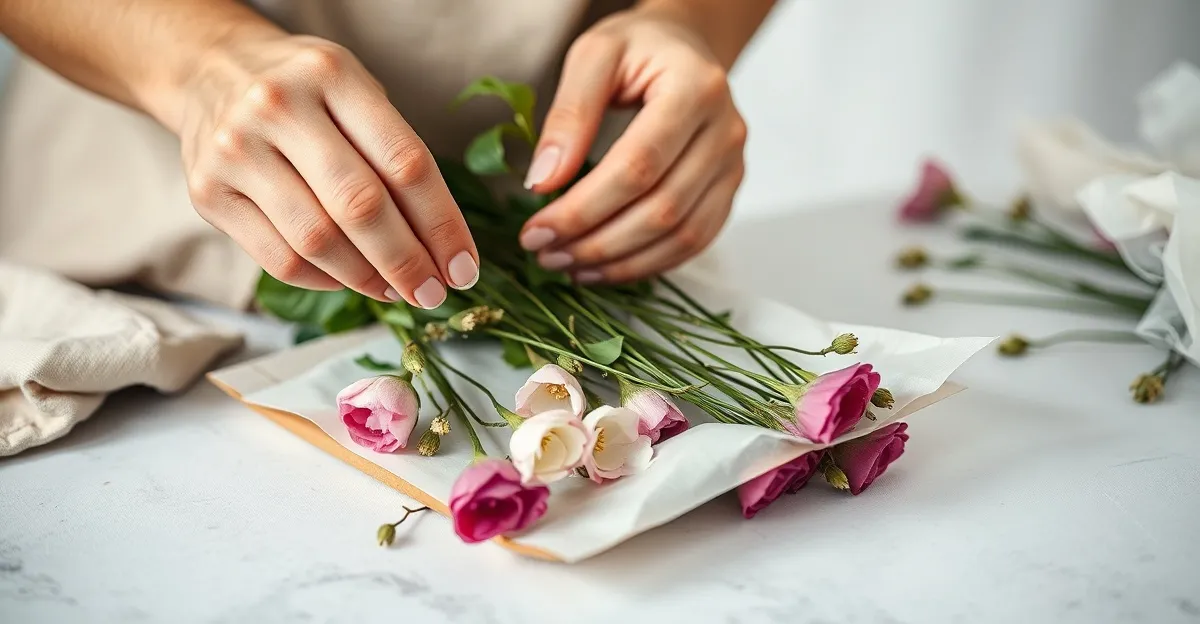
Every year, thousands of visitors leave Bali wanting to bring a piece of its floral world home with them — a dried frangipani from their wedding day, a pressed hibiscus from the garden of the villa where they honeymooned, a small bunch of dried tropical flowers to hang in an apartment back in Stockholm or Sydney. The challenge is doing it in a way that actually works: flowers that survive a 20-hour journey, clear biosecurity at the destination, and still look beautiful when they arrive.
This guide covers the full picture — which preservation methods hold up in the tropics, how to package flowers for international post, and which countries have the most important import restrictions to know about.
Why Fresh Flowers Cannot Be Mailed Internationally
Fresh cut flowers are generally prohibited from international air mail and most courier services from Indonesia. They pose a biosecurity risk — insects, mites, fungal spores, and plant diseases can all hitch a ride. Indonesia's own agricultural agency (Badan Karantina Pertanian) requires phytosanitary certificates for commercially exported fresh plant material, which is beyond what an individual traveller can arrange at the post office.
The solution is to preserve flowers properly before mailing, which eliminates the live biological risk and dramatically changes what customs will accept. Fully dried or pressed flowers with no soil, roots, or pests attached can often enter many countries — though you should always check the specific rules for your destination country, as requirements vary significantly.
Pressing: The Best Method for Flat Keepsakes
Pressing is the most accessible preservation method and produces pieces that ship perfectly flat. For mailing overseas, pressed flowers between sheets of card or sealed in a picture frame are sturdy, lightweight, and unlikely to be flagged by customs.
In Bali's humidity, you need to accelerate pressing or the flowers will brown before they dry. The microwave method — flower between two sheets of paper, sandwiched between ceramic tiles or a microwave-safe plate, microwaved on low power in 30-second bursts — produces pressed flowers in under two minutes. The key is letting them cool completely, then sealing them immediately in a zip-lock bag with a silica gel sachet.
Flowers that press exceptionally well from Bali include frangipani petals (press individually rather than as the whole five-petal structure), bougainvillea bracts, Dendrobium orchid florets, and individual marigold petals. For something more structured, small fern fronds found along roadsides toward Kintamani add visual interest.
For mailing pressed flowers, sandwich them between two pieces of heavy card, place inside a rigid envelope or small flat box, and mark the package "DRIED BOTANICAL SPECIMENS — NO SOIL" on the outside.
Air Drying and Silica Gel Drying
For three-dimensional flowers — small bouquets, individual roses, clusters of baby's breath — drying is more appropriate than pressing. Air drying is simple but slow, and in Bali's humidity it rarely works well unless you are in the cooler highlands around Bedugul or Kintamani.
Silica gel drying is more reliable in the coastal lowlands. You can find silica gel in large bags at Ace Hardware branches in Kuta, Seminyak (Sunset Road), and Denpasar. The process: fill a container halfway with silica gel, place your flowers face-up, then gently pour more gel around and over them until they are completely buried. Seal the container and leave for 3–7 days. The gel draws moisture out without crushing petals.
Silica-dried flowers are fragile — petals can shatter if mishandled — so they need protective packaging for shipping. Place them in a rigid box with crumpled tissue paper providing cushioning on all sides, but not pressing directly against the blooms. Double-boxing (a smaller box inside a larger box with packing material between) is recommended for anything delicate.
If the flowers are to be truly lasting gifts, consider transferring silica-dried flowers into an epoxy ornament before mailing. The resin encases the flower completely, making it robust enough to survive any postal journey.
Resin-Preserved Flowers: The Most Durable Option
Fully cured epoxy or UV-resin pieces — ornaments, bookmarks, coasters — are arguably the safest format for international mailing. Once cured, epoxy is an inert solid. It contains no living material, no moisture, no biological risk. Customs agencies see it as a manufactured craft item, not a botanical specimen, which simplifies the import side significantly.
The trade-off is weight and size. A set of resin coasters can weigh 800g–1kg, which affects courier costs from Bali significantly. JNE, J&T, and Pos Indonesia all offer international services; for packages under 2kg, DHL and FedEx are more reliable for anything going to Europe, Australia, or the United States.
Phytosanitary Requirements and Country Rules
This is where you need to do your research for your specific destination.
Australia and New Zealand have some of the strictest biosecurity rules in the world. Dried plant material must be declared. Pressed flowers are often admitted but are inspected at the border. Any flower material with seeds attached is more likely to be confiscated. Always declare botanical items on the arrival card — failure to declare is a serious offence with heavy fines.
European Union requires that dried plant material from third countries be free from pests and — for certain species — may require a phytosanitary certificate even for personal amounts. For small personal quantities of clearly processed pressed flowers or resin pieces, enforcement varies, but it is worth knowing the rules.
United States requires declaration of all plant material at customs. Pressed flowers and fully dried botanicals are often allowed in small personal quantities but must be declared. Fresh flowers from Indonesia to the US require USDA inspection.
Japan and South Korea generally require phytosanitary certificates for dried plant material; for fully processed/encased items (like resin), the rules are more relaxed.
For the most current rules, check the IATA regulations summary or contact the embassy of your destination country. The safest option for mailing internationally without stress is fully cured resin pieces, since they fall outside most plant biosecurity frameworks.
Packaging Flowers for the Journey
The physical challenge of international post from Bali is that packages travel through multiple handling points — often Jakarta or Singapore hub airports — before reaching the final destination. Packages get stacked, bumped, and thrown more than we would like. Packaging needs to anticipate this.
For pressed flower artworks or card-mounted pieces: Use a rigid cardboard backing (at least 3mm thick) on both sides. Place inside a padded envelope, then inside a rigid outer box. The double-hard-surface approach prevents the piece from bending in transit.
For silica-dried loose flowers: Double-box method. Inner box packed tightly with tissue paper. Outer box with foam padding or crumpled kraft paper. Mark FRAGILE on all sides — it does not guarantee gentle handling, but it helps at the final mile.
For resin ornaments and coasters: Wrap each piece individually in bubble wrap, then place in a box with foam padding or crumpled newspaper. Coasters should be wrapped individually and stacked with foam squares between each one. Mark FRAGILE.
Labelling: Write your return address, the recipient's full address (in both Latin script and local script if relevant), and a contents description. For botanical specimens, add "DRIED BOTANICAL — PERSONAL AMOUNT" on the outside.

The team
your florists
weekly subscription · Bali
We write about flowers because we love them. We deliver them because someone should — properly, weekly, across Bali.
— heyflowerPay once for 3, 6, or 12 months, no auto-renewal.
Sending via Courier vs. Pos Indonesia
From Bali, your main options for international shipping are:
Pos Indonesia EMS (Express Mail Service) — affordable, tracking available, typically 7–14 days to most destinations. Acceptance of botanical material varies by counter and destination. Suitable for pressed flower cards and resin pieces.
JNE International / J&T Cargo International — more widely available across Bali, similar timeframes to EMS, slightly more reliability on tracking updates.
DHL and FedEx — significantly more expensive (often 3–5x the price) but more reliable, faster (3–7 days), and better at navigating customs. Worth the cost for anything valuable or fragile. DHL has a drop-off point in Kuta and Seminyak; FedEx operates from Denpasar.
For anything you truly care about — a wedding flower keepsake, a meaningful gift — pay for DHL or FedEx. The price difference is real but the reliability difference is also real.
What to Include With Your Package
A small note inside the package explaining the contents helps if customs opens the parcel: "This package contains dried/pressed botanical specimens — Balinese flowers. No soil, no pests. Personal gift quantity only." In English and ideally in the destination country's language.
Including a short description of the flowers and where they come from adds a personal dimension. Flowers have rich meaning in Balinese culture — if you are curious about the stories behind the blooms you are sending, learning about lotus in Balinese Hinduism: meaning and ritual use gives useful context about why flowers carry so much cultural weight here.
FAQ
Can I carry pressed flowers in my check-in luggage? Generally yes, for most destinations, as long as they are fully dried and you declare them. Place them in a rigid container in your checked bag to avoid crushing. Australia and New Zealand require declaration; always comply.
What is the cheapest way to mail dried flowers from Bali? Pos Indonesia EMS is typically the cheapest tracked option for packages under 2kg. For very lightweight items like pressed flower cards, the standard tracked airmail option (Pos Udara) costs significantly less and still reaches most destinations in 2–4 weeks.
How long do pressed flowers last after mailing? Properly pressed and sealed flowers can last 10–20 years if kept away from direct sunlight and moisture. Framed behind UV-protective glass, they can last even longer. The main enemies are UV light (causes fading) and humidity (causes browning and mould).
Will the flowers get damaged in the heat during transit? Pressed flowers are stable and unaffected by heat. Silica-dried loose flowers can be affected if they reabsorb moisture, but if they are shipped quickly and the destination is not extremely humid, they travel well. Resin pieces are fully heat-stable for the temperature ranges encountered in cargo holds.
Do I need a phytosanitary certificate for personal amounts? For commercially exported plant material, yes. For personal quantities of clearly processed dried botanicals, the answer varies by country. Fully cured resin pieces generally do not require phytosanitary documentation. Always check the destination country's biosecurity rules before shipping.
Ready to enjoy fresh Bali flowers every week without the logistics? Explore our weekly flower subscription and get handpicked blooms delivered to your door every week — from our hands straight to yours.



