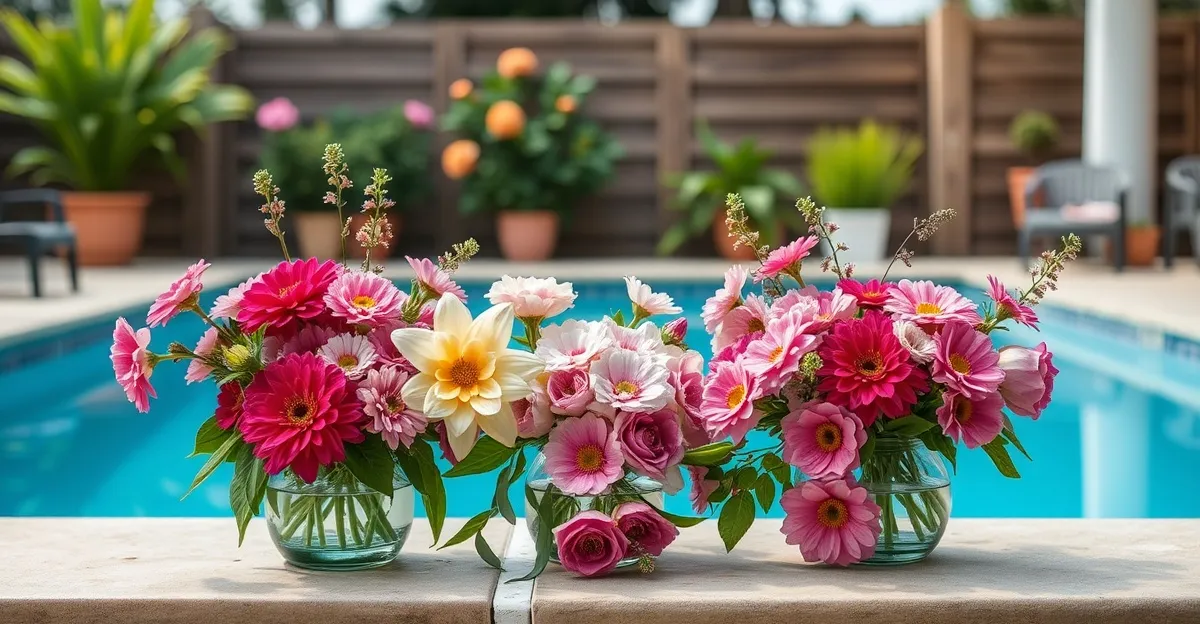
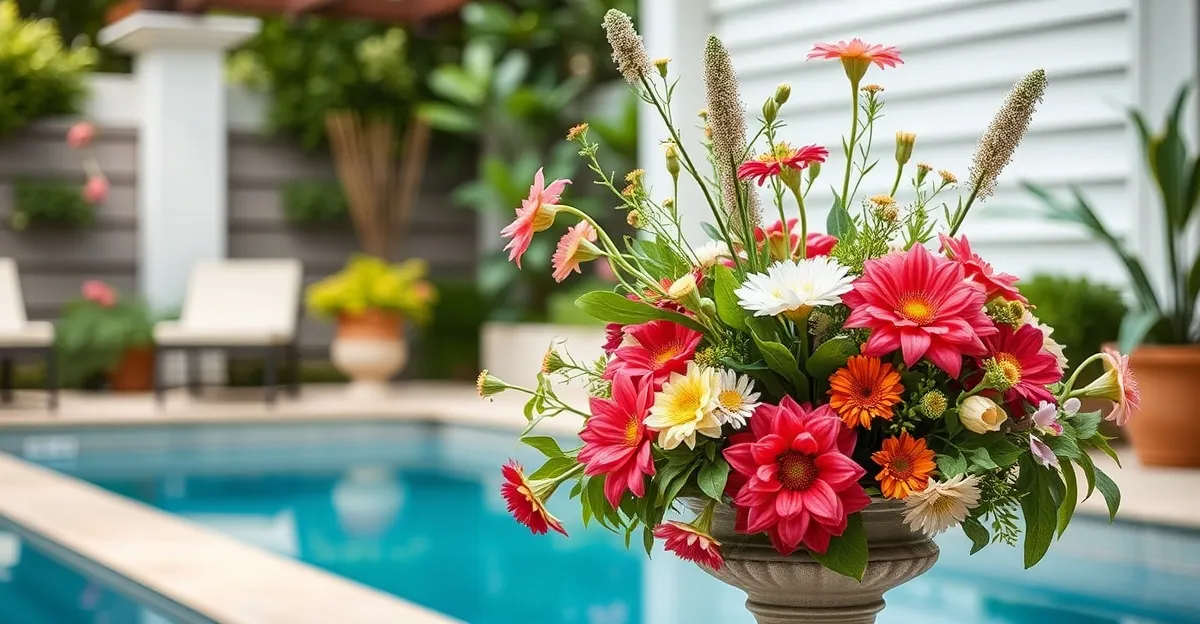
Picking the right vase for your pool deck
Find the best vase for your Bali pool deck — outdoor-safe materials, stable shapes, and styles that handle tropical heat and humidity.
The outdoor vase challenge in Bali
Choosing a vase for a pool deck is completely different from choosing one for inside the house. The outdoor environment in Bali — strong sun, humidity at 75% or above, occasional tropical downpours, wind off the Indian Ocean or valley breeze from the rice terraces — puts every material under stress. A delicate glass vase that looks beautiful on a dining table will become an accident hazard on a sun-slicked pool deck. A lightweight ceramic will tip and shatter the first time a breeze catches a bunch of heliconias.
This guide covers what actually works for outdoor flower display in Bali's climate, from the practical standpoint of materials and shapes, to how to match the vessel to your pool deck's aesthetic.
Material matters: what survives outdoors
Concrete and terrazzo: The best all-round outdoor vase material for Bali. Heavy enough not to tip, unaffected by water and humidity, and available in styles that suit both modern villa aesthetics and traditional Balinese design. Concrete planters and low terrazzo bowls are widely made in Bali — look at craft suppliers in Gianyar and the furniture export workshops around Kerobokan. The weight that makes them stable also means they're not going anywhere in the wind. Cost starts from IDR 150,000 for smaller pieces.
Stone: Similar advantages to concrete, with the added bonus of natural variation in texture and colour. Volcanic stone (paras) is quarried locally in Bali and used extensively in architecture and garden features. A paras stone bowl or planter for the pool deck feels genuinely part of the island's material culture. These are heavier and pricier — expect IDR 250,000–600,000 — but they last indefinitely outdoors.
Heavy terracotta: Bali's terracotta varies significantly in quality. The thick-walled handmade terracotta from workshops in Pejaten village (Tabanan area) is durable and weathers beautifully outdoors. Thin factory-made terracotta chips and cracks in the heat-cool cycles of Bali's climate. Stick to substantial, heavy pieces and they'll serve you for years.
Galvanised steel and powder-coated metal: These work well in more contemporary villa settings — the kind of property you'd find in Berawa or Pererenan with a modern architectural aesthetic. Metal is heavy, weather-resistant, and the industrial look pairs well with architectural flowers like birds of paradise and heliconias. The risk is rust on cheaper pieces; look for powder-coated or galvanised options, not bare steel.
Fibreglass and high-density resin: Increasingly popular in Bali's hospitality sector for exactly this kind of application. These can mimic stone or concrete aesthetics at lower cost and less weight, while being genuinely weather-resistant. The quality varies, but higher-end options look excellent and are virtually indestructible.
What to avoid outdoors: Thin glass (breakage risk, no stability), lightweight ceramics without significant weight or base, untreated natural bamboo and wood (moulds quickly), and anything with glued components (tropical humidity destroys most adhesives in weeks).
Shape and stability: think about wind
A pool deck is rarely a still environment. Even in inland Ubud, afternoon valley breezes are reliable. In coastal areas like Canggu, Kuta, and Nusa Dua, the wind off the ocean can be strong enough to knock over anything with a high centre of gravity.
For outdoor pool deck use, favour:
Wide, low shapes: A squat bowl or planter with a wide base and lower profile is far more stable than a tall cylindrical vase. The low centre of gravity keeps it grounded even when a bunch of heliconias is catching the breeze.
Heavy base relative to height: If you do use a taller shape — say, for a dramatic arrangement of birds of paradise — make sure the base weight is substantial. Fill the vase to at least two-thirds with water, which adds ballast at the bottom.
Wide-mouthed vessels: These make it easier to arrange structural tropical stems, which are often thick-stalked and don't fit comfortably into narrow-necked vases. Heliconia stems in particular need room.
Sizing for the pool deck context
Pool decks are generally generous spaces, and the arrangements they hold should be proportionate. This is not the place for bud vases or delicate single stems — those get lost visually and are too vulnerable outdoors.
For most pool deck settings, think large: planters or bowls that are at least 25–35cm across, holding five to eight substantial stems. A pair of matched planters at each end of the pool — one of the most classic Balinese villa styling choices — should each be at least 30cm tall with a wide, stable base.
For a table arrangement on a poolside dining table or seating area, you can go slightly smaller — a low bowl 15–20cm across holding a cluster of anthuriums or tropical roses works well as a centrepiece that won't obstruct sightlines across the table.
Aesthetic matching: villa styles in Bali
Bali's pool villas follow a handful of distinct design languages, and your vessel choice should fit the one you're working with.
Traditional Balinese / resort style: Volcanic stone planters or carved paras stone vessels. Heavy terracotta with aged patina. These match dark timber, thatched roofs, and intricate stone carvings perfectly. Fill them with torch ginger, heliconia, and tropical foliage for the full effect.
Modern minimalist (common in Seminyak, Berawa, Canggu): White or grey concrete, powder-coated steel, or clean-lined terrazzo. The vessel should be architectural in form — a simple cylinder or rectangular trough. Fill with architectural flowers: birds of paradise, large anthuriums, single-variety heliconia.
Jungle/green aesthetic (Ubud, Penestanan, Keliki): Rough terracotta, stone, or even hollow bamboo segments sealed at the base. Less structured arrangements using mixed tropical foliage and whatever local flowers are in season. The look should feel organic rather than designed.
For more on flower colour palettes that suit outdoor settings, ivory flower arrangements for villa interiors covers how neutral palettes translate to villa styling — many of those principles apply outdoors too.

The team
your florists
weekly subscription · Bali
We write about flowers because we love them. We deliver them because someone should — properly, weekly, across Bali.
— heyflowerPay once for 3, 6, or 12 months, no auto-renewal.
Practical care for outdoor vases
Water evaporation is dramatically faster outdoors in Bali's heat. An outdoor vase that needs topping up every two days indoors may need daily attention in direct sun. Make a habit of checking water levels each morning when you're out for your first swim.
Position outdoor vases in shade where possible — under a pool umbrella, beneath a pavilion roof, or in the shadow of the villa structure. Even partially sun-tolerant flowers like heliconia will last significantly longer in semi-shade than in full midday sun.
After a tropical downpour, check that rain hasn't overfilled low bowls to the point that stems are submerged entirely — this accelerates stem rot. A simple drain hole in the bottom (appropriate for planters, not for watertight vases) solves this if you're using the vessel for very robust tropical stems.
A weekly flower subscription means you're always working with fresh stock, and the rotation happens on a regular schedule regardless of how quickly the outdoor flowers turn over. Flower arrangement ideas for your pool deck has more on the best flower choices to pair with these vessels.
FAQ
What is the most durable outdoor vase material for Bali? Concrete, volcanic stone (paras), and heavy terracotta are the most durable. They handle humidity, sun, and rain without deteriorating, and their weight makes them wind-stable.
Can I use a regular ceramic vase outdoors? You can, but it's a risk. Thin ceramics are vulnerable to thermal shock (sudden cold rain on a sun-heated surface), tip easily in wind, and may crack or chip over time. If using ceramic outdoors, choose thick-walled, heavy pieces.
How big should a pool deck vase be? Larger than you think — at least 25–35cm across for a main display. Pool decks are generous spaces and small arrangements get visually lost. Err on the side of size and visual impact.
Where can I buy good outdoor vases in Bali? The furniture and craft export workshops around Kerobokan and Seminyak stock a wide range of concrete and stone planters. Pejaten village in Tabanan is known for quality terracotta. The garden and home stores along Jalan Raya Seminyak and Jalan Sunset Road also carry outdoor-appropriate vessels.
Do I need to seal concrete or stone vases before using them with water? For display vases holding water directly, a concrete sealer (available at hardware stores throughout Bali) prevents the surface from absorbing water and developing mineral deposits over time. Stone generally doesn't need sealing unless it's very porous.
Ready to bring fresh tropical blooms to your Bali pool deck? Explore our weekly flower subscription and get handpicked flowers delivered to your door every week.
More on pool deck