Picking the right vase for your living room
A practical guide to choosing the right vase for your living room in Bali — from scale and material to what works with tropical blooms and humid air.
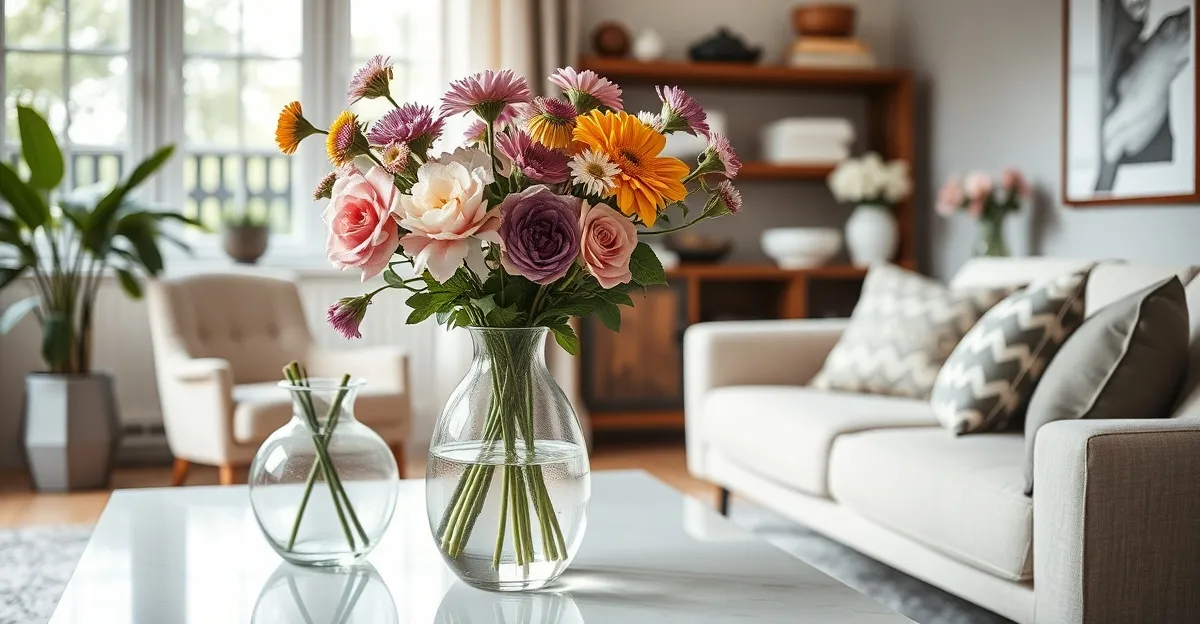
The vase you choose shapes the whole arrangement. The same bunch of flowers can look entirely different in a tall clear glass cylinder versus a wide-mouthed terracotta bowl. In Bali, where interior styles range from minimalist villa to full Balinese traditional, there are a few extra considerations beyond the usual — humidity, the scale of open-plan spaces, and access to genuinely beautiful local materials that are worth building around.
This guide is for anyone who wants their living room arrangements to look intentional, not accidental. You don't need an expensive collection. You need the right pieces for how you actually live and what flowers you gravitate toward.
Start with scale — it matters more than style
The single most common vase mistake is going too small. A 20cm glass bud vase that would look charming on a dining table gets completely swallowed in a large open-plan living room in Canggu or Seminyak. Before thinking about material, colour or shape, think about scale.
A rough guide: the vase should be roughly one-third to one-half the height of the finished arrangement. For a living room coffee table, you want a vase at least 20–30cm tall. For a sideboard or console, 35–50cm. For a floor arrangement or a dramatic corner piece, you're looking at 60cm and above.
Bali's villa-style homes — with their soaring ceilings and generous floor plans — almost always benefit from going a size up from what feels instinctively right. Trust that instinct, then go bigger.
Glass: clean and versatile, but shows watermarks
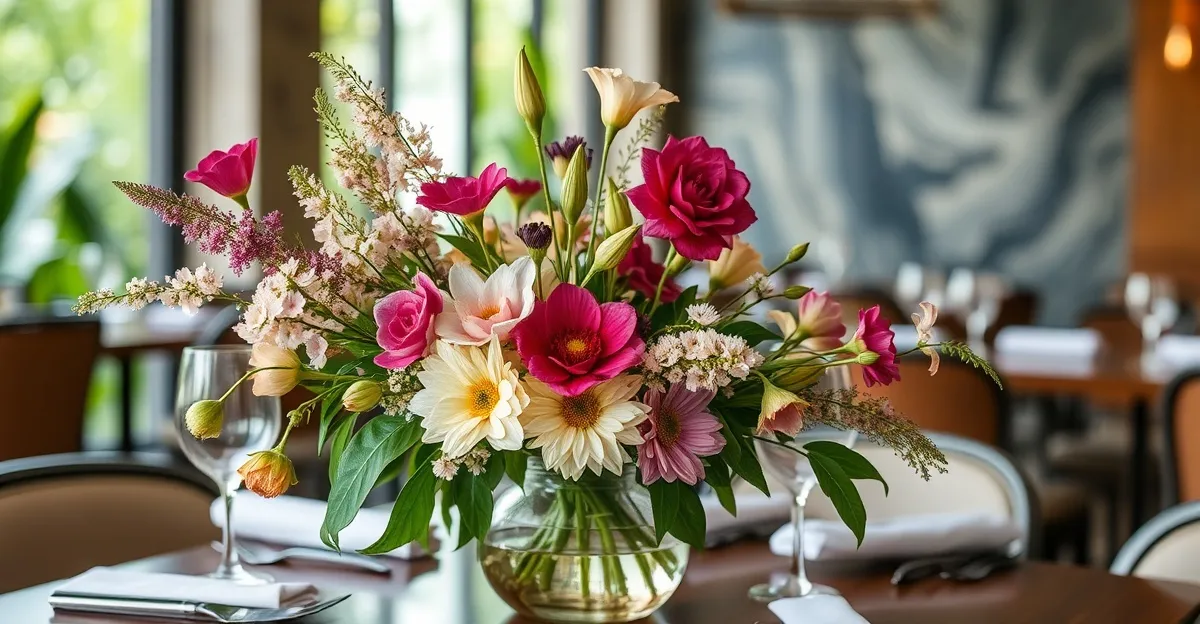
Clear glass vases are a genuinely good starting point. They are neutral, they suit almost any flower, and they're readily available across Bali at prices from around Rp 50,000–200,000 depending on size. The large cylindrical vases you see in hotel lobbies are easy to replicate at home.
The downside in Bali's climate is that glass shows water quality very clearly. The high mineral content in some areas means watermarks and cloudiness appear faster than in cooler climates. If you choose glass, commit to changing the water every two days and cleaning the vase properly between arrangements.
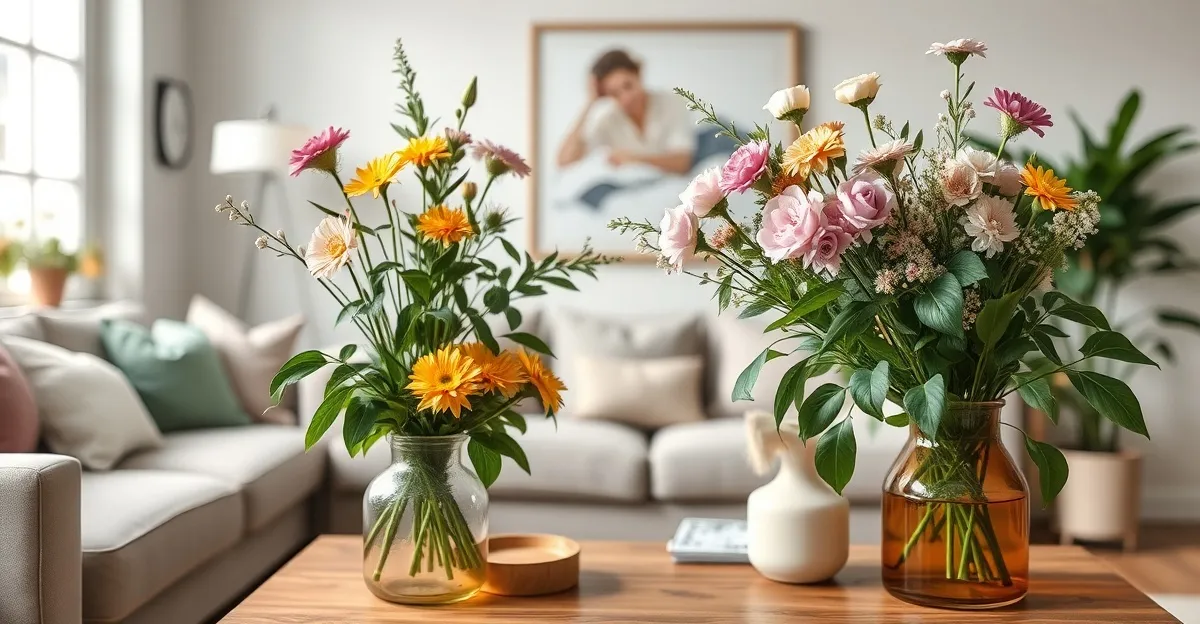
Frosted or tinted glass (soft grey, green, amber) is more forgiving in this regard and has a warmer look that suits the natural materials common in Bali interiors — wood, rattan, woven textiles.
Ceramics: the most versatile choice for a tropical home
A good ceramic vase is arguably the most useful piece you can own for a Bali living room. Ceramics don't show watermarks, they're naturally cool (which helps slow bacterial growth in warm weather), and they come in a range of forms that suit different arrangement styles.
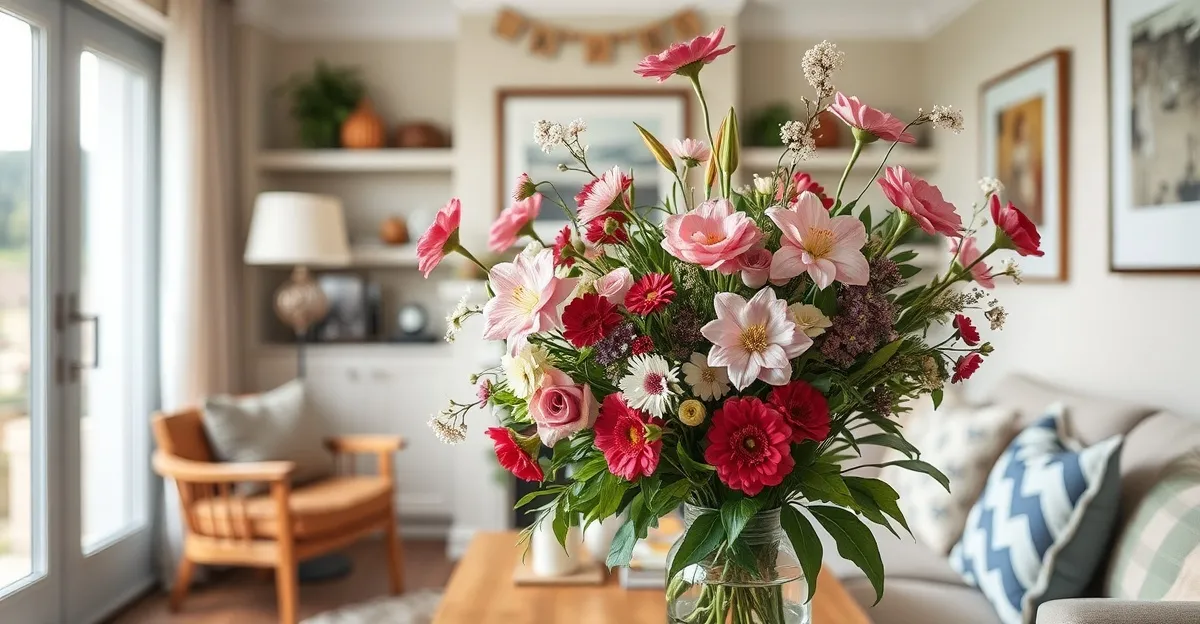
Wide-mouthed ceramics — bowls and squat cylinders — work well for loose, low arrangements of tropical blooms: gerberas, short-stemmed roses, mixed chrysanthemums. The wide opening lets you spread flowers horizontally, which suits coffee table settings where you want the arrangement visible from above.
Narrow-necked ceramics work best for dramatic single-stem or small-bunch arrangements. Three stems of bird of paradise in a tall, narrow ceramic pot can look like a deliberate design decision rather than an afterthought.
Locally made ceramics from Ubud and Gianyar are worth exploring. You'll find glazed earthenware in muted earthy tones — terracotta, olive, warm grey, charcoal — that look beautiful against Bali's typical interior palette of natural wood and stone.
Rattan and woven baskets: a natural fit for the Balinese aesthetic
Woven baskets and rattan vessels are part of daily life in Bali and translate naturally into the home. The key to using them for flowers is a waterproof liner — either a glass insert, a tin, or a plastic liner cut to fit.
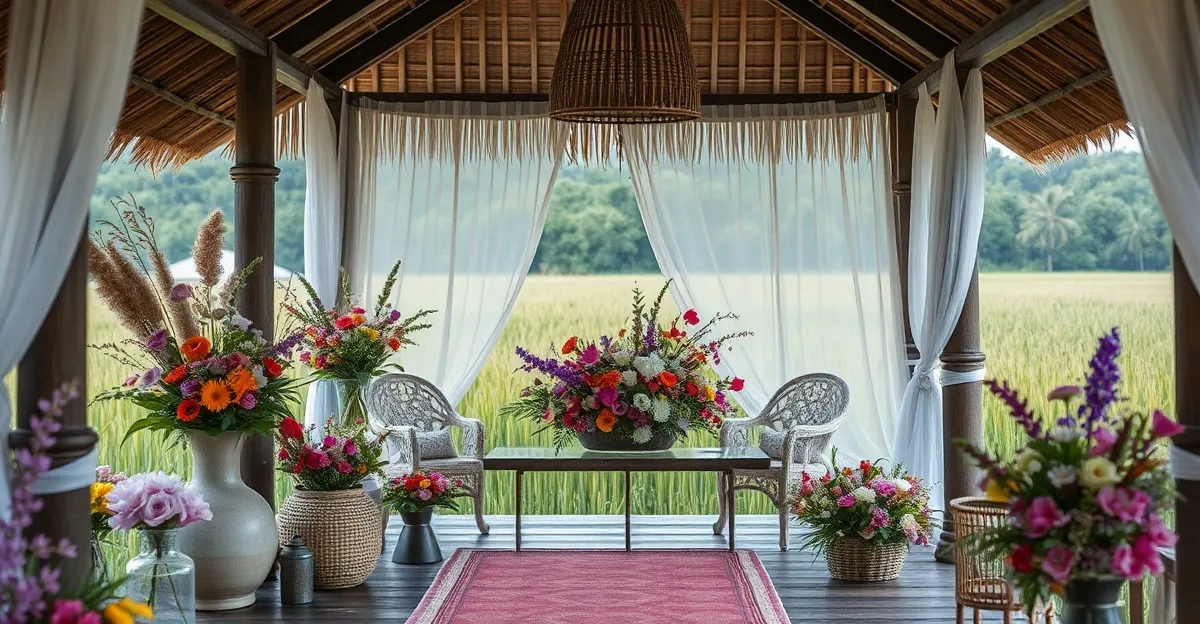
Once lined, a rattan or woven vessel gives you a very different look from glass or ceramic. It's warmer, more textural, and particularly suited to mixed arrangements with a lot of greenery. Think of a generous bunch of tropical leaves with pops of colour from gerberas or alstroemeria, held in a low basket on a reclaimed wood coffee table.
This style works especially well in living rooms with traditional Balinese architectural details — carved wood, stone sculptures, woven ceiling panels. The organic texture of the basket picks up those elements without competing.
Teak and wooden vessels: dramatic but needs care
Solid teak or carved wooden vessels are widely available across Bali, particularly in the craft villages around Ubud and Mas. They look genuinely beautiful, especially when used for structural greenery rather than cut flowers — large monstera leaves, branches, or long grasses.
The issue with using them for fresh flowers with water is that unfinished or minimally finished wood can split, warp or mould in the humidity. If you want to use a wooden vessel for actual flowers, it needs a well-fitting glass or ceramic liner, and you should be careful not to let water splash the rim.
For purely structural, waterless arrangements — dried branches, preserved leaves, or sculptural pods — wooden vessels are excellent and require no special care beyond occasional dusting.
Think about your arrangement style before buying
Different arrangement styles call for different vessel shapes:
- Mass arrangements (lots of flowers packed in): Wide-mouthed vases in medium height. The opening supports many stems.
- Structured/architectural: Tall, narrow vases or simple cylinders. Less flower, more form.
- Loose and naturalistic: A slightly irregular shape helps — slightly flared openings, asymmetric forms, basket weaves. These prevent the arrangement from looking too regimented.
- Single-variety (one type of flower repeated): Any vessel works, but straight cylinders or clean ceramics suit this style well because the vessel doesn't compete with the repetitive simplicity of the flowers.
If you want inspiration for what to actually put in your chosen vase, our guide to flower arrangement ideas for your living room covers arrangement styles in detail.

The team
your florists
weekly subscription · Bali
We write about flowers because we love them. We deliver them because someone should — properly, weekly, across Bali.
— heyflowerPay once for 3, 6, or 12 months, no auto-renewal.
Colour and material coordination for a Bali interior
Bali interiors tend to favour a palette of natural tones: warm wood browns, soft stone greys, terracotta, cream and white, with occasional dark contrast from volcanic stone or black ironwood. Vases that pick up these tones — terracotta ceramics, natural rattan, muted glazed earthenware — tend to integrate effortlessly.
Bright coloured vases can work, but they need to be used deliberately. A deep cobalt blue ceramic or a bold forest green vessel can be a design choice in its own right, particularly in a more contemporary or eclectic interior. If you go this route, keep the flowers simple and the rest of the room's palette relatively calm.
White and cream ceramics are universally useful — they work in any interior, suit any flower colour, and look clean and considered without being boring.
FAQ
How many vases do I need for a living room? Most living rooms benefit from two or three vessels of varying heights. A tall dramatic piece for a sideboard or floor, a medium piece for a console or shelf, and a low-profile piece for the coffee table gives you flexibility without clutter.
What size vase suits a villa with high ceilings? For the large open-plan living areas common in Canggu and Seminyak villas, a minimum height of 40–50cm for the main piece is advisable. Floor-standing vessels at 60–80cm are entirely appropriate and often necessary to have visual impact in these spaces.
Are glass vases hard to maintain in Bali's humidity? Not hard, but they need more attention. The warm, humid climate accelerates bacterial growth in vase water. Change the water every two days, clean the glass with a little vinegar or mild bleach between uses, and you'll keep cloudiness and smell under control.
Where can I buy good vases in Bali? The craft and homewares shops along Jalan Raya Seminyak, Jalan Sunset Road, and around Ubud's main market area stock a wide range. For local ceramics, Ubud and the surrounding villages have workshops where you can buy directly. Denpasar's markets also have affordable glass and ceramic options.
Can I use the same vase for different flower types? Yes — versatile vases are the most useful ones to own. Wide-mouthed ceramics work across the most flower types. The only limitation is stem length: a tall narrow vase won't suit short-stemmed flowers without significant trimming.
Ready to bring fresh flowers to your Bali home or event? Explore our weekly flower subscription and get handpicked blooms delivered to your door every week.
More on living room