Picking the right vase for your dining table
How to choose the perfect vase for your Bali dining table — the right shape, material, height, and where to source beautiful vessels locally on the island.
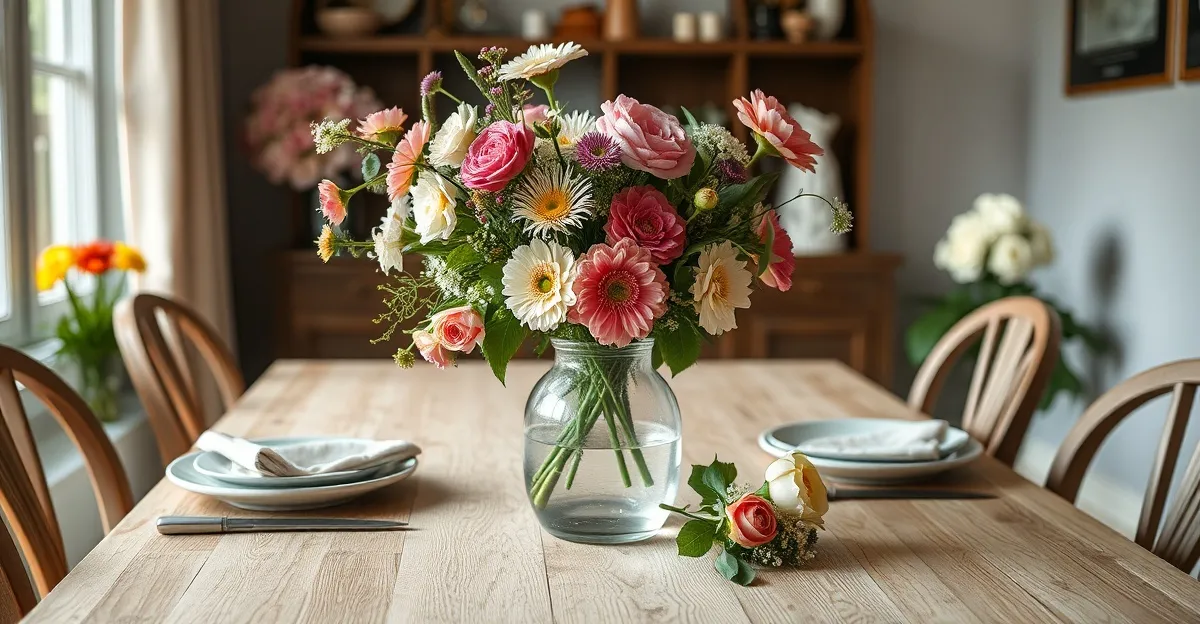
Choosing a vase for the dining table is different from choosing one for any other room. The dining table has two functions that pull in opposite directions: it needs to display flowers beautifully, and it needs to allow people to see and talk to each other across the table. This creates a set of constraints that rules out a significant proportion of the vases that would otherwise work well in a home.
In Bali, where dining takes place across a wide variety of surfaces — outdoor stone tables on terraces, low wooden tables in pavilions, formal indoor dining rooms in villa compounds, beachside tables in reed-roofed bale — the right vase choice also needs to account for the specific environment. What works on a polished marble indoor dining table may not work on a rough-hewn teak outdoor table in a cross-ventilated pavilion.
This guide works through every variable: height, width, shape, material, and where to find excellent dining table vessels in Bali.
The height constraint: why it matters most
The most important variable for a dining table vase is height — specifically, the total height of the vase plus the arrangement it holds.
When guests are seated at a standard dining table (table height approximately 75 cm), their eye level is approximately 120–130 cm above the floor. The centre of the table is approximately 50–55 cm below their eye line. This means:
- Arrangements up to 30 cm tall: Comfortably below seated eye level. Guests see over the arrangement easily.
- Arrangements 30–50 cm tall: The problem zone. Not quite below eye level, not dramatically above it. Blocks sightlines without creating the drama of genuine height.
- Arrangements over 70 cm tall: The dramatic option. The base is below eye level; the flowers are above. Guests look around the base, not through the middle. Requires a slender vase and dramatic flowers.
The practical result: For most dining table situations, choose a vase that holds flowers at a maximum total height of 30 cm. Alternatively, choose a vase that is itself 50–60 cm tall, creating a dramatic high arrangement with flowers at 80+ cm total height.
Shape categories and what they are best for
Wide, low or shallow bowls
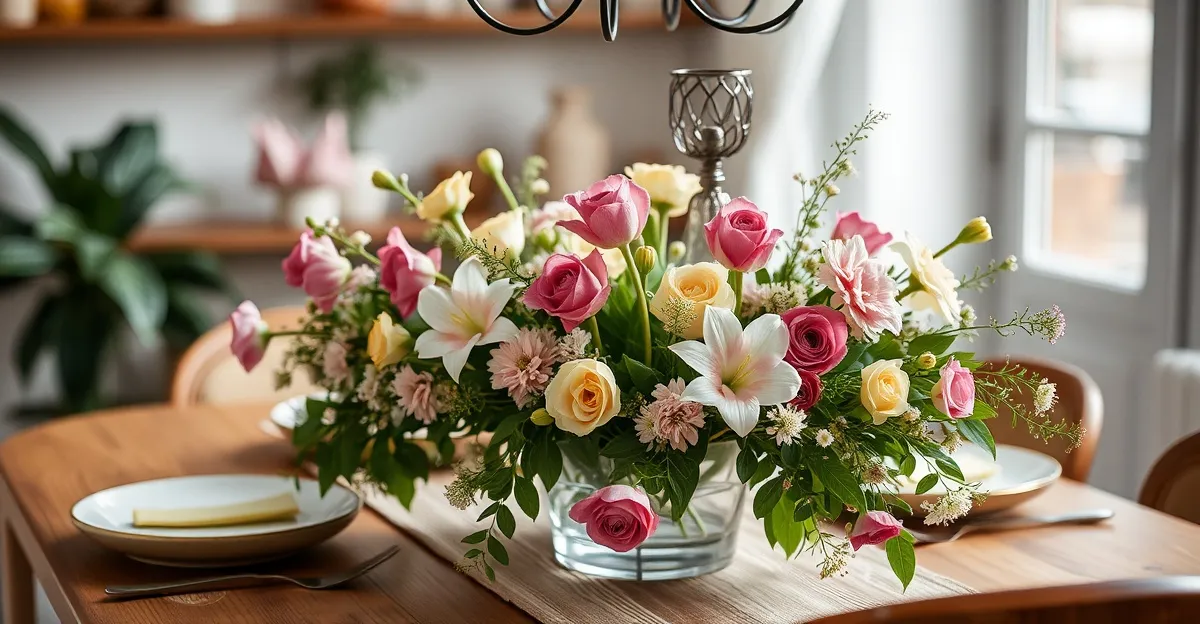
The most practical dining table shape. A wide bowl keeps the arrangement naturally low and allows an abundant spread of flowers across the table's visual centre without creating height.
What they work with: Loose, garden-style arrangements; floating flower heads; clustered short-stemmed flowers; combinations of blooms with leafy foliage tucked throughout.
Bali-specific options: Shallow stone bowls from Bali's stone carvers in Batubulan; wide terracotta bowls; hand-thrown wide ceramic bowls in matte white or earthy tones; large coconut shell bowls (distinctive and very Bali-specific).
Best arrangement style: Multiple flower varieties at similar heights. Chrysanthemum, roses, alstroemeria, and baby's breath packed moderately into a wide low ceramic.
Narrow-neck tall vases
For the dramatic high arrangement option. The narrow neck supports a small number of long-stemmed flowers at height — three or five stems of calla lily, anthurium, or birds of paradise — while the narrow profile at table level does not obstruct conversation.
What they work with: Long-stemmed, sculptural flowers that make a statement individually. Not suitable for dense, abundant arrangements.
Bali-specific options: Tall stone cylinders from craft workshops in Ubud area; black basalt columns; slender ceramic bottles; tall bamboo-wrapped cylinders.
Best arrangement style: Three white calla lilies. Five stems of white anthurium. Three orange birds of paradise. One dramatic variety, long-stemmed, in quantity.
Cluster of bud vases
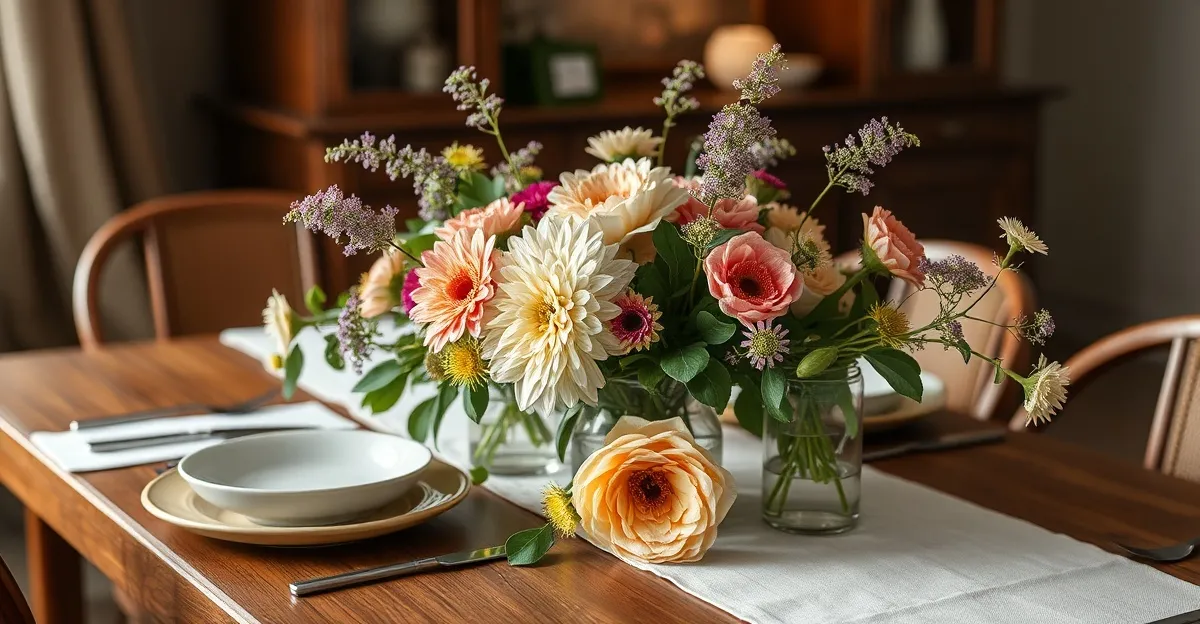
Three to seven small bud vases arranged along the table centre, each holding one or two stems. The cluster reads as a composition from across the room. At the dining table, the low profile of individual bud vases means no height problem.
What they work with: Any flower at shorter stem lengths. Mixed varieties across different vases. Interesting when some vases are slightly taller than others — creating a rhythm rather than a flat line.
Bali-specific options: Small terracotta bud vases from craft markets (sold in sets); small ceramic bottles; matching glass test-tube style vessels in a row; small coconut shell vessels.
Best arrangement style: One or two stems per vase, mix of varieties across the cluster. Alstroemeria in one, a spray carnation in another, a stem of eucalyptus in a third.
Single statement vessel
A single bowl, jug, or jar that is not technically a vase but functions as one. A ceramic jug with a loose bunch of garden roses. A coconut shell with tropical leaves and a flower tucked in. An old terracotta urn repurposed as a dining table centrepiece.
What it works with: Loose, casual arrangements. The "just picked from the garden" aesthetic. Works particularly well for informal dining occasions and al fresco meals.
Bali-specific options: Traditional Balinese ceramic jugs; hand-thrown stoneware pitchers from Ubud ceramicists; old coconut shells; stone basins.
Material: matching the vessel to the table
The dining table itself sets the design context for the centrepiece vessel.
Teak dining table: The warm brown-gold of teak is most flattered by terracotta, dark ceramic, and stone vessels. Clear glass also works because it does not compete with the wood grain. Avoid very light-coloured or very formal vessels — they contrast awkwardly with teak's organic warmth.
Stone dining table (granite, marble, volcanic stone): Stone vessels feel naturally appropriate — stone on stone has a cohesion. Dark ceramics and metal also work. The formality of stone tables suits more considered vessel choices rather than terracotta or casual jug arrangements.
White or pale-painted table: Any colour vessel works. This is the most neutral surface for vessel selection. White ceramic vases blend; dark ceramics create contrast; terracotta adds warmth.
Woven or bamboo table: Natural fibre surfaces call for natural material vessels — rattan-wrapped, coconut, bamboo, terracotta. These surfaces are typically informal and outdoor; match the vessel to that quality.
Glass table: Stone or dark ceramic provides the most interesting contrast. Clear glass vessels on a glass table are elegant but can look like the vessel disappears. Coloured glass with a glass table requires careful colour coordination.
Scale considerations for Bali dining tables
Bali villa and home dining tables come in a wider range of sizes than most markets:
Small indoor dining table (seats 4): A single arrangement in a wide low vessel, 20–25 cm total height. Or a cluster of three small bud vases. Do not overpower a small table with a large centrepiece.
Standard dining table (seats 6–8): A generous low arrangement in a wide bowl, or the narrow-neck tall vase option. A table runner of three vessels works well for 8-seater tables.
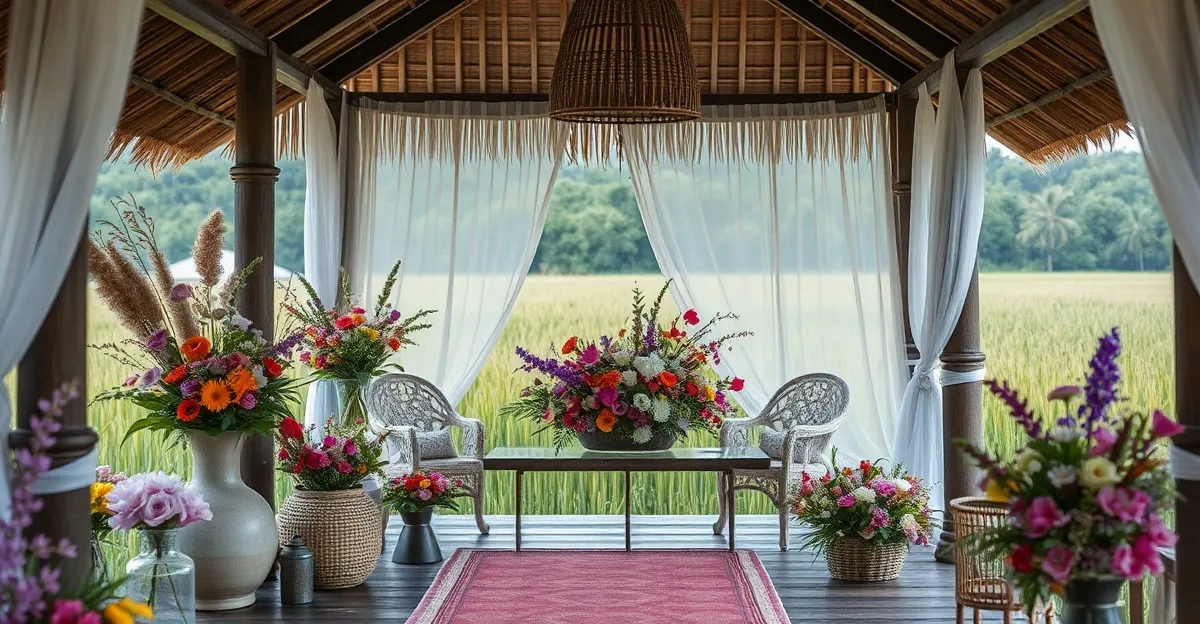
Long outdoor pavilion table (seats 10+): A runner arrangement is almost always more appropriate than a single centrepiece. Three to five vessels spaced along the table centre, each holding a compact arrangement. The alternative is a single very large statement piece at the centre.
Low table (traditional Japanese or Balinese-style seating): The height dynamic changes completely — seated on cushions at a low table, the eye level when seated is approximately 80–90 cm above the floor, and the table surface is approximately 40 cm high. Arrangements can be taller — 35–45 cm — without blocking sightlines. Wide, abundant arrangements look natural and generous at this table height.

The team
your florists
weekly subscription · Bali
We write about flowers because we love them. We deliver them because someone should — properly, weekly, across Bali.
— heyflowerPay once for 3, 6, or 12 months, no auto-renewal.
Where to find dining table vases in Bali
For terracotta and local pottery: The villages around Pejaten in Tabanan are the centre of Bali's terracotta tradition. Wider clay pots in flat-bottomed forms ideal for dining tables are available at very accessible prices. Plan a half-day trip to browse; bring cash.
For hand-thrown ceramics: Ceramic studios around Ubud and Mas produce excellent dining table vessels. The work ranges from functional to gallery quality. Visiting studios in person is the best approach — you can see the specific piece and its quality directly.
For stone: Batubulan village, south of Ubud on the main road, has dozens of stone carving workshops. Low stone bowls, basalt cylinders, and stone urns are all available. Heavy to transport but extraordinarily durable.
For design-forward contemporary pieces: The design stores of Seminyak and Canggu — particularly along Jalan Kayu Aya and the Berawa strip — stock curated collections of locally made ceramics and some imported vessels. Higher price points, but reliable quality and curation.
For the unusual and one-of-a-kind: Ubud's antique and vintage stores along Jalan Raya Ubud sometimes carry beautiful old ceramic pieces, stone objects, and unusual vessels that work as extraordinary dining table centrepieces. Nothing is mass-produced; each piece is specific.
FAQ
What is the maximum practical height for a dining table arrangement? 30 cm or 70+ cm. Anything between these heights creates a sightline problem for seated guests. For most practical purposes, stay under 30 cm total arrangement height.
Can I use a standard flower vase for a dining table? Yes, if the total arrangement height (vase plus flowers) stays under 30 cm, or if the vase is tall enough to push the flowers above the seated eye line (70+ cm total). Standard medium-height vases (20–35 cm) typically create a problematic height range — the arrangement ends up in exactly the sightline-blocking zone.
How do I stabilise a vase on an outdoor Bali dining table? Weight the base with clean pebbles or small stones before adding water and flowers. Choose a vase with a wide, stable base rather than a pedestal or narrow base design. In very exposed outdoor settings, a low wide bowl is more stable than any tall vessel.
Is it worth having multiple dining table vases for different occasions? Yes — a low wide bowl for everyday and casual meals; a dramatic tall narrow vase for formal dinners; a cluster of bud vases for relaxed family meals. Three vessels covers most dining occasions and can all be sourced very affordably from Bali's craft markets.
Should the dining table vase match the vases in other rooms? Not necessarily, but a shared material language (all ceramic, or all terracotta, or all natural materials) creates a coherent interior even when the vessels are different in form. A mixed material approach — stone in the entrance, ceramic on the dining table, glass in the bedroom — works too but requires more deliberate thought.
The right vessel for the occasion
A dining table vase is not a permanent choice frozen in place. The best approach is a small collection of vessels that rotate with the occasion, the season, and the flowers available. A terracotta bowl for weekday meals, a stone cylinder for dinner parties, a cluster of ceramic bud vases for a celebration lunch — the right vessel for the right moment makes every meal at the table feel slightly more considered, which is exactly what the best dining table flowers should do.
Ready to bring fresh flowers to your Bali home or event? Explore our weekly flower subscription and get handpicked blooms delivered to your door every week.
More on dining table