Pairing Ranunculus with Other Blooms: A Florist's Guide
A Bali florist's guide to pairing ranunculus with other flowers — the combinations that work, the contrasts that sing, and how to build a cohesive arrangement.
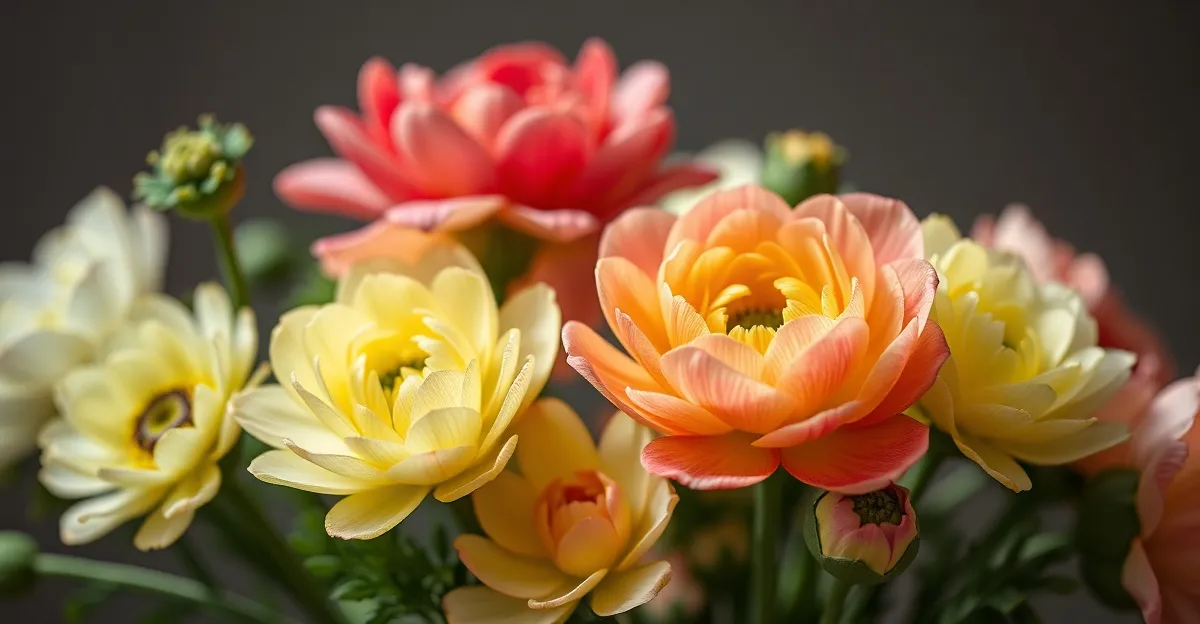
Ranunculus is extraordinary on its own — those layered, concentric petals create a focal point that almost nothing in the flower world can match. But a skilled florist knows that ranunculus becomes something even more remarkable when paired thoughtfully with the right companions. The goal is to let ranunculus be the star while building an arrangement around it that adds depth, texture, movement, and narrative.
In our Canggu studio, we work with ranunculus in mixed arrangements ranging from intimate hand-tied bouquets to large event installations. Here's what we've learned about what works beautifully alongside these extraordinary flowers.
Understanding Ranunculus as a Design Element
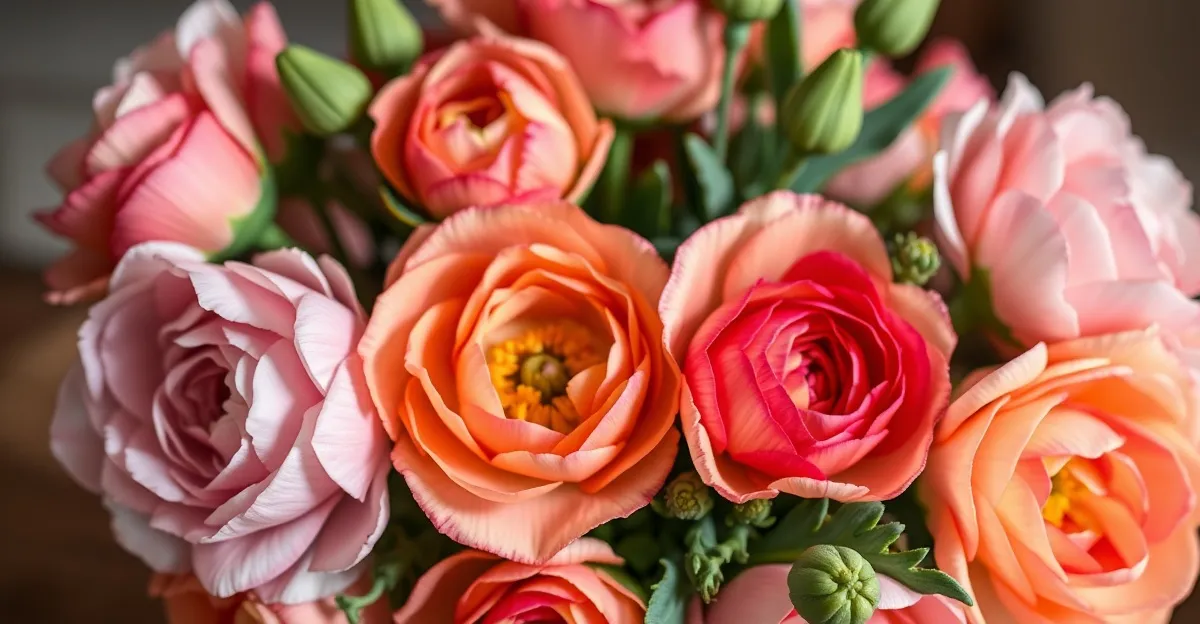
Before we discuss pairings, it helps to understand what role ranunculus plays in an arrangement. With its perfectly circular, multi-layered form and available palette spanning from deep burgundy through every pink, coral, yellow, and white, ranunculus almost always functions as a focal flower.
Its round shape creates a sense of completeness and fullness. It works at a medium scale — not as large and statement-making as bird of paradise or heliconia, but significantly larger than most filler flowers. This makes it versatile: it can anchor a bouquet as the primary focal point or serve as a secondary focal element alongside a larger hero bloom.
The Best Supporting Flowers for Ranunculus
Lisianthus
This is one of the most natural partners for ranunculus. Both flowers have multi-layered, ruffled petals and share a slightly romantic, garden-party quality. The difference in scale — ranunculus's perfectly round, full dome versus lisianthus's more loosely ruffled cup — creates exactly the kind of visual rhythm that makes an arrangement feel alive rather than repetitive.
Colour pairing: White lisianthus with coral or pink ranunculus; purple lisianthus with white or blush ranunculus.
Sweet Peas
Sweet peas bring something ranunculus fundamentally lacks: delicate, wispy movement. The trailing tendrils and softly ruffled petals create airiness around ranunculus's structured density. This contrast — heavy and round versus light and loose — is one of the most classic pairings in romantic floristry.
In Bali, sweet peas are available seasonally as imported blooms and are worth seeking out specifically for arrangements where you want an airy, romantic quality.
Colour pairing: Pink or lavender sweet peas with blush or white ranunculus; coral sweet peas with peach ranunculus.
Roses
Ranunculus and roses are the foundational pairing of romantic European floristry, and there's good reason for that. Both flowers are layered and petal-dense, but their different geometries create contrast: ranunculus's concentric circles versus the spiral unfolding of a rose. Mixed together, they create arrangements that feel lush, luxurious, and deeply romantic.
In Bali, garden roses are available as imported blooms and make a statement in mixed arrangements. For more local sourcing, Indonesian-grown roses from highland Java complement ranunculus beautifully.
Colour pairing: Garden roses in cream or blush with red or coral ranunculus; white roses with pink ranunculus; peach roses with white ranunculus.
Peonies
When peonies are in season, pairing them with ranunculus creates one of the most spectacular and covetable arrangements in all of floristry. Both flowers share the layered, dense petal quality that makes each individually extraordinary, but their size difference — peonies are typically significantly larger — creates a beautiful hierarchy in the arrangement.
Note that peonies are seasonal and relatively expensive in Bali due to import requirements. When they're available, they're worth the investment for significant occasions.
Colour pairing: Pink peonies with white ranunculus; white peonies with deep pink or coral ranunculus.
Filler Flowers That Complement Ranunculus
Baby's Breath (Gypsophila)
The original complementary filler and still one of the best. Baby's breath's cloud-like clusters of tiny white flowers create airy lightness that prevents ranunculus from looking heavy. This is particularly important in hand-tied bouquets where the density of ranunculus blooms can make an arrangement feel compact.
For a more contemporary look, use baby's breath sparingly and structurally rather than as a generalist filler throughout the arrangement.
Wax Flower
Wax flower (Chamelaucium) is a small-flowered Australian native that has become popular in international floristry for its textural quality and range of colours from white through pink to deep burgundy. Its tiny star-shaped flowers create excellent contrast with ranunculus's large, layered blooms.
Wax flower is available in Bali through well-stocked florists and works particularly well in arrangements where you want texture without adding large competing focal flowers.
Thistle and Scabiosa
For more editorial, contemporary arrangements, small-headed flowers like scabiosa (pincushion flower) and soft thistle varieties create sculptural contrast to ranunculus. The spiky, sphere-like quality of these flowers plays beautifully against ranunculus's smooth, layered rounds.
Muscari (Grape Hyacinth)
When available in Bali (primarily as imported seasonal blooms), muscari's tiny grape-like clusters of deep purple-blue create a stunning colour contrast alongside soft pink or white ranunculus.
Foliage Pairings That Elevate Ranunculus
Eucalyptus
Silver dollar eucalyptus is the most universally effective foliage pairing for ranunculus. The rounded, grey-green leaves echo the circular geometry of ranunculus blooms while providing muted contrast to the flowers' saturated colours. The slight silver cast of eucalyptus foliage creates a sophisticated, contemporary look.
Seeded eucalyptus adds textural interest alongside its soft grey-green colour. For a more rustic or boho feel, gum leaves from various eucalyptus varieties work well.
Italian Ruscus
Dark, glossy ruscus provides architectural structure and creates visual depth in arrangements. Its small oval leaves on branching stems create a grid-like structure that supports other flowers while providing clean contrast to ranunculus's soft, ruffled character.
Soft-Textured Tropical Foliage
For arrangements that want to acknowledge Bali's tropical setting without losing ranunculus's romantic European character, soft tropical foliage choices include:
- Asparagus fern: Light and feathery, creates delicacy around heavier ranunculus blooms
- Maidenhair fern: Tiny, rounded leaflets on delicate stems, creates an almost Victorian botanical quality
- Pittosporum: Dark green, compact leaves with a slightly formal quality that pairs well with ranunculus's elegance
Pairing by Arrangement Style
Romantic Garden-Style Bouquet
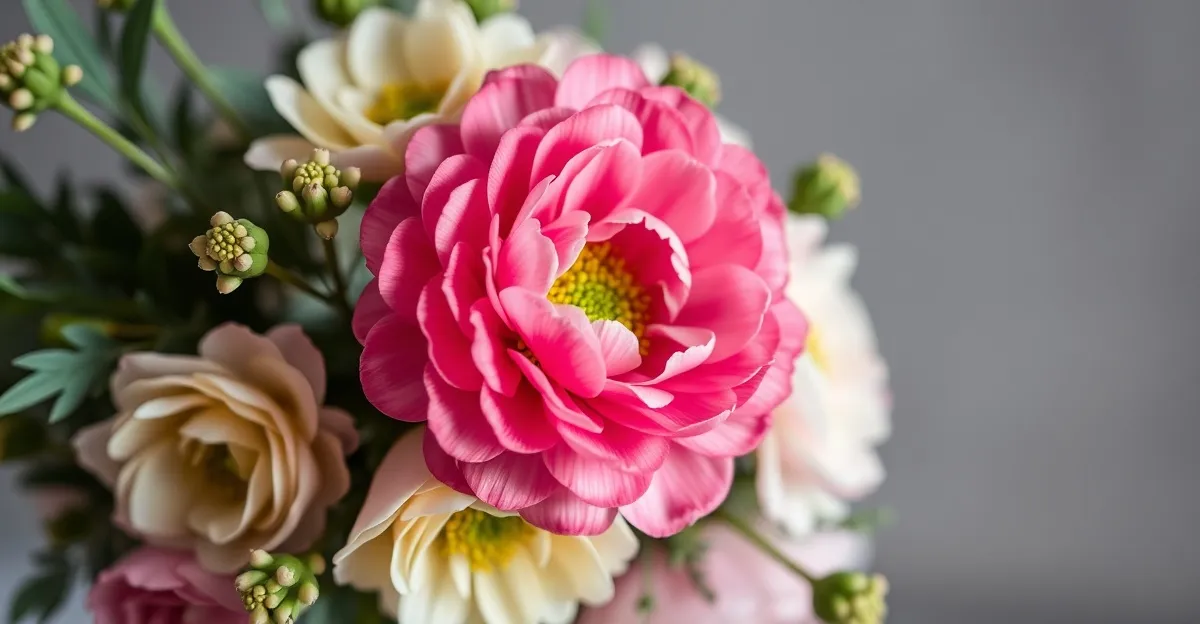
For a loose, garden-gathered aesthetic: ranunculus + sweet peas + lisianthus + eucalyptus + scattered wax flower. This creates a bouquet that looks as though it was gathered from a beautiful garden, with plenty of movement and a soft romantic palette.
Structured Premium Bouquet
For a tighter, more structured arrangement: ranunculus + garden roses + ruscus + baby's breath. The geometry is more deliberate, the colours cleaner, the overall effect more formally luxurious.
Contemporary Tropical Arrangement
For a look that feels specifically Balinese: ranunculus (white or coral) + white dendrobium orchids + tropical foliage (asparagus fern, soft monstera leaves) + frangipani. This bridges ranunculus's Western origins with Bali's tropical character in a way that feels intentional rather than forced.
Wildflower-Inspired Design
For an informal, joyful arrangement: ranunculus + anemones + muscari + small daisy varieties + mixed greenery. This style works particularly well for birthdays and casual celebrations.

The team
your florists
weekly subscription · Bali
We write about flowers because we love them. We deliver them because someone should — properly, weekly, across Bali.
— heyflowerPay once for 3, 6, or 12 months, no auto-renewal.
Colour Palette Thinking with Ranunculus
The colour of your ranunculus largely determines which companions work best. Some notes on palette building:
Warm palettes (red, coral, peach, orange ranunculus): Pair with cream, peach roses, wax flower in pink or white, eucalyptus. Avoid blue or purple companions which can feel jarring.
Soft romantic palettes (blush, pale pink ranunculus): Pair with white and cream companions, silver foliage, lavender wax flower. This is the classic wedding palette.
Cool sophisticated palettes (burgundy, deep wine ranunculus): Pair with dusty rose, cream, grey-green eucalyptus, deep ruscus. Avoid yellow or orange which clash with the sophistication.
Fresh palettes (yellow, white ranunculus): Pair with bright green foliage, white companions, occasional touches of blue or purple. The most spring-like arrangements come from this starting point.
For broader colour palette inspiration for Bali events and floristry, our guide to pastel wedding palette ideas for Bali shows how these principles apply in practice.
Frequently Asked Questions
What single flower pairs best with ranunculus for a minimal, elegant arrangement?
Eucalyptus alone with ranunculus creates a beautiful, elegant minimal arrangement. If you want a second flower rather than just foliage, a single stem of lisianthus or garden rose alongside three to five ranunculus blooms in a simple vase creates understated luxury.
Can ranunculus be paired with tropical flowers in Bali?
Yes, with thoughtfulness. White orchids and white ranunculus together bridge the tropical and the romantic beautifully. The key is choosing tropical flowers with a similarly refined quality rather than very bold tropical statement flowers (like bird of paradise or large heliconia), which can overwhelm ranunculus in scale and character.
Should ranunculus be the only focal flower in an arrangement?
Not necessarily — but if you're using multiple focal flowers, choose them at different scales (ranunculus at medium scale, peonies at large, anemones at small) rather than multiple flowers of the same size competing for attention.
How many ranunculus stems make a proper bouquet?
Three to five ranunculus stems create a visible focal presence in a hand-tied bouquet. Seven to ten stems create a more abundant arrangement. For event centrepieces, anywhere from ten to twenty stems depending on the arrangement scale. Ranunculus at full bloom is quite generous in size, so fewer stems than you might expect creates good visual impact.
Do ranunculus petals fall easily when combined with other flowers?
Ranunculus petals do shed over time, particularly as the flower reaches the end of its vase life. In mixed arrangements, the petals add to the display rather than detracting from it — they fall softly around the vase base. This is simply part of ranunculus's natural cycle rather than a flaw.
Let the Pairings Tell the Story
The art of pairing ranunculus with other flowers is ultimately about creating a composition that's more than the sum of its parts — where each flower makes the others more beautiful by contrast and complementarity. Whether you're building a romantic bridal bouquet, a joyful birthday arrangement, or a refined centrepiece for a Bali event, ranunculus gives you an extraordinary starting point.
At heyflower.co, we arrange ranunculus with the care and botanical knowledge that these extraordinary flowers deserve. Browse our seasonal collections or explore our flower subscriptions for regularly delivered arrangements that showcase the best of what's blooming in Bali each week. You might also enjoy our guide to birthday flower delivery in Pererenan for more inspiration on celebrating beautifully.
More on Ranunculus