Pairing ginger flower with other blooms: a florist's guide
Ginger flowers are striking on their own, but the right companion blooms unlock their full potential. Here's how to pair them well in Bali arrangements.
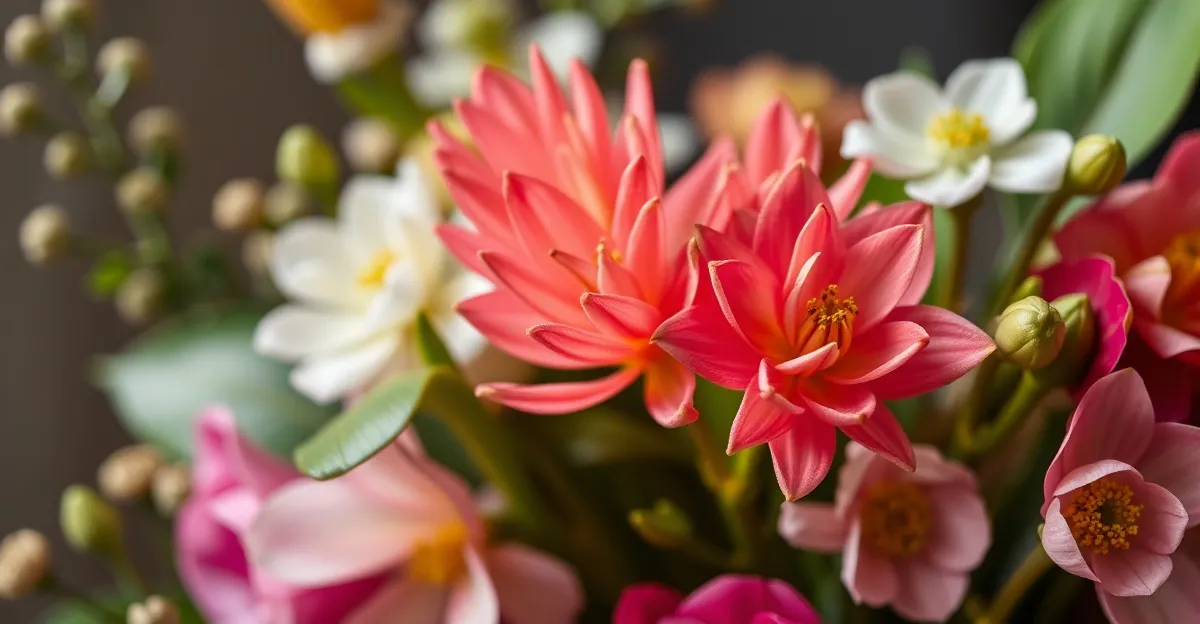
Torch ginger (Etlingera elatior) is one of the most architecturally impressive flowers in tropical floristry. The deep red or pink heads, mounted on two-metre stems, have a sculptural quality that most flowers simply can't match. But ginger flowers can also be challenging to work with — their scale and intensity mean that pairing choices matter more than with smaller, gentler blooms.
Get the combination right and a ginger flower arrangement looks genuinely extraordinary. Get it wrong and the whole thing can feel unbalanced or visually noisy. Here's how to think about it.
Understanding Ginger Flower's Visual Character
Before choosing companions, understand what torch ginger actually brings to an arrangement. The flower head is dense and geometric — a tightly packed spiral of waxy bracts (the "petals" are actually modified leaves) that form a pinecone-like structure. The color saturates the eye: deep coral-red in the most common variety, soft bubblegum pink in the rarer pale form, white-tipped in some cultivars.
The stem is the other factor. Torch ginger grows on separate stems from the foliage plant, and those stems are tall, straight, and smooth. In an arrangement, you're often working with the stem as much as the flower — it provides vertical structure that most other tropical flowers don't.
Given this, good companion flowers either:
- Contrast the form (soft, loose, or feathery textures against the ginger's density)
- Complement the color (flowers that pick up the coral, pink, or red without competing with it)
- Add scale variation (smaller blooms that create visual rhythm alongside the large ginger head)
Tropical Companions That Work
Heliconia: The most natural pairing. Both are tropical heliconias from the same family (Zingiberales order), and they share a visual vocabulary: bold forms, strong colors, structural stems. Heliconia pendula (the hanging lobster claw) with red ginger creates a statement arrangement that feels completely of-place in Bali. Use heliconia as a secondary element, not an equal — the sizes vary enough that you need to make a clear hierarchy.
Bird of paradise (Strelitzia reginae): The orange and blue of bird of paradise is a bold pairing with red ginger, but it works because the bird of paradise's geometric quality matches the ginger's. Avoid the combination if you want something soft or romantic — this is maximalist tropical. For a Bali villa entrance or resort lobby, it's extraordinary.
Anthurium: The smooth, heart-shaped anthurium spathe in white or cream offers genuine relief from the intensity of red ginger. A few anthurium heads at a lower height in the same arrangement soften the composition without competing. Red anthurium with red ginger is too much of one thing — keep it light or cream.
White dendrobium orchid sprays: This is the most versatile pairing. Orchid sprays are small, delicate, and white or pale — they create negative space and lightness that balances the weight of ginger. Fill the mid-height of an arrangement with dendrobium while ginger provides the height, and the result is both tropical and refined.
Tropical greenery: Never underestimate what foliage does for torch ginger. Monstera leaves, especially the fenestrated large-leaf variety, provide a bold organic backdrop that frames the ginger head. Bird's nest fern and aspidistra are excellent lower fillers. Avoid fine, wispy greenery like asparagus fern — it gets visually lost and looks fussy against the ginger's boldness.
Color Palettes and What Works
Coral-red ginger with white companions: The safest and most elegant palette for Bali settings. White anthurium, white orchids, and cream heliconia against the coral of the ginger creates a clean, tropical-luxury feel. Good for resort receptions, villa dining tables, spa relaxation areas.
Pink ginger with yellow accents: The pale pink form of torch ginger pairs well with yellow oncidium orchids or yellow alstroemeria. This is a more joyful combination, suited to celebrations and welcome arrangements. The yellow-pink combination reads warm and optimistic rather than formal.
Red ginger with deep purple: Vanda orchids in deep purple alongside red ginger create something dramatic and rich. This is a statement palette for evening events, wedding receptions, or restaurant arrangements where you want bold impact. Not subtle, but genuinely impressive.
Mixing ginger colors: Red and pink torch ginger in the same arrangement can work if one clearly dominates. But avoid treating them as equals — pick a hero color and let the other play a supporting role.
For a broader sense of what colors each ginger variety brings and what those colors signal symbolically, see the guide to ginger flower colors and what each one symbolises.
What Not to Pair With Ginger Flower
Other large-headed tropical flowers as equals: Ginger flower and protea at equal scale in the same arrangement fight for dominance and neither wins. Similarly, Anthuriums at the same height and scale as ginger creates a confused visual hierarchy. There needs to be a clear lead flower.
Delicate cottage-garden flowers: Ginger flower will overwhelm sweet peas, lisianthus, or ranunculus. These flowers belong in a different register — pairing them creates a composition that looks unresolved, as if two different arrangements were combined.
Baby's breath in large quantities: The fine, airy quality of gypsophila can work as a small accent with tropical flowers, but in large amounts it just looks incongruous alongside something as bold as torch ginger. A small handful to add texture is acceptable; a cloud of it is not.
Busy mixed arrangements: Ginger flower demands some breathing room. Arrangements with 10 or 12 different flower types tend to diminish the ginger's impact rather than enhance it. Simpler is better — three or four elements, each with a clear role.

The team
your florists
weekly subscription · Bali
We write about flowers because we love them. We deliver them because someone should — properly, weekly, across Bali.
— heyflowerPay once for 3, 6, or 12 months, no auto-renewal.
Practical Notes for Bali Florists and DIY Arrangers
Torch ginger is available year-round in Bali — it grows at lower and mid elevations across the island and is cultivated extensively in the east (Karangasem regency) and north (near Singaraja). The wet season (roughly November–April) tends to bring the freshest stems as growth accelerates with rain. During dry season, the stems are equally good but the flower heads may be slightly smaller.
When conditioning ginger flower for arrangements, cut the stem at an angle and place in deep water for at least four hours before arranging. The stems absorb water slowly, so they benefit from longer conditioning than most flowers. At room temperature in Bali (26–32°C), expect torch ginger to last 7–10 days in an arrangement with clean water changed every two days.
For larger event styling — weddings, villa setup, spa launch — it's worth knowing how torch ginger performs at scale. Its value in wedding contexts specifically is covered in detail in ginger flower in wedding bouquets: ideas, meanings, and pairings.
FAQ
Can ginger flower be used in a hand-tied bouquet? The standard torch ginger stem is too tall and heavy for most hand-tied bouquets. However, smaller cultivars exist (sometimes called "lesser ginger") with shorter stems and smaller heads that work well in hand-tied compositions. The full torch ginger is better suited to vase arrangements and statement displays.
Does torch ginger work with roses? An interesting pairing. Garden roses in deep red or coral can complement red torch ginger if the arrangement has enough space and supporting foliage. Pale pink spray roses with pink torch ginger works beautifully. White roses are perhaps the most universally compatible partner — they provide classic elegance against the tropical exoticism of the ginger.
How many ginger stems should I use per arrangement? For most home vase arrangements: one or two stems maximum. The flower head is large enough that three in a single vase can look cluttered. For larger venue or event arrangements, three to five stems provides impact while maintaining visual clarity.
Where can I buy torch ginger stems in Bali? The flower markets in Denpasar (Pasar Burung Satria and the flower market near Jalan Gajah Mada) carry torch ginger regularly. Bedugul market (up in the highlands) has more highland flowers but less tropical material. Ordering from a dedicated flower delivery service is the most reliable option for quality and consistency.
Is ginger flower used in traditional Balinese ceremony? Torch ginger is not a primary ceremony flower in the way frangipani or marigold are, but it appears in large offerings and festival decorations, particularly in the regencies where it grows abundantly. Its large size makes it useful for ceremonial gateway decorations (penjor-style arrangements) during Galungan.
Torch ginger rewards a confident approach. Choose strong, simple companions, give the stems room to breathe, and let the flower do what it does best: anchor a composition and give it unmistakeable tropical identity.
Ready to bring fresh flowers to your Bali home or event? Explore our weekly flower subscription and get handpicked blooms delivered to your door every week.
More on Ginger flower