Melasti ceremony: flowers carried to the sea
Discover the flowers used in Melasti, the pre-Nyepi purification ceremony where Balinese Hindus carry sacred objects and offerings to the sea for cleansing.
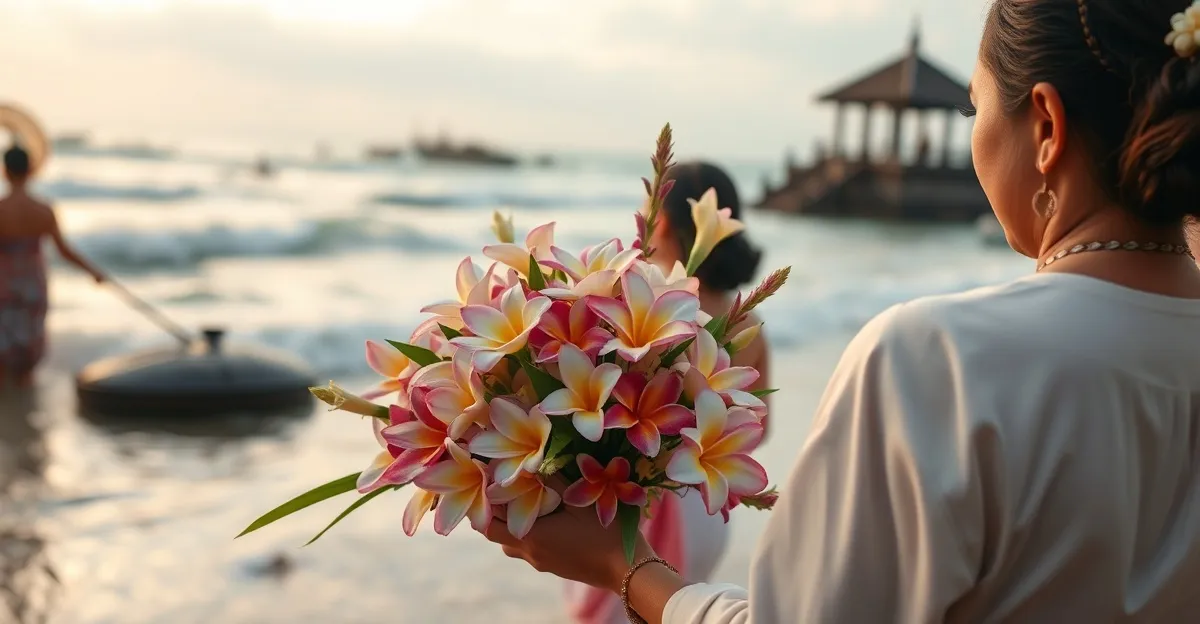
Three or four days before Nyepi, Bali's Day of Silence, something extraordinary happens on the island's beaches. Thousands of people converge on the coast in procession — gamelan ensembles playing, priests chanting, and long columns of devotees in white and yellow traditional dress carrying the sacred objects of their temples down to the sea. Among those objects and offerings: enormous quantities of fresh flowers.
Melasti is the ritual that precedes Nyepi, and it is one of the most visually and spiritually powerful ceremonies in the Balinese calendar. Understanding its flower use gives you insight into what the sea means to Balinese spirituality.
The purpose of Melasti
Melasti (also written Melis or Mekiyis) is a purification ceremony. The word relates to "lasti" — to cleanse, to restore. Before the Saka New Year (Nyepi), all spiritual impurities accumulated during the year must be washed away. The sea — especially the open ocean rather than calm lagoons — is considered the most powerful purifier available in nature.
The ceremony involves carrying a temple's sacred objects (pratima, rangda masks, barong costumes) along with community offerings to the sea or to a large lake or river if the sea is inaccessible. The sacred items are ritually purified in the water while prayers are conducted on the beach.
In coastal villages, the procession might walk directly to their own beach. In inland areas — Ubud, Tegallalang, the highland villages of Kintamani — long processions make the journey to the nearest sacred water source, sometimes travelling for hours.
Flowers in the Melasti procession
The flowers used in Melasti are carried, worn, arranged into offerings, and sometimes released into the sea. Several types feature prominently:
Marigold (gumitir): Strings of yellow-orange marigold are perhaps the most visually dominant flower at Melasti. They are draped over sacred objects being carried, woven into the bamboo structures supporting offerings, and worn as garlands by participants.
White frangipani (jepun putih): White frangipani flowers are placed at the crown of offering towers and in the hair of women participating in the procession. Their white colour symbolises purity — appropriate for a purification ceremony.
Hibiscus (pucuk): Red hibiscus appears in the directional offerings carried to the sea. It's associated with Brahma and the transformative, southern energy — fitting for a ceremony about transformation and release.
Kenanga and fragrant flowers: Strongly scented flowers feature more heavily than usual at Melasti. The belief is that the fragrance carries prayers upward and announces the ceremony to the divine.
Lotus (padma): At particularly elaborate Melasti ceremonies, lotus flowers appear in the highest-tier offerings. Lotus is associated with spiritual purity — the clean flower rising from muddy water — making it cosmologically perfect for Melasti.
The visual spectacle: what you actually see
If you attend a Melasti ceremony on a beach in Bali — Kuta, Sanur, Soka in Tabanan, Lebih beach in Gianyar, or the dramatic cliff-edge temple ceremonies at Tanah Lot — what strikes you is the scale of the flower use.
Each village or banjar (neighbourhood community) brings its own complete set of offerings, and these are assembled on the beach for collective prayer before the purification. The beach becomes a field of colour: yellow marigold strings stretching for hundreds of metres, white frangipani against the dark sand, red hibiscus in offering baskets, green palm-leaf structures with flower inlays.
The priests conducting the ceremony sprinkle holy water (tirtha) infused with flowers — particularly frangipani and fragrant herbs — over the sacred objects and the devotees. Some offerings and flowers are released into the waves at the ceremony's end.
Flowers released to the sea
One of the most moving parts of Melasti is the moment when certain flower offerings are carried into the water or released to float out to sea. This act is called nganyud — to let go, to release to the current. The sea carries these offerings, and by extension the impurities they've symbolically absorbed, away from the community.
The flowers chosen for nganyud are usually complete canang sari or assembled petal arrangements, not just loose blooms. The visual of white frangipani petals on the waves as the sun sets over Bali's western coast is one of those images that stays with you.
In recent years, environmental consciousness has led some communities to use biodegradable offerings exclusively for the ocean release portion of Melasti — emphasising natural flowers and avoiding plastic-backed components.
Flower supply before Melasti
From a practical standpoint, the days immediately before Melasti see a surge in flower demand across Bali that rivals Galungan. Every family participating in their village procession needs flowers; every temple needs decoration; the scale of the offering towers assembled on the beach requires enormous quantities.
Flower prices in markets like Pasar Badung, Pasar Ubud, and the smaller village markets can rise 40–60% in the three days before Melasti. Marigold and white frangipani are the most affected. Vendors come from as far as the flower-growing highlands of Bedugul to supply the coastal markets.
Can marigold grow in Bali? A florist's perspective has background on why marigold supply can tighten so sharply around major ceremonies.

The team
your florists
weekly subscription · Bali
We write about flowers because we love them. We deliver them because someone should — properly, weekly, across Bali.
— heyflowerPay once for 3, 6, or 12 months, no auto-renewal.
Melasti in different parts of Bali
Melasti ceremonies have distinct regional characters:
- Tanah Lot, Tabanan: The clifftop temple situation means the procession navigates steep paths; offerings are compact and tightly wrapped.
- Lebih beach, Gianyar: Considered one of the spiritually most potent ocean Melasti sites because of the beach's connection to the holy Petanu River.
- Sanur, Denpasar: Long, flat beach accommodates enormous processions from Denpasar's urban neighbourhoods; very large offerings.
- Nusa Dua / Jimbaran: Calmer water, but beach access allows particularly large official ceremonies attended by regional officials.
Balinese temple flower etiquette for visitors explains how to attend Melasti and other major ceremonies respectfully.
FAQ
When does Melasti happen each year? Melasti occurs three to four days before Nyepi (the Balinese Day of Silence), which falls on the new moon of the tenth Saka month. The exact date shifts each Gregorian year — check a Balinese calendar for the annual date.
Can tourists attend Melasti ceremonies? Yes, most Melasti ceremonies on public beaches are open to respectful observers. Dress in white traditional dress (sarong and sash at minimum), stay on the outer edges, and avoid interfering with the procession or offering areas. Photography is generally accepted but ask permission before photographing individuals closely.
Why is the sea chosen for this purification ceremony? The sea (segara) in Balinese Hinduism is the realm of transition and dissolution — it takes away what is finished and purifies what will continue. Mountains represent the divine (sacred, pure), the sea absorbs the earthly and transforms it. This vertical cosmology (mountains-earth-sea) underlies much of Balinese spiritual geography.
Are all the flowers consumed by the sea, or are some kept? Most offerings carried in procession are kept and returned to the temple after the water blessing. Only the specific nganyud (release) offerings are given to the sea. Sacred objects like pratima are never placed in salt water.
What should I wear and bring to a Melasti ceremony? White or light-coloured traditional dress. Women: white kebaya, sarong, sash. Men: white shirt, sarong, udeng headband if possible. A small canang sari or a bundle of white frangipani as an offering is appreciated if you wish to participate in the spiritual aspect rather than just observe.
Ready to bring fresh flowers to your Bali home or event? Explore our weekly flower subscription and get handpicked blooms delivered to your door every week.



