Low-maintenance flower setups for a bedside table
Simple, long-lasting flower ideas for your Bali bedside table — blooms that survive humidity, need minimal fuss, and still look beautiful.
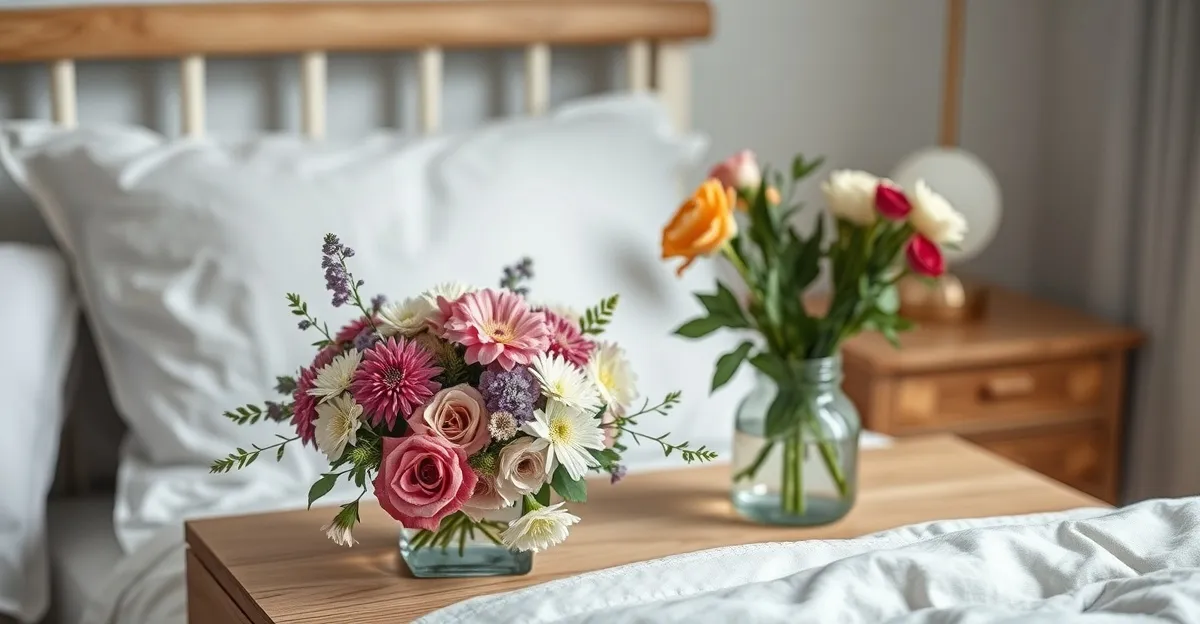
The case for flowers at the bedside
There's something genuinely restorative about waking up to flowers. It doesn't need to be a dramatic arrangement — a single orchid spike or three garden roses in a small ceramic pot is enough to shift the tone of a room. In Bali, where most homes and villas already have beautiful natural materials and open-air design, adding fresh flowers to the bedside table feels like a natural extension of the space.
The obstacle for most people isn't desire — it's maintenance. Nobody wants to deal with wilted stems and slimy water at the end of a long day. The good news is that with the right flower choices and a simple setup, your bedside arrangement can look good for five to ten days with almost no effort. The key is choosing blooms that genuinely suit Bali's warm, humid conditions rather than fighting against them.
Flowers that last well in a bedroom environment
Not every flower is suited to the bedside. Cut roses from a cool florist refrigerator can wilt in 48 hours when placed in a warm, enclosed room — and in Bali, even with air conditioning, bedrooms often retain heat overnight when the unit is turned down or off.
Tropical orchids (Dendrobium and Phalaenopsis): These are the easiest bedside flower in Bali. Dendrobium sprays last 10–14 days with a water change every two days. Phalaenopsis spikes can last even longer if kept away from direct sunlight. They're widely grown across the island and available at most flower markets for IDR 15,000–40,000 per stem.
Anthurium: Waxy and architectural, anthuriums hold up exceptionally well in humidity. A single stem in a slim vase beside the bed can look striking for up to two weeks. The glossy red or white spathes don't lose their colour even as the water warms.
Birds of paradise (Strelitzia): These are perhaps overdramatic as a bedside flower, but one stem in a tall slim vase next to a wooden headboard looks genuinely beautiful. They last 10–12 days and require almost no attention.
Chrysanthemums: Underrated in home arrangements, mums last incredibly well — up to two weeks in the right conditions. The smaller pompom varieties work well in a bedside setup and are available cheaply at the Badung market in Denpasar.
Tropical ginger: Torch ginger and red ginger are bold choices that feel distinctly Balinese. They last 7–10 days and the structural quality means they look good even as they dry down slightly.
Simple setups that require minimal effort
The lowest-maintenance bedside arrangement is often a single flower type in a simple vase — not because it's lazy, but because a monobotanical display is easier to care for (you're replacing all stems at the same time) and often more visually refined.
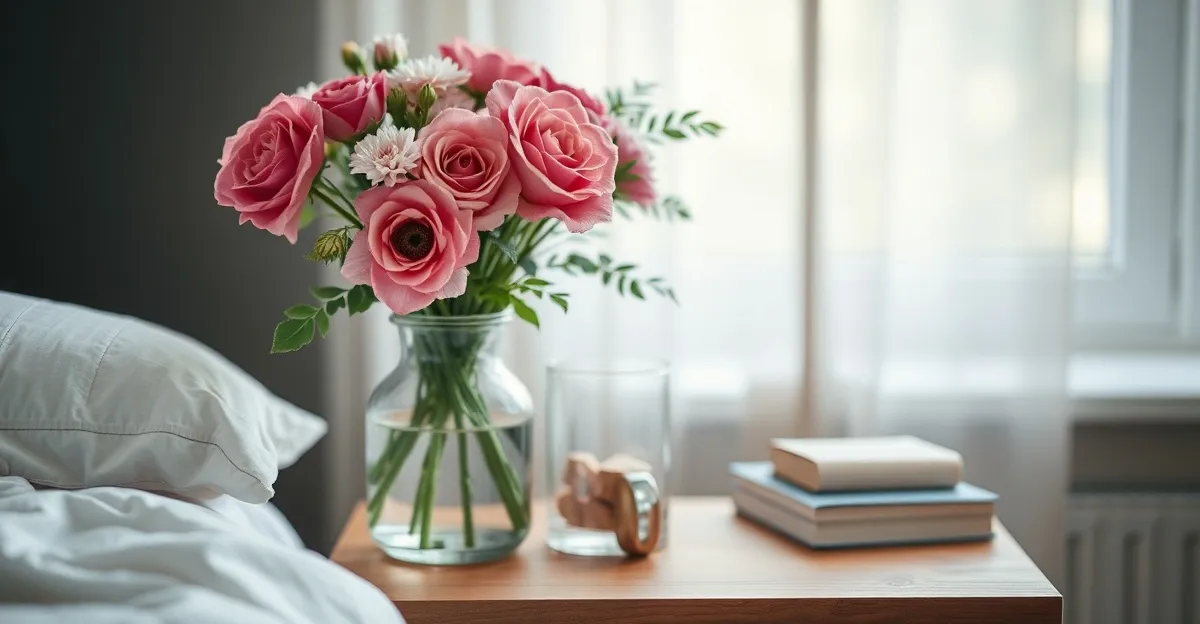
The single-stem setup: One Phalaenopsis orchid spike in a narrow ceramic bud vase. Change the water every three days. Replace the spike every two to three weeks. That's it. Total cost: around IDR 35,000–50,000 per week.
The small cluster: Five to seven stems of matching Dendrobium orchids or pompom chrysanthemums in a low ceramic bowl. These hold each other upright without floral foam or support. Change water every two days. Replace when the lowest stems start to flag, which is usually around day 8–10.
The potted option: This is technically the lowest-maintenance choice of all. A potted peace lily or a small flowering kalanchoe on the bedside table gives you blooms that last weeks, not days. In Bali's humidity, these plants thrive without much attention. The trade-off is that they look more like plants than arrangements — which some people love and others don't.
Setting up the vase to reduce fuss
The setup itself matters as much as the flower choice. A few small habits make bedside flowers dramatically less work.
Use flower food: If your delivery comes with a sachet of flower food, use it. It slows bacterial growth and keeps stems looking fresh for several extra days. If you don't have any, a drop of household bleach (just a drop) in a clean vase of water does the same job.
Cut stems at an angle before placing: This sounds like extra work but takes thirty seconds and can double the flower's vase life. A diagonal cut exposes more surface area to water uptake.
Use filtered or cooled water: Bali's tap water varies significantly by area. In Ubud and highland areas, it's generally fine for flowers. In coastal Kuta or Seminyak, the water can have a higher mineral content that affects stem uptake. If you're regularly having flowers die faster than expected, switching to bottled or filtered water for the vase often helps.
Position away from the AC vent: This is a common mistake in Bali. Placing the vase directly under or near an air conditioning vent rapidly dries out petals, especially in bedrooms where the AC runs overnight. Flowers on the side of the bed away from the unit will last noticeably longer.
Pairing fragrance with visual simplicity
The bedroom is the one place in the home where fragrance from flowers matters as much as appearance. A small, visually simple setup — one stem of jasmine or a few tuberose buds — can perfume the entire room overnight. This is worth factoring into your bedside flower choices.
The most effective fragrant flowers for bedside use in Bali are jasmine (melati), tuberose (sedap malam), and small gardenias. All are locally available and relatively affordable. Jasmine is the most subtle; tuberose is heavier and sweeter; gardenia is rich and almost citrusy in a warm room. Gardenia needs daily water changes to stay fresh — their petals brown quickly in heat — but even two or three days of that scent in a bedroom is worth the effort.
If fragrance isn't your priority or you share the bedroom with someone who prefers a neutral space, stick with orchids or anthuriums, which have almost no scent and work entirely on visual merit.

The team
your florists
weekly subscription · Bali
We write about flowers because we love them. We deliver them because someone should — properly, weekly, across Bali.
— heyflowerPay once for 3, 6, or 12 months, no auto-renewal.
Seasonal adjustments and what to expect
Bali's wet season (roughly November through March) brings higher humidity and slightly cooler evenings in highland areas like Ubud and Tegallalang. During this period, flowers at the bedside tend to last a little longer than in the dry season peak (June–August) when AC units are working harder and rooms get dryer.
In dry season, consider increasing your water changes to daily for more delicate flowers, and check if your bedside arrangement needs a light mist of water sprayed on the petals to keep them from drying out. This is especially relevant for roses, which are heat-sensitive.
During important Balinese religious periods — Galungan, Kuningan, odalan ceremonies — you may notice that locally-grown flowers are in higher demand and slightly harder to source in the usual varieties. This is worth keeping in mind if you're relying on a weekly delivery service. A good subscription service will communicate any availability changes ahead of time. What happens on temple days for your subscription delivery explains how this typically affects delivery schedules.
FAQ
What is the longest-lasting flower for a bedside vase in Bali? Dendrobium orchids and anthuriums consistently last the longest — 10–14 days with minimal care. Both handle Bali's humidity well and don't require daily attention.
Can I leave bedside flowers without changing the water for more than two days? In Bali's heat, two days is the maximum for most flowers before bacterial growth starts affecting the stems and shortening vase life. Orchids are more forgiving — every three days is usually fine.
Is it okay to leave fresh flowers next to an air conditioner overnight? It's not ideal. AC units dry out petals, particularly roses and gardenias. Keep the vase on the side of the bed away from the AC vent, or turn the unit to a lower fan speed overnight.
Do potted plants work well as a bedside setup? Yes, particularly in Bali where the humidity keeps tropical plants happy. Peace lilies, anthuriums, and small orchid plants all work well. The advantage is longevity; the trade-off is that they look more permanent and plant-like than a fresh cut arrangement.
How often should I replace a bedside arrangement? With low-maintenance flowers like orchids or anthuriums, every 10–14 days is realistic. With more delicate flowers like roses or gardenias, expect to replace every 5–7 days. A weekly delivery subscription aligns naturally with the shorter cycle.
Ready to bring fresh flowers to your Bali bedroom? Explore our weekly flower subscription and get handpicked blooms delivered to your door every week.
More on bedside table