How to preserve a snapdragon bouquet after the event
Snapdragons can be preserved beautifully as dried arrangements or pressed botanicals. Learn the techniques that actually work in Bali's tropical climate.
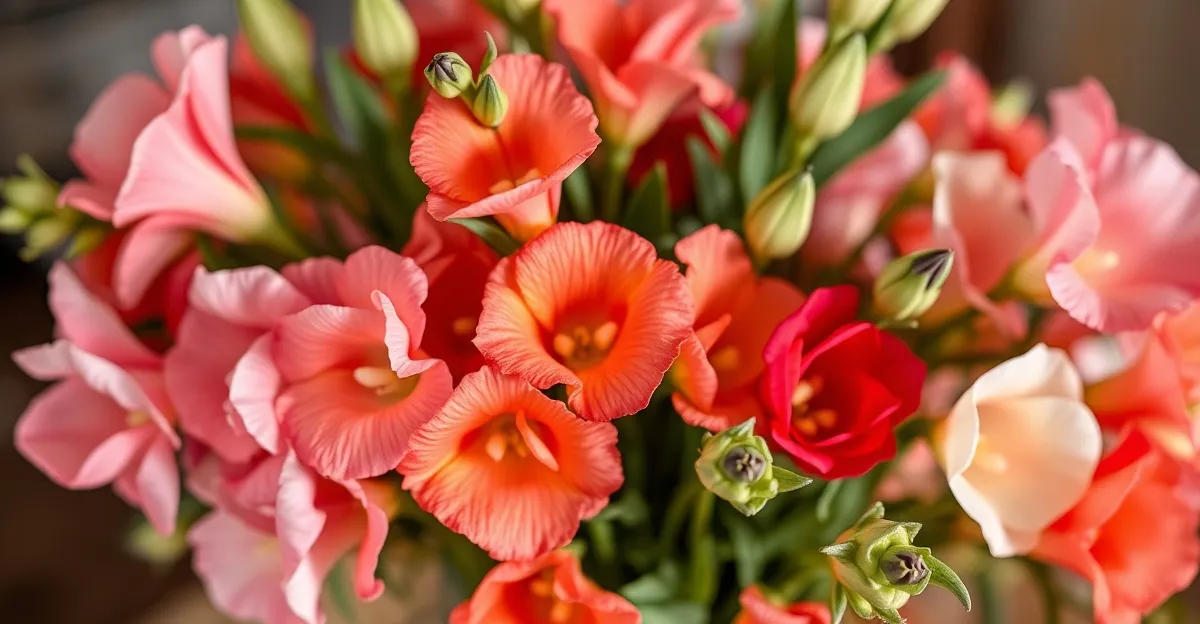
Snapdragons have a quality that makes them worth preserving: the sequential arrangement of florets along the spike creates a naturally beautiful structure that, when dried, maintains much of its form and character. A dried snapdragon spike is not a wilted disappointment — it is genuinely attractive botanical material that has its own identity distinct from the fresh flower.
If you have a snapdragon bouquet worth keeping — from a wedding in Canggu, a significant birthday arrangement, or simply a bunch you fell in love with — this guide covers the preservation methods that work in Bali's tropical conditions.
Snapdragons as preserved material: what to expect
Before choosing a method, know what you are working with. Snapdragon spikes have several characteristics that affect preservation:
Sequential florets: The individual flowers along the spike are at different stages — some fully open, some still in bud. This creates variation in how different sections of the spike dry. Buds tend to shrink and become tighter; open florets dry in a more open, papery state.
Hollow stems: Snapdragon stems are hollow, which means they lose moisture faster than solid-stemmed flowers. This can actually speed up air drying compared to solid-stemmed flowers, which is helpful in Bali's humid conditions.
Variable petal thickness: The tubular florets have layers of petals — outer and inner — which can separate and become fragile during drying. Handle dried snapdragons with more care than you might handle a robust dried flower like an everlasting or celosia.
Color retention: Snapdragons dry with moderate to good color retention. White and yellow varieties tend to cream slightly; orange retains warmth; pink and red may deepen or fade depending on the specific variety. Purple and burgundy often dry beautifully to deep, rich tones.
The central challenge: Bali's humidity
Every preservation method in this guide is modified for Bali's climate. On the coast — Seminyak, Kuta, Sanur, Canggu — relative humidity runs 70–85% year-round, spiking higher during the wet season from November through March. In Ubud, the hill town's higher elevation brings slightly cooler air but can be even wetter during the wet season.
This humidity is the enemy of all flower drying. Methods that work easily in Melbourne or Amsterdam's dry interiors need active modification in tropical Bali — primarily by creating drier microenvironments and checking regularly for mold.
Method 1: Air drying (best for dried arrangements)
Air drying is the simplest method, and with the right setup it works for snapdragons in Bali.
Key modifications for Bali:
-
Choose your location carefully. You need the driest, most ventilated spot in your home. A room with air conditioning running consistently, or a well-ventilated interior space away from kitchen steam and bathroom moisture. Avoid any enclosed spaces without airflow.
-
Set up a fan. In Bali's humidity, passive air drying is much slower and more prone to mold. A ceiling fan on low, or a small desk fan directed across the drying area (not blowing directly on the flowers, but creating air movement in the space) significantly improves results.
-
Prepare the flowers while still fresh and firm — not wilted. Strip all leaves from the stems. Bundle in very small groups: 2–3 stems maximum. Snapdragon spikes are wide and if bundled tightly, the flower heads will press against each other and the moisture between them creates mold conditions.
-
Hang upside down from a hook, clothesline, or rack. The inversion keeps the spike's shape intact and prevents the flower heads from drooping during drying.
-
Check daily for the first 10 days. Look for any soft spots, discoloration, or off-smell. Remove any affected stems immediately.
-
Complete drying takes 3–5 weeks in Bali's conditions — significantly longer than the 2–3 weeks cited for temperate climates. Do not rush it; partially dried flowers that are moved or displayed prematurely will continue to attract moisture.
Results: Dried snapdragon spikes have a papery, sculptural quality. The form of the spike is preserved, with individual florets showing their characteristic shape. Color mutes toward warmer, earthy tones. Beautiful in dried arrangements, wreaths, or loose in a vase.
Method 2: Silica gel drying (best for 3D form and color preservation)
Silica gel actively removes moisture from flowers, counteracting Bali's ambient humidity. For three-dimensional preservation that maintains the snapdragon's form more faithfully than air drying, this is the best method.
Silica gel is available at hardware stores and craft supply shops in Denpasar — look at shops near Tiara Dewata mall, or at craft supply retailers in the Pemogan or Sesetan areas. It can also be ordered through Indonesian e-commerce platforms.
Steps:
-
Find an airtight container large enough to accommodate your snapdragon spikes. Rectangular storage containers with tight-fitting lids work well. For tall spikes, you may need to choose between bending the stem (which creates a natural curve) or cutting the spike to fit the container.
-
Pour a 3–4cm layer of silica gel into the container.
-
Place snapdragon spikes face-up in the silica gel, spacing them so they do not touch each other.
-
Carefully pour additional silica gel over and around the spikes, supporting the individual florets as you pour to prevent them from collapsing or flattening.
-
Seal the container completely.
-
Leave for 5–7 days. Snapdragons' multiple layered florets take slightly longer to fully dry than simpler flower forms.
-
Open carefully and use a soft brush to remove any silica crystals caught between florets.
Results: Snapdragons preserved this way maintain their three-dimensional form remarkably well. Colors are more vivid than air-dried results. Individual florets show their characteristic tubular shape. This method is ideal if you want preserved stems that look close to fresh rather than obviously dried.
Method 3: Pressing individual florets (best for framing and resin work)
Pressing works best for individual snapdragon florets rather than whole spikes. The individual flowers, once separated from the spike, press beautifully flat and show their distinctive shape clearly.
Steps:
-
Pull individual florets from the spike — they detach fairly easily when pressed gently from the base.
-
Open each floret by pressing it flat between your fingers before placing it on the pressing paper. This shows the interior of the flower (which has lovely detail) and ensures even flattening.
-
Arrange florets on absorbent paper without overlapping. Space them generously.
-
Cover with another layer of absorbent paper, then weight with heavy books or a purpose-made flower press.
-
Change the paper every 2 days for the first week — this is critical in Bali's humidity to prevent mold. Set a phone reminder.
-
After 2–3 weeks, florets should be fully flat and papery.
Uses: Pressed snapdragon florets are beautiful framed under glass, incorporated into resin work, used in botanical art, or applied to greeting cards and stationery. For ideas on creating resin keepsakes from pressed flowers, see our article on epoxy ornaments with pressed Bali flowers.

The team
your florists
weekly subscription · Bali
We write about flowers because we love them. We deliver them because someone should — properly, weekly, across Bali.
— heyflowerPay once for 3, 6, or 12 months, no auto-renewal.
Timing your preservation
The most important practical point: begin preservation while the flowers are still fresh and firm. A snapdragon spike that has already fully bloomed through all its florets and begun to soften will not preserve as well as one taken at peak freshness.
For a wedding bouquet or event flowers, this means making a decision on the day — ideally within 6 hours of the event ending. Leaving flowers in a warm room overnight in Bali without preservation preparation risks losing the opportunity.
Display and storage after preservation
Preserved snapdragons need protection from Bali's ambient humidity even after drying is complete. Fully dried flowers can re-absorb moisture from the air, becoming soft and potentially developing mold.
Best display conditions in Bali:
- In an air-conditioned room with consistent climate control
- Away from kitchen steam, bathroom moisture, and outdoor air from open windows
- In a sealed display case or glass cloche — this creates a microenvironment with lower humidity
- With silica gel packets placed near (not touching) arrangements to absorb ambient moisture
Avoid outdoor display or display in any uncontrolled humid space. Even covered outdoor areas in Bali are too humid for long-term dried flower display.
For ongoing fresh flowers in your home, our weekly flower subscription delivers handpicked blooms to keep your space looking fresh week to week.
FAQ
How long do air-dried snapdragons last in Bali? In an air-conditioned room with some moisture management (silica gel packets nearby), dried snapdragons can last 12–18 months before significant fading or deterioration. In a warm, uncontrolled space, expect 3–6 months.
Can I preserve an entire snapdragon bouquet (multiple stems together)? Yes, but for air drying you need to separate stems into very small groups (2–3 maximum) to allow airflow between spikes. For silica gel, separate stems into individual spikes for best results — the container size needed for a full bouquet at once would be very large.
The florets keep falling off my dried snapdragons — what can I do? A light spray of hairspray on fully dried spikes helps bind petals and reduces shedding. Work quickly and hold the can at 30cm distance to avoid clumping. This is a finishing coat rather than a preservation method, applied after drying is complete.
My dried snapdragons turned brown — what went wrong? Browning is usually caused by one of: starting preservation when flowers were already past their prime, mold (even invisible mold) caused by slow drying in humid conditions, or ethylene exposure from nearby ripening fruit. In Bali, slow drying is the most common cause — use silica gel to speed the process and minimize mold risk.
Are snapdragon spikes or individual florets better for resin work? Individual florets pressed flat are better for resin — they integrate more naturally into the resin pour and the flat form prevents the air bubbles that can form around three-dimensional objects. Press florets individually (as described above) before using in resin projects.
Ready to bring fresh flowers to your Bali home or event? Explore our weekly flower subscription and get handpicked blooms delivered to your door every week.
More on Snapdragon