How to care for carnation in Bali's humid climate
Carnations are among the toughest cut flowers in Bali's heat. Here's exactly how to care for them to get the maximum vase life.
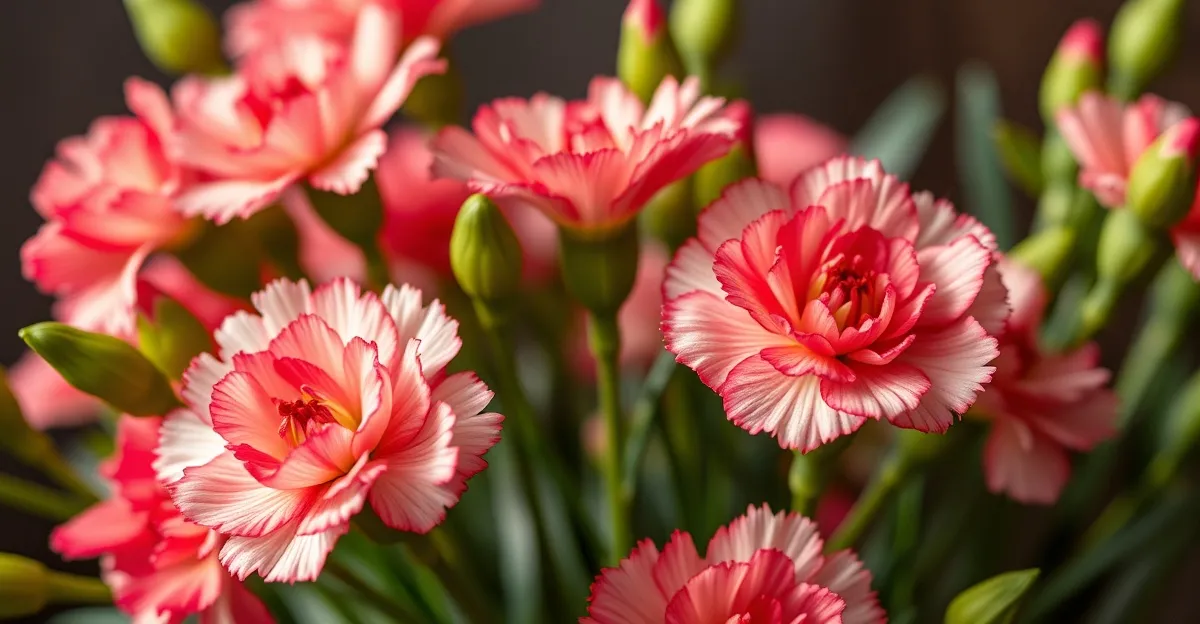
In the world of cut flowers, carnations are the reliable veterans. While peonies wilt dramatically in Bali's heat and sweet peas collapse within days, carnations hold their form and colour through conditions that destroy more fragile flowers. This isn't accidental — carnations have evolved tough, waxy petals and efficient water-use systems that make them genuinely well-suited to warm conditions.
In Bali, a carnation with good care can last ten to fourteen days. Without care, five to seven days. That spread — the difference between what you get with attention versus neglect — is worth understanding. This guide explains exactly what carnations need in tropical conditions and why each care step matters.
Why carnations handle tropical heat relatively well
Understanding carnation biology helps the care instructions make intuitive sense.
Carnations (Dianthus caryophyllus) evolved in Mediterranean climates — warm, relatively dry summers, cool winters. They're not designed for the cold, humid temperate conditions that peonies prefer. This makes them meaningfully more tolerant of Bali's warmth than many popular imported flowers.
Their waxy petals are the key structural adaptation. The wax coating reduces moisture loss from petal surfaces — the process called transpiration that in unprotected petals leads to wilting under heat. Carnation petals also have a more rigid cellular structure than the soft, multi-layered petals of peonies or roses, which gives them better mechanical resilience.
What carnations do struggle with in Bali: bacteria. Like all cut flowers, carnations die primarily from bacterial blockage of their stem's vascular system. In Bali's warm water, bacteria multiply rapidly. The difference from peonies is that carnations can often survive more bacterial buildup before they droop — but manage the bacteria well and you extend their life dramatically.
First steps when your carnations arrive
Unwrap immediately
Don't leave carnations wrapped in paper or cellophane in Bali's heat. Unwrap within the first hour. Trapped warm air creates a high-humidity microenvironment that accelerates stem bacteria even before the flowers are in a vase.
Check stem condition
Fresh carnations should have firm, green stems. Any slimy coating, dark discolouration, or off smell near the stem base suggests bacterial damage from transit. These stems can still be helped with a fresh cut, but be prepared for potentially shorter vase life.
Cut stems immediately
Use sharp scissors or a clean knife. Cut at a 45-degree angle, removing at least 2–3cm. If possible, cut under running water or immediately submerge the cut end to prevent an air bubble forming in the stem's vascular tissue.
Condition the stems
Before arranging, let the newly cut stems stand in a bucket of room-temperature water for two to four hours. This initial conditioning period allows the stems to fully hydrate and dramatically improves subsequent vase life. Many people skip this step; it's worth doing.
Vase setup that matters
Clean vase
Bacteria from previous arrangements will immediately colonise your fresh water. Before using any vase, wash thoroughly with hot soapy water and rinse completely. This matters more in Bali's temperatures than in cooler climates.
Water depth and temperature
Fill the vase about half to two-thirds full. Room-temperature water is better than cold — cold water can slow water uptake. Carnations drink actively and a reasonably deep water level helps.
Flower food
Commercial flower food sachets contain three active components: a biocide (controls bacteria), an acidifier (improves water uptake), and a simple sugar (provides energy). All three genuinely extend carnation vase life. Use it if you have it.
DIY alternative: dissolve one tablespoon of sugar in one litre of water and add two to three drops of household bleach. Mix well. This approximates the function of commercial flower food adequately.
Avoid adding anything else
You may have heard of aspirin, copper coins, or other home remedies. These don't have solid evidence behind them and some (particularly copper compounds) can actually damage carnation stems over time. Stick to the flower food formula above.
Ongoing care: the routine that matters
Water changes every two days
The single most impactful maintenance action. In Bali's temperatures, vase water becomes bacteria-saturated within 48 hours. Don't just top up — drain completely, rinse the vase, and refill with fresh treated water.
Fresh cuts every two days
Alongside the water change, re-cut 1–2cm off each stem. This removes the section that has accumulated the most bacterial buildup and exposes fresh vascular tissue with better water uptake. Make sure your scissors are clean before each cut.
Strip leaves below the waterline
Any leaf submerged in the water will decompose quickly in Bali's heat, feeding bacteria. Check each time you change the water and remove any leaves that have dropped below the surface.
Remove spent blooms
As individual carnations in a mixed bunch begin to deteriorate, remove them before they affect their neighbours. Dying plant material releases ethylene gas that accelerates aging in surrounding flowers.
Location: the most important decision
The wrong location defeats good care. In Bali:
Avoid:
- Direct sunlight (accelerates all deterioration processes)
- Near air conditioning vents blowing directly on the arrangement (desiccates petals)
- Near fruit — particularly bananas, mangoes, and papaya, all common in Bali kitchens (ethylene gas)
- Near the stove or in a hot kitchen corner
Aim for:
- Bright indirect light
- A consistent temperature below 28°C
- Good air circulation but not a direct draught
- Away from fruit
The best locations in most Canggu or Seminyak villas: a central dining or living room table that gets good indirect light from a shaded garden, or a well-ventilated interior space that stays relatively cool through the day.
Bali's seasonal considerations
Wet season (November–March)
Bali's wet season brings peak humidity — sometimes 85–90%. In these conditions:
- Bacteria in vase water multiply even faster
- Consider daily water checks rather than every two days
- Be more aggressive about removing any leaves that touch the water
- Good air circulation in the room becomes more important
Dry season (May–September)
The dry season is carnation's better season in Bali. Lower humidity means slower bacterial growth, slightly longer vase life, and less mould risk. This is when you can realistically push toward the twelve to fourteen day end of the vase life range.

The team
your florists
weekly subscription · Bali
We write about flowers because we love them. We deliver them because someone should — properly, weekly, across Bali.
— heyflowerPay once for 3, 6, or 12 months, no auto-renewal.
Reviving drooping carnations
Unlike peonies, carnations respond quite well to revival attempts if caught early. If stems are still green and firm but heads are drooping:
- Cut 5cm off each stem at a sharp diagonal
- Place stems in hot (not boiling) water — about 60°C — for 30 seconds
- Transfer immediately to a vase of room temperature treated water
- Place in a cool, dark location for one to two hours
The hot water technique shocks the stem's vascular system open, allowing better water uptake. About half of early-stage drooping carnations revive well with this approach.
If stems are slimy or soft, the bacterial damage is too extensive to reverse. Time to refresh your arrangement entirely.
Carnations in mixed arrangements
If your carnations are part of a mixed arrangement, they'll often outlast their companions in Bali's heat. Be prepared for a gradual refresh:
- Remove companion flowers as they fade
- Keep the carnations going with continued water changes and stem cuts
- Add fresh foliage or companion blooms if desired
Carnations with fresh eucalyptus, for instance, can make a beautiful minimal arrangement for the latter part of the vase life after original companions have faded.
For fresh carnation arrangements delivered to your Canggu, Berawa, Seminyak, Pererenan, or Kerobokan home, explore heyflower.co's subscription options at /#subscriptions. We select flowers specifically for their condition in Bali's climate, and our flower delivery in Kerobokan guide has more information about what we offer locally.
Frequently Asked Questions
How long do carnations last in Bali compared to roses?
Carnations generally outlast roses in Bali's tropical conditions. Roses give six to ten days with good care; carnations give eight to fourteen days. In Bali's heat, carnations' more robust cellular structure and waxy petals give them a meaningful endurance advantage.
Why do my carnations keep drooping even with fresh water?
This usually indicates bacterial stem blockage — the stem can't draw water even though the vase is full. Try the hot water revival technique described above. If that doesn't work, the blockage is too complete and the flowers are past their useful vase life.
Can I refrigerate carnations to extend their life in Bali?
Yes. Carnations stored at 4–8°C will slow their aging significantly. If you have space in a fridge (whole vase can be impractical) or a dedicated cool space, overnight chilling can add one to two days of display life. Unlike some flowers, carnations handle refrigerator temperatures well.
Are carnations safe around pets in Bali?
Carnations are mildly toxic to cats and dogs. If your villa has pets that might access the arrangement, position it out of reach. Ingestion typically causes mild gastrointestinal upset rather than severe toxicity, but it's worth avoiding if your pets are curious around plants.
Why are my carnations splitting at the calyx?
"Splitting" at the calyx — where the base of the petals meets the green calyx — is a carnation-specific phenomenon. It's often caused by temperature fluctuations, over-fertilisation at the growing stage, or certain bacterial conditions. While not ideal aesthetically, split carnations can still be used and have the same vase life as intact ones. Remove any that split significantly and display the intact ones.
More on Carnation