Gerbera in Balinese Ceremonies: Traditional Uses in Bali
How do gerberas fit into Bali's rich ceremonial flower culture? A look at their role in offerings, temple rituals, and Balinese celebrations.
Flowers in Bali are never purely decorative. They carry meaning in layers — botanical, spiritual, aesthetic, and social — and this applies whether you are talking about the frangipani pressed into a temple offering or the marigolds strung across a doorway for Galungan. Every flower that enters Balinese ceremonial life does so through a process of cultural absorption: it is assessed, adopted or adapted, and given a role that fits within an existing symbolic vocabulary.
The gerbera is a relatively recent addition to that vocabulary. Not an ancient sacred flower, not mentioned in the Hindu texts that underpin Balinese religion — and yet today gerberas appear in offerings, at ceremonies, and in the market stalls that supply the daily needs of Bali's devotional culture. Understanding how and why they arrived, and what role they play, tells you something useful about how living traditions adapt and evolve.
The Foundations of Balinese Flower Use
To understand where gerberas fit, you first need to understand the framework they entered.
In Balinese Hinduism (often called Agama Hindu Dharma), flowers are one of the primary offerings to the divine. The canang sari — the small palm-leaf offering baskets placed at temples, home shrines, crossroads, and the entrances of businesses — must contain flowers, and the colours of those flowers are spiritually significant:
- White flowers face east, toward Iswara
- Red flowers face south, toward Brahma
- Yellow or gold flowers face west, toward Mahadewa
- Blue or black flowers face north, toward Wisnu
The directional colour system means flower choice is not arbitrary. Practitioners need specific colours reliably available, which is one reason why marigolds, frangipani, hibiscus, and bougainvillea — all available year-round in Bali — became the foundational flowers of daily offering practice.
How Gerberas Entered the Offering Culture
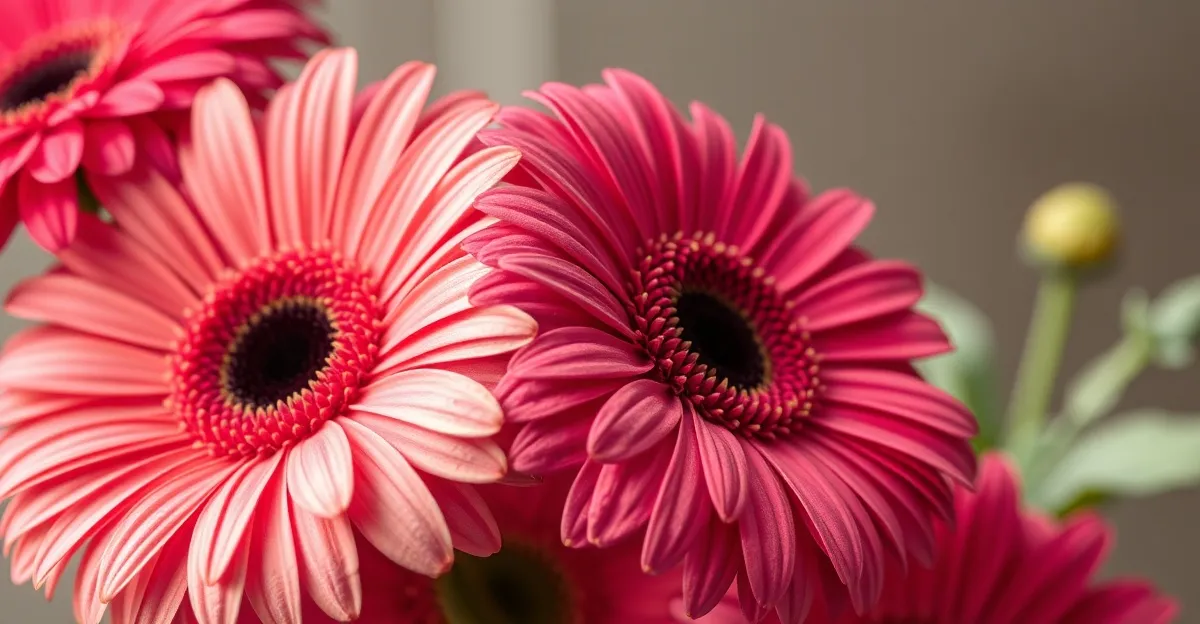
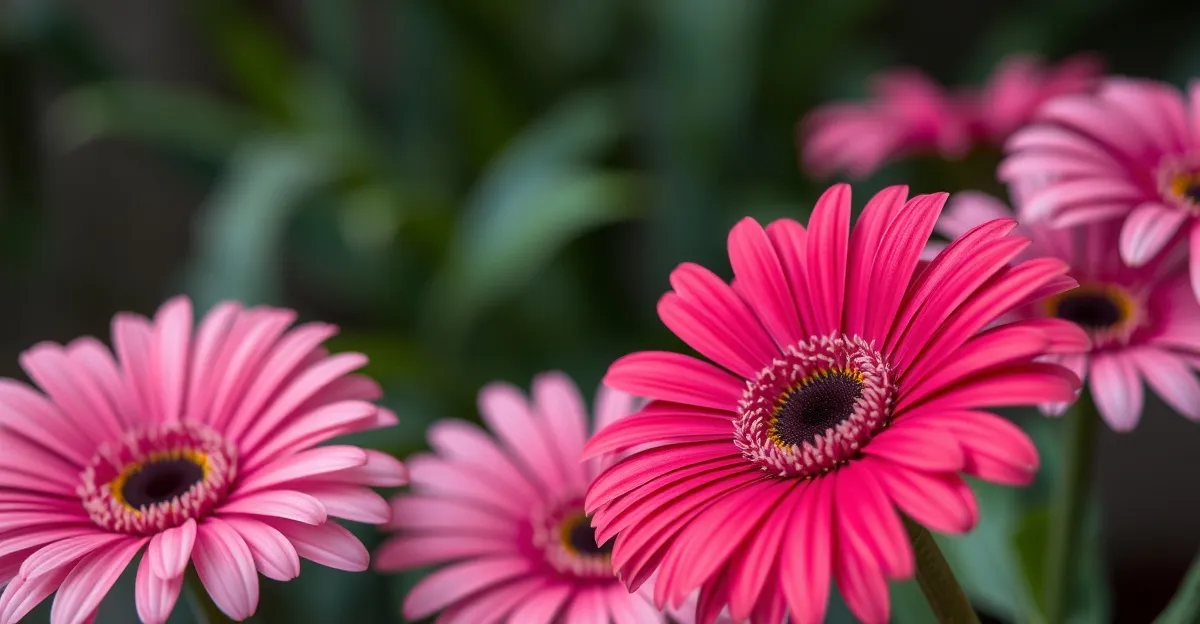
Gerberas are not indigenous to Bali and have no ancient ceremonial history on the island. They entered through commercial floriculture: as cut flower markets expanded and gerbera farms developed in highland Indonesia (particularly around Bedugul in Bali and Lembang in West Java), gerberas became increasingly available in Bali's local markets.
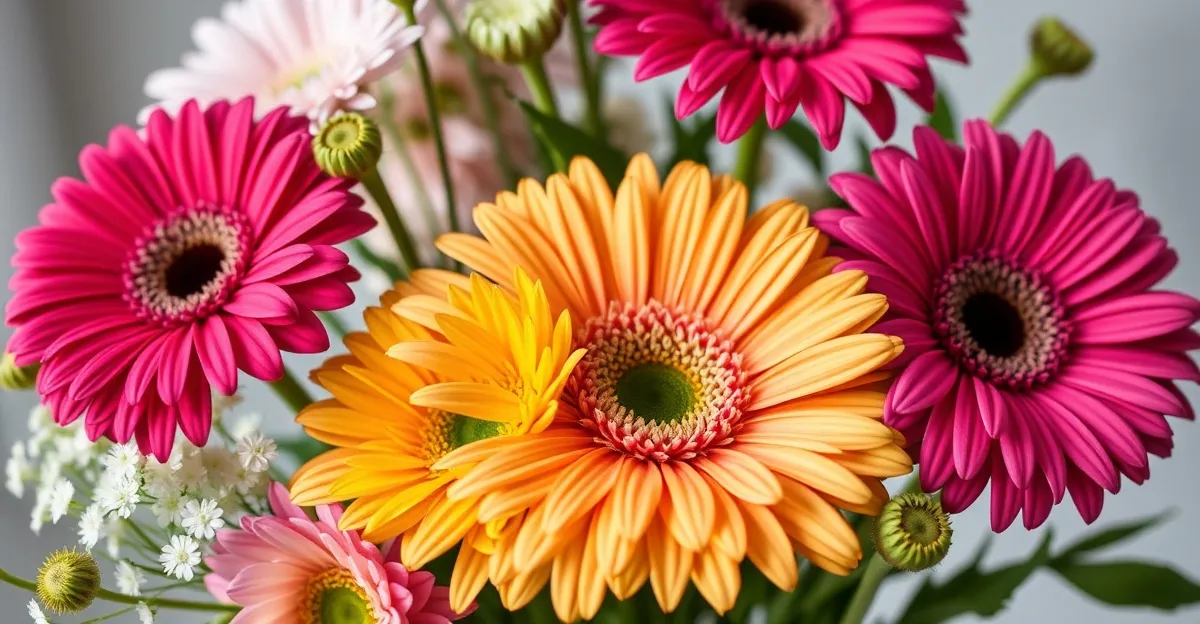
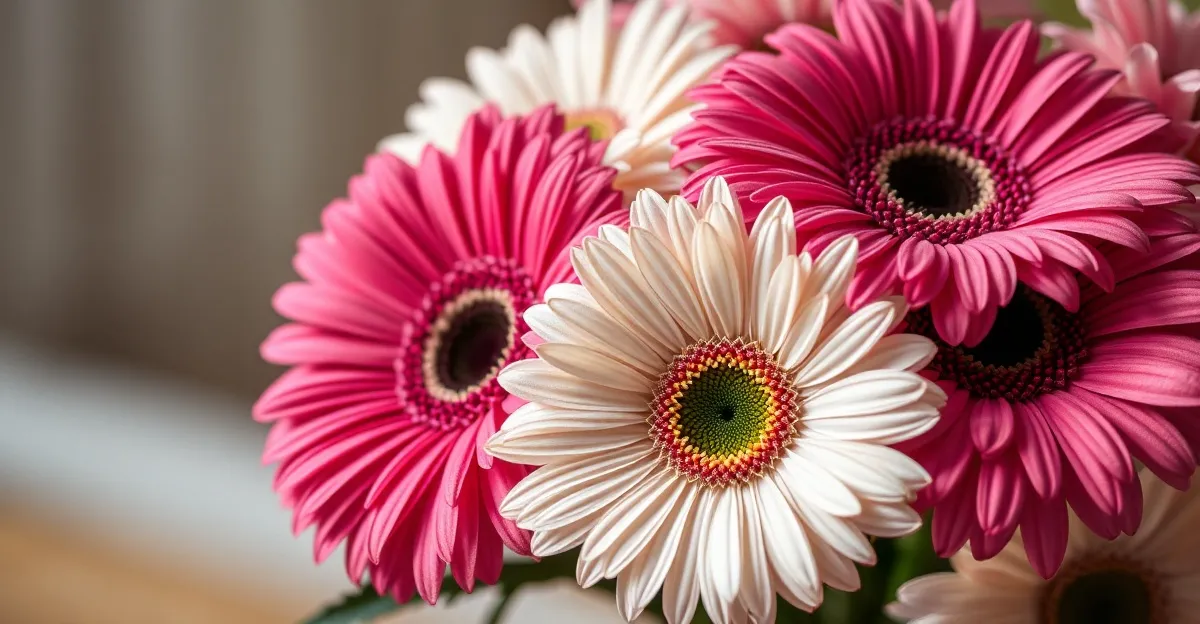
For practitioners building canang sari and preparing offerings, the gerbera's most obvious advantage is its colour range. A single flower type that comes in red, yellow, orange, white, and pink can theoretically satisfy multiple directional requirements. And in a culture where the daily demand for fresh flowers is extraordinary — an observant Balinese family may prepare three to five offerings per day — having versatile, affordable, locally available flowers matters enormously.
Gerberas are now a common sight in morning flower markets alongside marigolds and roses. They are bought for both ceremonial and decorative use, and the line between these is not always clearly drawn in Balinese practice.
Gerberas in Canang Sari
In contemporary canang sari, you will often see gerbera petals — particularly white and yellow — used as the primary floral layer. The flowers are sometimes used whole (for larger offerings) and sometimes just the petals (stripped from the stem and layered over the palm-leaf base).
Practising Balinese women who prepare daily offerings have adopted gerberas pragmatically. They hold shape well, their petals lie flat, and they do not bruise or turn quickly after cutting. In the early morning market rush at places like the Beraban or Jimbaran flower markets, gerberas in standard colours are sold by the bunch specifically for offering preparation.
The flowers' lack of traditional religious symbolism is not considered a problem in this context. Balinese religious practice emphasises intention and process as much as specific materials — the offering is meaningful because it is made with care and devotion, not because the flowers carry predetermined spiritual weight.
Major Ceremonies and Gerbera Use
Galungan and Kuningan
Galungan marks the victory of dharma over adharma and occurs every 210 days on the Balinese Pawukon calendar. During this period, penjor — tall decorated bamboo poles — line every road in Bali, and home shrines are elaborately decorated with flowers.
Gerberas appear in Galungan decorations, particularly in the arrangements placed on home altars. Bright coral and orange gerberas are popular because they complement the gold and yellow tones traditional to Galungan decoration. They are not a replacement for more traditional flowers (marigolds, frangipani, hibiscus) but a supplement that adds colour and fullness to larger arrangements.
Temple Odalan (Temple Birthday)
Each of Bali's thousands of temples has its own Odalan — an anniversary ceremony held every 210 days. During Odalan, the temple is extensively decorated, and large flower arrangements are placed at the main shrines and offerings areas.
For larger temple celebrations, gerberas are now commonly used in the cut flower arrangements that decorate temporary altars and entrance gates. They are valued for their visual impact — the large, open flower faces read well from a distance and create a sense of abundance appropriate for a festive temple occasion.
Ngaben (Cremation Ceremony)
Ngaben is one of the most important ceremonies in the Balinese lifecycle — the cremation that releases the soul from the body and allows it to progress toward reincarnation or union with the divine. The ceremony involves elaborate preparation of the body, a ceremonial procession, and the burning of an often-ornate cremation tower.
Flowers play a significant role in the offerings prepared for Ngaben, and gerberas appear in the offerings and decorations that accompany the ceremony. Given that Ngaben is ultimately a celebration of spiritual release rather than a mourning event (though grief is present), bright colours including gerbera's typical palette are not out of place.
For more context on how flowers function across different ceremonial contexts in Bali, the history and origin of the marigold covers another flower that is now integral to Balinese ceremony despite arriving through trade.
The Practical Economy of Ceremonial Flowers
One aspect of gerberas in Balinese ceremony that deserves mention is simple economics. Daily flower use in a devout Balinese household is substantial — not a special occasion thing but a daily commitment. Flowers need to be affordable, available, and reliable.
Gerberas from highland Bali farms are cost-competitive with locally grown marigolds and significantly cheaper than imported roses or premium orchids. For a flower that needs to be purchased every day, or several times a week, affordability is genuinely important. This is one reason why gerberas have found a stable place in the market alongside flowers with much longer ceremonial histories.

The team
your florists
weekly subscription · Bali
We write about flowers because we love them. We deliver them because someone should — properly, weekly, across Bali.
— heyflowerPay once for 3, 6, or 12 months, no auto-renewal.
Gerberas in Secular Bali Celebrations
Beyond the specifically religious context, gerberas appear widely in Bali's secular celebration culture:
Birthdays and anniversaries: Bright gerbera arrangements are popular gifts and table decorations at celebrations held in villas, restaurants, and beach clubs across Canggu, Seminyak, and Kerobokan.
Hotel and resort decoration: Many Bali properties use gerberas in their daily lobby and room arrangements — they are striking, relatively long-lasting, and available in colours that complement almost any interior.
Wedding and event decoration: For events that want tropical colour without the premium price of orchids, gerberas are a practical choice. They work particularly well outdoors where their bold faces show clearly against green backgrounds.
If you want a sense of how Bali's ceremony and celebration flower culture connects to everyday gifting, birthday flower delivery in Pererenan: curated ideas shows how florists here approach celebration arrangements with cultural awareness.
Bringing Balinese Flower Culture Into Your Home
If you live in or are staying in Bali, there is something meaningful about participating in the island's flower culture rather than just observing it. Having fresh flowers in your home — changed regularly, treated with care — is an extension of the Balinese relationship with natural beauty and devotion.
You do not need to adopt anyone else's religious practice to appreciate this. Simply having seasonal local flowers, including gerberas when they are at their best, creates a connection to the island's rhythms that enriches the experience of being here.
Frequently Asked Questions
Are gerberas considered sacred in Balinese religion?
Not in the way that frangipani or lotus are, which carry specific associations in Hindu iconography. Gerberas have entered Balinese ceremony through pragmatic adoption — they are used because they are available, colourful, and affordable, not because they carry ancient religious symbolism.
Can tourists participate in Balinese flower offerings?
You can purchase canang sari at markets and observe how they are made and placed. Participating in the construction of offerings is generally welcomed if guided by someone with knowledge of the practice. Simply buying flowers from local markets and keeping fresh flowers in your accommodation is a natural, gentle way to connect with the island's flower culture.
What flowers are used in the most important Balinese offerings?
The most significant ceremonial flowers in Balinese practice include frangipani (jepun), hibiscus (pucuk), marigold (gumitir), and various orchids. Gerberas play a supporting role in contemporary offerings alongside these more traditionally significant flowers.
Are there flowers that should never be used in Balinese offerings?
Some flowers are considered more appropriate for specific ceremonies or deities. The specific requirements vary by ceremony, priest, and region. In general, freshness is the most important criterion — wilted or damaged flowers are considered less appropriate as offerings. Intention matters more than the specific species in most everyday offering contexts.
Where can I buy ceremonial flowers in Canggu or Seminyak?
Local morning markets are the main source — the Canggu traditional market opens early and stocks the full range of ceremonial flowers. Many warungs and small shops throughout the area also sell pre-made canang sari and flower bundles. The morning is the best time to buy for freshness.
Fresh flowers for your home or villa delivered every Monday across Canggu, Berawa, Pererenan, Seminyak, and Kerobokan — heyflower.co connects you to Bali's best seasonal blooms without the early-morning market trip.
More on Gerbera