Flowers for a Balinese cremation (Ngaben) ceremony
Understand which flowers are appropriate for a Balinese Ngaben cremation ceremony, what each bloom signifies, and how to participate respectfully with floral gifts.
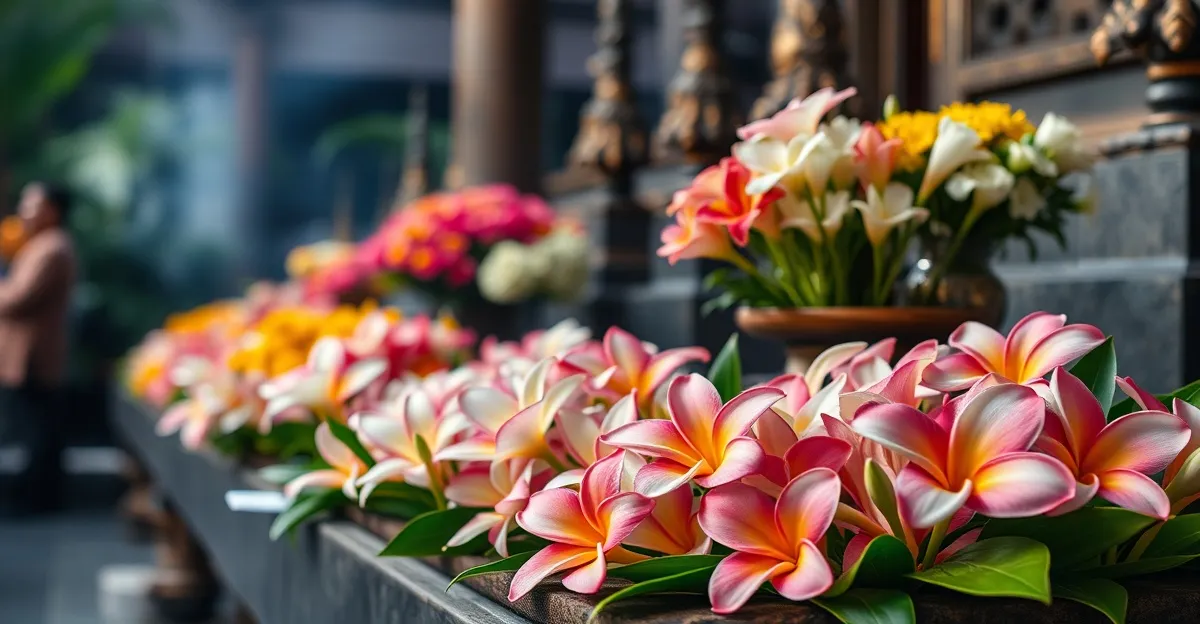
In Bali, death is not treated as an ending but as a transition — the soul completing one cycle of existence and preparing for the next. The Ngaben cremation ceremony is a joyful event in the Balinese understanding: a final act of love by the family that releases the soul from its earthly attachment so it can journey onward.
Flowers are central to this ceremony, but not in the way that Western funeral flowers work. The context, colour choices, and symbolic intentions are quite different, and knowing this helps you participate appropriately whether you're a friend of the family, an expat resident attending your first Ngaben, or someone planning ahead for their own Balinese family's ceremony.
Why Ngaben is considered joyful
Before discussing flowers, it helps to understand the framing. Balinese Hindus believe the physical body is a temporary vessel (sarira) for the soul (atma). When the body dies, the soul must be released through cremation — an act of purification by fire — so it can be reborn or, for those who have attained sufficient spiritual merit, achieve moksha (liberation from the cycle of rebirth).
Delaying or neglecting a cremation is considered harmful to the deceased's soul. The family that performs an elaborate, beautiful Ngaben is demonstrating love. This is why Ngaben ceremonies involve gamelan music, elaborate processions, brightly coloured cremation towers (bade), and — yes — beautiful fresh flowers.
Flowers appropriate for Ngaben
White flowers: White is the primary colour of death and purification in Balinese Hindu tradition. White frangipani, white chrysanthemum, and white jasmine all feature prominently. These signal the spiritual transition and the purity being sought for the soul.
Yellow flowers: Yellow (from marigold and yellow chrysanthemum) represents the auspicious, the divine, and is associated with Mahadewa. Yellow flowers at Ngaben signal that this transition is blessed and supported by the gods.
Mixed offerings: The standard directional colour system of Balinese offerings applies at Ngaben too — red, white, yellow, and dark flowers at their respective cardinal positions within the offering structures.
Garlands: Long garlands of marigold are draped over the cremation tower (bade) and over the padma structure at the cremation ground. The visual richness of the yellow-orange garlands against the white tower wrapping is distinctive.
Do avoid: Pure red arrangements as standalone gifts (red can carry associations with danger/emergency in some Balinese ritual contexts). All-black arrangements. Avoid cheap, desiccated, or wilting flowers — the quality of the offering matters.
The cremation tower and its floral decoration
The bade is the tower structure built to carry the body to the cremation grounds. It is an extraordinary piece of ephemeral architecture — multi-tiered, painted, and decorated — that is built to be burned. The number of tiers signals the deceased's social and spiritual status: a pemangku (priest) receives a different number than a commoner or a noble.
Fresh flowers are incorporated throughout the bade's decoration:
- Marigold strings wound around every horizontal surface
- White frangipani placed at the head position
- Flower garlands connecting the tiers
- Chrysanthemum and hibiscus in the offering trays attached to the tower's sides
This decoration is done by the community (banjar) collectively in the days before the ceremony. The effort involved is significant — a major Ngaben bade might require thousands of marigold flowers and hundreds of frangipani.
Flowers given by friends and community
If you're attending a Ngaben as a friend or neighbour, bringing flowers is appropriate. In Balinese practice, the most common floral gift is a prepared banten (offering basket) with the standard directional flower arrangement — this is directly usable in the ceremony.
If you're not familiar with assembling a banten, a fresh arrangement of mixed white and yellow flowers (white chrysanthemum, yellow marigold, white frangipani) in a simple terracotta pot or wrapped in banana leaf is warmly received.
What not to bring: Overly elaborate Western-style funeral wreaths with white lilies and formal ribbon bows look out of place. Similarly, very fragrant but exotic imported flowers that have no ceremonial meaning may seem impersonal. Simple, fresh, local-feeling arrangements are best.
The best flowers for sympathy in Bali covers the full range of sympathy flower options across different communities in Bali, with specific guidance for different cultural contexts.
Mass cremations (ngaben massal)
Because individual Ngaben are expensive — requiring weeks of preparation, an elaborate bade, gamelan hire, food for hundreds of guests, and large quantities of ceremonial materials — many Balinese families bury their dead temporarily and wait to participate in a village mass cremation (ngaben massal) held every few years.
At these events, dozens of families cremate their relatives simultaneously, sharing the cost of the bade, gamelan, and community feast. The flower requirements for a mass cremation are proportionally vast — each family still provides individual offerings, but the communal decorations are funded collectively.
Mass cremations in places like Ubud, Gianyar, and Klungkung attract significant community participation and, in some cases, respectful visitors who observe from the outer areas.

The team
your florists
weekly subscription · Bali
We write about flowers because we love them. We deliver them because someone should — properly, weekly, across Bali.
— heyflowerPay once for 3, 6, or 12 months, no auto-renewal.
Post-cremation flower offerings
The Ngaben ceremony doesn't end with the cremation fire. In the days and weeks afterward, ongoing flower offerings are part of the transition ritual:
Nyekah (purification ceremony, held months to years after Ngaben): A ceremony completing the spiritual transformation of the deceased. Elaborate offerings with white and yellow flowers are central.
Ongoing ancestral offerings: After the Ngaben, the spirit of the deceased joins the family's ancestral shrine. Regular canang sari at the family shrine includes acknowledgement of recently passed family members.
Canang sari: the daily Balinese flower offering explained explains how these daily offerings connect the living and the deceased in ongoing relationship.
FAQ
Is it disrespectful to watch a Ngaben ceremony? Respectful observation from the outer areas of a public Ngaben ceremony is generally accepted in Bali, especially for cremations that take place on public roads. Wear modest, dark or neutral clothing. Don't photograph the body or the grieving family members at close range. A white or neutral-coloured sarong and sash is appropriate attire if you attend the ceremony directly.
How much should I spend on flowers for a Ngaben gift? There's no fixed rule, but Rp 100,000–250,000 for a well-prepared fresh arrangement is appropriate for an acquaintance. For close friends or extended family, Rp 300,000–600,000 for a more elaborate banten-style offering with fresh flowers is suitable.
Can I buy ready-made Ngaben flower offerings? Yes — florists and market vendors near major temples can assemble banten-style offerings, particularly in areas with active Ngaben traditions like Ubud and Gianyar. Specify that it's for a Ngaben (cremation) ceremony so the vendor uses the appropriate colours and composition.
Why is white the colour of death in Bali when it's associated with purity? White represents both purity and spiritual transition in Balinese Hindu symbolism — they are not separate ideas. The purity is the transition: the soul being cleansed through the ceremony and released in its purest form. White at Ngaben is not about grief; it's about clarity of spiritual journey.
What happens to all the cremation flowers and the bade after the ceremony? The bade and all its decorations — including the fresh flowers — are burned with the body. The ashes (of both the flowers and the body) are later collected and released into the sea in a subsequent ceremony. Everything is returned to the elements.
Ready to bring fresh flowers to your Bali home or event? Explore our weekly flower subscription and get handpicked blooms delivered to your door every week.



