14 flowers that handle Bali humidity like champs
Which cut flowers actually survive Bali's heat and humidity? A local florist's guide to 14 blooms that hold up in tropical conditions without wilting in hours.
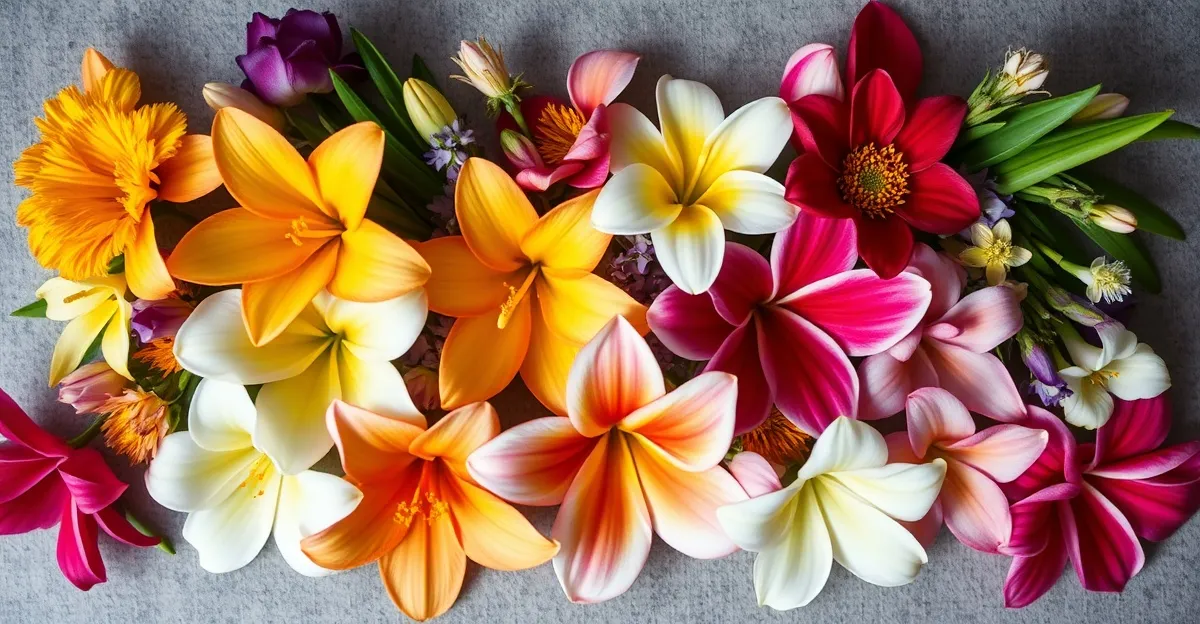
Bali's climate does not forgive delicate flowers. When the wet season settles in — usually November through March — relative humidity in areas like Ubud, Gianyar, and even coastal Seminyak can sit between 75 and 90 percent for weeks at a stretch. Temperatures rarely drop below 24°C, even at night. If you leave an arrangement out without AC, you're essentially running a small greenhouse on your kitchen counter.
Most online florist advice is written for temperate climates. It assumes you have access to a cool, dry space for your flowers. In Bali, you often don't. This guide is written from the tropical side — for the people living in open-air villas, renting a room in Canggu with the fan on all night, or setting up flowers in a hotel lobby with no direct air conditioning over the display.
These 14 flowers genuinely hold up. They're not just surviving — they actually look good for a reasonable amount of time in Bali's conditions.
1. Anthurium
Anthuriums might be the most humidity-proof cut flower available anywhere. Their waxy, lacquered spathes evolved specifically for wet tropical conditions, and they hold their gloss and form for two to three weeks even in Bali's most oppressive heat. A single red or pink anthurium stem in a tall vase is practically indestructible.
They're grown locally across Bali and available year-round at markets in Denpasar and Ubud. Price: Rp 15,000–30,000 per stem depending on size.
2. Heliconia
Heliconia is essentially built for this climate. The dramatic, torch-like bracts — in red, orange, yellow, and bi-colour combinations — are fully adapted to tropical heat and can look fresh in a vase for two to three weeks with basic water changes. The plant is native to the tropical Americas but has been grown in Bali for decades and performs exceptionally here.
For tall displays, standing heliconias in floor vases in hotel lobbies and restaurants across Seminyak and Sanur are a common sight for a reason.
3. Bird of paradise (Strelitzia)
Strelitzia reginae is a reliable performer in tropical heat. The architectural orange and blue blooms look exotic but handle warmth well, particularly if stem ends are recut in clean water. They can last ten to fourteen days in a vase even without air conditioning.
One practical note: the flowers open sequentially from the bract, so an arrangement continues to evolve over time. What looks like a partially open flower today will reveal new petals over the following days.
4. Tropical ginger flowers
The ornamental gingers — Alpinia purpurata (red and pink ginger), Etlingera elatior (torch ginger), and Hedychium species (butterfly and white ginger lily) — are among the most reliable cut flowers in Bali's climate. They're grown across the island and sold at virtually every market.
Torch ginger in particular is remarkably long-lasting. The waxy buds open slowly and can hold their form for ten days or more in a vase. The complete florist's guide to pairing ginger flower has ideas for combining these dramatic stems with other Bali-grown blooms.
5. Chrysanthemum (mums)
Chrysanthemums are workhorses. They're not glamorous, but in Bali's humidity they regularly outlast many fancier alternatives. Standard spray mums can go two weeks in a vase, sometimes longer. They're also among the cheapest reliable cut flowers available in Bali — Rp 8,000–15,000 per bunch at Pasar Badung in Denpasar.
The key to keeping them going in the heat is water quality. Change the water every two days and trim stem ends at an angle each time.
6. Orchids (cut stems)
Phalaenopsis and Dendrobium orchids are both reliably long-lasting as cut flowers in tropical conditions. Dendrobium in particular, which is grown extensively in Bali and across Java, can hold cut stems for two to three weeks with minimal care. They're a staple in high-end villa arrangements across Seminyak and Nusa Dua precisely because of their durability.
Phalaenopsis cut stems (usually sold as individual arching branches rather than single flowers) are longer in the vase and visually dramatic. Both types prefer clean, room-temperature water and indirect light.
7. Protea
Protea has become increasingly available in Bali over the last few years, sourced from growers in Java and imported from Australia and South Africa. The good news for Bali buyers: protea genuinely loves warmth. These South African natives are drought-adapted and handle low-humidity conditions well, but they also hold up respectably in Bali's conditions — usually eight to twelve days in a vase.
The textural drama of protea — particularly King Protea and Blushing Bride varieties — makes them popular in contemporary arrangements across the island's design-conscious hospitality sector.
8. Marigold
Marigold is one of the most culturally embedded flowers in Bali — used in offerings, temple ceremonies, and garlands throughout the island. From a florist's perspective, marigold growing in Bali is not difficult at all — it thrives in the tropical sun. As a cut flower it holds well for seven to ten days and the deep yellow-orange tones look warm and alive in almost any arrangement.
The fragrance is distinctive and not to everyone's taste, but in outdoor or well-ventilated spaces it blends into the general Bali ambient scent pleasantly.
9. Alstroemeria
Alstroemeria (Peruvian lily) is a practical choice for humid conditions. The small, elegant blooms open progressively along each stem, which means you get a week or more of changing flowers from a single bunch. They're pollen-free by default (unlike true lilies), which removes one common problem with humid-climate flowers — pollen dropping and staining.
Available year-round from Bali florists, usually sourced from Java. Soft pinks, corals, and whites are particularly popular in the island's current aesthetic.
10. Sunflower
Sunflowers are surprisingly sturdy in tropical heat, provided they have a full vase of water. The large heads do drink heavily — check the water level daily — but with that basic maintenance they'll hold seven to ten days in Bali's conditions. Their cheerful, high-contrast look works well in informal settings: a kitchen counter, a cafe table, a co-working space.
11. Statice (Sea lavender)
Statice is a dried-flower that happens to work beautifully fresh. The papery texture means it retains form even as it slowly dries in the heat. In a humid environment, statice won't dry out too fast — it transitions from fresh to gently dried over the course of a week or two, maintaining its colour and structure throughout. Statice colors carry different symbolic meanings — purple for remembrance, white for purity, pink for grace — worth knowing before choosing colours for a specific occasion.

The team
your florists
weekly subscription · Bali
We write about flowers because we love them. We deliver them because someone should — properly, weekly, across Bali.
— heyflowerPay once for 3, 6, or 12 months, no auto-renewal.
12. Carnation
Carnations are perennial underdogs in the flower world but they earn their place in tropical arrangements purely through longevity. A fresh carnation in Bali can easily go two weeks in a vase. They're available in an enormous range of colours, inexpensive (Rp 5,000–10,000 per stem), and the ruffled petals hold their form well in humidity.
Contemporary florists are rehabilitating carnations — used thoughtfully, in massed monochromatic arrangements or as texture against architectural foliage, they look sophisticated.
13. Tropical foliage — monstera, palm, banana leaf
Not flowers, technically, but worth including because they're the backbone of every humidity-proof arrangement in Bali. Monstera leaves, palm fronds, and banana leaf sections last for weeks in water and look genuinely beautiful against flower stems. In the wet season, when even moderately durable flowers are struggling, a base of tropical foliage with a few resilient blooms can hold a space better than a purely floral arrangement.
14. Frangipani
Frangipani is unusual in that it doesn't need water at all — the cut stems don't draw moisture and can be placed dry in a vase or scattered loose in a shallow bowl. The blooms hold their form and fragrance for two to three days at room temperature even without water, making them one of the most practical flowers in the Bali florist's toolkit for hot environments.
The limitation is that you can't extend their life beyond two to three days regardless of care. They're a daily-fresh flower rather than a long-lasting one. But for a bedroom or an event space where you want the quintessential Bali scent without worrying about vase maintenance, they're unbeatable.
The general rule for Bali humidity
Thick, waxy, or papery petals handle humidity best. Thin, tissue-like petals — sweet peas, delphinium, anemones — struggle. Native or adapted tropical species perform better than imports that evolved in cool climates. Locally grown flowers are generally more acclimatised than imports, which have also gone through the stress of cold-chain transport.
When in doubt: anthurium, heliconia, orchid, and ginger are the core four. Everything else builds around them.
FAQ
How long do most flowers last in Bali's humidity? With basic care (clean vase, daily water refill, trimmed stems, kept out of direct sun), resilient flowers last seven to fourteen days. Less durable flowers — roses, tulips, delicate lilies — typically last three to five days without air conditioning.
Does air conditioning make a big difference to vase life? Yes, significantly. An air-conditioned room in Bali is much closer to temperate-climate conditions, and most flowers will last longer. Moving arrangements to a cooled space overnight can add several days to their life.
Are there flowers I should simply never buy in Bali? Sweet peas and delphiniums struggle badly in tropical heat and are rarely worth the investment without consistent air conditioning. Tulips are imported at significant cost and rarely last more than a day or two outside of a cool space.
What's the most important care step in Bali's climate? Water quality. Bacteria in warm water break down stem ends very quickly. Daily water changes with a clean vase make more difference than any other single factor.
Where do Bali florists source heat-resistant flowers? Local farms in Bedugul, Kintamani, and across the Tabanan highlands grow chrysanthemums, marigolds, and foliage. Orchids, anthuriums, and heliconias come from local and Java-based farms. Some premium imports (roses, peonies, protea) come in from Java, Australia, or the Netherlands.
Ready to bring fresh flowers to your Bali home? Explore our weekly flower subscription and get handpicked blooms delivered to your door every week — our team selects varieties that genuinely hold up in the island's climate.



