Carnation in Balinese ceremonies: traditional uses in Bali
How carnations feature in Balinese Hindu offerings, temple ceremonies, and the daily spiritual life of Bali — from canang sari to major festivals.
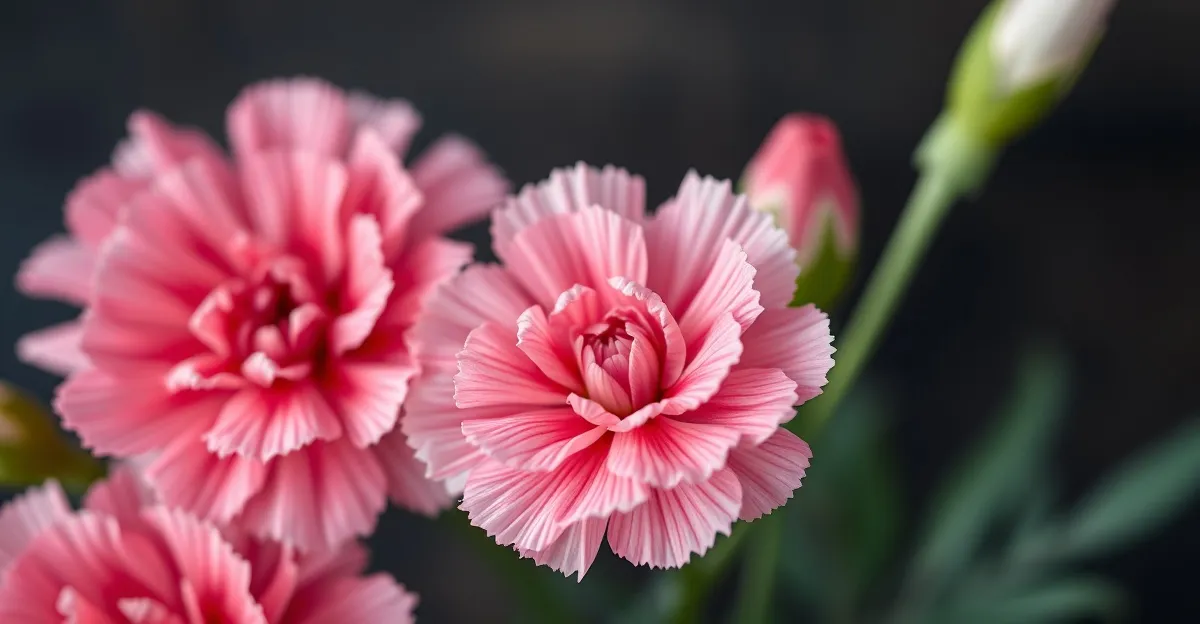
Every morning in Bali, tens of thousands of small woven palm-leaf trays appear on doorsteps, at shop entrances, on the bonnets of cars, at the foot of temple gates. These are canang sari — daily offerings that are the heartbeat of Balinese Hindu spiritual life. Inside them, among the rice, incense, and small biscuits, are flowers. And quite often, those flowers are carnations.
Understanding how carnations fit into Balinese ceremony requires understanding something fundamental about Balinese Hinduism: flowers are not decorative. They are offerings in the fullest sense — vehicles for intention, prayer, and gratitude directed to the divine. The species matters less than the colour, the freshness, and the sincerity with which the offering is made.
The colour system in Balinese offerings
Balinese Hindu cosmology assigns directions and colours to different deities. This colour system, sanga mandala, is reflected in temple offerings and ceremonial arrangements.
White flowers represent Iswara and are placed in the east. Red flowers represent Brahma and are placed in the south. Yellow flowers represent Mahadewa and are placed in the west. Black or dark blue flowers represent Wisnu and are placed in the north. Multicoloured flowers are placed in the centre, representing Siwa.
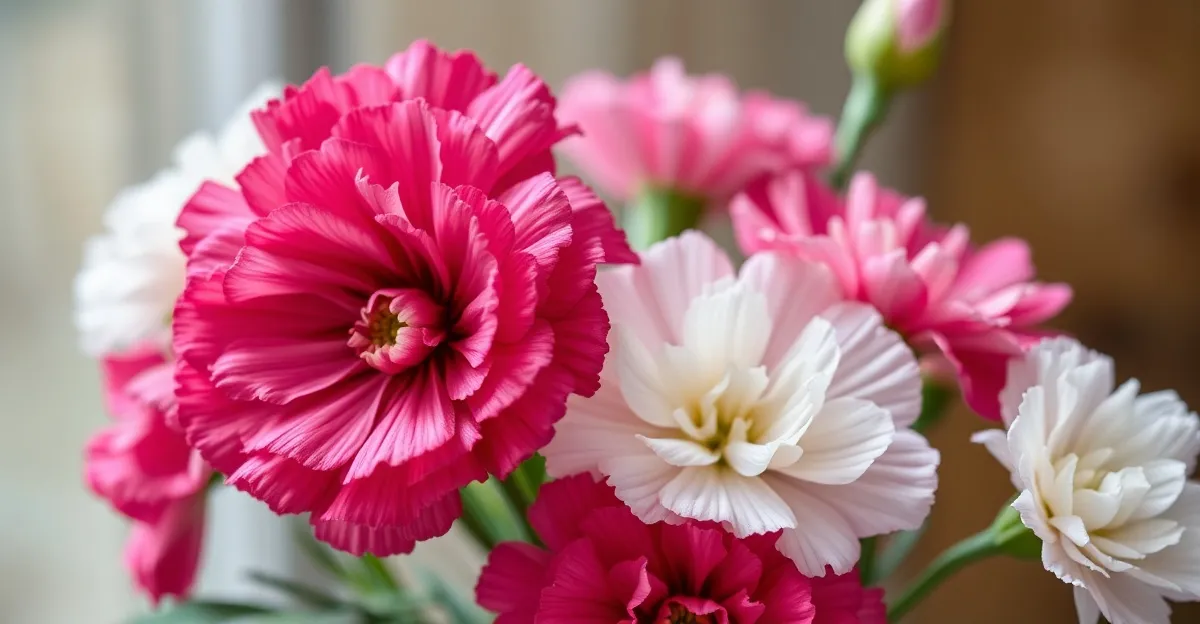
Carnations, available in every one of these colours, are genuinely useful within this framework. White carnations for eastern offerings, red carnations for southern offerings — the flower's extraordinary colour range makes it adaptable across the entire ceremonial spectrum.
Carnations in canang sari
Canang sari are the most common daily offering and are prepared by women throughout Bali every morning. The construction of a canang sari is itself a meditative practice. The woven palm-leaf base is shaped, then filled according to colour direction — white flowers pointing east, red pointing south, yellow pointing west, pink or blue pointing north.
Carnations are among the flowers most commonly purchased at Bali's traditional markets (pasar) for this purpose. They are affordable, widely available, and their petals are dense enough to create visually full offerings. Miniature carnation blooms are particularly popular because their size suits the small scale of a canang sari tray.
The market at Badung in Denpasar, open from the early hours of the morning, sells flower bundles specifically calibrated for canang sari preparation — mixed colour carnation bundles, marigold strings, frangipani, and jasmine, all bundled for daily purchase.
Larger temple ceremonies
For major temple ceremonies — odalan (temple anniversaries), full moon and new moon rituals, and the great festivals — flower use scales up dramatically. Large offerings called gebogan are constructed as towering arrangements of fruit, rice cakes, flowers, and palm-leaf decorations that women carry on their heads to temple in spectacular procession.
Carnations appear in these larger offerings both as cut blooms woven into arrangements and as component parts of woven flower garlands. Long strands of carnation heads threaded on string are used to decorate temple gates, shrines, and ceremonial structures during major events.
Galungan and Kuningan
Galungan and Kuningan are among the most significant festivals in the Balinese calendar — celebrating the victory of dharma over adharma (good over evil) and the return of ancestral spirits to earth. The entire island transforms during Galungan, with every compound entrance decorated with tall bamboo poles (penjor) draped in offerings, palm decorations, and flowers.
For Galungan, flower purchases increase dramatically across Bali. Carnations in yellow, red, orange, and white are woven into the hanging flower garlands that decorate penjor and shrines. The visual effect of a street lined with flower-draped penjor during Galungan is one of the most beautiful sights Bali offers.
For visitors wondering how to participate appropriately, our guide to Galungan flower subscription ideas offers context on timing and what flowers are most meaningful during this period.
Melaspas and blessing ceremonies
Melaspas are purification and blessing ceremonies performed for new buildings, vehicles, and significant new possessions. They involve elaborate flower offerings placed at key points — the entrance, the corners, at thresholds. Flower garlands and fresh blooms play a significant role in visually marking the sacred nature of the occasion.
Carnations frequently appear in these contexts because they are affordable enough to use in quantity and durable enough to maintain their appearance through a full ceremony. A melaspas for a new villa in Canggu might involve hundreds of individual flower heads arranged across multiple offerings and decorative installations.
Nyepi and what it means for flower access
Nyepi, the Balinese Day of Silence, brings the entire island to a complete halt once a year. The day before Nyepi, Pengerupukan, involves the dramatic ogoh-ogoh processions and tremendous community energy. Flower sales surge in the days before Nyepi as families and communities prepare offerings for the transition.
On Nyepi itself, no flowers can be purchased or delivered. It is the one day each year when Bali's extraordinary flower trade completely pauses. For those living in Bali's expat communities in Canggu or Seminyak, understanding this cycle is part of living here well.

The team
your florists
weekly subscription · Bali
We write about flowers because we love them. We deliver them because someone should — properly, weekly, across Bali.
— heyflowerPay once for 3, 6, or 12 months, no auto-renewal.
The flower market ecosystem
The flower supply that sustains Bali's ceremonial needs is enormous. Bedugul's highland flower market, about an hour north of Canggu, supplies much of southern Bali with carnations, chrysanthemums, and marigolds. Flower vendors at traditional markets throughout Bali offer pre-arranged bundles for canang sari and larger offerings.
This ecosystem operates largely outside the luxury floristry world. The same carnations that appear in a premium Seminyak hotel lobby arrangement might, later in the week, end up threaded into a temple garland in a Canggu family compound. The flower does not distinguish between these contexts. Its beauty and its meaning are equally valid in both.
Frequently Asked Questions
Do you need to use specific flowers in Balinese offerings?
No specific species are required, but colour according to the directional system is important for correctly constructed offerings. Freshness is considered more important than species — a fresh, sincere offering of any flowers is considered more appropriate than an elaborate arrangement of wilted blooms.
Can non-Balinese people participate in offering ceremonies?
Visitors are welcome at most temple ceremonies, though there are protocols — appropriate dress (sarong and sash), respectful behaviour, and awareness of which areas are accessible to non-worshippers. Participating in making canang sari as a learning experience is warmly offered at many cultural programs.
Why are carnations popular for Balinese offerings compared to more tropical flowers?
Primarily for practical reasons — availability, affordability, and colour range. Carnations provide the full spectrum of colours needed for directional offering systems at a price point that allows daily use. Their durability also means they maintain their appearance through a full day of ceremonial use.
How much do flowers for offerings cost at Bali markets?
A bundle of carnations for canang sari purposes typically costs Rp 5,000–15,000 at traditional markets — a few cents per offering. The daily flower expense for a family maintaining regular canang sari practice is a meaningful but manageable part of household spending.
Do carnations have any specific meaning in Balinese Hinduism?
In Balinese Hinduism, it is the colour rather than the species that carries primary meaning. Carnations, like all flowers, are understood as pure offerings of beauty and natural grace. Their specific species is secondary to their freshness, colour, and the intention behind the offering.
Living in Bali means being surrounded by ceremonial beauty every day. At heyflower.co, we source fresh carnations and seasonal blooms from Bali's highland growers each week, delivering to Canggu, Berawa, Pererenan, Seminyak, and Kerobokan.
More on Carnation