Bali temple visit guide: can you bring flowers in?
Everything you need to know about bringing flowers into Balinese temples — what's appropriate, what's offered, and how to participate respectfully as a visitor.
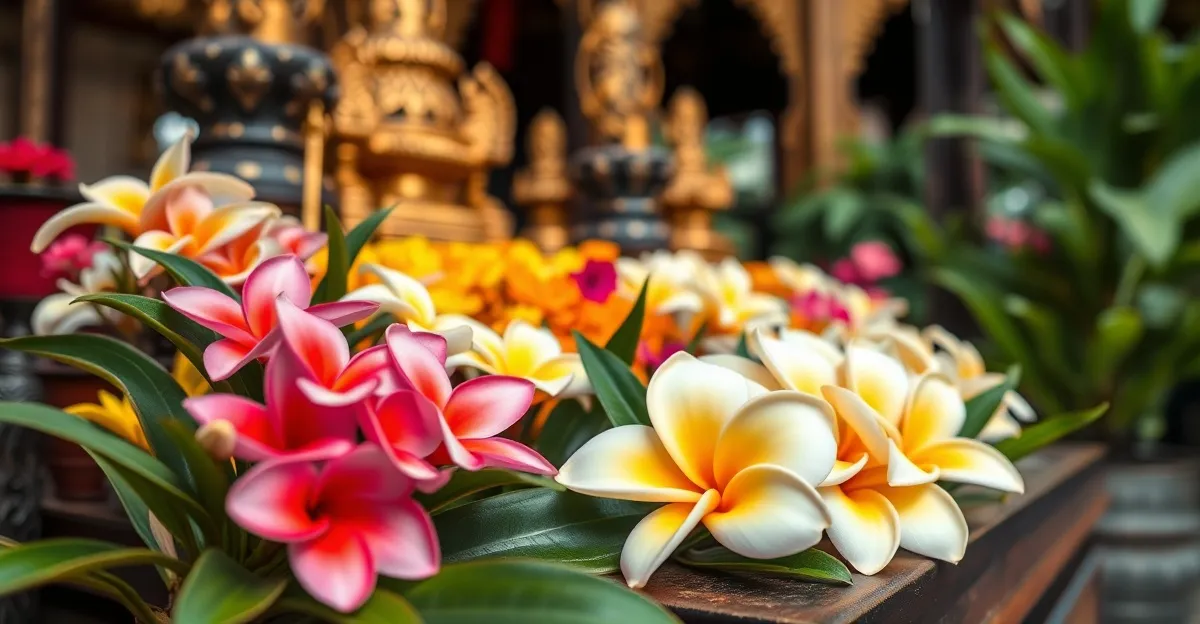
Visiting a Balinese temple is one of the more memorable experiences you can have on this island, but it comes with a set of unwritten expectations that can feel opaque if you haven't had someone explain them. The question of flowers — can you bring them, should you bring them, what kind is acceptable — is one that comes up repeatedly for first-time temple visitors and even for longer-term residents who want to participate respectfully rather than just observe.
The answer, in short, is yes — you can bring flowers to a Balinese temple, and doing so is considered a meaningful gesture of respect and devotion. But the how matters considerably more than the whether.
Understanding what flowers mean in a temple context
Balinese temples (pura) are not museums or tourist attractions in the Western sense. They are active places of worship where deities are believed to reside and where the local community maintains ongoing spiritual relationships through regular offerings and ceremony. When you bring flowers to a temple, you're not decorating a historic building — you're participating, however modestly, in that living relationship.
Flowers offered at a temple go through a specific process. They're typically incorporated into banten (offering trays) that are placed at specific shrines within the temple compound. If you bring loose flowers, a temple worker or a pemangku (temple priest) may arrange them into offerings, or you may be invited to add them to an existing offering.
The most universally welcome flowers for temple visits are those already embedded in the Balinese offering tradition: white and yellow frangipani, yellow marigold, red hibiscus, and yellow champaca. These are the flowers that every temple already uses in its daily offerings, so bringing them is contributing something immediately useful and meaningful.
Buying temple flowers before you arrive
At the entrance to most significant temples — Pura Tanah Lot, Pura Besakih, Pura Uluwatu, Pura Tirta Empul — vendors sell flower offerings for visitors. These typically come in small trays or baskets already prepared with the right flowers and incense. Buying one and carrying it in shows immediate understanding and good intention.
At major temples in Ubud and around Gianyar, where Balinese community temples are integrated into daily village life, you'll often see offering sellers stationed near the gate. Prices are modest — prepared canang might cost Rp 5,000-20,000 depending on complexity.
If you want to bring flowers from home or from a florist, plain loose flowers in white, yellow, and red are always appropriate. Avoid elaborate imported flower arrangements that look decorative rather than devotional — they can seem out of place and may not be accepted in the same spirit as traditional offering flowers.
What you should not bring
Some flowers are not appropriate to bring into certain temple contexts, for reasons rooted in ritual logic rather than aesthetic preference. Flowers associated specifically with funerary ceremony — certain white chrysanthemum arrangements, specific death-offering flower types — would create a confusing ritual signal in a living temple context. The detailed colour and flower associations are covered in colors in Balinese offerings: red, white, yellow, black, blue.
Elaborate store-bought bouquets in the Western style — ribbons, cellophane, decorative wrapping — are slightly awkward in a traditional temple because the packaging signals a different cultural context. The flower is right; the presentation is confusing. If you want to bring something from a florist, ask them to prepare it as a simple, unwrapped bundle of offering-appropriate flowers.
Flowers that are wilted, damaged, or have been left sitting in warm air for many hours are not appropriate offerings. In Balinese ritual logic, an offering represents your best — giving damaged goods signals carelessness or disrespect, neither of which is what you intend.
The temple dress and behaviour rules that apply alongside flowers
Bringing appropriate flowers is one part of temple respect. The other rules are equally important. A sarong and sash (selendang) are required at every temple that allows public entry — they're rented or loaned at the gate at most major temples if you don't have your own. During your period, Balinese custom holds that you should not enter the inner temple compound (jeroan). Many temples post this at their entrance; it's not a slight but a sincere belief about maintaining the ritual purity of the sacred space.
Photography of active ceremony is a sensitive area. At major tourist temples, photography in the outer courtyard (jaba) is usually accepted. Photographing active worship, priests conducting ceremony, or the inner sanctum without explicit permission is not. When in doubt, watch what other temple visitors are doing and follow the lead of Balinese community members who are present.
Which temples are most accessible for flower offering participation?
Several temples have strong traditions of welcoming sincere visitors who want to participate beyond just observing.
Pura Tirta Empul in Tampaksiring is a water temple famous for its purification springs. Visitors are welcome to participate in the melukat (purification ritual) by entering the holy spring. Flower offerings are made at shrines around the spring complex.
Pura Gunung Kawi in Gianyar is a rock-cut temple complex where offerings are placed at the carved niches throughout the site. The walk in itself is beautiful, through rice terraces and down stone steps.
Village temples throughout Ubud and the surrounding villages are where you'll experience the most genuine, unmediated version of temple life. Coming during an odalan (temple anniversary) when the community is gathered is extraordinary, but you'll need to be especially attentive to cues about where visitors are welcome and where community ceremony space should be respected.
For major ceremonies and odalan flower demands, see our guide to odalan temple anniversaries and floral offerings for details on what's expected and how the flower supply chain works during these events.

The team
your florists
weekly subscription · Bali
We write about flowers because we love them. We deliver them because someone should — properly, weekly, across Bali.
— heyflowerPay once for 3, 6, or 12 months, no auto-renewal.
After leaving: the flowers stay
A small thing to understand: when you place flowers as an offering at a Balinese temple, they stay. You don't take them back. The flowers belong to the divine now, and taking them would undo the offering. Old offerings at temples are eventually cleared away and composted or placed respectfully at the base of sacred trees — but the act of offering means releasing the flowers completely.
This is philosophically coherent with the Balinese understanding of offerings as acts of giving without expectation of return. The canang sari that Balinese women place each morning is released completely — there's no transactional expectation of receiving something back for each specific offering. The practice is one of ongoing relationship maintenance, gratitude expressed consistently, relationship with the divine tended like a garden through daily, patient attention.
Frequently asked questions
Can I buy flowers outside the temple to bring in, or do they need to be prepared offerings? Both are acceptable. Simple loose flowers (plumeria, marigold) can be placed at shrine bases or given to a pemangku to incorporate into offerings. Pre-prepared offering trays from gate vendors are easier if you're less familiar with the practice.
Are there temples where flowers are not appropriate to bring? A very small number of highly restrictive temples have rules about what can be brought in. These are usually community temples not generally open to non-Balinese visitors. If you're visiting a temple where flower offerings are normal, bringing flowers is appropriate.
Is it disrespectful to photograph flowers I've brought as offerings? Photography in the outer areas of temples is generally accepted. Photographing your own flower offering before placing it is usually fine. Photographing the inner shrine areas or active ceremony without permission is not.
What if I arrive at a temple and there are no offering sellers at the gate? If you don't have flowers, arriving with sincere attention and respectful dress is sufficient. You don't have to bring flowers to visit a temple respectfully. If you want to give something, purchasing a few flowers from a nearby warung or market and bringing them as a simple gesture is always appreciated.
Can children bring offerings to temples? Yes, and teaching children to make and present offerings is considered an important part of Balinese cultural education. Children participating in offering ceremony are welcomed warmly.
Ready to bring fresh flowers to your Bali home or event? Explore our weekly flower subscription and get handpicked blooms delivered to your door every week.



