7 flowers that do NOT handle Bali humidity (and what to pick instead)
Some beautiful flowers simply fall apart in Bali's tropical heat. Here are 7 blooms to avoid and the better alternatives for lasting arrangements in Bali.
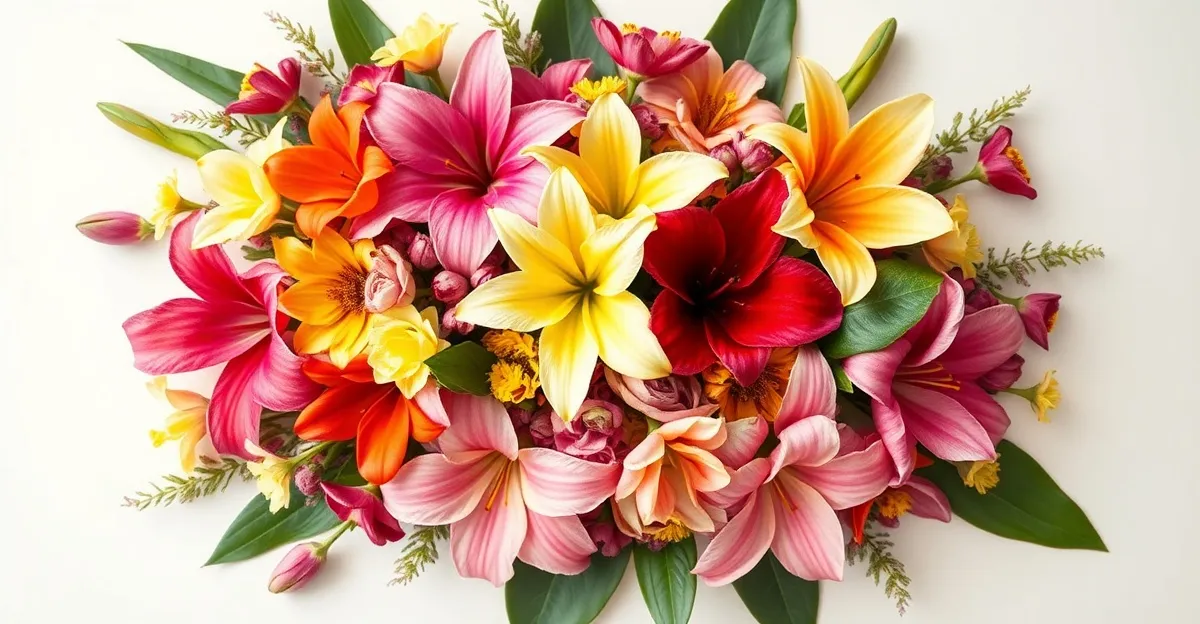
There's a specific disappointment that happens when you receive a beautiful bouquet in Bali, put it in a vase with good intentions, and return two hours later to find half of it wilting against the side of the container. No drama, no neglect — just the physics of tropical heat working against flowers that evolved somewhere far cooler and drier.
Not all flowers are created equal in the heat. Some have thick, waxy petals that shrug off moisture and warmth. Others have thin, tissue-like petals built for brief spring bursts in European meadows, and they simply cannot cope with Bali's wet season conditions — 32°C, 85 percent humidity, and the kind of warm nights that never really drop to a helpful cool.
This guide covers the seven most commonly requested flowers in Bali that genuinely struggle in the tropical climate — along with better alternatives that will actually hold up in your villa, café, or home.
1. Sweet peas — gorgeous for about an hour
Sweet peas are among the most requested flowers in the Instagram-influenced aesthetic world — those ruffled, tissue-thin petals in soft lilacs, pinks, and creams look extraordinary in photographs. In a cool European spring they last beautifully. In Bali, even with a well-maintained vase, expect four to six hours before they start to go soft.
The petals are essentially a single layer of fragile cellular tissue. They have no structural backup when ambient temperature tips above 28°C. The moment they begin to wilt, they don't recover — unlike some flowers that can be revived with fresh water and a stem trim.
What to pick instead: Lisianthus. The layered, ruffled petals look similar to sweet peas in photographs, carry comparable symbolism (sweet pea meaning and symbolism and lisianthus are both about appreciation and delicate affection), and lisianthus holds dramatically better in tropical heat — typically seven to ten days with basic care.
2. Tulips — cold-chain casualties
Tulips are imported into Bali from the Netherlands or occasionally from Java highland growers. By the time they arrive at a Bali florist, they've already been through significant cold-chain stress. When they hit the island's ambient temperature, the stem structure that holds the flower head upright (which depends on turgor pressure in the stem) starts to fail quickly.
Even with excellent care — recut stems, clean water, a cool room — tulips in Bali typically last two to three days before the stems lose their verticality and the flowers begin to droop. Without air conditioning, expect less. They're also considerably more expensive in Bali than at the source, making the cost-to-longevity ratio genuinely poor.
What to pick instead: Soft roses. They're more reliably sourced closer to home (Bedugul grows excellent roses), they hold better in the heat, and a well-chosen blush or cream rose carries comparable elegance. At Rp 20,000–35,000 per stem from a good Bali florist, roses are also better value.
3. Delphinium — fall-apart blues
Delphinium's tall spires of blue, purple, and white flowers are genuinely beautiful, and the blue tones are unusual in the flower world — there aren't many true blues available. The problem is structural. The individual florets along each stem are loosely attached and thin-petalled, and in high humidity they begin detaching and browning from the bottom up within a day or two.
Can delphinium actually grow in Bali? The short answer is that it's not well-suited to lowland tropical conditions. It can be grown in Bali's cooler highlands but rarely is, commercially. Most delphinium in Bali is imported and already somewhat compromised by transit.
What to pick instead: Blue is genuinely difficult in tropical cut flowers, so the honest answer is to embrace the alternatives. Agapanthus (available seasonally) has a similar vertical form and blue tones with better durability. Alternatively, shifting the colour palette to soft purples — vanda orchids, purple statice — gives you something in that cool colour register with much better longevity.
4. Anemones — a one-day wonder
Anemones, with their dark centres and satiny petals in white, pink, red, and purple, are deeply appealing to look at. They're also quite short-lived as cut flowers even in ideal conditions, and Bali's conditions are far from ideal for them.
The petals are thin and crumple readily in heat. Without air conditioning, an anemone arrangement in a Bali living room or office will look presentable for a few hours and sad by evening. Even with good AC, expect two to three days maximum.
What to pick instead: For the colour drama of anemones, reach for tropical orchids — Dendrobium in particular, available in pinks, purples, and white — which carry comparable visual impact and last weeks rather than hours. If you specifically want the dark-centred floral look, consider ranunculus in small quantities — they hold somewhat better than anemones, though still aren't ideal in extreme heat.
5. Garden roses (old-fashioned varieties) — fragile and thirsty
This one requires nuance. Commercial hybrid tea roses and spray roses, which dominate the Bali flower supply, are actually reasonably durable in tropical conditions — four to seven days with care. But the old-fashioned, full-petalled garden rose varieties — David Austin types, cabbage roses, and highly petalled heirloom varieties — perform quite differently.
Their extreme petal count means the interior of the flower holds moisture and warmth, creating conditions for rapid bacterial damage from the inside out. The centres brown and rot while the outer petals still look fresh, which is both frustrating and wasteful.
What to pick instead: If you want the full, lush look of a garden rose in Bali, choose peony-style spray roses — which are bred for commercial durability while keeping that layered aesthetic — or opt for actual peonies when available, which hold somewhat better than you'd expect given their appearance.
6. Lily of the valley — almost impossible to source and almost impossible to keep
Lily of the valley barely makes the Bali flower supply at all — it's a cool-temperate plant that doesn't grow anywhere near the tropics and doesn't import well. When it does appear at premium florists, usually for specific wedding requests, the price reflects both the scarcity and the cold-chain challenge. And it wilts very fast.
This one is on the list largely as a preventative note: if someone requests lily of the valley for a Bali wedding or event and you're helping them plan, kindly redirect the conversation early. The disappointment of receiving a wilted substitute or watching a premium import fail within hours is avoidable.
What to pick instead: White freesia, with its arching stems and delicate bell-shaped florets, gives a similar elegant, lightweight aesthetic with infinitely better survivability in Bali's climate. White jasmine strands can also replicate the cascading, small-flower look in a more tropical key.

The team
your florists
weekly subscription · Bali
We write about flowers because we love them. We deliver them because someone should — properly, weekly, across Bali.
— heyflowerPay once for 3, 6, or 12 months, no auto-renewal.
7. Hyacinth — a fragrance too heavy for the tropics
Hyacinths have an intense, sweet fragrance that many people love in cool climates. In the tropics, that fragrance amplifies significantly in the heat — the aromatic compounds off-gas faster at higher temperatures. What's lovely and evocative in a cool European spring can become genuinely overwhelming in a hot Bali room, particularly in the first few days of opening.
Beyond the fragrance issue, hyacinths don't hold well without cold. The thick, heavy flower heads on relatively short stems depend on turgid, cold-watered stem tissue to stay upright. In Bali's ambient warmth, they slump within a day or two.
What to pick instead: For fragrance in a tropical space, white ginger lily (Hedychium coronarium) gives a lighter, cleaner floral scent that's pleasant rather than overwhelming in the heat. For the visual density of hyacinths in an arrangement, grape-like clusters of purple or white statice give a similar massed-floret effect with excellent longevity.
The pattern worth noting
Every flower on this failure list has thin, complex, or moisture-sensitive petals. They evolved in conditions — cool Springs, dry summers, frosty winters — that are essentially opposite to Bali's climate. The replacements all share structural features: waxy or papery petals, tropical or near-tropical origins, or simply tougher cell structure built for heat and moisture.
The shoulder seasons in Bali — April and October — are slightly more forgiving than the deep wet season, with humidity dipping a little and temperatures slightly more moderate. Shoulder season flowers that thrive covers which blooms to reach for when you want to push slightly outside the guaranteed-safe tropical list.
FAQ
Can I keep struggling flowers alive longer with ice water? Cold water can extend the life of some delicate flowers by a few hours, but it's impractical as a long-term strategy and can shock tropical-origin flowers that prefer room temperature water. The better approach is to simply choose flowers suited to the climate.
What's the best thing I can do in Bali's heat to extend any flower's life? Keep flowers away from direct sunlight, change vase water daily, recut stems at an angle every two days, and if possible move arrangements to an air-conditioned space overnight. These four steps will add days to almost anything.
Is there a time of year in Bali when delicate flowers do better? The dry season (roughly June to August) is the most forgiving period for less tropical-adapted flowers. Lower relative humidity and occasionally cooler nights give imports a slightly longer window. Uluwatu and southern coastal areas also tend to have lower humidity than inland areas like Ubud.
Are expensive flowers worth it in Bali if they only last a day? For specific occasions — a wedding table, a photoshoot, a one-evening event — the answer can be yes. For everyday home flowers, no. Choose for longevity and you'll spend less and enjoy your flowers more.
Do Bali florists give advice on what will last in a specific location? Good ones do. It's always worth mentioning your living situation — open-air villa, air-conditioned apartment, outdoor event space — when ordering, so the florist can make informed recommendations.
Ready to bring fresh flowers to your Bali home that will actually last? Explore our weekly flower subscription and get handpicked blooms delivered to your door every week — selected specifically for Bali's tropical climate.



